
lovethailand home >North Travel Attractions >Chiang Rai Travel Attractions >Muang Chiang Rai >Wiang > Wat Phra Kaew
TL;DR: Wat Phra Kaew is located at Trairat Road, Wiang Subdistrict, Mueang Chiang Rai District, Chiang Rai, open Open daily, hours 07:00 – 18:00. Highlights include Emerald Buddha legend, Phra Chao Lan Thong, Ho Phra Yok, Hong Luang Saeng Kaew, Lanna-style viharn.

Wat Phra Kaew
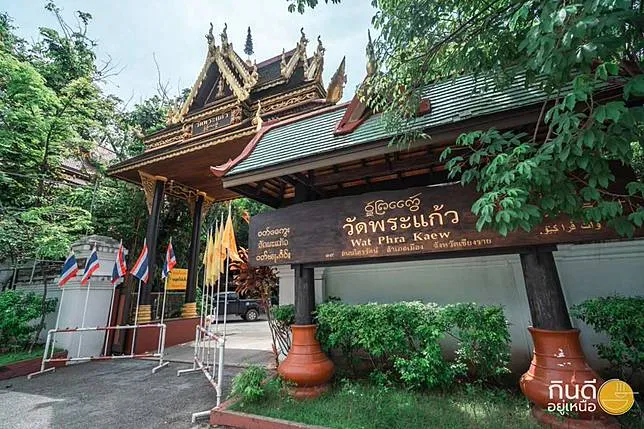
Open Days: Open daily
Opening Hours: 07:00 – 18:00
Wat Phra Kaew Chiang Rai is one of the most historically important temples in Chiang Rai and one of the key cultural landmarks in northern Thailand. Located on Trairat Road in the heart of the city, this third-class royal temple is widely known as the place where the Emerald Buddha, or Phra Kaew Morakot, was first discovered according to Lanna tradition. For that reason alone, it stands far above the level of an ordinary city temple and remains one of the most meaningful places to visit in Chiang Rai.
In simple terms, Wat Phra Kaew is not just a beautiful temple for worship. It is a place where Chiang Rai’s local identity, Lanna history, sacred art, and one of Thailand’s most famous religious legends come together in a single temple compound. Visitors come here to see where the story of the Emerald Buddha began, to admire traditional Lanna architecture, and to experience a calm and respectful atmosphere right in the city center.
The temple was originally called Wat Pa Ya or Wat Pa Yia. Its earlier name came from the abundance of “mai yia,” a local bamboo-like plant that once grew in the area. Although the exact founding date of the temple is not clearly recorded, Wat Phra Kaew has long been recognized as an important temple in Chiang Rai’s history and was closely connected to the political and religious life of the Lanna Kingdom.
According to Lanna chronicles, Thao Mahaprom, ruler of Chiang Rai and younger brother of King Kue Na, brought sacred Buddha images from Kamphaeng Phet to Chiang Rai. These included the Phra Sihing image and the Phra Rattana Patima. After political conflict broke out following the death of King Kue Na, the Phra Sihing image was eventually taken back to Chiang Mai, while the Phra Rattana Patima was concealed inside a chedi at Wat Pa Yia. It had been coated with plaster, lacquer, and gold, so its true identity remained unknown for a long time.
In 1434 CE, the chedi collapsed, revealing a plaster-covered Buddha image. Later, when part of the outer coating broke away, people noticed the green crystal-like surface underneath. Once the plaster was removed, the hidden image was recognized as the famous Emerald Buddha. This discovery changed the identity of the temple forever, and Wat Pa Yia came to be known as Wat Phra Kaew from that time onward.
Although the Emerald Buddha was later moved to Lampang, then to other important centers, and today is enshrined in Bangkok, Wat Phra Kaew Chiang Rai has kept its place as the starting point of that story. This makes the temple especially meaningful for travelers interested in Thai history, sacred objects, and the movement of royal Buddhist images in the Lanna world.
The temple has also played an important role through later periods of Chiang Rai history. When Chiang Rai became deserted during times of war, many important temples declined. After the city was restored in the nineteenth century, Wat Phra Kaew was gradually revived. A new viharn was built in 1890, likely on the base of an earlier Lanna-era structure. Its design shares characteristics with other important Chiang Rai temples, especially in the proportions and style of the northern Thai roofline.
The main viharn or ubosot of Wat Phra Kaew is one of the temple’s strongest visual features. It follows a traditional Lanna form with a relatively low base and a layered roof that slopes gracefully downward. Although it underwent major restoration in the twentieth century, the building still preserves the character of northern Thai religious architecture and gives visitors a strong sense of the local cultural setting.
Inside the main hall, the most important image is Phra Chao Lan Thong, a large bronze Buddha in the Mara-Vijaya posture. With a lap width of 2 meters and a height of 2.8 meters, it is one of the most impressive Buddha images associated with Chiang Rai. It was moved to Wat Phra Kaew in 1961 and has served as the principal image of the temple ever since. The image is admired not only for its sacred significance but also for its strong artistic character.
Visitors can also see important bronze disciple statues, a historic octagonal chedi covered with gilded copper, and the Ho Phra Yok, or Jade Buddha Hall. This hall houses Phra Buddha Rattanakorn Nawutivas Anusorn Mongkol, commonly known as the Jade Buddha of Chiang Rai, and includes displays related to the Emerald Buddha legend as well as the creation of the modern jade image.
Another interesting building inside the temple is Hong Luang Saeng Kaew, a museum-style structure designed in an applied Lanna form. It displays important Buddha images, including a replica of the Phra Buddha Sihing, together with Buddhist art and cultural interpretation in a more modern exhibition style. For visitors who want more than a quick temple stop, this part of the complex adds real depth to the visit.
Wat Phra Kaew remains an active royal temple today under the leadership of Phra Vajiradilok (Sompong Sirimangkhalo). It is still used for religious life while also welcoming a steady flow of visitors. Despite its central city location, the atmosphere remains relatively calm, especially in the morning. Large trees and a well-organized compound make it comfortable for walking and quiet observation.
From a travel perspective, Wat Phra Kaew is one of the easiest major temples to include in a Chiang Rai itinerary. It is close to Wat Phra Singh, Wat Ming Mueang, the Clock Tower, and the city walking street area. This makes it ideal for a half-day cultural route on foot or by short taxi ride. Visitors interested in history usually find that the temple rewards a slower visit rather than a rushed photo stop.
Getting There is simple. Wat Phra Kaew is located on Trairat Road in central Chiang Rai, around 1 kilometer from the Chiang Rai Clock Tower. It can be reached easily by private car, taxi, local transport, or on foot if you are staying in the city center. Parking is available, and the temple works well as part of a city temple route that includes nearby landmarks.
For the best visit, morning hours are recommended. The weather is usually more comfortable, the atmosphere is quieter, and you can spend enough time seeing the main viharn, the historic chedi, the Ho Phra Yok, and the museum area without feeling rushed. This is one of the temples in Chiang Rai where both casual travelers and serious cultural visitors usually leave feeling that the visit was worth their time.
| Name | Wat Phra Kaew Chiang Rai |
| Location | Trairat Road, Wiang Subdistrict, Mueang Chiang Rai District, Chiang Rai |
| Address | 19 Trairat Road, Wiang Subdistrict, Mueang Chiang Rai District, Chiang Rai 57000 |
| Summary | A third-class royal temple in central Chiang Rai and the traditional discovery site of the Emerald Buddha, with important Lanna architecture, historic Buddha images, and temple museums. |
| Highlights | Emerald Buddha legend, Phra Chao Lan Thong, Ho Phra Yok, Hong Luang Saeng Kaew, Lanna-style viharn |
| History | Originally known as Wat Pa Ya or Wat Pa Yia; renamed Wat Phra Kaew after the discovery of the Phra Rattana Patima in 1434 CE; elevated as a royal temple in 1978 |
| Name Origin | The original name came from the local “yia” plant in the temple area; the current name refers to the discovery of the Emerald Buddha. |
| Distinctive Features | A historically important Lanna temple combining religious significance, royal temple status, sacred Buddha images, and museum-style interpretation. |
| Travel Information | Located in central Chiang Rai, about 1 km from the Clock Tower, easy to reach by car, taxi, local transport, or on foot from nearby city-center hotels. |
| Current Status | Open daily for worship and sightseeing and remains one of Chiang Rai’s most important royal temples. |
| Open Days | Open daily |
| Opening Hours | 07:00 – 18:00 (Ho Phra Yok / museum approximately 09:00 – 17:00) |
| Fees | Free admission |
| Facilities | Parking area, shaded walking space, temple exhibition areas, and museum-style buildings inside the compound |
| Main Areas / Zones | Main viharn, Phra Chao Lan Thong, bronze disciple statues, historic chedi, Ho Phra Yok, Hong Luang Saeng Kaew, and the relocated Buddha image from Wat Nong Bua Sot |
| Abbot | Phra Vajiradilok (Sompong Sirimangkhalo) |
| Main Contact Number | 089-851-3530, 089-952-5056, 053-711-385, 053-715-047 |
| Official Website / Official Page | www.watphrakaew-chiangrai.com / Wat Phra Kaew Chiang Rai official Facebook page |
| Nearby Tourist Attractions | 1. Wat Phra Singh Chiang Rai 1 km 2. Wat Ming Mueang 1 km 3. Chiang Rai Clock Tower 1 km 4. Chiang Rai Walking Street 1 km 5. Wat Rong Suea Ten 3 km |
| Nearby Restaurants | 1. Khao Soi Por Jai 1 km Tel. 053-711-889 2. Le Patta Hotel Restaurant 1 km Tel. 053-600-680, 081-357-4579 3. Chivit Thamma Da 2 km Tel. 053-166-967 4. Melt In Your Mouth 3 km Tel. 062-023-0549 5. Lhu Lam Restaurant 4 km Tel. 053-711-269 |
| Nearby Accommodations | 1. Hi Chiangrai Hotel 1 km Tel. 053-719-977 2. Le Patta Hotel 1 km Tel. 053-600-680, 081-357-4579 3. Nak Nakara Hotel 2 km Tel. 053-717-700 4. The Riverie by Katathani 3 km Tel. 053-607-999 5. Le Meridien Chiang Rai Resort 4 km Tel. 053-603-333 |
Frequently Asked Questions (FAQ)
Q: Is Wat Phra Kaew Chiang Rai the place where the Emerald Buddha was discovered?
A: According to Lanna tradition and historical accounts, Wat Phra Kaew Chiang Rai is the temple where the Emerald Buddha was first discovered after a chedi collapsed.
Q: Where is Wat Phra Kaew Chiang Rai located?
A: It is located on Trairat Road in Wiang Subdistrict, right in central Chiang Rai.
Q: Is there an entrance fee?
A: No. Admission is free.
Q: What are the main highlights inside the temple?
A: Key highlights include the Emerald Buddha legend, Phra Chao Lan Thong, Ho Phra Yok, Hong Luang Saeng Kaew, and the historic Lanna-style viharn.
Q: How much time should visitors spend here?
A: Most visitors should allow about 1 to 2 hours to see the temple buildings, sacred images, and museum-related areas comfortably.
Q: What places can I visit after Wat Phra Kaew?
A: Nearby options include Wat Phra Singh, Wat Ming Mueang, the Chiang Rai Clock Tower, the Walking Street area, and Wat Rong Suea Ten.
 Category: ●Places of Worship
 Group: ●Temple
Last Update : 6 MonthAgo
 Last Update : 6 MonthAgo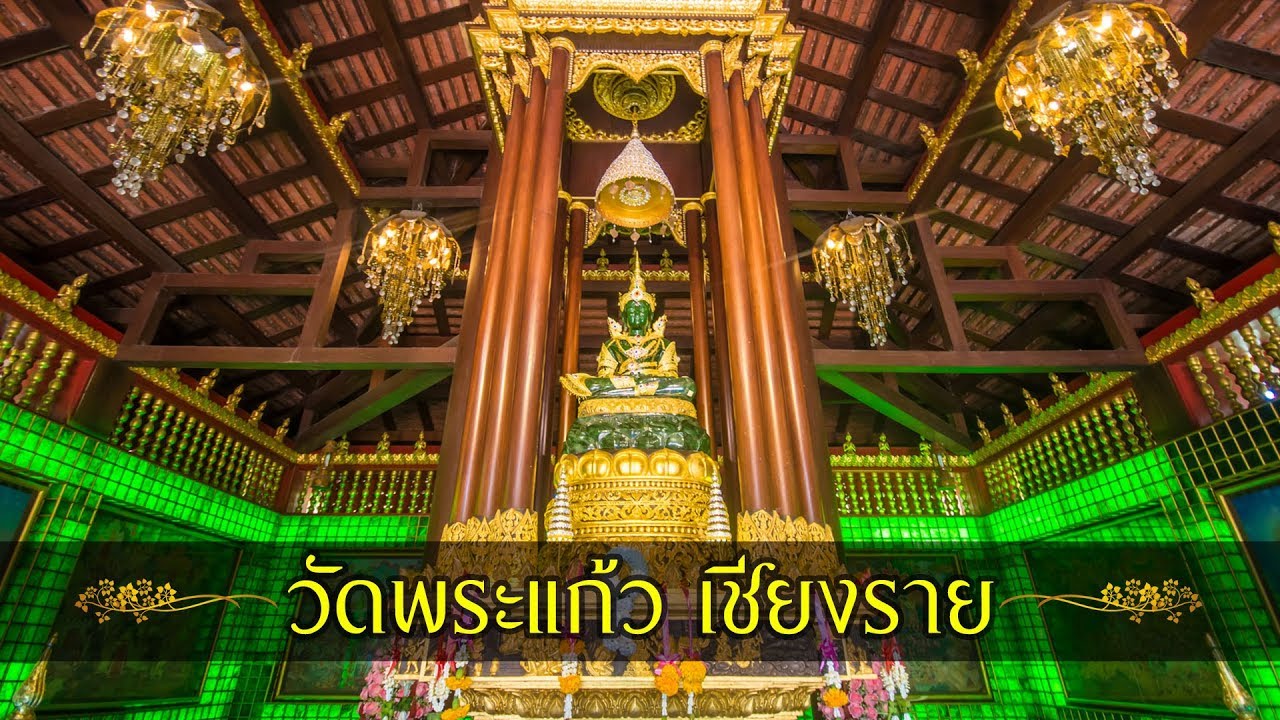
 Click to Access the Navigation Map GPS
Wat Phra Kaew Map
Recommend

 Art, Culture and Heritage
 Historical Sites and Monuments(3)
 Landmarks and Memorials(7)
 Art, Craft Centres, Tradition(6)
 Museums(8)
 Historic Homes and Cities(1)
 Educational Places
 Museum for Study(1)
 Library(1)
 Educational Gardens, Farm(3)
Temple(38)
Educational Gardens, Farm(3)
Temple(38)
 Other Sacred Sites(5)
 Research and Development
 Royal Project(9)
 Suburban Living
 Village, Community(16)
 Local Market(5)
 Nature and Wildlife
 National Parks and Marine Reserves(20)
 Mountain (Doi)(20)
 Dam, Reservoir, Lake(8)
 Waterfalls(16)
 Hot Springs(6)
 Caves(8)
 River, Canal(10)
 Sea, Beach(1)
 Other natural attractions(3)
 Entertainment and Agricultural
 Animal camps and shows(1)
 Farms, Parks and Ecotourism(9)
 Waterpark(1)
 Shopping
 Shopping and Night Market(2)
 Call Customer Service in Tourism
 Call Customer Service in Tourism(1)
 Travel Articles, Recipes
 Travel Review, Food Review(1)
 Food Menu, North Recipes(1)


