
lovethailand home >North Travel Attractions >Kamphaeng Phet Travel Attractions >Khlong Khlung >Wang Yang > Wat Roek Rai Samakkhi
TL;DR: Wat Roek Rai Samakkhi is located at Ban Wang Yang, Moo 1, Wang Yang Subdistrict, Khlong Khlung District, Kamphaeng Phet Province, open Daily, hours 08.00 – 17.00.
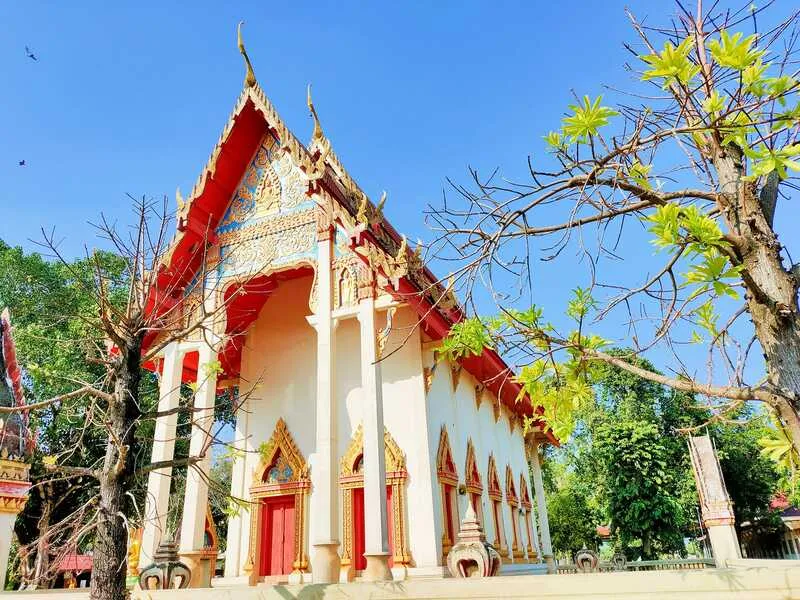
Wat Roek Rai Samakkhi
Open Days: Daily
Opening Hours: 08.00 – 17.00
Wat Roek Rai Samakkhi in Kamphaeng Phet Province is an important community Buddhist temple located at No. 116, Moo 1, Wang Yang Subdistrict, Khlong Khlung District, Kamphaeng Phet Province. The temple is significant not only as a place of worship but also as a center for community development, health promotion, Buddhist learning, digital education, and local cultural communication. It was established through the faith and generosity of Phu Yai Prueang Roek Rai, who donated 18 rai of land for the temple. Today, the temple continues to serve as a spiritual and social center for the people of Ban Wang Yang and nearby communities.
Wat Roek Rai Samakkhi is situated in Ban Wang Yang, Moo 1, in Wang Yang Subdistrict. The area is a local community where Buddhism, agriculture, village life, and shared public activities remain closely connected. The temple is one of the important religious sites in Wang Yang Subdistrict, serving as a place for merit-making, Dhamma listening, meditation, annual ceremonies, and community gatherings. It represents the practical and living role of a Thai rural temple.
The temple began with the land donation of Phu Yai Prueang Roek Rai, who gave 18 rai for the construction of a Buddhist temple. This act reflects an important tradition in Thai society, where a temple is considered a shared spiritual space for many generations. The name “Roek Rai Samakkhi” preserves the memory of the donor and also emphasizes the value of unity. The word “samakkhi” means harmony or solidarity, which suits the temple’s role as a place created by collective faith.
Construction began in 1955. The temple received official permission for construction on 29 April 1969, was officially established as a temple on 17 February 1970, and later received its consecrated boundary in 2007. These milestones show the development of the temple from a community religious site into a formally recognized Buddhist temple. The consecrated boundary is especially important because it allows the temple to perform formal monastic ceremonies according to Buddhist discipline.
The current abbot of Wat Roek Rai Samakkhi is Phra Khru Thaworn Wachirasat. As the religious leader of the temple, the abbot oversees Buddhist activities, community ceremonies, temple management, and moral guidance for local people. In rural Thai communities, an abbot often plays a role beyond temple administration. He is also a spiritual guide, community coordinator, and cultural leader.
One of the most distinctive aspects of Wat Roek Rai Samakkhi is its role in health promotion. The temple received an outstanding provincial health-promoting temple award in 2008 and was also recognized at the regional level. This shows that the temple has developed beyond its religious function to support the well-being of the community. A health-promoting temple provides a clean, safe, and supportive environment for body, mind, and social life.
Health promotion through a temple is meaningful in Thai rural society because the temple is accessible to all generations. Children, adults, elders, monks, and laypeople can all join temple activities. By maintaining a clean and organized environment and encouraging wholesome living, the temple helps connect physical health with mental well-being. Wat Roek Rai Samakkhi is therefore an example of how Buddhist temples can support quality of life in a holistic way.
The temple is also known for its religious training activities, especially ordination and temporary renunciation programs held in honor of the monarchy. The Nekkhammachari and lay renunciation program in honor of Her Royal Highness Princess Maha Chakri Sirindhorn is held every April. This activity allows participants to practice simplicity, moral discipline, chanting, meditation, and mindful living within the temple environment.
The mass ordination program in honor of His Majesty King Bhumibol Adulyadej the Great is held from July until the end of Buddhist Lent. This period is significant in Thai Buddhism because monks remain in residence during the rains retreat and laypeople often increase their merit-making, Dhamma study, and support for the Sangha. Joining an ordination program during this period allows participants to experience monastic discipline and Buddhist learning more deeply.
Another important activity is the Nekkhammacharini and lay renunciation program in honor of Her Majesty Queen Sirikit, held every August. This program offers women and laypeople an opportunity to practice moral discipline, meditation, chanting, and simple living. Such activities strengthen mental discipline, reduce attachment to everyday distractions, and encourage a deeper understanding of Buddhist values.
These annual activities make Wat Roek Rai Samakkhi a continuing center for moral training. The temple does not limit its role to occasional ceremonies. Instead, it provides structured opportunities throughout the year for people to practice discipline, generosity, patience, mindfulness, and community responsibility. This makes the temple important for both personal development and social harmony.
Wat Roek Rai Samakkhi also functions as a computer learning center in cooperation with the national digital sector. This role shows how a Thai temple can adapt to modern society while preserving its religious identity. By providing access to digital learning, the temple supports monks, youth, and local residents who want to improve their knowledge and skills. It helps bridge traditional community life with contemporary technology.
The temple also operates as a center for religious, artistic, and cultural communication through Wat Roek Rai Samakkhi Radio Station on 101.25 MHz. The station broadcasts daily from 05.30 to 06.00 and from 20.30 to 21.00. These broadcasts help share Dhamma teachings, temple news, cultural knowledge, and community information. The radio station is an important example of how a temple can use local media to keep Buddhism and culture close to daily life.
Morning and evening broadcasts are especially meaningful for the community. In the morning, Dhamma and temple messages can help people begin the day with calmness and clarity. In the evening, the broadcasts provide a moment for reflection after daily work. Through radio, the temple extends its role beyond the physical compound and reaches listeners in their homes and daily routines.
Socially, Wat Roek Rai Samakkhi is a gathering place for people in Wang Yang Subdistrict. Buddhist holy days, Kathin, Pha Pa, ordination ceremonies, royal tribute activities, and local merit-making events bring together families, elders, youth, monks, and community leaders. These gatherings strengthen unity and help maintain local Buddhist culture across generations.
Wang Yang Subdistrict is a predominantly Buddhist community with several important temples located in different villages. Wat Roek Rai Samakkhi is located in Moo 1, Ban Wang Yang, and serves as one of the key spiritual centers of the subdistrict. Temples in rural communities often support many stages of life, including ordination, family merit-making, funerals, festivals, community meetings, and youth activities. This makes the temple a foundation of local social life.
For visitors interested in community-based cultural travel, Wat Roek Rai Samakkhi offers a meaningful example of a modern rural Thai temple. It preserves Buddhist ceremonies while also supporting health, education, communication, and digital learning. Not every temple performs such a wide range of roles. A visit to this temple helps travelers understand how Buddhist institutions can contribute to community development in practical ways.
Visitors to Wat Roek Rai Samakkhi can experience a calm rural temple atmosphere. The temple compound supports worship, meditation, community events, and learning activities. Visitors may make merit, pay respect to Buddha images, offer alms, sit quietly, or learn about temple programs. During ordination, renunciation, or Kathin events, the temple becomes especially lively with local participation.
The temple is also suitable for a cultural route around Wang Yang and Khlong Khlung District. Nearby temples include Wat Talom Suwannaram, Wat Pracha Sattharam, Wat Wang Nam Samakkhi Tham, Wat Preecha Sattharam, and Wat Nikhom Thammaram. Visiting these temples together gives travelers a clearer view of Buddhist community life in Wang Yang Subdistrict.
For those interested in well-being, Wat Roek Rai Samakkhi is valuable because it shows how a temple can promote health in an integrated way. Buddhist practice already emphasizes mental balance, mindfulness, moderation, and discipline. When combined with clean surroundings and health-focused community activities, the temple becomes a place where physical and mental well-being support each other.
Getting There is convenient by private car or local hired vehicle. From Kamphaeng Phet town, travel toward Khlong Khlung District, then continue to Wang Yang Subdistrict and Ban Wang Yang. The temple is located within a village area, so using a map application or local directions is recommended. It can be included in a simple cultural route around Khlong Khlung and Wang Yang.
Travelers without private transport can first reach Khlong Khlung District and then continue by local hired vehicle to Wang Yang Subdistrict. The route is suitable for visitors who prefer quiet community travel, merit-making, and local temple visits rather than crowded tourist attractions.
Visitors should dress respectfully because Wat Roek Rai Samakkhi is an active Buddhist temple with monks and community activities. It is important to keep quiet in worship and meditation areas, avoid disturbing monks or practitioners, and help keep the temple clean. Respectful behavior helps preserve the temple’s peaceful atmosphere and cultural dignity.
Wat Roek Rai Samakkhi is more than a local temple. It brings together Buddhist faith, community unity, health promotion, moral training, digital learning, and cultural communication. For visitors who want to understand how a Thai temple can serve both spiritual and social needs, this temple is a meaningful destination in Khlong Khlung District, Kamphaeng Phet Province.
| Name | Wat Roek Rai Samakkhi |
| Location | Ban Wang Yang, Moo 1, Wang Yang Subdistrict, Khlong Khlung District, Kamphaeng Phet Province |
| Address | No. 116, Moo 1, Wang Yang Subdistrict, Khlong Khlung District, Kamphaeng Phet 62120, Thailand |
| Highlights | Community Buddhist temple known for religious activities, health promotion, digital learning, community radio, and annual renunciation and ordination programs |
| History | Construction began in 1955; official construction permission was granted on 29 April 1969; officially established as a temple on 17 February 1970; received its consecrated boundary in 2007 |
| Name Origin | The name is connected with Phu Yai Prueang Roek Rai, who donated 18 rai of land for the temple, while “Samakkhi” reflects community unity |
| Distinctive Features | A community temple serving as a religious center, health-promoting temple, computer learning center, and cultural communication center through community radio |
| Travel Information | Travel from Kamphaeng Phet town toward Khlong Khlung District, then continue to Wang Yang Subdistrict; suitable for private cars or local hired vehicles |
| Current Status | Active community temple with Buddhist ceremonies, Kathin activities, renunciation programs, and community learning activities |
| Open Days | Daily |
| Opening Hours | 08.00 – 17.00 |
| Fees | No admission fee |
| Facilities | Temple courtyard, pavilion, worship area, meditation area, community activity area, and parking space within the temple compound |
| Main Areas / Zones | Religious ceremony area, renunciation program area, computer learning center, and community radio station on 101.25 MHz |
| Abbot / Caretaker | Phra Khru Thaworn Wachirasat |
| Official Website / Official Page | Wat Roek Rai Samakkhi, Wang Yang Subdistrict, Khlong Khlung District, Kamphaeng Phet Province |
| Nearby Tourist Attractions | 1. Wat Talom Suwannaram, Ban Wang Talom, about 4 km 2. Wat Pracha Sattharam, Ban Nong Sano, about 5 km 3. Wat Wang Nam Samakkhi Tham, Ban Wang Nam, about 6 km 4. Wat Preecha Sattharam, Ban Nikhom, about 8 km 5. Wat Nikhom Thammaram, Ban Nikhom Mai, about 9 km 6. Khlong Khlung Vermicelli Factory, about 18 km |
| Nearby Restaurants | 1. Waree Ahan Tam Sang, about 15 km 2. Rai Som Restaurant, about 16 km 3. Nai Ya Bo Pla Restaurant, about 16 km 4. SHA BEAR Japanese Sticky Milk, Tha Makhuea Branch, about 17 km 5. Oo-Long Cafe, about 17 km 6. KFC PTT Kamphaeng Phet (Khlong Khlung), about 18 km |
| Nearby Accommodations | 1. Ruendokkaew Khlong Khlung, about 18 km 2. Scenic Riverside Resort, about 35 km, Tel. 055-722-009 3. The Room Hotel Kamphaengphet, about 36 km, Tel. 062-586-9778 4. Navarat Heritage Hotel, about 37 km, Tel. 055-711-211, 055-711-219 5. Soda Resort Kamphaeng Phet, about 38 km, Tel. 055-711-711, 055-713-123 6. P. Paradise Hotel, about 38 km |
Frequently Asked Questions (FAQ)
Q: Where is Wat Roek Rai Samakkhi located?
A: Wat Roek Rai Samakkhi is located at No. 116, Moo 1, Wang Yang Subdistrict, Khlong Khlung District, Kamphaeng Phet Province.
Q: Why is Wat Roek Rai Samakkhi important?
A: It is an important community temple known for Buddhist ceremonies, health promotion, moral training, digital learning, and community radio activities.
Q: Who donated the land for Wat Roek Rai Samakkhi?
A: Phu Yai Prueang Roek Rai donated 18 rai of land for the construction of the temple.
Q: Who is the abbot of Wat Roek Rai Samakkhi?
A: The abbot is Phra Khru Thaworn Wachirasat.
Q: What activities is Wat Roek Rai Samakkhi known for?
A: The temple is known for renunciation programs, mass ordination ceremonies, Kathin, a computer learning center, and a community radio station on 101.25 MHz.
Q: Is there an admission fee at Wat Roek Rai Samakkhi?
A: No. There is no admission fee. Visitors can enter for worship, merit-making, and temple activities when appropriate.
Q: How can visitors get to Wat Roek Rai Samakkhi?
A: Travel from Kamphaeng Phet town toward Khlong Khlung District, then continue to Wang Yang Subdistrict by private car or local hired vehicle.
Q: What nearby places can be visited with Wat Roek Rai Samakkhi?
A: Nearby places include Wat Talom Suwannaram, Wat Pracha Sattharam, Wat Wang Nam Samakkhi Tham, Wat Preecha Sattharam, Wat Nikhom Thammaram, and community attractions in Khlong Khlung District.
 Category: ●Places of Worship
 Group: ●Temple
Last Update : 1 MonthAgo
 Last Update : 1 MonthAgo
 Click to Access the Navigation Map GPS
Wat Roek Rai Samakkhi Map
Recommend

 Art, Culture and Heritage
 Historical Sites and Monuments(4)
 Landmarks and Memorials(1)
 Art, Craft Centres, Tradition(4)
 Museums(4)
 Historic Homes and Cities(1)
Temple(25)
Historic Homes and Cities(1)
Temple(25)
 Other Sacred Sites(8)
 Research and Development
 Royal Project(2)
 Suburban Living
 Village, Community(2)
 Local Market(2)
 Nature and Wildlife
 National Parks and Marine Reserves(4)
 Mountain (Doi)(2)
 Dam, Reservoir, Lake(4)
 Waterfalls(4)
 Hot Springs(1)
 River, Canal(3)
 Bays and Beaches(2)
 Other natural attractions(1)
 Entertainment and Agricultural
 Farms, Parks and Ecotourism(5)
 Waterpark(1)
 Shopping
 Shopping and Night Market(1)


