
lovethailand home >North Travel Attractions >Kamphaeng Phet Travel Attractions >Muang Kamphaeng Phet >Nong Pling > Wat Phra Kaeo
TL;DR: Wat Phra Kaeo is located at Kamphaeng Phet Historical Park, Old City Zone, Nai Mueang Subdistrict, Mueang Kamphaeng Phet District, Kamphaeng Phet Province, open Daily, hours 08.30 – 16.30.
Wat Phra Kaeo
Open Days: Daily
Opening Hours: 08.30 – 16.30
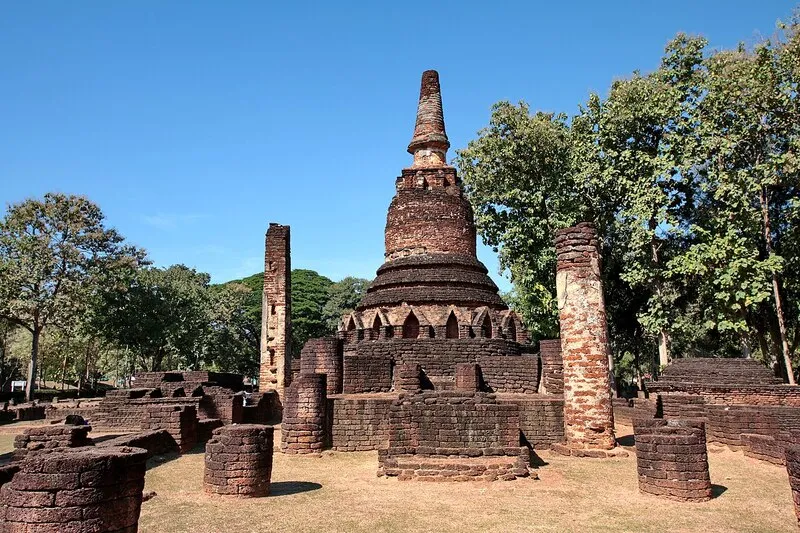
Wat Phra Kaeo in Kamphaeng Phet Province is one of the most important ancient Buddhist monuments inside Kamphaeng Phet Historical Park. Located in the central zone of the old walled city, in Nai Mueang Subdistrict, Mueang Kamphaeng Phet District, this large royal temple was closely connected with the political and religious center of ancient Kamphaeng Phet. It is the largest temple within the old city wall and contains many significant remains, including laterite walls, vihara bases, mondops, an ubosot, satellite stupas, a lion-surrounded stupa, an elephant-surrounded stupa, standing Buddha remains, and important Buddha image groups. For travelers who want to understand the historical and artistic heart of Kamphaeng Phet, Wat Phra Kaeo is an essential stop.
Today, Wat Phra Kaeo is not an active monastery with resident monks. It is an ancient monument managed as part of Kamphaeng Phet Historical Park under the Fine Arts Department. Its role is therefore different from a functioning temple. It is a place for historical learning, archaeological interpretation, and cultural appreciation. Even so, the sacred meaning of the site remains clear through its stupas, Buddha images, ritual buildings, and sacred layout. The temple still communicates the deep Buddhist faith of the people who built and used it many centuries ago.
The importance of Wat Phra Kaeo begins with its location. It stands in the center of ancient Kamphaeng Phet, near the palace area and the city pillar shrine. This is similar to major royal temples in other Thai historical cities, such as Wat Phra Si Sanphet in Ayutthaya and Wat Mahathat in Sukhothai. Such temples were not ordinary community monasteries. They were central religious monuments linked with royal power, state ceremonies, sacred legitimacy, and the spiritual identity of the city.
The temple plan is rectangular and contains many structures within laterite boundary walls. Laterite is one of the most distinctive materials of Kamphaeng Phet. Its reddish-brown color, rough texture, and strong durability give the monuments a powerful character. At Wat Phra Kaeo, laterite was used for walls, pillars, building cores, foundations, and many architectural elements. Walking through the temple, visitors can clearly see how local material shaped the visual identity of Kamphaeng Phet’s ancient architecture.
One of the most fascinating aspects of Wat Phra Kaeo is that it preserves architectural layers from several historical periods. The temple was not built all at once. It developed through multiple phases from the late Sukhothai period into the early Ayutthaya period. Different groups of monuments were added, expanded, and modified according to changing political power, religious ideas, and artistic preferences. This makes Wat Phra Kaeo a complex historical landscape rather than a simple single-period temple.
In its early phase, the temple was associated with the late Sukhothai cultural sphere and the reign of King Lithai. Important features included the elephant-surrounded stupa group, a vihara, and a mondop connected with a large standing Buddha known as Phra Attharot. These elements show strong Sukhothai influence, especially in the form of the bell-shaped stupa and elephant-decorated base. They also confirm that Kamphaeng Phet was an important religious and political center within the wider Sukhothai network.
The elephant-surrounded stupa is one of the most important monuments at Wat Phra Kaeo. Located toward the western end of the temple, it is a bell-shaped stupa on a square base, with smaller stupas at the 4 corners and stucco elephant figures projecting around the base. In Buddhist cosmology, elephants can symbolize strength, support, and the stability of the sacred universe. This architectural idea is found in several Sukhothai-period sites, and its presence at Kamphaeng Phet shows the artistic relationship between Kamphaeng Phet, Sukhothai, and Si Satchanalai.
Near the elephant-surrounded stupa are remains associated with Phra Attharot, a large standing Buddha image. The original image was made with a laterite core and would have been an impressive sacred figure. Today, only the feet and parts of the laterite core remain, but these remains are still powerful evidence of the original scale. The word Attharot is associated with the number 18 and is commonly used for large standing Buddha images. The remains at Wat Phra Kaeo help visitors imagine the grandeur of the ancient sacred space.
The standing Buddha remains are especially valuable because they reveal both artistic ambition and construction technique. Ancient craftsmen used laterite as the inner structure and then shaped the outer surface with stucco. When the stucco disappeared over time, the laterite core remained visible. This allows modern visitors to understand how large Buddha images were built. The ruin is not merely damage; it is also evidence of an old method of creating monumental Buddhist sculpture.
Another important group is the lion-surrounded stupa, which reflects early Ayutthaya artistic influence combined with local Kamphaeng Phet traditions. Unlike the elephant-surrounded stupa, this monument uses lion figures around the base. The lion symbolizes power, protection, and royal authority. The coexistence of elephant-surrounded and lion-surrounded stupas in one temple makes Wat Phra Kaeo especially important because it reveals different artistic layers and changing symbolic language across time.
Wat Phra Kaeo also contains important Buddha image groups, including the group often referred to as the “Three Buddhas.” These figures show facial forms and stylistic traits closer to Ayutthaya influence than to the softer Sukhothai style found in many other monuments of Kamphaeng Phet. This stylistic difference helps explain the transition of artistic taste as Ayutthaya political and cultural influence increased in the region.
Many Buddha images at Wat Phra Kaeo are now damaged, leaving only laterite cores or partial remains. This condition may seem incomplete at first, but it is highly informative. It reveals how ancient craftsmen constructed Buddha images by using laterite as an inner core and covering it with stucco. The surviving cores therefore show the hidden structure behind sacred art. Visitors who observe them carefully can learn not only about iconography, but also about historical construction techniques.
The temple is also associated with historical memory concerning the Emerald Buddha and Phra Phuttha Sihing. Local traditions and historical narratives connect these important Buddha images with this central temple, contributing to the name Wat Phra Kaeo. Whether approached through history, memory, or local tradition, this association helps explain why the temple was regarded as the most important sacred site in the center of Kamphaeng Phet.
King Rama VI also recognized the importance of this major central monument during his interest in ancient Kamphaeng Phet. The name Wat Phra Kaeo became widely used for this large temple at the heart of the city. Its royal and historical associations helped preserve its identity as the principal sacred monument within the old city zone.
Wat Phra Kaeo is closely connected with the city pillar shrine and the ancient palace area. The proximity of religious and political space reflects the structure of an ancient city. A royal temple at the center of the city was not only a place of worship. It was also a symbol of legitimate power, moral authority, and the unity of the city. This relationship between Buddhism and state power is one of the key reasons Wat Phra Kaeo is so historically important.
When walking through the temple, visitors should notice how the monuments are arranged in several groups rather than a single simple axis. Some parts follow east-facing Buddhist planning principles, while other areas reflect later additions and different symbolic intentions. The temple should therefore be read as a layered historical document. Each group of monuments represents a different period, artistic influence, and religious function.
Wat Phra Kaeo is part of Kamphaeng Phet Historical Park, which belongs to the UNESCO World Heritage property “Historic Town of Sukhothai and Associated Historic Towns.” This international status confirms the global value of the site. The temple is therefore not only a heritage site of Kamphaeng Phet or Thailand, but part of a wider human cultural legacy. Responsible tourism and careful conservation are essential.
The atmosphere of Wat Phra Kaeo is spacious, shaded, and calm. Visitors can spend from 1 hour to several hours exploring the temple, depending on their interest. Those who want to study the site carefully should observe the laterite walls, stupas, vihara remains, Buddha image cores, mondops, and spatial relationships between each group. A slow walk reveals much more than a quick photo stop.
The best time to visit is in the morning or late afternoon. Morning offers a quiet atmosphere, while late afternoon light brings out the warm reddish-brown tones of the laterite. Visitors should wear comfortable shoes and bring water, a hat, or an umbrella, especially during the hot season. The temple area is large and partly exposed to sunlight.
For photography, Wat Phra Kaeo offers many strong compositions: the elephant-surrounded stupa, the lion-surrounded stupa, laterite Buddha image remains, long wall lines, and ancient structures among trees. The most meaningful photographs are those that show the relationship between monument and space. Wat Phra Kaeo is valuable not only for individual structures, but also for the way those structures form a large sacred landscape.
Visitors should follow conservation rules carefully. Do not climb on the monuments, scratch or write on laterite surfaces, move ancient fragments, enter restricted areas, or behave in ways that may damage the structures. These monuments have survived for centuries and are vulnerable to both natural decay and visitor impact. Respectful behavior is a direct contribution to heritage preservation.
Wat Phra Kaeo is suitable for many types of visitors. General travelers will enjoy its scale and atmosphere. Students can learn about ancient city planning, Sukhothai and Ayutthaya art, laterite construction, and world heritage conservation. Art historians can study multiple stylistic layers in one place. Visitors interested in Buddhism can reflect on the sacred role of stupas, Buddha images, and royal temples in ancient Thai society.
Wat Phra Kaeo should be visited together with Wat Phra That and Kamphaeng Phet National Museum because they are located nearby and help complete the historical context of the old city. Wat Phra Kaeo shows the grand central royal temple, Wat Phra That presents another important sacred monument, and the museum helps explain sculptures, artifacts, and historical background. Travelers with more time should continue to the Aranyik zone to visit Wat Phra Si Iriyabot, Wat Phra Non, and Wat Chang Rop.
Getting There is convenient from Kamphaeng Phet town. Wat Phra Kaeo is located inside Kamphaeng Phet Historical Park in the central old city zone. Visitors can travel by private car, rental car, hired vehicle, or local transport. From the town center, follow signs to Kamphaeng Phet Historical Park or Kamphaeng Phet National Museum. The temple is close to several major historical sites, making it easy to plan a continuous walking or driving route.
Travelers arriving by interprovincial bus can get off at Kamphaeng Phet Bus Terminal and continue by hired vehicle or local transport to the historical park. Within the park, visitors can walk, cycle, or move between sites by vehicle. For a full experience, begin at Wat Phra Kaeo in the morning, continue to Wat Phra That and Kamphaeng Phet National Museum, then explore the Aranyik forest-monastery zone in the afternoon.
At a deeper level, Wat Phra Kaeo reveals the relationship between art, religion, and political authority in an ancient Thai city. A central royal temple was a sacred statement of urban power and Buddhist legitimacy. The stupas, Buddha images, laterite walls, and monumental layout were not merely buildings. They were architectural expressions of faith, authority, and cultural identity.
In summary, Wat Phra Kaeo in Kamphaeng Phet is one of the most important monuments in the historical park. It preserves the remains of a major royal temple with elephant-surrounded and lion-surrounded stupas, Phra Attharot remains, the Three Buddhas, vihara and mondop structures, ubosot remains, satellite stupas, and laterite walls. The site reflects the development of Kamphaeng Phet from the late Sukhothai period into the early Ayutthaya period. For anyone seeking the artistic and historical heart of Kamphaeng Phet, Wat Phra Kaeo is an essential destination.
| Name | Wat Phra Kaeo, Kamphaeng Phet |
| Location | Kamphaeng Phet Historical Park, Old City Zone, Nai Mueang Subdistrict, Mueang Kamphaeng Phet District, Kamphaeng Phet Province |
| Address | Nai Mueang Subdistrict, Mueang Kamphaeng Phet District, Kamphaeng Phet 62000, Thailand, inside Kamphaeng Phet Historical Park |
| Coordinates | 16.488276, 99.518022 |
| Highlights | Large central royal temple with laterite architecture, elephant-surrounded stupa, lion-surrounded stupa, Phra Attharot remains, the Three Buddhas, viharas, mondops, ubosot, and satellite stupas |
| History | A major central temple of ancient Kamphaeng Phet, with architectural development from the late Sukhothai period into the early Ayutthaya period, closely connected with the palace area and the political-religious center of the old city |
| Name Origin | The name Wat Phra Kaeo is linked with historical memory concerning the Emerald Buddha and Phra Phuttha Sihing, as well as the temple’s status as the most important central sacred site of ancient Kamphaeng Phet |
| Distinctive Features | Rectangular temple plan, extensive laterite construction, and multiple architectural groups reflecting late Sukhothai, Kamphaeng Phet, and early Ayutthaya artistic influences |
| Important Elements | Elephant-surrounded stupa, lion-surrounded stupa, Phra Attharot remains, the Three Buddhas, viharas, mondops, ubosot, satellite stupas, laterite walls, and central old-city monument groups |
| Main Areas / Zones | Elephant-surrounded stupa group, lion-surrounded stupa group, Phra Attharot area, vihara and mondop groups, ubosot area, laterite boundary walls, and area connected with Kamphaeng Phet City Pillar Shrine |
| Travel Information | Travel from Kamphaeng Phet town to Kamphaeng Phet Historical Park in the old city zone. Private car, rental car, hired vehicle, or local transport is convenient. The site can be combined with Wat Phra That, Kamphaeng Phet City Pillar Shrine, and Kamphaeng Phet National Museum. |
| Current Status | An ancient monument within Kamphaeng Phet Historical Park and part of the UNESCO World Heritage property Historic Town of Sukhothai and Associated Historic Towns |
| Open Days | Daily |
| Opening Hours | 08.30 – 16.30 |
| Fees | Thai nationals 10 Baht, foreign visitors 30 Baht |
| Caretaker | Fine Arts Department, through Kamphaeng Phet Historical Park |
| Main Contact Number | 055 711 921 |
| Nearby Tourist Attractions | 1. Kamphaeng Phet City Pillar Shrine, about 0.2 km 2. Wat Phra That Kamphaeng Phet, about 0.3 km 3. Kamphaeng Phet National Museum, about 0.7 km 4. Kamphaeng Phet Provincial Museum Commemorating The Golden Jubilee, about 1 km 5. Wat Phra Si Iriyabot, about 3 km 6. Wat Phra Non, about 3 km 7. Wat Chang Rop, about 4 km |
| Nearby Restaurants | 1. Wara Drip Coffee, about 2 km 2. Pad Thai Hor Khai Na Rong Phak, about 2 km 3. Kamphaeng Phet Phochana, about 3 km, Tel. 055-713-035 4. Thammarat Phochana, about 3 km, Tel. 055-714-247, 088-228-5449 5. Krua Mae Somchit, about 4 km, Tel. 086-549-1097, 055-721-064, 081-533-8192 6. Kuai Tiao Nai Ya, about 4 km, Tel. 089-839-0138 |
| Nearby Accommodations | 1. La Riva Boutique Hotel, about 3 km, Tel. 089-707-1360 2. Navarat Heritage Hotel, about 3 km, Tel. 055-711-211, 055-711-219, 081-533-5799 3. Chakungrao Riverview Hotel, about 4 km, Tel. 055-714-900-4 4. Hin Sai Resortel, about 4 km 5. Grand The Room Hotel, about 5 km 6. P. Paradise Hotel, about 5 km, Tel. 055-741-888, 092-034-3747 |
Frequently Asked Questions (FAQ)
Q: Where is Wat Phra Kaeo in Kamphaeng Phet located?
A: Wat Phra Kaeo is located inside Kamphaeng Phet Historical Park in the old city zone, Nai Mueang Subdistrict, Mueang Kamphaeng Phet District, Kamphaeng Phet Province.
Q: Why is Wat Phra Kaeo important?
A: It was a major central royal temple of ancient Kamphaeng Phet, closely connected with the palace area, religious ceremonies, Buddhist art, and the political-religious center of the old city.
Q: What are the main highlights of Wat Phra Kaeo?
A: The main highlights include the elephant-surrounded stupa, lion-surrounded stupa, Phra Attharot remains, the Three Buddhas, viharas, mondops, ubosot, satellite stupas, and laterite architecture.
Q: Is Wat Phra Kaeo connected with the Emerald Buddha?
A: The temple is associated with historical memory and local traditions concerning the Emerald Buddha and Phra Phuttha Sihing, which help explain its name and importance.
Q: What are the opening hours?
A: Wat Phra Kaeo is open daily from 08.30 to 16.30 as part of Kamphaeng Phet Historical Park.
Q: How much is the entrance fee?
A: Admission to Kamphaeng Phet Historical Park is 10 Baht for Thai nationals and 30 Baht for foreign visitors.
Q: How long should visitors spend at Wat Phra Kaeo?
A: Visitors should spend at least 1 hour, and 2 hours or more is recommended for those who want to study the monuments in detail.
Q: What nearby places can be visited with Wat Phra Kaeo?
A: Nearby places include Wat Phra That, Kamphaeng Phet City Pillar Shrine, Kamphaeng Phet National Museum, Wat Phra Si Iriyabot, Wat Phra Non, and Wat Chang Rop.
 Category: ●Places of Worship
 Group: ●Temple
Last Update : 4 MonthAgo
 Last Update : 4 MonthAgo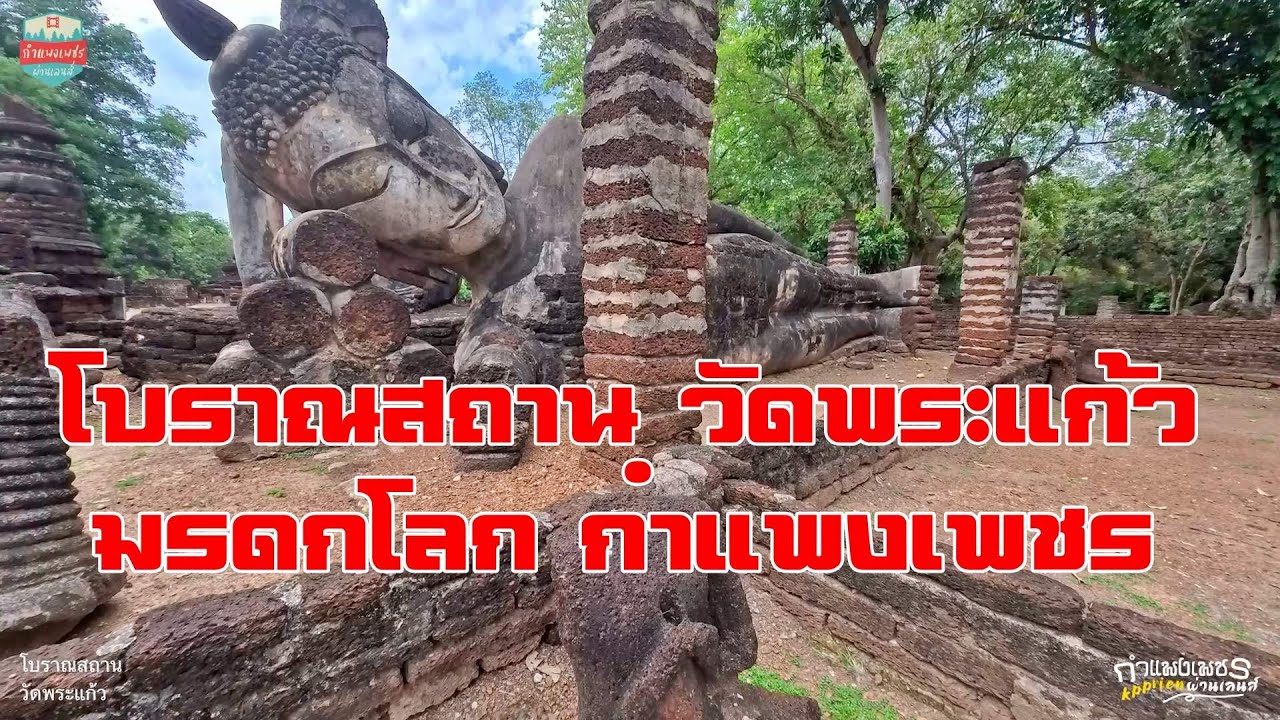
 Click to Access the Navigation Map GPS
Wat Phra Kaeo Map
Recommend

 Art, Culture and Heritage
 Historical Sites and Monuments(4)
 Landmarks and Memorials(1)
 Art, Craft Centres, Tradition(4)
 Museums(4)
 Historic Homes and Cities(1)
Temple(25)
Historic Homes and Cities(1)
Temple(25)
 Other Sacred Sites(8)
 Research and Development
 Royal Project(2)
 Suburban Living
 Village, Community(2)
 Local Market(2)
 Nature and Wildlife
 National Parks and Marine Reserves(4)
 Mountain (Doi)(2)
 Dam, Reservoir, Lake(4)
 Waterfalls(4)
 Hot Springs(1)
 River, Canal(3)
 Bays and Beaches(2)
 Other natural attractions(1)
 Entertainment and Agricultural
 Farms, Parks and Ecotourism(5)
 Waterpark(1)
 Shopping
 Shopping and Night Market(1)


