
lovethailand home >North Travel Attractions >Kamphaeng Phet Travel Attractions >Muang Kamphaeng Phet >Trai Trueng > Trai Trueng Ancient Town
TL;DR: Trai Trueng Ancient Town is located at Trai Trueng Subdistrict, Mueang Kamphaeng Phet District, Kamphaeng Phet Province, open Daily, hours Outdoor areas can be visited during daylight hours.
Trai Trueng Ancient Town
Open Days: Daily
Opening Hours: Outdoor areas can be visited during daylight hours
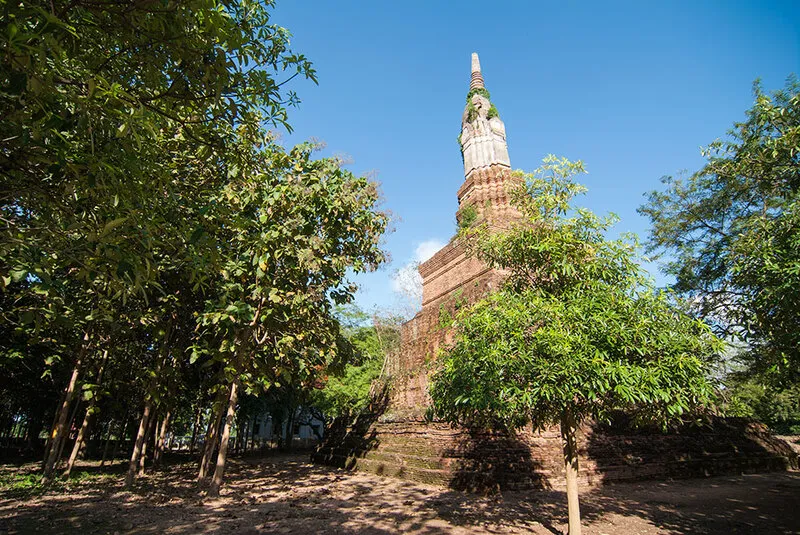
Trai Trueng Ancient Town in Kamphaeng Phet Province is an important historical settlement along the Ping River and a meaningful destination for travelers interested in Thai history, archaeology, ancient urban planning, and local culture. Located in Trai Trueng Subdistrict, Mueang Kamphaeng Phet District, the site is about 18 km from Kamphaeng Phet city on Highway 1, the Kamphaeng Phet–Nakhon Sawan route. Its location makes it convenient to reach by private car, rental car, or public transport passing along the main highway. The town is known for its ancient moats and earthen embankments, traces of old fortifications, ruined chedis, religious sites, and a rural atmosphere that allows visitors to imagine how an old riverside town once functioned in the wider historical landscape of Kamphaeng Phet.
Trai Trueng Ancient Town is not simply a roadside historical stop between Kamphaeng Phet and Nakhon Sawan. It is a place that adds depth to the broader story of Kamphaeng Phet Province. Many visitors know Kamphaeng Phet through Kamphaeng Phet Historical Park, Wat Phra Kaew, Wat Phra That, Wat Chang Rob, and the large laterite monuments connected with the Sukhothai cultural world. Trai Trueng shows another side of the province: an ancient riverside settlement with defensive earthworks, cultural continuity, and archaeological evidence from earlier periods. Visiting this site helps travelers understand that Kamphaeng Phet developed through many layers of settlement, not only through the major World Heritage monuments in the provincial town.
According to local historical tradition, Trai Trueng is associated with King Chai Siri of Chiang Rai, who is said to have established the town in 999 CE, or 1542 BE, after fleeing from enemies in the north. The story presents Trai Trueng as a refuge, a new political base, and a place where people could be protected during a period of instability. This legend gives the town a distinctive identity because it connects the ruins with themes of migration, survival, leadership, and the founding of a new community. Even though the surviving remains are fragmentary, the story allows visitors to see the site as a place of memory rather than only as a group of old brick ruins and earthworks.
From an archaeological perspective, Trai Trueng is highly valuable because it has been identified as an ancient Dvaravati-period settlement in the Kamphaeng Phet region. The town lies around Ban Wang Phra That in Trai Trueng Subdistrict, on the western side of the Ping River. Its urban plan is roughly rectangular with rounded corners, measuring approximately 800 m wide and 840 m long. The site is surrounded by 3 layers of moats and earthen embankments, a feature that reflects knowledge of urban planning, water management, territorial control, and defensive design. These moats and embankments were not only military features. They also marked the boundary of the settlement, organized space, and shaped the cultural landscape of the ancient town.
Archaeological finds from Trai Trueng include evidence associated with the Dvaravati period, such as metal slag, beads, and terracotta lamps. These objects suggest that the settlement was connected with production, exchange, craftsmanship, and wider cultural networks. Metal slag points to metallurgical activity or the use of metalworking knowledge. Beads suggest personal adornment, trade, and cultural contact. Terracotta lamps reflect daily life and influences from broader regional traditions. Together, these finds show that Trai Trueng was not an isolated village but a community with economic, technological, and cultural significance.
During the Sukhothai period, especially between the 13th and 16th centuries, Trai Trueng continued to be significant because of its location on important travel and trade routes. The town stood along routes connecting east and west, and also linked southern and northern areas through the Ping River basin. This location allowed people, goods, religious ideas, and artistic influences to move through the region. Trai Trueng therefore helps explain how the Sukhothai cultural world was supported by many local settlements and secondary towns, not only by royal capitals or major fortified cities.
Important religious sites associated with Trai Trueng include Wat Wang Phra That, Wat Chedi Chet Yot, and Wat Phra Prang. These sites preserve traces of Buddhist architecture and religious life within the old town area. Architectural remains such as lotus-bud-shaped stupas, bell-shaped stupas, brick monuments, and ruined chedis help visitors understand the role of Buddhism in the ancient settlement. They also show the transition from earlier cultural phases into Sukhothai and later traditions. Although many structures are now damaged, their surviving forms still reveal the religious and artistic importance of the town.
Wat Phra Prang is one of the notable historical sites within the Trai Trueng area. Its name suggests a connection with prang-type architecture, a form associated with artistic influences from the Lopburi and early Ayutthaya periods. The site has long been mentioned in historical surveys and local records, making it an important point for understanding how Trai Trueng was recognized by later generations as an ancient place. Visitors should view Wat Phra Prang not only as a ruin but also as part of the scholarly and local effort to remember the historical landscape of Kamphaeng Phet.
Wat Chedi Chet Yot is another important site that reflects the religious character of Trai Trueng. Its name suggests a distinctive chedi group or architectural form that once stood out in the area. Although many parts have deteriorated over time, the remaining traces indicate that religious monuments were once distributed within the old town. The presence of several temple sites in a single ancient settlement shows that Buddhism played a central role in community life, ritual practice, and cultural identity.
Wat Wang Phra That connects Trai Trueng with present-day local faith and community memory. The name Ban Wang Phra That still appears in references to the ancient town and remains part of the local identity. This continuity shows that the memory of sacred monuments and the old town has not disappeared. For visitors, Trai Trueng should not be seen as an abandoned ruin isolated from modern life. It is better understood as a cultural landscape where temples, villages, roads, the Ping River, and local stories continue to exist together.
Today, the ancient remains of Trai Trueng include ruined chedis, traces of fortifications, moats, earthen embankments, and fragments of old architecture. Many structures have naturally deteriorated over the centuries, but this does not reduce their historical value. On the contrary, the remaining traces allow visitors to experience the real condition of an ancient town that has passed through a long period of time. Walking among the ruins and embankments gives a different feeling from seeing artifacts inside a museum, because visitors stand within the actual landscape where the ancient town once existed.
Old bricks, pottery fragments, and construction remains found in the area help explain the techniques and daily life of the past. Bricks are not merely broken materials. They are evidence of labor, craftsmanship, and social organization. Pottery fragments show cooking, storage, consumption, and exchange. Small objects and building traces allow the ancient town to become more vivid in the eyes of visitors, because they point to the activities of real people who lived, worked, worshipped, traded, and built communities in this area.
Trai Trueng also has the charm of a quiet rural community. The surrounding area has not been transformed into a large commercial tourist zone, so visitors can still experience the calm atmosphere of local roads, fields, temples, small shops, and the Ping River landscape. This simplicity is especially appealing for travelers who prefer slow cultural exploration and do not want crowded attractions. The best way to appreciate Trai Trueng is to observe carefully, walk slowly, and use imagination together with historical information.
Another interesting aspect of Trai Trueng is the culture of the local community. The area is associated with local food, village wisdom, and traditional cultural expressions, such as nam phrik kamphaeng phang, nam phrik maphrao, kaeng buan, sesame rice crackers, crispy bananas, khanom tan, and local performances. These cultural elements show that travel in Trai Trueng can go beyond ruins and ancient history. It can also include local flavors, community life, and the living heritage of people in the subdistrict.
Local dishes such as nam phrik kamphaeng phang reflect the creativity of Trai Trueng residents. The name of the dish is distinctive and carries a local story through the way it is eaten, with the “wall” of the chili paste being mixed with fish sauce to create a richer flavor. Kaeng buan is another traditional dish connected with merit-making and auspicious occasions. When food culture is connected with the ancient town, visitors can see that Trai Trueng has not only the history of a settlement but also the history of taste, household wisdom, and community identity.
For photography, the best time to visit Trai Trueng is in the morning or late afternoon. Natural light during these periods gives more depth to the ruined chedis, embankments, trees, and rural surroundings. Midday can be hot, and the light may be harsh for both walking and photography. Good photo subjects include the line of the earthen embankments, old brick remains, temple areas, local roads, riverside scenes, and the relationship between the ancient town and the present-day village. These documentary-style images often convey the character of Trai Trueng better than simple landmark photos.
Visitors should wear comfortable walking shoes with good grip because some areas may have uneven ground, soil surfaces, grass, or natural debris. Drinking water, a hat, and sun protection are recommended, especially during hot weather. Visitors should avoid climbing on ruined chedis, embankments, or fragile structures. Apart from safety concerns, climbing can damage the remaining archaeological features. The best way to explore an ancient town is to move carefully, respect the site, and treat the area as a shared cultural heritage of the community and the country.
Getting There from Kamphaeng Phet city is straightforward. Take Highway 1, the Kamphaeng Phet–Nakhon Sawan route, and drive south for about 18 km to Trai Trueng Subdistrict and Ban Wang Phra That. The route follows a major highway and is convenient for private cars, rental cars, or public transport passing between Kamphaeng Phet and Nakhon Sawan. For a more detailed visit, a private car is the most convenient option because it allows travelers to stop at several points in Trai Trueng and continue to Kamphaeng Phet Historical Park, Kamphaeng Phet National Museum, Wat Phra Borommathat Nakhon Chum, and restaurants in the provincial town.
Travelers coming from Bangkok can drive north via Highway 32 through Ayutthaya, Ang Thong, Sing Buri, and Nakhon Sawan, then continue on Highway 1 toward Kamphaeng Phet. Trai Trueng is located before Kamphaeng Phet city when approaching from the south, making it a suitable first stop before entering town. For a 1-day itinerary, travelers can visit Trai Trueng in the morning and continue to Kamphaeng Phet Historical Park or Kamphaeng Phet National Museum in the afternoon. For a 2-day trip, the route can be expanded to include Nakhon Chum, Phra Ruang Hot Springs, and other local attractions.
Trai Trueng is suitable for many types of travelers, including history lovers, archaeology enthusiasts, students, local researchers, photographers, cultural travelers, and families who want children to learn from real historical places. Its value lies in showing that ancient towns are not always perfectly restored monuments. Some are landscapes with partial traces that require careful observation and imagination. This kind of travel helps visitors read the land more deeply and understand ordinary-looking places as historical spaces.
Trai Trueng is especially meaningful when combined with Kamphaeng Phet Historical Park. The historical park shows the large laterite monuments and urban landscape of the Sukhothai-related World Heritage area, while Trai Trueng shows an older and more local riverside settlement with moats, embankments, and evidence from several periods. Visiting both places together helps travelers understand Kamphaeng Phet as a region of continuous settlement, not as a province defined by one historical period alone.
For educational travel, Trai Trueng is a good place to learn about the role of the Ping River in ancient life. The river was not only a water source. It was also a transportation route, trade route, and geographical factor that shaped settlement. Communities near rivers had better access to exchange networks, cultural influences, agriculture, and communication. Trai Trueng is a strong example of how river landscapes influenced ancient urban development in Thailand.
The moats and earthen embankments of Trai Trueng should be understood as works of local engineering. Digging moats and building multiple layers of embankments required labor, planning, and knowledge of soil, water, and defense. The existence of 3 layers of moats and embankments shows that the town had enough importance to justify a complex boundary and defensive system. These earthworks are among the most important features for understanding the scale and organization of the ancient settlement.
From an artistic perspective, the ruined chedis and religious remains of Trai Trueng reveal changing religious taste and architectural development. Although many details have disappeared, the forms of the stupas, brickwork, and temple layouts still help specialists and general visitors recognize traces of the Sukhothai period and later influences. Exploring this kind of site requires careful observation. Visitors should look not only for complete monuments but also for foundations, brick patterns, building positions, and relationships between structures and the surrounding town plan.
The charm of Trai Trueng lies in the way the old town is still connected with the present community. Visitors can see modern village life around the historical landscape. Temples and local communities still play important roles in daily life, while the ancient remains silently mark the past. This coexistence of past and present gives Trai Trueng the character of a cultural landscape rather than a detached archaeological site.
In summary, Trai Trueng Ancient Town is a worthwhile historical destination for travelers who want to understand Kamphaeng Phet beyond the main tourist route. The site includes the legend of King Chai Siri, an ancient town plan, 3 layers of moats and embankments, Dvaravati evidence, Sukhothai-period religious remains, ruined chedis, fortification traces, important temples, and the living culture of the Trai Trueng community. It is easy to reach from Kamphaeng Phet city and works well as part of a route with Kamphaeng Phet Historical Park. Travelers who enjoy history, archaeology, photography, and quiet ancient landscapes will find Trai Trueng small in appearance but deep in meaning.
| Name | Trai Trueng Ancient Town |
| Location | Trai Trueng Subdistrict, Mueang Kamphaeng Phet District, Kamphaeng Phet Province |
| Address | Ban Wang Phra That area, Trai Trueng Subdistrict, Mueang Kamphaeng Phet District, Kamphaeng Phet 62160, Thailand |
| Coordinates | Approximately 16.301, 99.590 |
| Highlights | Ancient town along the Ping River with a rounded rectangular plan, 3 layers of moats and earthen embankments, ruined chedis, fortification traces, Wat Wang Phra That, Wat Chedi Chet Yot, and Wat Phra Prang |
| History | An ancient Dvaravati-period settlement that continued into the Sukhothai period, with a local tradition linking the town to King Chai Siri of Chiang Rai, who is said to have established the town in 999 CE / 1542 BE |
| Name Origin | “Trai Trueng” is an old town name preserved in local memory and Kamphaeng Phet tourism records |
| Distinctive Features | Ancient town plan surrounded by 3 layers of moats and earthen embankments, approximately 800 m wide and 840 m long, with archaeological evidence from several historical periods |
| Travel Information | From Kamphaeng Phet city, take Highway 1 south on the Kamphaeng Phet–Nakhon Sawan route for about 18 km to Trai Trueng Subdistrict and Ban Wang Phra That. The site is suitable for private cars, rental cars, or public transport passing along the main highway |
| Current Status | Historical and archaeological learning site in Trai Trueng Subdistrict |
| Open Days | Daily |
| Opening Hours | Outdoor areas can be visited during daylight hours; morning and late afternoon are best for walking and photography |
| Facilities | Local access roads, nearby temples, community shops, and local administrative office for travel information |
| Main Areas / Zones | Ban Wang Phra That ancient town area, moats and earthen embankments, Wat Wang Phra That, Wat Chedi Chet Yot, Wat Phra Prang, ruined chedis, and old fortification traces |
| Caretaker | Trai Trueng Subdistrict Administrative Organization with the local community, and relevant Fine Arts authorities for archaeological remains |
| Main Contact Number | Trai Trueng Subdistrict Administrative Organization, Tel. 055-841-049 |
| Official Website / Official Page | Trai Trueng Subdistrict Administrative Organization website and official Facebook page |
| Nearby Tourist Attractions | 1. Wat Wang Phra That, about 1 km 2. Wat Phra Prang, Trai Trueng, about 1 km 3. Wat Chedi Chet Yot, Trai Trueng, about 1 km 4. Kamphaeng Phet Historical Park, about 20 km 5. Kamphaeng Phet National Museum, about 20 km 6. Wat Phra Borommathat Nakhon Chum, about 23 km |
| Nearby Restaurants | 1. 88 Cafe Trai Trueng, about 3 km 2. Kai Phochana Trai Trueng Restaurant, about 4 km 3. Nong Si Riverside Restaurant, about 6 km 4. Mango House Resort & Cafe, about 15 km, Tel. 092-9660991 5. Kamphaeng Phet Phochana Nai Ya, about 18 km, Tel. 055-713035, 061-5544261 6. Thammarat Phochana, about 18 km, Tel. 055-714247, 088-2285449 |
| Nearby Accommodations | 1. I Loft 33, about 3 km, Tel. 083-2196415, 086-3595131 2. Mango House Resort & Cafe, about 15 km, Tel. 092-9660991 3. The Room Hotel Kamphaengphet, about 16 km, Tel. 080-0081507 4. P. Paradise Hotel, about 17 km, Tel. 055-741888, 092-0343747 5. Navarat Heritage Hotel, about 18 km, Tel. 055-711211, 055-711219 6. Chakungrao Riverview Hotel, about 18 km, Tel. 055-714900-4 |
Frequently Asked Questions (FAQ)
Q: Where is Trai Trueng Ancient Town located?
A: Trai Trueng Ancient Town is located in Trai Trueng Subdistrict, Mueang Kamphaeng Phet District, Kamphaeng Phet Province, about 18 km from Kamphaeng Phet city on Highway 1.
Q: Why is Trai Trueng Ancient Town important?
A: It is an ancient riverside settlement with 3 layers of moats and earthen embankments, archaeological evidence from the Dvaravati period, and continued importance during the Sukhothai period.
Q: How is Trai Trueng connected with King Chai Siri?
A: Local tradition says that King Chai Siri of Chiang Rai established Trai Trueng in 999 CE / 1542 BE after moving south from Chiang Rai to create a new settlement.
Q: What can visitors see at Trai Trueng Ancient Town?
A: Visitors can see moats, earthen embankments, ruined chedis, old fortification traces, Wat Wang Phra That, Wat Chedi Chet Yot, Wat Phra Prang, and the rural landscape of the Ping River area.
Q: How can travelers get to Trai Trueng Ancient Town?
A: From Kamphaeng Phet city, take Highway 1 south toward Nakhon Sawan for about 18 km. The site is accessible by private car, rental car, or public transport passing along the main highway.
Q: When is the best time to visit Trai Trueng?
A: Morning and late afternoon are the best times because the weather is more comfortable and the natural light is suitable for photography.
Q: Who should visit Trai Trueng Ancient Town?
A: The site is suitable for history lovers, archaeology enthusiasts, photographers, students, cultural travelers, and visitors who want to explore Kamphaeng Phet beyond the main historical park.
Q: What nearby attractions can be combined with Trai Trueng?
A: Travelers can combine Trai Trueng with Kamphaeng Phet Historical Park, Kamphaeng Phet National Museum, Wat Phra Borommathat Nakhon Chum, and attractions in Kamphaeng Phet city.
 Category: ●Art, Culture and Heritage
 Group: ●Historical Sites and Monuments
Last Update : 5 MonthAgo
 Last Update : 5 MonthAgo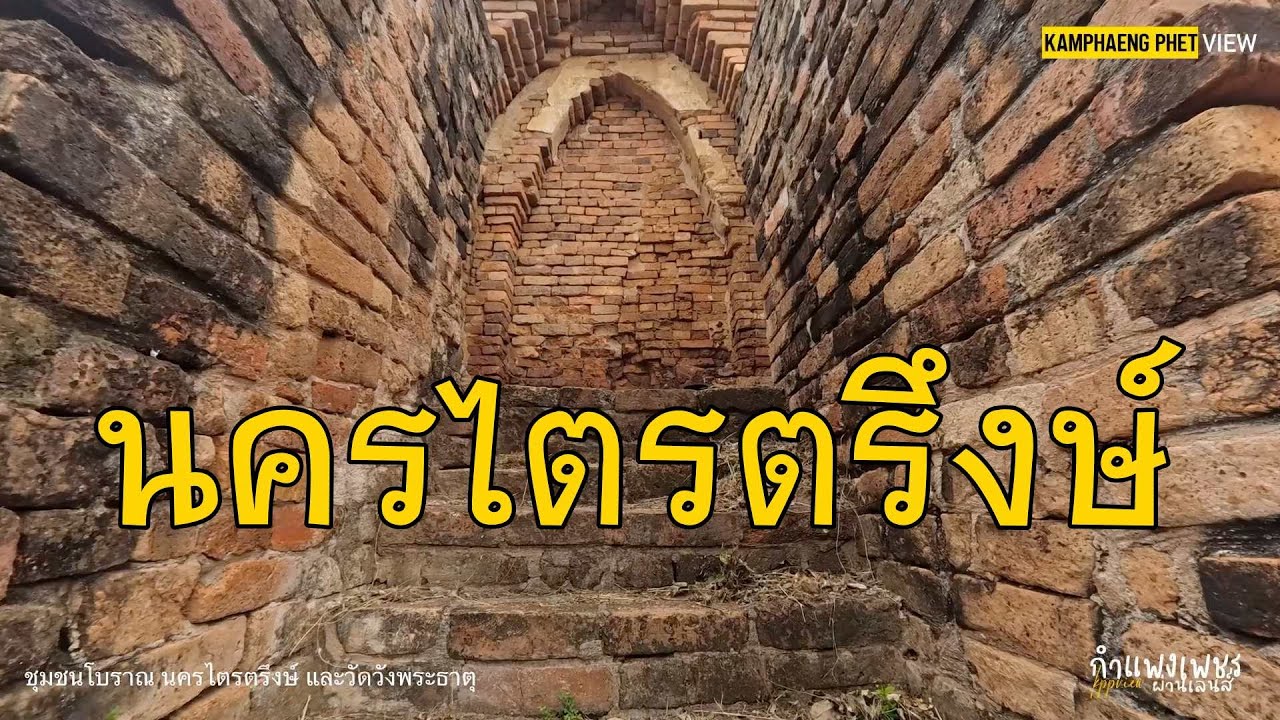
 Click to Access the Navigation Map GPS
Trai Trueng Ancient Town Map
Recommend
 Historical Sites and Monuments(4)
 Landmarks and Memorials(1)
 Art, Craft Centres, Tradition(4)
 Museums(4)
 Historic Homes and Cities(1)
 Places of Worship
 Temple(25)
 Other Sacred Sites(8)
 Research and Development
 Royal Project(2)
 Suburban Living
 Village, Community(2)
 Local Market(2)
 Nature and Wildlife
 National Parks and Marine Reserves(4)
 Mountain (Doi)(2)
 Dam, Reservoir, Lake(4)
 Waterfalls(4)
 Hot Springs(1)
 River, Canal(3)
 Bays and Beaches(2)
 Other natural attractions(1)
 Entertainment and Agricultural
 Farms, Parks and Ecotourism(5)
 Waterpark(1)
 Shopping
 Shopping and Night Market(1)
 Travel Articles, Recipes
 Travel Review, Food Review(1)


