
lovethailand home >North Travel Attractions >Kamphaeng Phet Travel Attractions >Muang Kamphaeng Phet >Nakhon Chum > Baan Hang Rama V
TL;DR: Baan Hang Rama V is located at Nakhon Chum Subdistrict, Mueang Kamphaeng Phet District, Kamphaeng Phet Province, open Exterior Viewing Subject To Site Conditions, hours No Official Visiting Hours Specified.
Baan Hang Rama V
Open Days: Exterior Viewing Subject To Site Conditions
Opening Hours: No Official Visiting Hours Specified
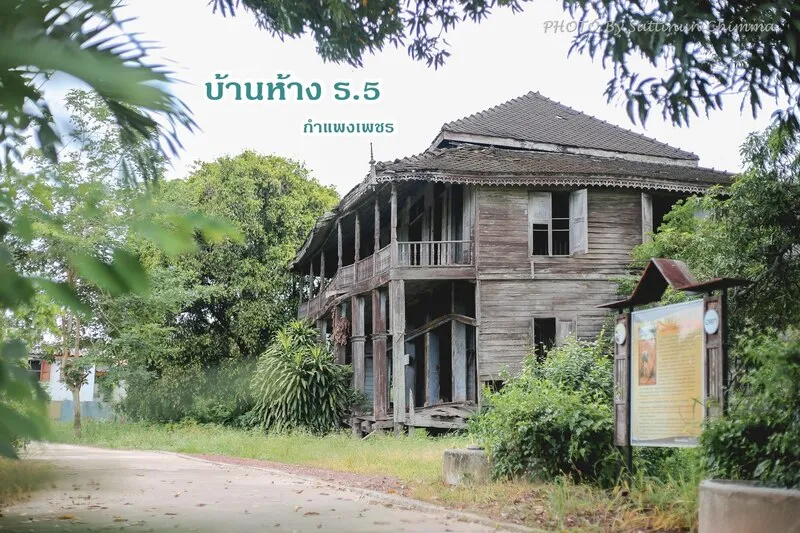
Baan Hang Rama V in Kamphaeng Phet Province, also known as Baan Pha Pho, is one of the most important wooden heritage houses in Nakhon Chum Subdistrict, Mueang Kamphaeng Phet District. Located near Wat Sawang Arom and Khlong Suan Mak, this old teak house reflects the prosperity of Nakhon Chum during the reign of King Rama V. The two-storey building is made largely of teak and features a Thai-Western architectural style, delicate carved wooden decoration, and a strong connection with Pha Pho, a wealthy timber merchant whose life and business were closely tied to the canal-side economy of old Nakhon Chum. A visit here is not only a chance to see an old house, but also an opportunity to understand timber trade, canal transport, community history, and the cultural memory of Kamphaeng Phet.
Baan Hang Rama V is especially meaningful for travelers who want to see Kamphaeng Phet beyond the historical park and ancient ruins. Nakhon Chum is not only a place of old temples and sacred monuments. It was once a lively trading community where Khlong Suan Mak played an important role in transporting timber and goods from the western forested areas toward the Ping River. The house stands as architectural evidence of this commercial past. It helps visitors understand Nakhon Chum as a trading town, a canal-side settlement, and a multicultural community that developed during the early modern period of Thai history.
The term “Baan Hang” suggests that the building was more than a private residence. It was connected with timber business and commercial activity during a time when waterways were central to transport. Timber from forested areas could be moved along canals and rivers before being sent onward to other markets. The house therefore functioned as a residence, a business base, and a symbol of the economic power of a timber merchant. Its position near the canal was practical and strategic, allowing the owner to stay close to the movement of goods and labor.
Pha Pho is the key figure associated with this house. He was a wealthy timber merchant in Nakhon Chum and is remembered in local history as a person connected with the old timber economy of Kamphaeng Phet. His name is also linked with cultural memory and literature, as the atmosphere of Nakhon Chum and Khlong Suan Mak later became associated with stories and creative works inspired by the area. Baan Hang Rama V therefore represents not only one man’s residence, but also a wider social world of merchants, workers, ethnic groups, canal trade, and local memory.
The architecture of Baan Hang Rama V is the main reason the site deserves conservation. The house is a two-storey teak building with a Thai-Western character, a style commonly found in houses of wealthy families during a period when Thai society began incorporating Western architectural influences into traditional wooden structures. The pillars, flooring, walls, roof structure, and decorative details show the skill of old craftsmen who valued durability, proportion, ventilation, and beauty. Although the house has aged considerably, its remaining form still communicates the elegance of a once-prosperous canal-side residence.
Teak is central to the identity of this house. It is a durable and valuable wood, well suited to Thailand’s climate and widely used in important houses of the past. Baan Hang Rama V uses teak throughout much of its structure, from major supporting elements to walls, floors, and decorative details. Local descriptions often emphasize the quality of the timber and the strength of the wooden posts. Such construction reflects both the wealth of the original owner and the high level of woodworking skill available in the area.
The carved wooden details on the front section of the house are among its most attractive features. These carved panels are not only decorative; they also help create ventilation and soften the solid appearance of the building. In a hot and humid environment, such design is both practical and beautiful. The combination of carved wood, open spaces, and traditional proportions shows how old Thai wooden architecture often integrated craftsmanship with climate-sensitive design.
The interior once reflected the lifestyle of a wealthy household, with wooden ceilings, walls, floors, and organized rooms that suggested status and order. Today, because the old wooden building has deteriorated, visitors should not go up onto the house. Even from the outside, however, the remaining architectural details allow visitors to imagine the beauty of the original building. The value of the house lies not only in physical completeness, but also in its ability to tell stories about Nakhon Chum’s past.
The house’s location beside Khlong Suan Mak gives it strong cultural landscape value. The canal was once a major route for timber movement, trade, travel, and daily life. Walking from Wat Sawang Arom toward Baan Hang Rama V along the canal is therefore more than a simple approach to an old house. It is a walk through the memory of a former water-based economy. The canal, the temple, the community, and the house together form a historical landscape that explains how Nakhon Chum functioned in the past.
Wat Sawang Arom is a useful starting point for visiting Baan Hang Rama V. The house is located not far from the temple, and visitors can walk along the canal for about 500 meters. This short walk allows travelers to experience the quiet atmosphere of old Nakhon Chum, with its canal-side setting, local houses, and slower rhythm of community life. Visitors should walk carefully, respect local residents, and avoid disturbing private homes along the way.
Today, Baan Hang Rama V should be approached as a conservation site rather than a fully opened house museum. The wooden structure has aged and deteriorated over time, and visitors should view the house from the outside. They should not climb onto the building, touch wooden parts, move objects, or enter unsafe areas. Respecting these limits protects both visitors and the fragile heritage structure.
The charm of Baan Hang Rama V is that it remains in its original setting. It has not been removed from the canal, the temple, or the community that give it meaning. Visitors can therefore understand the house as part of a neighborhood rather than as an isolated architectural object. When viewed together with Khlong Suan Mak, Wat Sawang Arom, and Nakhon Chum’s old settlement pattern, the house becomes part of a living cultural landscape.
Nakhon Chum has long been an important community in Kamphaeng Phet. Located near the Ping River and connected with Khlong Suan Mak, it was once a trading zone where people from different backgrounds came to live and work. Thai, Chinese, Karen, Mon, Lao, and other groups contributed to the social and economic life of the area. Baan Hang Rama V is one of the remaining pieces of evidence showing the prosperity and diversity of Nakhon Chum during this period.
Compared with other historical attractions in Kamphaeng Phet, Baan Hang Rama V tells a different chapter of history. The historical park presents the world of ancient Kamphaeng Phet and the Sukhothai cultural sphere. Baan Hang Rama V, by contrast, reveals the world of Nakhon Chum during the early modern period, when timber trade, waterways, wealthy merchants, and hybrid architectural styles shaped local life. Visiting both types of sites gives travelers a broader understanding of Kamphaeng Phet across different periods.
For those interested in wooden architecture, this house is a valuable case study. It demonstrates teak construction, carved wooden decoration, spatial planning, and the relationship between building and waterway. Even in its deteriorated condition, the house shows how wealthy families used architecture to express status, taste, and practical adaptation to climate. It also helps raise awareness of the challenges involved in conserving old wooden buildings.
From the perspective of social history, Baan Hang Rama V helps visitors see Nakhon Chum as more than a quiet old community. It was a place of merchants, laborers, travelers, and people involved in the timber economy. The house of a wealthy timber merchant beside a canal shows how economic power, transportation, and social life were linked before modern roads became dominant. Understanding the house helps visitors see Nakhon Chum as a living trade community in the past.
The site also carries literary and cultural associations. The atmosphere of Nakhon Chum and Khlong Suan Mak has inspired later storytelling and has been linked with Thai literary memory. This gives Baan Hang Rama V an additional layer of cultural significance. Still, visitors should distinguish between historical facts and literary interpretation so that the real place and its community are respected.
For photography, Baan Hang Rama V offers many meaningful visual elements: old teak surfaces, carved wooden details, the canal-side setting, and the quiet atmosphere of Nakhon Chum. However, photography should be done responsibly. Visitors should not climb onto the house, enter unsafe areas, disturb local residents, or move anything for a better photograph. The best images are those that capture the house within its cultural setting rather than treating it as a decorative ruin.
Baan Hang Rama V is best visited together with nearby attractions in Nakhon Chum. Travelers can begin at Wat Sawang Arom, continue to the house by walking along Khlong Suan Mak, then visit Wat Phra Borommathat Nakhon Chum, Nakhon Chum Retro Market, or cross to Kamphaeng Phet town to explore the national museum and historical park. This route is suitable for a half-day or full-day cultural trip.
Wat Sawang Arom is an important nearby temple and a good starting point. Its location near the canal helps visitors understand that the house belongs to a wider environment of temple, canal, and community. Starting the walk from the temple makes the visit more meaningful because it reveals the relationship between religious space, residential heritage, and the old waterway.
Wat Phra Borommathat Nakhon Chum is another major site in the same cultural route. Its golden stupa is one of the most recognizable landmarks of Nakhon Chum. Combining this temple with Baan Hang Rama V helps travelers see the area from multiple angles: faith, trade, architecture, community, and history.
Nakhon Chum Retro Market is a good addition for visitors who want to experience local food and community atmosphere. The market is held at specific times and features local products, traditional-style food, and a nostalgic setting. Together with Baan Hang Rama V, it helps connect the old commercial identity of Nakhon Chum with present-day community-based tourism.
From a conservation viewpoint, Baan Hang Rama V is an example of heritage that requires careful attention. Old wooden buildings are valuable but fragile. Conservation should respect original materials, construction techniques, historical context, and community meaning. If preserved appropriately, the house can become a long-term learning site for wooden architecture, timber trade history, and Nakhon Chum’s cultural identity.
Visiting this house also helps people recognize the importance of small-scale heritage in local communities. Places like this may not have full tourist facilities or formal museum services, but they hold deep value for local memory. Travelers who visit respectfully, support local businesses, and share accurate information can help strengthen awareness of community heritage.
Visitors should prepare for a community-style visit rather than a controlled museum visit. Comfortable walking shoes, drinking water, and a careful attitude are recommended. Avoid visiting during the hottest part of the day if walking along the canal. If taking photos, use safe viewpoints and do not enter risky areas. Such respectful travel makes the visit more rewarding and supports good relations with the local community.
Getting There is convenient by private car or rental car. Travelers can head to Nakhon Chum Subdistrict in Mueang Kamphaeng Phet District and use Wat Sawang Arom or Khlong Suan Mak as the main reference point. From Wat Sawang Arom, walk along the canal for about 500 meters to reach Baan Hang Rama V. From Kamphaeng Phet town, cross the Ping River to the Nakhon Chum side and combine the visit with Wat Phra Borommathat Nakhon Chum, Nakhon Chum Retro Market, and Kamphaeng Phet Historical Park.
Travelers using public transport can arrive in Kamphaeng Phet town and continue by local vehicle or hired transport to Nakhon Chum. Asking to be dropped near Wat Sawang Arom or Wat Phra Borommathat Nakhon Chum is practical. From there, visitors can walk or continue by local transport depending on comfort and weather.
The best visiting time is in the morning or late afternoon when the light is softer and the weather is cooler. Morning is suitable for a quiet canal walk, while late afternoon is good for photography. Visitors planning to include Nakhon Chum Retro Market should check market dates in advance because it is not held every day.
Visitors should understand that Baan Hang Rama V is not a fully accessible house museum. Its value lies in careful exterior viewing, reading the surrounding context, and connecting the house with Khlong Suan Mak, Wat Sawang Arom, and Nakhon Chum as a whole. With this approach, the site offers a deeper cultural experience than a brief photo stop.
In summary, Baan Hang Rama V in Kamphaeng Phet is a valuable cultural heritage site that reflects teak architecture, Thai-Western design, timber trade, wealthy household life during the reign of King Rama V, and the canal-side history of Nakhon Chum. It reminds visitors that cultural heritage is not found only in major monuments, but also in old houses, canals, temples, and communities that quietly preserve the memory of the past.
| Name | Baan Hang Rama V / Baan Pha Pho |
| Location | Nakhon Chum Subdistrict, Mueang Kamphaeng Phet District, Kamphaeng Phet Province |
| Address | Nakhon Chum Subdistrict, Mueang Kamphaeng Phet District, Kamphaeng Phet 62000, near Wat Sawang Arom and Khlong Suan Mak |
| Highlights | A two-storey teak house from the Rama V period, featuring Thai-Western architecture, carved wooden decoration, and a canal-side setting in old Nakhon Chum |
| History | Associated with Pha Pho, a wealthy timber merchant in Nakhon Chum during the reign of King Rama V, and connected with the timber trade along Khlong Suan Mak |
| Name Origin | The name Baan Hang Rama V reflects its role as a house and business-related site from the Rama V period, while Baan Pha Pho refers to the former owner associated with the timber trade |
| Distinctive Features | Two-storey teak structure, carved wooden front decoration, original wooden elements, and a setting beside Khlong Suan Mak |
| Travel Information | Travel to Wat Sawang Arom in Nakhon Chum, then walk along Khlong Suan Mak for about 500 meters to reach Baan Hang Rama V. Private car or rental car is the most convenient option. |
| Current Status | A community heritage site in Nakhon Chum. Visitors should view it from the outside and should not climb onto the house for safety and conservation reasons. |
| Open Days | Exterior viewing subject to site conditions |
| Opening Hours | No official visiting hours specified |
| Visitor Guidelines | View from outside, do not climb onto the house, do not touch or move wooden parts, avoid unsafe areas, and respect the surrounding community |
| Caretaker | Nakhon Chum community and local agencies involved in community-based tourism |
| Nearby Tourist Attractions | 1. Wat Sawang Arom, about 0.5 km 2. Khlong Suan Mak, about 0.5 km 3. Nakhon Chum Retro Market, about 1 km 4. Wat Phra Borommathat Nakhon Chum, about 2 km 5. Kamphaeng Phet National Museum, about 4 km 6. Kamphaeng Phet Historical Park, about 5 km |
| Nearby Restaurants | 1. Krua Khun Krit, near Wat Phra Borommathat Nakhon Chum, about 2 km, Tel. 082-780-5129 2. Krua Rim Khlong Suan Mak Nakhon Chum, about 2 km 3. Pad Thai Hor Khai Na Rong Phak, about 3 km 4. Kin Pla Kamphaeng Phet, about 4 km 5. Krua Mae Somchit, about 5 km, Tel. 086-549-1097, 055-721-064, 081-533-8192 6. Thammarat Phochana, about 5 km, Tel. 055-714-247, 088-228-5449 |
| Nearby Accommodations | 1. Techno River View Resort, about 2 km 2. La Riva Boutique Hotel, about 3 km 3. Hin Sai Resortel, about 3 km 4. Navarat Heritage Hotel, about 4 km, Tel. 055-711-211, 055-711-219 5. Chakungrao Riverview Hotel, about 5 km, Tel. 055-714-900-4 6. P. Paradise Hotel, about 6 km, Tel. 055-741-888, 092-034-3747 |
Frequently Asked Questions (FAQ)
Q: Where is Baan Hang Rama V located?
A: Baan Hang Rama V, also known as Baan Pha Pho, is located in Nakhon Chum Subdistrict, Mueang Kamphaeng Phet District, Kamphaeng Phet Province, near Wat Sawang Arom and Khlong Suan Mak.
Q: Why is Baan Hang Rama V important?
A: It is an old two-storey teak house from the Rama V period that reflects Thai-Western wooden architecture, timber trade history, and the canal-side heritage of Nakhon Chum.
Q: Can visitors enter the house?
A: Visitors should view the house from the outside only and should not climb onto the building because the old wooden structure has deteriorated and requires careful conservation.
Q: How far is it from Wat Sawang Arom to Baan Hang Rama V?
A: It is about 500 meters by walking along Khlong Suan Mak from Wat Sawang Arom.
Q: Who was Pha Pho?
A: Pha Pho was a wealthy timber merchant in Nakhon Chum during the Rama V period and is closely associated with the history of this house and the local timber economy.
Q: What nearby places should travelers visit together with Baan Hang Rama V?
A: Nearby places include Wat Sawang Arom, Khlong Suan Mak, Nakhon Chum Retro Market, Wat Phra Borommathat Nakhon Chum, Kamphaeng Phet National Museum, and Kamphaeng Phet Historical Park.
Q: Who is this place suitable for?
A: It is suitable for travelers interested in local history, wooden architecture, Rama V period heritage, timber trade, canal-side communities, and quiet cultural travel.
Q: What should visitors be careful about?
A: Visitors should respect the community, view the house from safe areas, avoid climbing onto the building, avoid touching wooden parts, and stay away from deteriorated sections.
 Category: ●Art, Culture and Heritage
 Group: ●Historic Homes and Cities
Last Update : 4 MonthAgo
 Last Update : 4 MonthAgo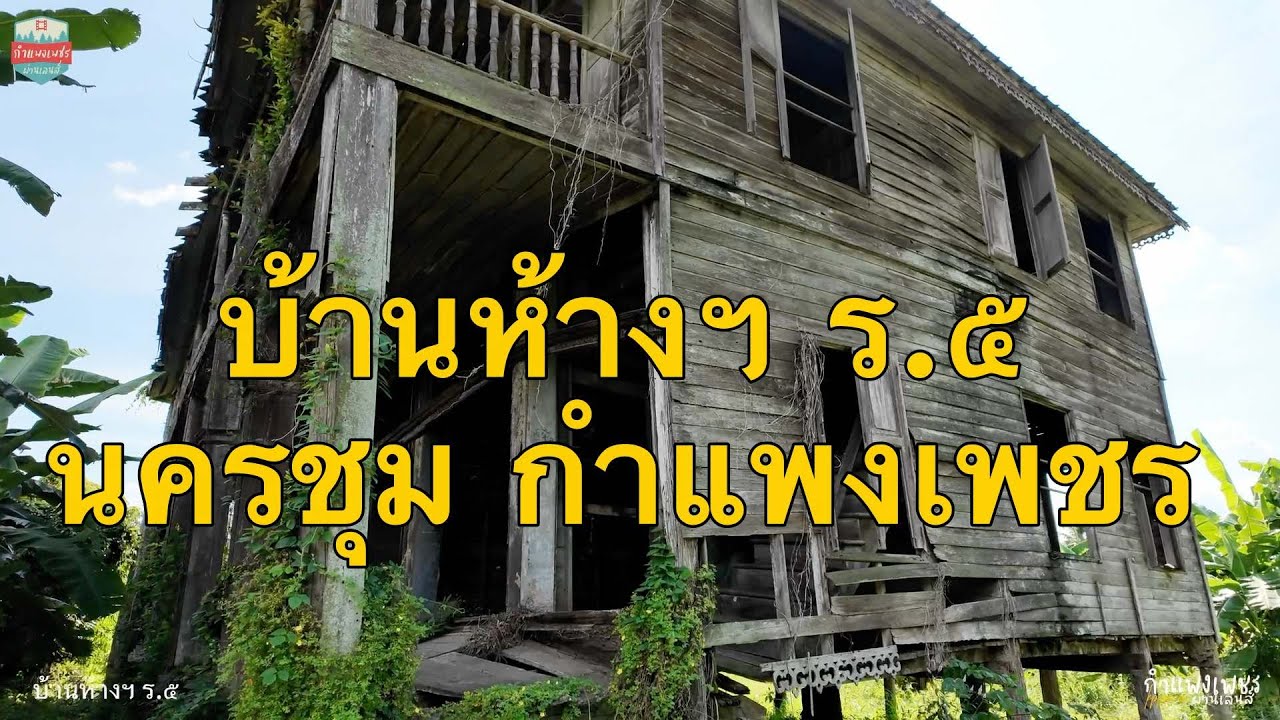
 Click to Access the Navigation Map GPS
Baan Hang Rama V Map
Recommend

 Historical Sites and Monuments(4)
 Landmarks and Memorials(1)
 Art, Craft Centres, Tradition(4)
 Museums(4)
Historic Homes and Cities(1)
Museums(4)
Historic Homes and Cities(1)
 Places of Worship
 Temple(25)
 Other Sacred Sites(8)
 Research and Development
 Royal Project(2)
 Suburban Living
 Village, Community(2)
 Local Market(2)
 Nature and Wildlife
 National Parks and Marine Reserves(4)
 Mountain (Doi)(2)
 Dam, Reservoir, Lake(4)
 Waterfalls(4)
 Hot Springs(1)
 River, Canal(3)
 Bays and Beaches(2)
 Other natural attractions(1)
 Entertainment and Agricultural
 Farms, Parks and Ecotourism(5)
 Waterpark(1)
 Shopping
 Shopping and Night Market(1)


