
lovethailand home >North Travel Attractions >Kamphaeng Phet Travel Attractions >Muang Kamphaeng Phet >Nai Muang > Kamphaeng Phet Provincial Museum
TL;DR: Kamphaeng Phet Provincial Museum is located at Pin Damri Road, Nai Mueang Subdistrict, Mueang Kamphaeng Phet District, Kamphaeng Phet Province, open Daily, hours 09.00 – 16.00.
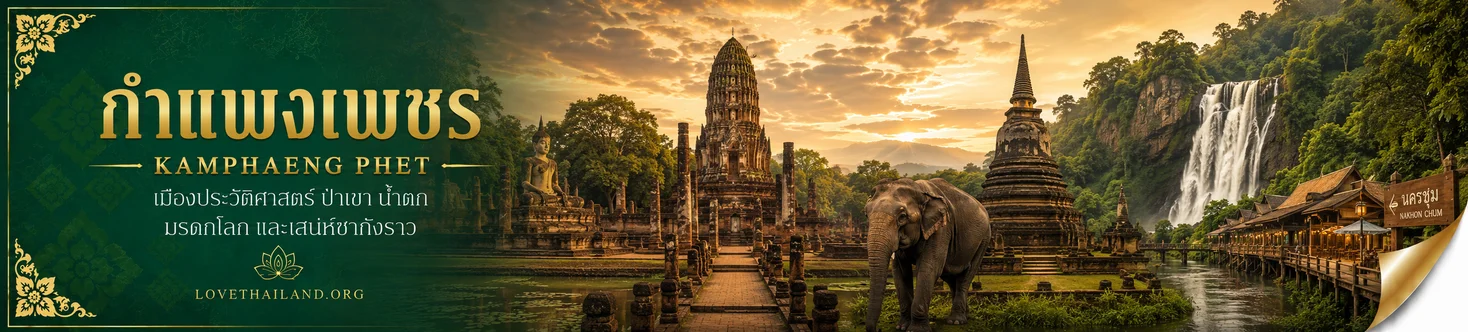
Kamphaeng Phet Provincial Museum
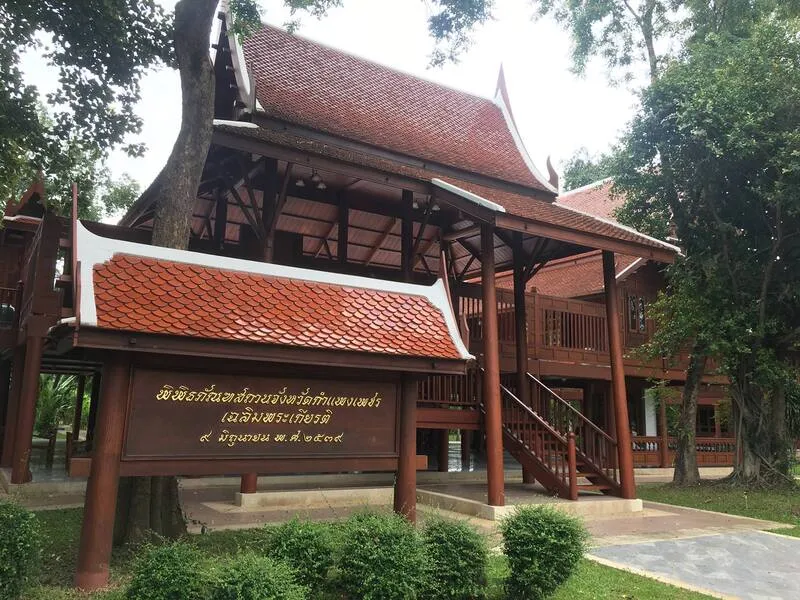
Open Days: Daily
Opening Hours: 09.00 – 16.00
Kamphaeng Phet Provincial Museum Commemorating the Golden Jubilee, commonly known as the Thai House Museum, is one of the most meaningful cultural attractions in Kamphaeng Phet Province. Located at 104/5 Pin Damri Road, Nai Mueang Subdistrict, Mueang Kamphaeng Phet District, it stands close to Kamphaeng Phet National Museum and the old town area. The museum is especially notable for its elegant group of traditional Central Thai wooden houses built from teak, creating a calm and warm atmosphere that suits visitors who want to understand the history, culture, ethnic diversity, local wisdom, and identity of Kamphaeng Phet in one place.
This museum is highly suitable for travelers who want to see Kamphaeng Phet beyond its ancient ruins. While the historical park reveals the physical remains of the old city, the museum explains the people, traditions, natural resources, beliefs, crafts, and cultural background that shaped the province. Visiting this museum before or after exploring the historical park helps travelers connect the archaeological landscape with the living culture of the local community.
The museum was established to commemorate the Golden Jubilee of His Majesty King Bhumibol Adulyadej’s reign. It was created through cooperation among the Pariyattithammasuksa Foundation under the patronage of Somdet Phra Nyanasamvara, the Supreme Patriarch of Thailand, Kamphaeng Phet Province, the Fine Arts Department, and the Department of General Education. The project began in 1996 and officially opened in 1997. For this reason, the museum is not simply an exhibition venue; it is a cultural institution designed to collect, preserve, and present the identity of Kamphaeng Phet for future generations.
The first highlight visitors notice is the architecture. The museum complex is designed as a group of traditional Central Thai houses made from golden teak. Raised floors, open spaces, wooden verandas, and refined carpentry reflect Thai residential wisdom and the relationship between architecture, climate, and everyday life. The building itself becomes part of the exhibition, allowing visitors to experience traditional Thai living space while learning about local history and culture.
Inside the museum, the exhibitions cover history, archaeology, natural history, outstanding provincial heritage, ethnic culture, and local ways of life. The displays introduce the geography of Kamphaeng Phet, local natural resources, ancient settlements, historical towns such as Nakhon Chum, Thep Nakhon, Bang Phan, and Kamphaeng Phet, as well as the province’s role in the historical development of the lower northern region of Thailand. Visitors can understand Kamphaeng Phet as a living historical city rather than only a destination of ancient brick ruins.
The historical section helps explain why Kamphaeng Phet was important in Thai history. The city served as a significant fortified town connected with the Sukhothai cultural sphere. Its old moats, walls, Buddhist temples, and archaeological sites remain visible in Kamphaeng Phet Historical Park today. By visiting the museum first, travelers gain a clearer understanding of the city’s location along the Ping River, its defensive role, its religious landscape, and its artistic links with other major historical centers.
Another strong section focuses on the outstanding heritage of Kamphaeng Phet Province. The museum presents both natural and cultural assets, including marble, oil resources, famous Kamphaeng Phet amulets, local bananas, handicrafts, and community wisdom. This part shows that the province is not only important for archaeology, but also for living traditions, local products, craftsmanship, and community-based knowledge that continue to shape the area today.
Kamphaeng Phet amulets are especially meaningful because they connect Buddhism, art, local belief, and history. Examples such as Phra Kamphaeng Sum Kor, Phra Nang Phaya Kamphaeng Phet, and related Buddhist votive tablets help explain why the name of Kamphaeng Phet is respected among those interested in Thai Buddhist art. These objects are not merely collectibles; they represent faith, craftsmanship, historical memory, and the transmission of cultural values across generations.
The ethnic culture section is another important part of the museum. Kamphaeng Phet has long been connected with diverse groups of people. The exhibitions present ways of life, beliefs, clothing, tools, settlement patterns, and traditions of various ethnic communities such as Hmong, Yao, Karen, and Lisu, as well as other groups that have cultural connections with the province. This section helps visitors understand that the history of Kamphaeng Phet was shaped by many communities rather than a single cultural group.
The ethnic displays also reveal the relationship between people and their environment. Clothing, tools, food culture, housing, occupation, and ritual practices reflect how communities adapted to landscape, climate, forests, rivers, and agricultural life. This makes the museum useful not only for general tourists but also for students, researchers, and travelers who want a deeper understanding of local society.
The museum uses photographs, maps, models, multimedia, video presentations, and interpretive panels to make historical and cultural information easier to understand. Visitors who are not familiar with archaeology can begin with the broader picture of the city before connecting the information to real sites in the old town and historical park. This style of presentation makes the museum accessible for both Thai visitors and foreign travelers.
Beyond permanent exhibitions, the museum also functions as a community learning space. It has hosted art displays, craft demonstrations, wood carving activities, garland making, and creative workshops. These activities give young people and visitors opportunities to experience Thai art and local culture directly. The museum is therefore not a silent storage space for old objects, but a living cultural center that connects the past with present-day community life.
The museum’s educational role is especially valuable. School groups, university students, organizations, and tourists can learn about local history, cultural heritage, ethics, art, and community wisdom through direct experience. Seeing traditional teak architecture, listening to explanations, viewing objects, and joining activities helps make cultural knowledge more memorable and meaningful.
The museum also supports local handicrafts and community products. By presenting and promoting crafts made by local groups, it helps preserve traditional skills while contributing to community-based cultural tourism. This connection between museum, local economy, and cultural preservation gives the attraction a practical role in supporting people in the area.
The atmosphere around the museum is peaceful and suitable for slow exploration. Visitors can spend time reading exhibition panels, observing the details of the wooden buildings, viewing the displays, and photographing the teak Thai house architecture. A typical visit may take around 45 minutes to 1.5 hours, depending on how deeply visitors want to explore the exhibitions.
One of the museum’s greatest advantages is its location in the old town zone. It is close to Kamphaeng Phet National Museum and several major historical sites. A good half-day or full-day route can begin at the Thai House Museum to understand the city’s background, continue to Kamphaeng Phet National Museum, and then move on to Wat Phra Kaeo, Wat Phra That, and Kamphaeng Phet Historical Park. This route gives travelers a stronger sense of place than visiting ruins alone.
Getting There is easiest by private car or rental car. From central Kamphaeng Phet, follow the route toward Pin Damri Road and the old town area. Travelers arriving by interprovincial bus can get off in Kamphaeng Phet town and continue by local transport or hired vehicle. Because several museums and historical sites are located near one another, this area is ideal for a slow cultural itinerary.
For travelers driving from Bangkok or other provinces, follow the main highway to Kamphaeng Phet and then enter the city toward the historical park or Kamphaeng Phet National Museum. The Thai House Museum is located nearby, making it convenient to combine with temples, ancient monuments, restaurants, and riverside areas in the same trip.
Travelers interested in history should take time to read the exhibition details carefully. The information on geography, natural history, ancient towns, Buddhist amulets, ethnic groups, and local heritage helps visitors understand the wider meaning of Kamphaeng Phet Historical Park, which is part of the Historic Town of Sukhothai and Associated Historic Towns World Heritage area.
The museum is also appropriate for families. Children can learn from images, models, objects, and the real atmosphere of the Thai wooden houses, while adults can explore deeper information on local history and culture. For families traveling in Kamphaeng Phet, this museum offers an educational stop that is calm, practical, and meaningful.
For foreign visitors, Kamphaeng Phet Provincial Museum Commemorating the Golden Jubilee provides a helpful introduction to the province. It explains the cultural identity behind the old city, the importance of traditional Thai architecture, and the diversity of local communities. A visit here helps travelers understand why Kamphaeng Phet is historically significant and why the old town deserves careful preservation.
Before visiting, travelers should note that the museum is open daily from 09.00 to 16.00 and admission is free. Groups should contact the museum in advance for smoother arrangements. Visitors should dress politely, keep the museum quiet, avoid touching exhibits unless permitted, and help maintain the cleanliness of the cultural site.
In summary, Kamphaeng Phet Provincial Museum Commemorating the Golden Jubilee is one of the best starting points for understanding Kamphaeng Phet. It brings together history, archaeology, local heritage, ethnic culture, handicrafts, community wisdom, and traditional Thai architecture in a single cultural space. For anyone planning to explore Kamphaeng Phet in depth, this museum is a meaningful place to begin.
| Name | Kamphaeng Phet Provincial Museum Commemorating the Golden Jubilee |
| Common Name | Thai House Museum / Kamphaeng Phet Provincial Museum |
| Location | Pin Damri Road, Nai Mueang Subdistrict, Mueang Kamphaeng Phet District, Kamphaeng Phet Province |
| Address | 104/5 Pin Damri Road, Nai Mueang Subdistrict, Mueang Kamphaeng Phet District, Kamphaeng Phet 62000, Thailand |
| Highlights | Traditional Central Thai teak house complex, exhibitions on Kamphaeng Phet history, local heritage, ethnic culture, handicrafts, and community learning |
| History | Established to commemorate the Golden Jubilee of His Majesty King Bhumibol Adulyadej’s reign. The project began in 1996 and officially opened in 1997. |
| Name Origin | The name reflects its commemorative purpose and its role as a provincial museum presenting the identity of Kamphaeng Phet. |
| Distinctive Features | A golden teak Thai house complex with exhibitions on history, archaeology, natural history, provincial heritage, and ethnic culture |
| Main Areas / Zones | Kamphaeng Phet history, ethnic culture, outstanding provincial heritage, lecture room and activity area, multimedia displays, ethics learning center, and local handicraft product area |
| Travel Information | Accessible by private car or rental car via Pin Damri Road in Kamphaeng Phet old town. Travelers arriving by bus can continue from the town center by local transport or hired vehicle. |
| Current Status | Open and operating |
| Open Days | Daily |
| Opening Hours | 09.00 – 16.00 |
| Fees | Free admission |
| Facilities | Lecture room, activity area, multimedia exhibition space, local handicraft product area, and youth learning area |
| Caretaker | Office of Arts and Culture, Kamphaeng Phet Rajabhat University, together with related Thai House Museum authorities |
| Main Contact Number | 0 5571 2919, 08 6674 0007, 08 1953 4907 |
| Official Website / Official Page | Official website of Kamphaeng Phet Provincial Museum Commemorating the Golden Jubilee and its official Facebook page |
| Nearby Tourist Attractions | 1. Kamphaeng Phet National Museum, about 0.2 km 2. Wat Phra Kaeo, about 1 km 3. Wat Phra That, about 1 km 4. Kamphaeng Phet Historical Park, about 2 km 5. Wat Chang Rop, about 4 km 6. Kamphaeng Phet City Pillar Shrine, about 2 km |
| Nearby Restaurants | 1. Tiao Talay Kamphaeng Phet, about 1 km, Tel. 094-828-1094 2. Krua Mae Somchit, about 1 km, Tel. 086-549-1097, 055-721-064, 081-533-8192 3. Thammarat Phochana, about 2 km, Tel. 055-714247, 088-228-5449 4. Kamphaeng Phet Phochana (Nai Ya), about 3 km, Tel. 0-5571-3035 5. Mae Ping Riverside Restaurant, about 4 km, Tel. 05-572-2455, 081-973-8038 |
| Nearby Accommodations | 1. P Paradise Hotel, about 2 km, Tel. 055-741-888 2. La Riva Boutique Hotel, about 2 km 3. Hin Sai Resortel, about 2 km 4. Navarat Heritage Hotel, about 2 km 5. Wilai Condotel, about 2 km 6. Chakungrao Riverview Hotel, about 3 km, Tel. 055-714900-4 |
Frequently Asked Questions (FAQ)
Q: Where is Kamphaeng Phet Provincial Museum Commemorating the Golden Jubilee located?
A: It is located at 104/5 Pin Damri Road, Nai Mueang Subdistrict, Mueang Kamphaeng Phet District, Kamphaeng Phet Province, near Kamphaeng Phet National Museum and the old town area.
Q: What are the museum’s opening days and hours?
A: The museum is open daily from 09.00 to 16.00.
Q: Is there an admission fee?
A: No. Admission is free.
Q: What can visitors see inside the museum?
A: Visitors can see exhibitions on Kamphaeng Phet history, ethnic culture, local heritage, handicrafts, multimedia presentations, and traditional Thai teak architecture.
Q: How long should visitors spend at the museum?
A: A visit usually takes around 45 minutes to 1.5 hours, depending on how much time visitors spend reading the displays and exploring the museum grounds.
Q: Is the museum suitable for children and students?
A: Yes. It is a useful learning destination for children and students because it presents local history, culture, ethnic diversity, and community wisdom in an accessible way.
Q: What nearby attractions can be visited after the museum?
A: Nearby places include Kamphaeng Phet National Museum, Wat Phra Kaeo, Wat Phra That, Kamphaeng Phet Historical Park, and Wat Chang Rop.
Q: How can visitors contact the museum?
A: Visitors can contact the museum at 0 5571 2919, 08 6674 0007, or 08 1953 4907.
 Category: ●Art, Culture and Heritage
 Group: ●Museums
Last Update : 4 MonthAgo
 Last Update : 4 MonthAgo
 Click to Access the Navigation Map GPS
Kamphaeng Phet Provincial Museum Map
Recommend

 Historical Sites and Monuments(4)
 Landmarks and Memorials(1)
 Art, Craft Centres, Tradition(4)
Museums(4)
Art, Craft Centres, Tradition(4)
Museums(4)
 Historic Homes and Cities(1)
 Places of Worship
 Temple(25)
 Other Sacred Sites(8)
 Research and Development
 Royal Project(2)
 Suburban Living
 Village, Community(2)
 Local Market(2)
 Nature and Wildlife
 National Parks and Marine Reserves(4)
 Mountain (Doi)(2)
 Dam, Reservoir, Lake(4)
 Waterfalls(4)
 Hot Springs(1)
 River, Canal(3)
 Bays and Beaches(2)
 Other natural attractions(1)
 Entertainment and Agricultural
 Farms, Parks and Ecotourism(5)
 Waterpark(1)
 Shopping
 Shopping and Night Market(1)


