
lovethailand home >North Travel Attractions >Kamphaeng Phet Travel Attractions >Muang Kamphaeng Phet >Khanathi > Wat Prasat Local Museum
TL;DR: Wat Prasat Local Museum is located at Wat Prasat, Moo 2, Ban Khon Tai, Khonthi Subdistrict, Mueang Kamphaeng Phet District, Kamphaeng Phet Province, open Please contact in advance, hours Please contact in advance.

Wat Prasat Local Museum
Open Days: Please contact in advance
Opening Hours: Please contact in advance
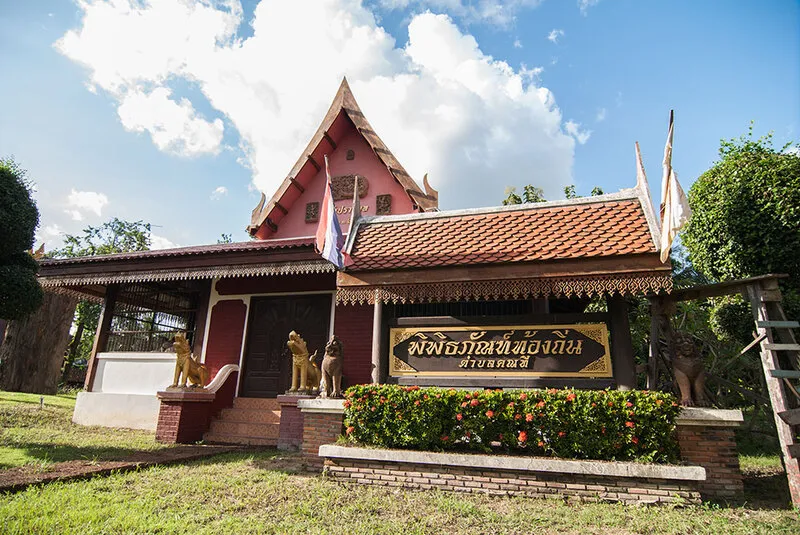
Wat Prasat Local Museum, also known as Wat Prasat Museum in Kamphaeng Phet, is located inside Wat Prasat at Moo 2, Ban Khon Tai, Khonthi Subdistrict, Mueang Kamphaeng Phet District. About 22 km from Kamphaeng Phet city, this local museum preserves Buddhist images, ancient objects, blue-and-white ceramics, Bencharong ware, Sangkhalok ceramics, traditional household tools, fishing tools, woven crafts, and Thai herbal medicine manuscripts. It is an important cultural learning site for travelers who want to understand the ancient city of Khonthi and the local history of Kamphaeng Phet beyond the main historical park.
Wat Prasat Local Museum is a meaningful cultural and historical learning site located within Wat Prasat in Ban Khon Tai, Khonthi Subdistrict, Mueang Kamphaeng Phet District. The museum is about 22 km from Kamphaeng Phet city and sits within a community closely connected with the ancient city of Khonthi. Unlike large national museums, this local museum presents history from the perspective of a temple and community. Its value lies not only in the objects on display, but also in the way those objects remain connected to the place where they were found, the people who preserved them, and the local memory that surrounds them.
Wat Prasat is located in the area of the ancient city of Khonthi, also associated with Ban Khon. Khonthi appears in the King Ramkhamhaeng Inscription dated to 1292 CE / 1835 BE as one of the cities connected with the Sukhothai kingdom. This background gives the museum a deeper historical meaning. Visitors are not simply entering a small temple museum; they are entering a landscape connected with an ancient settlement, Sukhothai cultural influence, Buddhist art, and the long history of communities along the Ping River basin.
The museum was established in 2003 to preserve and display ancient objects, Buddhist images, ceramics, household tools, and local cultural materials discovered in the Khonthi area. These objects help visitors understand that local history is not made only through royal capitals, large temples, or major monuments. It is also built through village temples, household objects, fishing tools, handmade crafts, and community memory. Wat Prasat Local Museum therefore provides a valuable view of Kamphaeng Phet from the level of everyday life and local heritage.
The atmosphere of the museum is closely tied to Wat Prasat itself. The temple still functions as a religious and community space, making the museum feel different from a formal exhibition building detached from daily life. Visitors can first pay respect at the temple, observe the local setting, and then explore the museum collections. This relationship between temple, museum, and community is one of the most important features of the site. It reflects the Thai tradition of temples serving not only as religious centers, but also as places of education, memory, and cultural preservation.
One important feature of Wat Prasat is the viharn that enshrines Luang Pho To, a large Buddha image respected by local people. The presence of Luang Pho To reminds visitors that faith is still a living part of the site. The museum objects are not isolated antiques; they exist within a temple environment where Buddhist devotion continues. This gives the visit a layered experience: spiritual, historical, artistic, and local all at once.
The museum displays Buddhist images from different periods, especially the Sukhothai and Ayutthaya periods. Each image reflects a specific artistic style, craftsmanship, and religious meaning. The face, eyebrows, nose, lips, hair, posture, and proportions of a Buddha image can reveal artistic influences and historical development. For visitors interested in Thai art, these images offer a chance to study Buddhist sculpture in a local context rather than only in a major national museum.
Among the most significant objects associated with the museum is a Sukhothai-period walking Buddha image, or Phra Phuttha Lila, said to be more than 700 years old. The walking Buddha is one of the most graceful forms of Sukhothai art, expressing movement, balance, calmness, and spiritual elegance. Seeing such an image in a local museum helps visitors understand how Sukhothai-style Buddhist art spread across communities in Kamphaeng Phet and nearby areas. It also shows that local temples played an important role in preserving high-value works of religious art.
The Buddhist images and ancient objects found in the Khonthi area help explain the network of ancient communities around Kamphaeng Phet. Although Khonthi is less widely known than the main city of Kamphaeng Phet or Nakhon Chum, the objects preserved at Wat Prasat show that this area had religious activity, craftsmanship, and cultural connections with larger historical centers. The museum therefore helps complete the broader story of Kamphaeng Phet by adding the voice of a local community.
The museum also displays Sangkhalok ceramics, blue-and-white wares, and Bencharong ceramics. These objects reflect taste, trade, technology, and daily life in past communities. Ceramics were not merely containers; they were part of household life, ritual use, exchange networks, and social identity. Sangkhalok ceramics connect the site to Sukhothai-period craft traditions, while blue-and-white and Bencharong wares reflect later cultural influences and changing preferences in Thai material culture.
By observing the forms, glazes, decorative patterns, and materials of the ceramics, visitors can gain insight into trade and cultural exchange. The presence of valuable ceramic wares in a local community indicates that Khonthi was not isolated. It was part of wider networks of exchange and cultural movement. These objects help visitors see economic and cultural history through everyday items, not only through inscriptions or large monuments.
Traditional tools and household objects form another important part of the museum. Fishing tools, woven bamboo objects, agricultural implements, containers, and everyday utensils show how people lived and worked in the past. These objects may appear simple, but they carry significant anthropological value. They explain how local people used natural materials, adapted to their environment, and created practical solutions for daily life. They also show that local wisdom was often transmitted through practice rather than formal writing.
The fishing tools on display reflect the relationship between local communities and waterways. Kamphaeng Phet is closely connected to the Ping River and other water systems, so fishing and water-based livelihoods were important parts of life. Traditional fishing tools were designed through observation of water levels, seasons, fish behavior, and local ecology. These objects help visitors understand how deeply local knowledge was connected with the environment.
Woven crafts reveal another dimension of local skill. Basketry requires knowledge of materials, preparation techniques, structure, strength, and practical design. Each woven object is both useful and beautiful. Its value does not come from luxury, but from balance, durability, and appropriateness for daily life. When placed in a museum, woven objects remind visitors that local craftsmanship is a form of intelligence, design, and cultural expression.
Thai herbal medicine manuscripts preserved at the museum open another window into local knowledge. Before modern medical systems were widely accessible, communities relied on herbal knowledge, local healers, and experience passed down through generations. Such manuscripts reflect the relationship between people and plants, as well as the ability of communities to care for themselves using local natural resources. They are important not only as old documents, but also as evidence of local medical wisdom and ecological understanding.
What makes Wat Prasat Local Museum special is its close connection to the community. Many objects on display are directly related to the local area. They are not presented only as beautiful antiques, but as things that once belonged to homes, fields, riversides, temples, and village life. This makes the museum feel intimate and authentic. Visitors can imagine how these objects were used, who made them, and how they formed part of daily life in Khonthi and Kamphaeng Phet.
The museum also connects the past with the present. Younger generations may no longer be familiar with traditional fishing tools, handmade baskets, old ceramic wares, or herbal medicine manuscripts. Seeing these objects helps them ask questions about the lives of their ancestors. It also encourages respect for local wisdom and for older generations who lived with deep practical knowledge of nature, materials, and community life.
For travelers interested in Sukhothai and Kamphaeng Phet history, Wat Prasat Local Museum adds depth beyond the main tourist route. Kamphaeng Phet Historical Park, Kamphaeng Phet National Museum, and Wat Phra Borommathat Nakhon Chum explain the major historical landscape, while Wat Prasat Local Museum presents the local community level. This smaller perspective is essential because history is not created only by capitals and rulers. It is also created by villages, temples, craftspeople, monks, farmers, fishers, and local families.
The museum is also suitable for visitors who appreciate old temples. Wat Prasat combines religious significance with archaeological and cultural value. The temple stands in the ancient Khonthi area, where old objects and local traditions remain part of the landscape. Visitors should take time to observe the temple grounds, the viharn, the museum building, and the surrounding community atmosphere. These details help reveal the continuity between ancient settlement and present-day village life.
For cultural tourism, Wat Prasat Local Museum is ideal for travelers who want a quieter and more meaningful route in Kamphaeng Phet. Many visitors know the province through its historical park, Wat Chang Rop, Wat Phra Kaeo, Wat Phra That, and Nakhon Chum. A trip to Khonthi adds another layer by showing how local communities outside the main city also preserve important heritage. This makes the travel experience more complete and less repetitive.
Visitors should contact the museum in advance before traveling. Since it is a local museum within a temple, visiting arrangements may differ from those of larger museums with fixed daily opening hours. Advance contact is especially useful for school groups, study groups, researchers, or visitors who want more detailed information from local caretakers. It helps ensure that the museum is ready for the visit and that visitors can spend their time meaningfully.
Getting There is convenient by private car, rental car, or local hired transport. From Kamphaeng Phet city, travel toward Khonthi Subdistrict in Mueang Kamphaeng Phet District, about 22 km away. The destination is Wat Prasat in Ban Khon Tai. Travelers arriving by interprovincial bus should get off at Kamphaeng Phet Bus Terminal and continue by local transport or hired vehicle. A private vehicle is the most convenient option because it allows travelers to combine the museum with other nearby historical and cultural sites.
The best time to visit is in the morning or early afternoon, allowing enough time to explore the temple and museum without rushing. During hot seasons, visitors should prepare drinking water, a hat, or an umbrella. Photography should be done respectfully, especially inside temple areas and near cultural objects. Visitors should avoid touching ancient objects, Buddhist images, ceramics, manuscripts, or display items without permission.
For families, the museum provides a useful learning experience. Children can compare old tools with modern objects, observe how ceramics were decorated, and ask why communities preserve old things. Such questions make history more accessible and help children understand that the past is not distant. It is connected to homes, temples, tools, and the everyday lives of real people.
For students and researchers, Wat Prasat Local Museum is a strong example of a community museum. It demonstrates that cultural preservation does not belong only to national institutions. Temples and local communities can also collect, preserve, and explain their heritage. This kind of museum keeps history close to the place where it happened and allows local people to remain part of their own historical narrative.
For international travelers, the museum reveals a more local side of Thailand. It shows that Thai culture is not limited to famous capitals, royal temples, or major tourist destinations. Small communities also hold valuable history, art, tools, beliefs, and memories. Visiting a local museum like Wat Prasat helps travelers understand Thailand at a more human scale.
Wat Prasat Local Museum can be combined with other cultural sites in Kamphaeng Phet. Travelers may visit Kamphaeng Phet National Museum, Kamphaeng Phet Historical Park, Phra Isuan Shrine, Kamphaeng Phet City Pillar Shrine, Wat Phra Borommathat Nakhon Chum, or other old-town sites on the same trip. This creates a balanced itinerary that includes both major historical landmarks and local community heritage.
From a preservation perspective, the museum is valuable because it gives local objects a proper place to be kept and interpreted. Without a local museum, some objects might be lost, overlooked, or separated from their original context. Keeping them at Wat Prasat allows them to remain close to the community and the ancient Khonthi area. This preserves not only objects, but also memory, identity, and the relationship between people and place.
Wat Prasat Local Museum may not be a large or highly modern museum, but its strength lies in its authenticity. It tells history through community objects, temple heritage, and local memory. For travelers who enjoy quiet cultural routes, meaningful local stories, and places connected to real communities, this museum offers a rewarding experience. It helps visitors see Kamphaeng Phet not only as an ancient city of monuments, but also as a province of villages, temples, crafts, tools, and living cultural memory.
In summary, Wat Prasat Local Museum is an important educational and cultural tourism site in Kamphaeng Phet Province. It connects past and present through Buddhist images, Sukhothai and Ayutthaya-period objects, ceramics, household tools, fishing tools, woven crafts, and herbal medicine manuscripts. A visit here allows travelers to understand the roots of Khonthi community, the role of local temples in preserving heritage, and the everyday wisdom of Kamphaeng Phet people across generations.
| Name | Wat Prasat Local Museum / Wat Prasat Museum, Kamphaeng Phet |
| Location | Wat Prasat, Moo 2, Ban Khon Tai, Khonthi Subdistrict, Mueang Kamphaeng Phet District, Kamphaeng Phet Province |
| Address | Wat Prasat, Moo 2, Khonthi Subdistrict, Mueang Kamphaeng Phet District, Kamphaeng Phet 62000, Thailand |
| Highlights | Buddhist images and ancient objects from the Khonthi area, blue-and-white ceramics, Bencharong ware, Sangkhalok ceramics, traditional household tools, fishing tools, woven crafts, and Thai herbal medicine manuscripts |
| History | The museum was established in 2003 inside Wat Prasat, located in the ancient city of Khonthi. Khonthi appears in the King Ramkhamhaeng Inscription dated to 1292 CE / 1835 BE and is connected with Sukhothai cultural history. |
| Name Origin | Named after Wat Prasat, an important temple of Ban Khon Tai and a local center for preserving ancient objects from the community |
| Distinctive Features | A temple-based local museum that presents Buddhist art, Khonthi archaeology, and the traditional way of life of Kamphaeng Phet communities through real local objects |
| Key Objects | A Sukhothai-period walking Buddha image over 700 years old, Sukhothai and Ayutthaya-period Buddhist images, blue-and-white ceramics, Bencharong ware, Sangkhalok ceramics, and ancient objects from the Khonthi area |
| Travel Information | Travel from Kamphaeng Phet city to Khonthi Subdistrict, about 22 km away. Private car, rental car, or local hired transport is recommended. Travelers arriving by bus should get off at Kamphaeng Phet Bus Terminal and continue by local transport to Ban Khon Tai. |
| Current Status | A local museum and learning site inside Wat Prasat, preserving ancient objects and local wisdom of the Khonthi community |
| Open Days | Please contact in advance |
| Opening Hours | Please contact in advance |
| Fees | No admission fee |
| Caretaker | Wat Prasat and Khonthi Subdistrict Administrative Organization |
| Main Contact Number | Khonthi SAO 055-867667, Wat Prasat 055-740020 |
| Nearby Tourist Attractions | 1. Wat Prasat, Ban Khon Tai, about 0 km 2. Ancient Khonthi City / Ban Khon Ancient City, about 0.5 km 3. Thai Song Dam Cultural Center at Ban Wang Nam, about 10 km 4. Kamphaeng Phet National Museum, about 22 km 5. Phra Isuan Shrine, about 22 km 6. Kamphaeng Phet Historical Park, about 23 km 7. Wat Phra Borommathat Nakhon Chum, about 25 km |
| Nearby Restaurants | 1. Krua Khun Nai Ban Khon Tai, about 2 km 2. Baan Suan Khonthi Restaurant, about 3 km 3. Krua Tha Makhuea, about 8 km 4. Lan Phai Restaurant, about 10 km 5. New Burger, about 21 km 6. 27 Mar Cafe / Krua Khun Krit, about 24 km, Tel. 082-780-5129, 086-347-9293 |
| Nearby Accommodations | 1. King Thong Resort Kamphaeng Phet, about 3 km 2. NKW Resort, about 4 km 3. Sabai Ta Resort, about 12 km 4. Mango House Resort & Cafe, about 13 km 5. The Resort Kamphaengphet, about 14 km 6. The Room Hotel Kamphaengphet, about 24 km |
Frequently Asked Questions (FAQ)
Q: Where is Wat Prasat Local Museum located?
A: It is located inside Wat Prasat at Moo 2, Ban Khon Tai, Khonthi Subdistrict, Mueang Kamphaeng Phet District, about 22 km from Kamphaeng Phet city.
Q: What can visitors see at Wat Prasat Local Museum?
A: Visitors can see Sukhothai and Ayutthaya-period Buddhist images, a walking Buddha image over 700 years old, blue-and-white ceramics, Bencharong ware, Sangkhalok ceramics, household tools, fishing tools, woven crafts, and herbal medicine manuscripts.
Q: When is Wat Prasat Local Museum open?
A: Visitors should contact the museum in advance because it is a local museum inside a temple and does not operate like a large museum with fixed daily visiting hours.
Q: Is there an admission fee?
A: No admission fee is charged, but visitors should contact the caretaker in advance to confirm visiting arrangements.
Q: Why is Wat Prasat historically important?
A: Wat Prasat is located in the ancient Khonthi area, which appears in the King Ramkhamhaeng Inscription dated to 1292 CE / 1835 BE and is connected with Sukhothai cultural history in Kamphaeng Phet.
Q: Who should visit this museum?
A: It is suitable for travelers interested in local history, Sukhothai art, Buddhist objects, ancient ceramics, traditional village life, old temples, family learning, students, researchers, and cultural travelers.
Q: How can visitors travel to Wat Prasat Local Museum?
A: Travel from Kamphaeng Phet city toward Khonthi Subdistrict, about 22 km away. Private car or local hired transport is recommended. Bus travelers should continue from Kamphaeng Phet Bus Terminal by local transport.
Q: What nearby attractions can be visited after the museum?
A: Nearby and connected attractions include Ancient Khonthi City, Kamphaeng Phet National Museum, Phra Isuan Shrine, Kamphaeng Phet Historical Park, and Wat Phra Borommathat Nakhon Chum.
Tel : 0 5574 0020
 Tel : 0 5574 0020
  Category: ●Art, Culture and Heritage
 Group: ●Museums
Last Update : 4 MonthAgo
 Last Update : 4 MonthAgo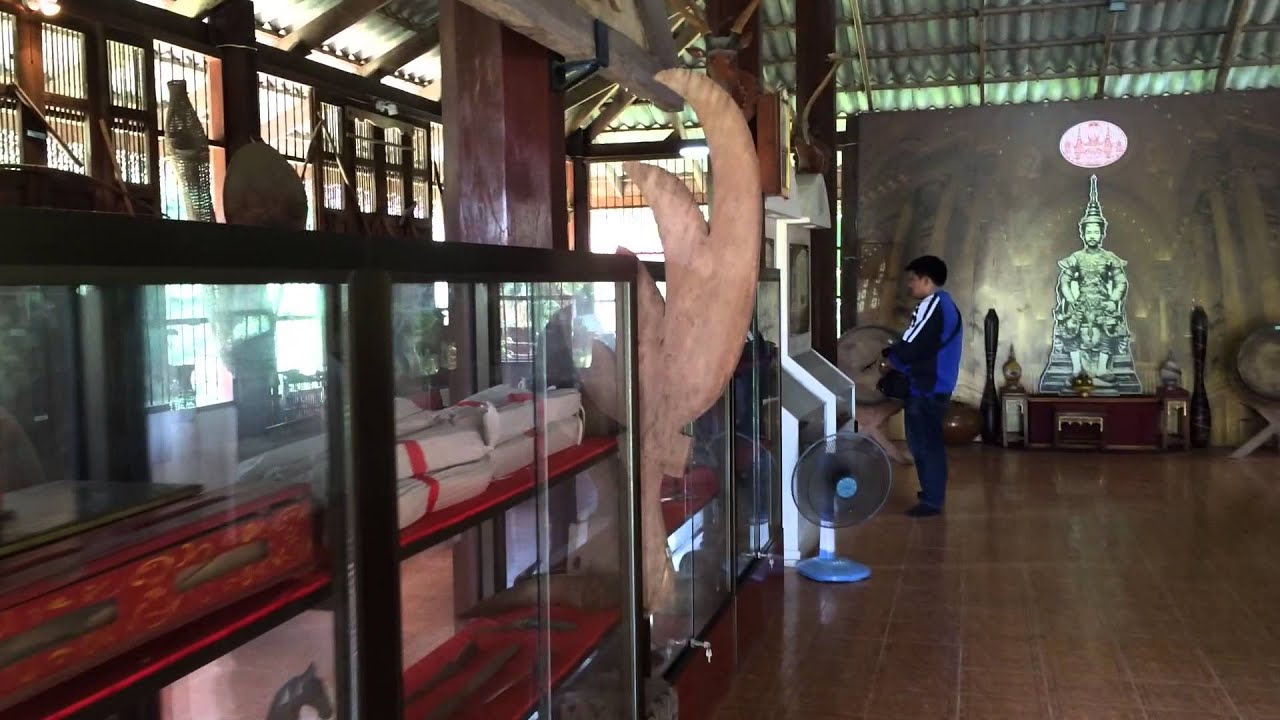
 Click to Access the Navigation Map GPS
Wat Prasat Local Museum Map
Recommend

 Historical Sites and Monuments(4)
 Landmarks and Memorials(1)
 Art, Craft Centres, Tradition(4)
Museums(4)
Art, Craft Centres, Tradition(4)
Museums(4)
 Historic Homes and Cities(1)
 Places of Worship
 Temple(25)
 Other Sacred Sites(8)
 Research and Development
 Royal Project(2)
 Suburban Living
 Village, Community(2)
 Local Market(2)
 Nature and Wildlife
 National Parks and Marine Reserves(4)
 Mountain (Doi)(2)
 Dam, Reservoir, Lake(4)
 Waterfalls(4)
 Hot Springs(1)
 River, Canal(3)
 Bays and Beaches(2)
 Other natural attractions(1)
 Entertainment and Agricultural
 Farms, Parks and Ecotourism(5)
 Waterpark(1)
 Shopping
 Shopping and Night Market(1)


