
lovethailand home >North Travel Attractions >Kamphaeng Phet Travel Attractions >Muang Kamphaeng Phet >Nai Muang > The Kamphang Phet National Museum
TL;DR: The Kamphang Phet National Museum is located at Pin Damri Road, Nai Mueang Subdistrict, Mueang Kamphaeng Phet District, Kamphaeng Phet Province, open Wednesday – Sunday, hours 09.00 – 16.00.
The Kamphang Phet National Museum
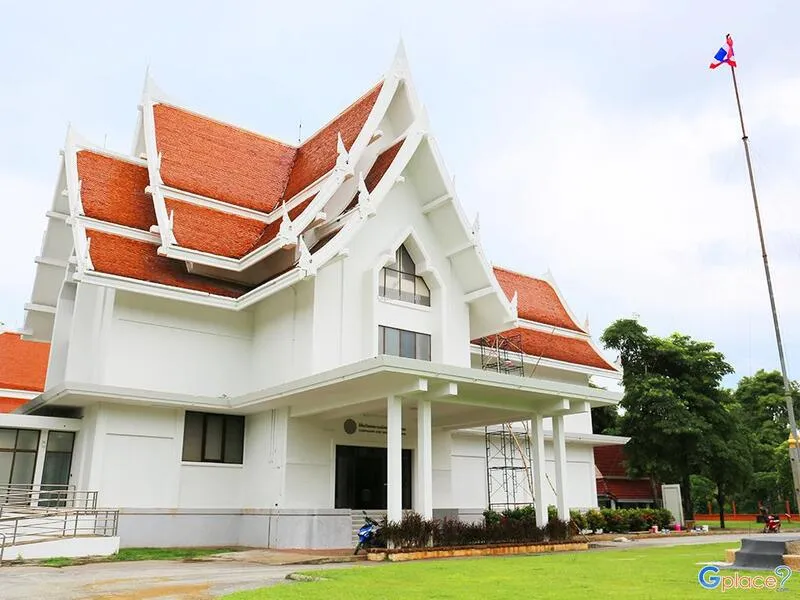
Open Days: Wednesday – Sunday
Opening Hours: 09.00 – 16.00
Kamphaeng Phet National Museum is one of the most important historical and cultural learning centers in Kamphaeng Phet Province. Located on Pin Damri Road in the old town area, the museum displays archaeological objects and artworks from many periods, including Prehistoric, Dvaravati, Lopburi, Sukhothai, Ayutthaya, and Rattanakosin. Highlights include Buddha heads, Sangkhalok ceramics, stucco figures of giants, deities and humans, the bronze Shiva image, and the Shiva base inscription. It is an essential stop for travelers who want to understand Kamphaeng Phet beyond its historical park.
Kamphaeng Phet National Museum is a key place for understanding Kamphaeng Phet as a historic city with a long and layered cultural development. The museum is located on Pin Damri Road in Nai Mueang Subdistrict, Mueang Kamphaeng Phet District, close to Phra Isuan Shrine, the old town area, Kamphaeng Phet Historical Park, and other major cultural landmarks. It is not merely a building that stores old objects. It is a structured learning space that helps visitors understand the city through archaeology, art history, religion, inscriptions, sculpture, ceramics, and architectural fragments.
Kamphaeng Phet was an important city in the lower northern region of Thailand, especially during the period connected with the Sukhothai cultural sphere. The province still preserves city walls, moats, ancient temples, chedis, religious monuments, and historic landscapes. Visiting the historical park allows travelers to see the scale of the ancient city, but visiting the museum helps them understand the details behind that city. Objects such as stucco decorations, Buddha images, inscriptions, ceramics, and bronze sculptures reveal artistic techniques, beliefs, and historical relationships that are not always visible when walking among ruins.
The museum was established as a national museum for the historical and archaeological heritage of Kamphaeng Phet Province. Its role is to collect, preserve, study, and display archaeological objects and artworks discovered within the province. Construction began in 1967, and the museum officially opened on 19 March 1971. Since then, it has served as a major institution for preserving the local cultural heritage of Kamphaeng Phet and making that heritage accessible to the public.
The permanent exhibitions are arranged in chronological order, allowing visitors to follow the development of Kamphaeng Phet from the Prehistoric period through Dvaravati, Lopburi, Sukhothai, Ayutthaya, and Rattanakosin periods. This timeline-based approach is useful because it shows that Kamphaeng Phet was not important only during one historical era. Instead, the area developed through multiple cultural layers, each leaving different kinds of evidence. The museum therefore helps visitors see the city as a living historical landscape shaped by settlement, religion, trade, political power, and artistic exchange.
The first exhibition building presents the story of Kamphaeng Phet from the Prehistoric period to the Dvaravati, Lopburi, and Sukhothai periods. This section helps visitors understand the early background of the area before Kamphaeng Phet became a major city in the Sukhothai network. The objects in this section reflect settlement, daily life, belief systems, and cultural influence from outside regions. They are important because they show that the city did not appear suddenly as a fully developed urban center, but grew gradually through human settlement and cultural contact.
The Dvaravati and Lopburi-related objects show the movement of religious and artistic ideas into the Ping River region. Although Kamphaeng Phet is often associated with Sukhothai, earlier cultural layers are essential to understanding the province’s deeper history. The objects from these periods reveal that Buddhism, artistic forms, and symbolic systems spread through networks of communities and cities across mainland Southeast Asia. This gives visitors a wider context for understanding Kamphaeng Phet’s later role as a historic city.
The Sukhothai section is especially significant because Kamphaeng Phet was one of the important cities connected to the Sukhothai world. The museum displays archaeological objects that help explain Sukhothai-style art in the Kamphaeng Phet area, including Buddha heads, stucco fragments, Sangkhalok ceramics, and architectural elements from ancient temples. These objects allow visitors to see details that may be difficult to notice when walking through the ruins, such as decorative patterns, facial features, craftsmanship, and symbolic designs used in religious architecture.
The Buddha heads displayed in the museum are important examples of Buddhist art and changing artistic taste. The shape of the face, eyebrows, nose, lips, hair, and expression can indicate different artistic influences and periods. Some images express serenity and softness, while others feel more formal and powerful. Observing these details helps visitors read history through form, style, and craftsmanship rather than through written information alone.
Sangkhalok ceramics are another important group of objects. These ceramics were not merely household items; they also reflect production technology, trade, taste, and cultural exchange. When displayed alongside sculptures and inscriptions, they show that Kamphaeng Phet was connected to wider economic and cultural networks. Travelers interested in trade history, ceramics, and craft production will find this section particularly useful.
The stucco figures of giants, deities, and humans are among the most visually engaging objects in the museum. These fragments once decorated the bases of chedis, viharns, and religious structures. Although many ancient buildings have collapsed over time, the surviving stucco pieces preserve the skill of local artisans. Their facial expressions, gestures, ornaments, and decorative lines show how much attention was given to religious architecture. They also help visitors imagine how richly decorated the ancient temples of Kamphaeng Phet once were.
One of the museum’s most important objects is the bronze Shiva image and the Shiva base inscription from Kamphaeng Phet. This object is significant in terms of Hindu religion, local history, inscription studies, and the history of heritage preservation in Thailand. The inscription is written in Sukhothai Thai script and dates to 1510 CE, or 2053 BE. It refers to Chao Phraya Si Thammasokarat and the establishment of the Shiva image, along with public works and religious merit-making. This evidence shows that Kamphaeng Phet had not only strong Buddhist traditions but also traces of Hindu belief and complex religious life.
The Shiva image is also connected with an important event in the reign of King Chulalongkorn, Rama V. In 1886, a foreigner named Rustmann cut off the head and hands of the Shiva image with the intention of taking them out of the country, but he was arrested in Bangkok. This incident led to greater concern about the safety of ancient objects in provincial towns. The story is therefore not only about one stolen object; it is also connected with the development of heritage protection and the modern awareness of conserving Thailand’s archaeological treasures.
Standing before the Shiva image, visitors can see how a single object can carry many layers of meaning. It relates to Hindu worship in Kamphaeng Phet, Sukhothai-period writing, Ayutthaya-period political and religious merit-making, the danger of antiquities being stolen, and the development of national preservation practices. For this reason, the Shiva image should be viewed slowly and carefully. It is one of the key highlights of the museum.
The second exhibition building presents Kamphaeng Phet during the Ayutthaya and Rattanakosin periods. This section shows that the city did not lose its importance after the Sukhothai period. Kamphaeng Phet continued to function as a strategic city, a community center, and a place where people lived, worshipped, traded, and adapted to changing political structures. The objects from these later periods help complete the story of the province beyond its better-known Sukhothai heritage.
The third exhibition building presents modern Kamphaeng Phet and the ethnic communities living within the province. This section is valuable because it connects the ancient city with the living province of today. Kamphaeng Phet should not be understood only as a place of ruins and old objects. It is also a province with communities, identities, cultural diversity, and contemporary ways of life. By connecting past and present, the museum becomes a place that explains how heritage continues to matter in modern society.
The museum also plays an important educational role. It organizes activities for school groups, students, elderly visitors, people with disabilities, and general audiences. Activities such as worksheets, games, guided questions, demonstrations, and learning programs help make the museum more interactive. This approach turns the museum from a place of passive viewing into a place where visitors can actively engage with history and cultural heritage.
For general travelers, Kamphaeng Phet National Museum adds depth to any trip through the province. If visitors start at the museum before going to Kamphaeng Phet Historical Park, they will have a clearer understanding of the historical periods, objects, and religious meanings behind the ruins. If they visit the historical park first and come to the museum afterward, the museum will help answer questions raised by the ancient monuments. Either route works well, and combining both sites is strongly recommended.
Visitors interested in photography, sculpture, or art history should allow at least 1 – 2 hours to walk through the museum slowly. The details of stucco patterns, bronze surfaces, ceramic shapes, Buddha image features, and inscriptions are worth careful observation. Each object is valuable not only because it is old, but because it tells a story about people, technology, belief, and artistic creativity in the past.
Families can also benefit from visiting the museum. For children, seeing real ancient objects can be more engaging than reading about history in textbooks. Parents can encourage children to compare Buddha images from different periods, notice patterns on ceramics, or ask why a Hindu image appears in a city with many Buddhist temples. These simple questions can turn a museum visit into an enjoyable learning experience.
For international travelers, the museum is a helpful starting point for understanding Kamphaeng Phet as part of the historic towns associated with Sukhothai. The exhibitions introduce Buddhist art, Hindu traces, Sukhothai-period inscriptions, ceramics, and the development of a city along the Ping River. This makes the museum especially useful for travelers who want cultural context before visiting ancient temples and ruins.
Getting There is convenient from Kamphaeng Phet city center and the provincial bus terminal. By private car, visitors can enter the old town area and follow Pin Damri Road to the museum, which is near Phra Isuan Shrine. Travelers driving from Bangkok can take Highway 32 through Ayutthaya, Ang Thong, Sing Buri, Chai Nat, and Nakhon Sawan, then continue on Highway 1 to Kamphaeng Phet. From the city, the museum is easy to reach by local transport, taxi, or private vehicle.
Those arriving by interprovincial bus can get off at Kamphaeng Phet Bus Terminal and continue by local transport to the museum. The distance is short enough for a convenient half-day cultural route. Visitors can combine the museum with Phra Isuan Shrine, Kamphaeng Phet City Pillar Shrine, Kamphaeng Phet Historical Park, Kamphaeng Phet Regional Museum, and the old town area.
The best time to visit is in the morning or early afternoon, allowing enough time to explore the exhibitions before closing. If combining the museum with the historical park, visitors may choose to visit the museum in the morning and the park in the afternoon, or visit the outdoor ruins early and use the museum as an afternoon indoor stop. This is practical during hot weather, when indoor museum time offers a comfortable break.
Visitors should note that the museum is open from Wednesday to Sunday, 09.00 – 16.00, and closed on Monday, Tuesday, and public holidays. The admission fee is 20 baht for Thai visitors and 100 baht for foreign visitors. Students in uniform, monks and religious persons, elderly visitors, and people with disabilities are eligible for free admission. Groups and educational visitors should contact the museum in advance for current visiting arrangements.
Proper museum etiquette is important. Visitors should keep noise levels low, avoid touching display objects, follow photography rules, and respect staff instructions. Many artifacts are old and fragile, and careful viewing helps preserve them for future generations. Reading the labels is also recommended, because the explanations provide essential context that makes the objects much more meaningful.
Kamphaeng Phet National Museum is an excellent gateway to other historical attractions in the province, including Kamphaeng Phet Historical Park, Trai Trueng Ancient Town, Phra Isuan Shrine, the King Rama V Trading House, Wat Phra Borommathat Nakhon Chum, and Kamphaeng Phet Regional Museum. Planning a connected cultural route allows visitors to understand the province as an ancient city, a religious center, a trade area, and a living community.
What makes this museum worth visiting is its role in preserving the evidence of a once-flourishing city. The objects inside are not just isolated antiques. They are fragments of temples, pieces of old architecture, traces of artisans, and evidence of belief systems that shaped Kamphaeng Phet for centuries. Once visitors understand this, walking through the museum becomes a process of reading the city through each object.
For anyone interested in Thai history, art, archaeology, and culture, Kamphaeng Phet National Museum should be included in the travel plan. It explains the province through real evidence, shows the continuity of artistic development across many periods, and highlights the importance of conserving cultural heritage. A visit here is not only a museum stop; it is a chance to listen to the memory of Kamphaeng Phet through inscriptions, sculptures, ceramics, and architectural fragments preserved for future generations.
| Name | Kamphaeng Phet National Museum |
| Location | Pin Damri Road, Nai Mueang Subdistrict, Mueang Kamphaeng Phet District, Kamphaeng Phet Province |
| Address | 120 Soi Pin Damri Road, Nai Mueang Subdistrict, Mueang Kamphaeng Phet District, Kamphaeng Phet 62000, Thailand |
| Highlights | Archaeological objects and artworks from many periods, Buddha heads, Sangkhalok ceramics, stucco figures of giants, deities and humans, the bronze Shiva image, and the Shiva base inscription |
| History | Construction began in 1967 and the museum officially opened on 19 March 1971. The exhibitions cover the Prehistoric, Dvaravati, Lopburi, Sukhothai, Ayutthaya, and Rattanakosin periods. |
| Distinctive Features | A national museum dedicated to preserving and presenting Kamphaeng Phet’s archaeological, historical, and artistic heritage |
| Main Areas / Zones | Exhibition Building 1: Prehistoric, Dvaravati, Lopburi, and Sukhothai periods Exhibition Building 2: Ayutthaya and Rattanakosin periods Exhibition Building 3: Present-day Kamphaeng Phet and ethnic communities in the province |
| Key Object | The bronze Shiva image and the Shiva base inscription in Sukhothai Thai script, dated to 1510 CE / 2053 BE, currently preserved at Kamphaeng Phet National Museum |
| Travel Information | From Kamphaeng Phet city center, follow Pin Damri Road to the old town area. From the provincial bus terminal, take local transport or a taxi to the museum. |
| Current Status | Open to visitors during official operating days and serves as a major historical, archaeological, and cultural learning center of Kamphaeng Phet Province |
| Open Days | Wednesday – Sunday; closed on Monday, Tuesday, and public holidays |
| Opening Hours | 09.00 – 16.00 |
| Fees | Thai visitors 20 baht; foreign visitors 100 baht. Free admission for students in uniform, religious persons, elderly visitors, and people with disabilities. |
| Caretaker | The Fine Arts Department, Ministry of Culture |
| Main Contact Number | 055-711570 |
| Official Website / Official Page | Kamphaeng Phet National Museum, The Fine Arts Department |
| Nearby Tourist Attractions | 1. Phra Isuan Shrine, about 0.3 km 2. Kamphaeng Phet Regional Museum, about 0.5 km 3. Kamphaeng Phet City Pillar Shrine, about 0.9 km 4. Kamphaeng Phet Historical Park, about 1.5 km 5. Wat Phra Kaeo Kamphaeng Phet, about 1.5 km 6. Wat Phra That Kamphaeng Phet, about 1.6 km 7. Wat Chang Rop, about 3.8 km |
| Nearby Restaurants | 1. New Burger, about 1.2 km 2. Wara Drip Coffee, about 1.3 km 3. Kamphaeng Phet Photchana / Nai Ya Restaurant, about 1.5 km 4. Thammarat Photchana, about 1.6 km 5. Baan Rim Nam Restaurant, about 1.8 km 6. 27 Mar Cafe / Krua Khun Krit, about 2.1 km, Tel. 082-780-5129, 086-347-9293 |
| Nearby Accommodations | 1. Home by the Bridge Hotel, about 1.6 km 2. Maigai Resort, about 1.9 km 3. Three J Guesthouse, about 2.1 km 4. Chakungrao Riverview Hotel, about 2.1 km 5. HOP INN Kamphaeng Phet, about 2.1 km, Tel. 02-080-2222 6. Techno River View Resort, about 2.2 km |
Frequently Asked Questions (FAQ)
Q: Where is Kamphaeng Phet National Museum located?
A: It is located on Pin Damri Road, Nai Mueang Subdistrict, Mueang Kamphaeng Phet District, near Phra Isuan Shrine and the old town area.
Q: When is Kamphaeng Phet National Museum open?
A: The museum is open from Wednesday to Sunday, 09.00 – 16.00, and closed on Monday, Tuesday, and public holidays.
Q: What is the admission fee?
A: The admission fee is 20 baht for Thai visitors and 100 baht for foreign visitors. Students in uniform, religious persons, elderly visitors, and people with disabilities are eligible for free admission.
Q: What are the highlights inside the museum?
A: Highlights include Buddha heads, Sangkhalok ceramics, stucco figures, the bronze Shiva image, the Shiva base inscription, and exhibitions covering Kamphaeng Phet from early periods to the present.
Q: Why is the Shiva image important?
A: The bronze Shiva image is important evidence of Hindu belief in Kamphaeng Phet. Its base inscription is written in Sukhothai Thai script and dates to 1510 CE / 2053 BE. It is also linked to an attempted theft during the reign of King Rama V.
Q: How long should visitors spend at the museum?
A: Visitors should allow at least 1 – 2 hours to explore the exhibitions and read the object labels carefully.
Q: Who should visit this museum?
A: The museum is ideal for travelers interested in Thai history, archaeology, Buddhist art, Hindu traces, Sukhothai heritage, families, students, researchers, and cultural travelers.
Q: What nearby attractions can be visited after the museum?
A: Nearby attractions include Phra Isuan Shrine, Kamphaeng Phet Regional Museum, Kamphaeng Phet City Pillar Shrine, Kamphaeng Phet Historical Park, Wat Phra Kaeo, Wat Phra That, and Wat Chang Rop.
 Category: ●Art, Culture and Heritage
 Group: ●Museums
Last Update : 4 MonthAgo
 Last Update : 4 MonthAgo
 Click to Access the Navigation Map GPS
The Kamphang Phet National Museum Map
Recommend

 Historical Sites and Monuments(4)
 Landmarks and Memorials(1)
 Art, Craft Centres, Tradition(4)
Museums(4)
Art, Craft Centres, Tradition(4)
Museums(4)
 Historic Homes and Cities(1)
 Places of Worship
 Temple(25)
 Other Sacred Sites(8)
 Research and Development
 Royal Project(2)
 Suburban Living
 Village, Community(2)
 Local Market(2)
 Nature and Wildlife
 National Parks and Marine Reserves(4)
 Mountain (Doi)(2)
 Dam, Reservoir, Lake(4)
 Waterfalls(4)
 Hot Springs(1)
 River, Canal(3)
 Bays and Beaches(2)
 Other natural attractions(1)
 Entertainment and Agricultural
 Farms, Parks and Ecotourism(5)
 Waterpark(1)
 Shopping
 Shopping and Night Market(1)


