
lovethailand home >Central Travel Attractions >Bangkok Travel Attractions >Lat Krabang >Thap Yao > Wat Phon Mani
TL;DR: Wat Phon Mani is located at Thap Yao Subdistrict, Lat Krabang District, Bangkok, open Daily, hours 08.00 – 17.00. Highlights include Old community temple on the northern bank of Khlong Prawet Burirom, Phra Phuttha Chinnarat-style principal Buddha image in the.
Wat Phon Mani
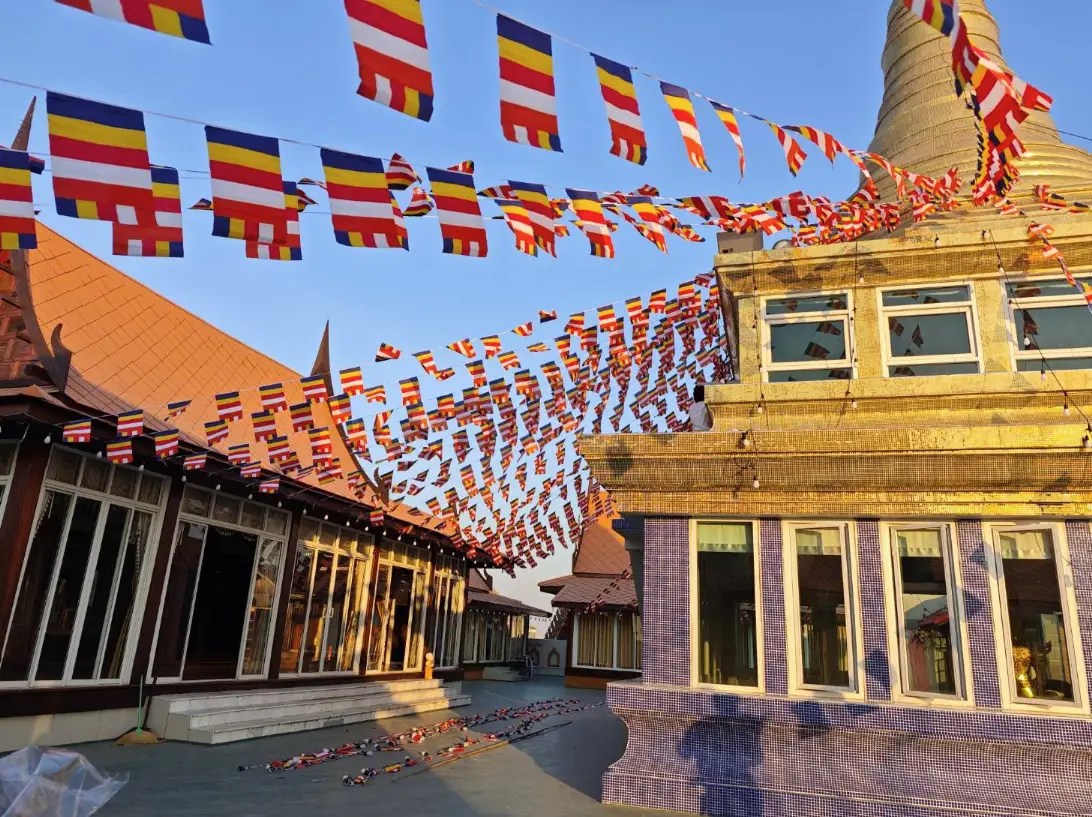
Open Days: Daily
Opening Hours: 08.00 – 17.00
Wat Phon Mani in Thap Yao Subdistrict, Lat Krabang District, Bangkok, is a community Buddhist temple under the Mahanikaya order. The temple stands on the northern bank of Khlong Prawet Burirom and has long been important to the Thap Yao and Luang Phaeng communities. It was founded through the devotion of Kamnan Phon and Nang Bunma Saenghiran, who donated land for the temple. Its present name preserves the memory of its founders, making Wat Phon Mani a meaningful place for visitors who want to make merit, study a canal-side community temple, and understand the older cultural landscape of eastern Bangkok.
Wat Phon Mani is located at 22 Moo 2, Pracha Phatthana Road, Thap Yao Subdistrict, Lat Krabang District, Bangkok 10520. The temple lies beside Khlong Prawet Burirom and connects with Pracha Phatthana Road, one of the local routes serving the Thap Yao community. The area is close to Hua Takhe, Luang Phaeng, Lat Krabang Road, and the wider Suvarnabhumi Airport zone. For travelers, Wat Phon Mani reveals a side of Lat Krabang that is deeper than the airport, expressways, and industrial areas. It shows a district shaped by canals, temples, schools, markets, old farming communities, and modern urban expansion.
The history of Wat Phon Mani began in 2462 BE, when Nai Phon Saenghiran, a local subdistrict headman of Lat Krabang, and his wife Nang Bunma Saenghiran donated land to establish a monastic residence and temple for the community. In the early period, local people called it Wat Mai Kamnan Phon, meaning the new temple of Kamnan Phon. The creation of the temple was not simply the construction of religious buildings. It gave the local community a shared place for merit-making, Buddhist ceremonies, Dhamma listening, and moral gathering.
At the beginning of the temple, 5 monks from Wat Pluk Sattha were invited to reside there, with Phra Yaem serving as the leading monk. This connection shows how temples in Lat Krabang were linked through monastic networks and community support. Wat Mai Kamnan Phon gradually developed from a small local monastic residence into a Buddhist temple with resident monks, religious activities, and a lasting role in the Thap Yao community.
The name Wat Phon Mani is one of the temple’s most important historical features. Local tradition says the name was graciously given by Somdet Phra Sangharaja, Somdet Phra Maha Samanachao Krom Phraya Vajirananavarorasa. It combines the names of the founders, Phon and Bunma, then adds the suffix “ni” to form Phon Mani. The temple name therefore serves as a memorial to its founders and preserves the story of local devotion in the name of the place itself.
Wat Phon Mani received its consecrated monastic boundary on 15 June 2466 BE, marking its formal religious status as a temple with a sacred area for monastic acts. Later records also identify another consecrated boundary on 17 January 2534 BE, connected with later development of the ordination-hall area. These dates show that Wat Phon Mani developed across several generations through establishment, restoration, expansion, and continued community support.
The temple originally had 9 rai, 3 ngan, and 75 square wah of land for religious structures. Later, another 2 rai, 2 ngan, and 16 square wah were added, bringing the total temple-building land to 12 rai, 1 ngan, and 91 square wah. Wat Phon Mani also had 100 rai, 1 ngan, and 53 square wah of ecclesiastical land. After the Bangkok-Chonburi motorway cut through the area, the remaining ecclesiastical land became 82 rai, 1 ngan, and 98 square wah. These land records show how modern infrastructure changed the physical landscape around the temple.
The general landscape of Wat Phon Mani is low-lying and rectangular. The surrounding community was traditionally connected with rice farming, fish farming, and gardening. Lat Krabang was historically shaped by canals and water-based livelihoods, so the temple’s canal-side location fits the older way of life. In the present day, rice farming has decreased as some areas have become factories, roads, and urban communities, while fish farming continues in parts of the district. Wat Phon Mani therefore reflects the transition from an agricultural settlement to a modern suburban community.
Khlong Prawet Burirom is essential for understanding Wat Phon Mani. The temple stands on the northern side of the canal, which once supported transport, farming, trade, and community movement. In earlier periods, residents used canals to reach temples, markets, and neighboring settlements. Because Wat Phon Mani stands beside the canal, it should be understood as both a religious center and a social gathering point for an older waterside community.
The ordination hall is the most important sacred building at Wat Phon Mani. Temple-history sources describe the hall as 8 meters wide and 12 meters long, built in 2486 BE. Inside is a principal Buddha image modeled after Phra Phuttha Chinnarat in the Mara-subduing posture, with a lap width of 3 sok, created in 2467 BE. This Buddha image is the main devotional focus of the temple and the central sacred image for worshippers in the Thap Yao community.
The Phra Phuttha Chinnarat-style principal Buddha image is meaningful because Phra Phuttha Chinnarat is one of the most admired Buddha-image forms in Thailand. Its graceful and dignified appearance is associated with calm, faith, and spiritual strength. At Wat Phon Mani, the image gives the ordination hall a strong sacred focus. The Mara-subduing posture also represents the Buddha’s victory over inner obstacles, making it especially meaningful for visitors seeking encouragement and clarity.
Other important structures at Wat Phon Mani include 7 monks’ residences, mostly half-concrete and half-wooden buildings, a chanting hall, and 2 sermon halls. These structures support the daily life of resident monks and the religious life of the community. The monks’ residences are for monastic living, the chanting hall supports daily chanting and observance, and the sermon halls are used for Dhamma listening, merit-making, meetings, funerals, ordinations, annual ceremonies, and other community events.
The sermon halls are especially important in a community temple. They are the places where local residents gather on Buddhist holy days, during ordinations, for merit-making, funerary rites, kathin ceremonies, and annual community events. In this way, Wat Phon Mani is part of the life cycle of the Thap Yao community. It serves people from daily worship to major family and community ceremonies.
Wat Phon Mani also has Wat Phon Mani School, also known as Wat Phon Mani Wimon Chinawat Uppatham School, located on temple land. This school connection shows the close relationship between temple and education in Thai communities. Temples have traditionally supported learning, moral development, and safe community space for children and young people. Wat Phon Mani is therefore a clear example of the Thai relationship between home, temple, and school in Lat Krabang.
Wat Phon Mani has also been associated with Buddhist scriptural education. This role confirms that the temple is not only a place for rituals, but also a place for the study of Buddhist teachings. Scriptural education is an important foundation for monks and novices, and it helps transmit Dhamma knowledge to the wider community. This educational role adds another layer to the temple’s religious and social importance.
The abbot lineage of Wat Phon Mani reflects long-term continuity in temple leadership. Historical records mention Phra Athikan In Kumaro, Phra Athikan Yot Khemako, Phra Khru Wimon Chinawat, and Phra Athikan Phuang Phonathammo as former abbots. Current 2025 kathin project records identify Phra Khru Kasem Sutthikhun as the present abbot and record 20 resident monks. This confirms that the temple continues to have active monastic residence and religious activities.
Phra Khru Kasem Sutthikhun, also known as Suksan Santachitto, is an important contemporary figure at Wat Phon Mani. His name appears in the latest kathin project records and in temple-related biographical information. This current abbot information helps confirm that Wat Phon Mani remains an active temple with ongoing religious administration, rather than only a historical site preserved in older documents.
The Lat Krabang District Office lists Wat Phon Mani among the 14 Buddhist temples in the district. This public listing confirms the temple’s place within the religious structure of Lat Krabang. The district is large and contains temples distributed along canals, roads, and old farming communities. Wat Phon Mani is one of the temples that helps complete the cultural map of eastern Bangkok.
Wat Phon Mani stands in Thap Yao, a neighborhood connected with Hua Takhe, Luang Phaeng, Pracha Phatthana Road, and Lat Krabang Road. The area contains old communities, markets, schools, factories, housing, and local food places. A visit to Wat Phon Mani therefore gives travelers a compact view of Lat Krabang’s diversity: canal life, a working temple, a school, local markets, and the changing cityscape around Suvarnabhumi Airport.
Wat Phon Mani has the atmosphere of a living community temple. Visitors can pay respect to the principal Buddha image, walk around the sermon halls, chanting hall, monks’ residence area, canal-side space, and community activity areas. A meaningful visit should take at least 1 hour. The temple is best appreciated slowly because its value lies in the relationship between its founders, name, canal, school, land history, and local community.
The canal-side area is an important part of the visit. Canal-side temples in eastern Bangkok differ from temples in the inner city because many of them grew from older agricultural and water-based communities. Standing near Khlong Prawet Burirom helps visitors understand why this temple was established here and why many Lat Krabang temples are connected with canals, fields, ponds, and traditional livelihoods.
The market and food area around Wat Phon Mani adds to its community atmosphere. Nearby food places around Talat Nat Wat Phon Mani and Luang Phaeng Road include noodle shops, Isan restaurants, crispy pork shops, cooked-to-order food, and local cafés. Visitors can combine temple worship with a local meal and support small businesses in the neighborhood. This makes Wat Phon Mani suitable for a short cultural and community-focused visit.
Compared with other temples in Lat Krabang, Wat Phon Mani has a clear identity. Wat Khum Thong is known for Luang Pho Khao and the Tak Bat Ruea Bok tradition. Wat Ratchakosa is known for Phraya Phet Phichai and Luang Pho Dam. Wat Bamrung Ruen is known for Wat Khlong Sam and its connection with Khlong Sam Prawet. Wat Pak Bueng is known for Luang Pho Phet and the Rom Klao community. Wat Phon Mani stands out for Wat Mai Kamnan Phon, its founder-based name, its location beside Khlong Prawet Burirom, and the presence of Wat Phon Mani School within the temple grounds.
Nearby places can turn a visit to Wat Phon Mani into a cultural route through Lat Krabang. Hua Takhe Old Market and Hua Takhe community are suitable for visitors who want to see wooden canal-side buildings, cafés, local food, art spaces, and a preserved old-neighborhood atmosphere. Wat Suttha Phot is suitable for those interested in Mon community history and old canal-side temples. Wat Hua Khu, Wat Lat Krabang, and Wat Ratchakosa can also be added for a fuller temple route in the district.
Hua Takhe community is especially suitable to combine with Wat Phon Mani because both are located in Lat Krabang and share a connection with Khlong Prawet Burirom. Hua Takhe Old Market is a more than 100-year-old wooden canal-side market with food shops, cafés, art activities, workshops, and community spaces. Visiting Wat Phon Mani in the morning and continuing to Hua Takhe later in the day gives travelers a deeper experience of eastern Bangkok.
For visitors interested in local history, Wat Phon Mani should be seen as evidence of a temple created by local devotion rather than by a large state or royal project. Its origin through Kamnan Phon and Nang Bunma Saenghiran gives the temple strong community meaning. The temple name preserves the founders. The canal preserves the landscape. The school preserves the social role of the temple. Together, these elements make Wat Phon Mani a layered memory site for the Thap Yao community.
Visitors should begin by paying respect to the principal Buddha image inside the ordination hall, then walk through the temple grounds, observe the relationship between the buildings and the canal, and notice how the surrounding area has changed from agricultural settlement to modern suburb. If there is a temple event, visitors should participate respectfully and give priority to monks and local worshippers because the temple remains a working religious space.
Visitors should dress modestly, keep quiet inside the ordination hall and chanting areas, avoid touching Buddha images or temple objects without permission, and respect monastic areas such as monks’ residences. Photography should be done carefully, especially inside buildings and near sacred objects. A respectful visit helps preserve the dignity of the temple and supports its role as a living sacred space.
Getting There is convenient by Pracha Phatthana Road, Luang Phaeng Road, Lat Krabang Road, Rom Klao Road, and routes connected with On Nut-Lat Krabang Road. Drivers can set the destination as Wat Phon Mani, Thap Yao, Lat Krabang, or Wat Phon Mani School. Travelers from Suvarnabhumi Airport can connect through Lat Krabang Road and Luang Phaeng Road, while travelers from central Bangkok can use expressway or motorway routes toward Lat Krabang before continuing on local roads.
Public-transport users can use routes serving the Wat Phon Mani stop and the Lat Krabang area. Current public-transit information lists routes 1-73R and 1-47 (143) at the Wat Phon Mani stop, connecting with Rom Klao, Min Buri, and Lat Krabang. Visitors unfamiliar with the area can connect from Lat Krabang Station or Airport Rail Link Lat Krabang, then continue by taxi, ride-hailing service, or local transport to the temple.
The best time to visit Wat Phon Mani is in the morning or late afternoon, when the weather is more comfortable for worship and walking around the temple grounds. Visitors coming on Buddhist holy days, weekends, or temple-event days should allow extra time for traffic and parking because local temples in Lat Krabang may be busier during community events.
Wat Phon Mani is valuable as an old community temple rather than as a large tourist landmark. Its importance lies in its founding story, meaningful name, canal-side location, Phra Phuttha Chinnarat-style principal image, Wat Phon Mani School, and its role in the Thap Yao community. Visitors who come with attention will understand how this temple helps tell the story of religion, settlement, education, and local identity in eastern Bangkok.
| Name | Wat Phon Mani |
| Location | Thap Yao Subdistrict, Lat Krabang District, Bangkok |
| Address | 22 Moo 2, Pracha Phatthana Road, Thap Yao, Lat Krabang District, Bangkok 10520 |
| Coordinates | Latitude 13.722417, Longitude 100.798222 |
| Highlights | Old community temple on the northern bank of Khlong Prawet Burirom, Phra Phuttha Chinnarat-style principal Buddha image in the Mara-subduing posture, Wat Mai Kamnan Phon history, name derived from Nai Phon and Nang Bunma Saenghiran, and Wat Phon Mani School within temple land |
| History | Established in 2462 BE by Nai Phon Saenghiran and Nang Bunma Saenghiran. Formerly called Wat Mai Kamnan Phon. The temple received a consecrated monastic boundary on 15 June 2466 BE and has another boundary record dated 17 January 2534 BE. |
| Name Origin | The name Wat Phon Mani comes from combining the names Phon and Bunma, the temple founders, and adding the suffix “ni” as a memorial to them. |
| Temple Land | Temple-building land covers 12 rai, 1 ngan, and 91 square wah. Current ecclesiastical land is 82 rai, 1 ngan, and 98 square wah after the Bangkok-Chonburi motorway cut through part of the former land. |
| Landscape | Low-lying land beside Khlong Prawet Burirom. The surrounding community was traditionally connected with rice farming, fish farming, and gardening, while parts of the area have changed into urban and industrial land. |
| Important Sacred Objects | Ordination hall, Phra Phuttha Chinnarat-style principal Buddha image in the Mara-subduing posture, 7 monks’ residences, chanting hall, 2 sermon halls, Khlong Prawet Burirom canal-side area, and Wat Phon Mani School |
| Main Areas / Zones | Ordination hall, sermon halls, chanting hall, monks’ residences, merit-making area, Khlong Prawet Burirom canal-side area, Wat Phon Mani School area, and community activity areas |
| Traditions / Rituals | Paying respect to the principal Buddha image, Buddhist holy day merit-making, sangha dana offerings, chanting, kathin ceremonies, ordinations, annual merit-making, and Buddhist community activities in Thap Yao |
| Abbot / Caretaker | Phra Khru Kasem Sutthikhun |
| Educational Role | The temple has a history of Buddhist scriptural education, and Wat Phon Mani Wimon Chinawat Uppatham School is located on temple land. |
| Travel Information | Accessible via Pracha Phatthana Road, Luang Phaeng Road, Lat Krabang Road, Rom Klao Road, and routes connected with On Nut-Lat Krabang Road by private car, taxi, local transport, or buses serving the Wat Phon Mani stop |
| Nearby Public Transport | The Wat Phon Mani stop is served by routes 1-73R and 1-47 (143). Travelers can also connect from Lat Krabang Station or Airport Rail Link Lat Krabang by taxi or local transport. |
| Current Status | Open as a community Buddhist temple, religious place, temple school, and local activity space in Lat Krabang District |
| Open Days | Daily |
| Opening Hours | 08.00 – 17.00 |
| Facilities | Parking area, public toilets, merit-making area, sermon halls, and wheelchair-accessible entrance |
| Nearby Tourist Attractions | 1. Wat Hua Khu, about 3 km 2. Hua Takhe Old Market, about 4 km 3. Hua Takhe Community, about 4 km 4. Wat Suttha Phot, about 4 km 5. Wat Lat Krabang, about 5 km |
| Nearby Restaurants | 1. Rad Na Yot Phak Empire, Mini Big C Luang Phaeng 1, Wat Phon Mani, about 1 km, Tel. 094-547-8444 2. Laab Lang Seven, Talat Nat Wat Phon Mani, about 1 km, Tel. 093-137-2765 3. Moo Krob Hia Kun, Talat Wat Phon Mani, about 1 km, Tel. 066-146-9626 4. Khao Moo Daeng Bami Kiao Branch 1, in front of Talat Nat Wat Phon Mani, about 1 km, Tel. 086-865-6564 5. Tam Nua Lat Krabang, about 2 km, Tel. 081-899-7001 |
| Nearby Accommodations | 1. Canalis Suvarnabhumi Airport Hotel, about 3 km, Tel. 02-327-1555 / 096-941-6656 / 082-547-9396 2. Gold Airport Suites, about 4 km, Tel. 099-285-1953 3. Pongsakorn Boutique Resort, about 4 km, Tel. 02-077-4537 4. Golden Jade Suvarnabhumi, about 7 km, Tel. 094-968-8585 / 02-181-2525 5. Divalux Resort & Spa Bangkok Suvarnabhumi Airport, about 13 km, Tel. 02-172-8999 |
Frequently Asked Questions (FAQ)
Q: Where is Wat Phon Mani located?
A: Wat Phon Mani is located at 22 Moo 2, Pracha Phatthana Road, Thap Yao Subdistrict, Lat Krabang District, Bangkok 10520, on the northern bank of Khlong Prawet Burirom.
Q: What was the former name of Wat Phon Mani?
A: The temple was formerly called Wat Mai Kamnan Phon because it was founded by Nai Phon Saenghiran, a local subdistrict headman, and Nang Bunma Saenghiran.
Q: What is the origin of the name Wat Phon Mani?
A: The name combines the names Phon and Bunma, the temple founders, with the suffix “ni” added as a memorial to them.
Q: What are the main features inside Wat Phon Mani?
A: Main features include the ordination hall, the Phra Phuttha Chinnarat-style principal Buddha image in the Mara-subduing posture, monks’ residences, chanting hall, sermon halls, canal-side area, and Wat Phon Mani School.
Q: What are the opening hours of Wat Phon Mani?
A: Wat Phon Mani is open daily from 08.00 to 17.00.
Q: Who is the current abbot of Wat Phon Mani?
A: The current abbot is Phra Khru Kasem Sutthikhun.
Q: How can visitors get to Wat Phon Mani?
A: Visitors can use Pracha Phatthana Road, Luang Phaeng Road, Lat Krabang Road, Rom Klao Road, or routes connected with On Nut-Lat Krabang Road. Public-transport users can use the Wat Phon Mani stop served by routes 1-73R and 1-47 (143).
Q: What nearby places can be visited with Wat Phon Mani?
A: Nearby places include Wat Hua Khu, Hua Takhe Old Market, Hua Takhe Community, Wat Suttha Phot, and Wat Lat Krabang.
 Category: ●Places of Worship
 Group: ●Temple
Last Update : 1 WeekAgo
 Last Update : 1 WeekAgo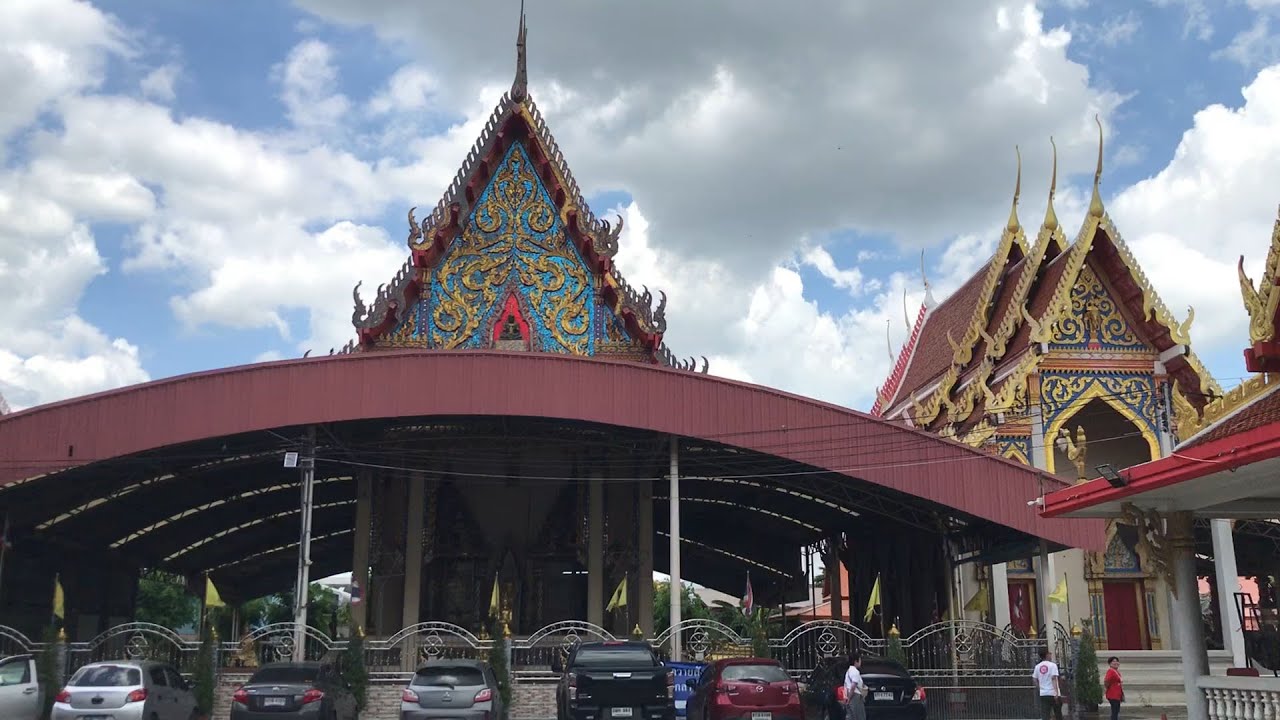
 Click to Access the Navigation Map GPS
Wat Phon Mani Map
Recommend

 Phra Nakhon(24)Dusit(17)Khlong San(7)Khlong Toei(3)Jatujak(2)Don Muang(5)Taling Chan(26)Thon Buri(23)Bangkok Noi(31)Bangkok Yai(13)Bang Kapi(5)Bang Kun Tien(15)Bang Khen(3)Bang Kholam(10)Bang Sue(9)Bang Plad(23)Bang Rak(6)Chom Thong(16)Bung Kum(5)Pra Wet(6)Patum Wan(6)Pom Prap Sattru Phai(11)Paya Thai(1)Pra Kanong(4)Pa Sri Charoen(23)Min Buri(7)Yan Na Wa(8)Ratchathewi(4)Rat Burana(6)Lat Krabang(13)Nong Chok(16)Lat Phrao(4)Sathorn(4)Sam Phan Tha Wong(12)Nong Khaem(7)Huai Khwang(3)Suan Luang(7)Din Daeng(2)Lak Si(1)Sai Mai(8)Khan Na Yao(2)Wang Thong Lang(1)Klong Sam Wa(10)Watthana(2)Bang Na(4)Thawi Watthana(3)Bang Khae(5)Thung Khru(4)Bang Bon(3)


