
lovethailand home >Central Travel Attractions >Bangkok Travel Attractions >Pa Sri Charoen >Pak Khlong Phasi Charoen > Wat Nak Prok
TL;DR: Wat Nak Prok is located at Thoet Thai Soi 49, Pak Khlong Phasi Charoen Subdistrict, Phasi Charoen District, Bangkok, open Daily, hours 08.00 – 18.00.
Wat Nak Prok
Open Days: Daily
Opening Hours: 08.00 – 18.00
Wat Nak Prok is a historic Buddhist temple in Phasi Charoen District, Bangkok. Located on Thoet Thai Soi 49 in an old canal-side community on the Thonburi side of the city, the temple is known for Luang Pho Nak Prok, a revered Buddha image sheltered by a seven-headed naga. Wat Nak Prok is also valued for its late Ayutthaya history, Thai-Chinese artistic details, old mural paintings, boat-shaped ordination hall, Naga Prok Vihara, and meditation facilities that continue to serve local worshippers today.
Wat Nak Prok is suitable for travelers who want to visit a meaningful local temple in Bangkok rather than a crowded landmark. The temple combines religious devotion, old Thonburi community life, Buddhist art, Chinese-influenced murals, and the strong symbolism of the naga. Its name comes directly from the temple’s principal sacred image in the vihara, where a seven-headed naga spreads its hood above a Buddha image in the Mara-subduing posture.
The temple area was formerly surrounded by orchards and waterways. Canals once passed both in front of and behind the temple, and local residents used boats as their main form of transportation. Over time, parts of the canals were filled to create roads, and the surrounding orchards gradually became a dense urban neighborhood of houses, commercial buildings, schools, and community lanes. Despite this urban change, Wat Nak Prok still preserves the identity of a canal-side community temple.
Wat Nak Prok stands on Thoet Thai Soi 49 in Pak Khlong Phasi Charoen Subdistrict, Phasi Charoen District, Bangkok. Its northern side borders Khlong Wat Nak Prok, its eastern side borders Wat Nang Chi Chotikaram, its southern side borders Khlong Bang Wa, and its western side borders Wat Nak Prok School. The close relationship between the temple, the canal, the school, and the local neighborhood shows how Buddhist temples functioned as spiritual, educational, and social centers in old Thonburi communities.
The temple is almost 300 years old. It was formerly called Wat Pok because it stood in an area covered by dense greenery and orchard land. Its foundation is associated with the late Ayutthaya period during the reign of King Borommakot, around 1748, roughly 19 years before the second fall of Ayutthaya. The temple later fell into decline during periods of war and instability, leaving only the old ordination hall and vihara in a deteriorated state before a major restoration took place in the early Rattanakosin period.
The major restoration of Wat Nak Prok is linked with Phra Boribun Thanakon, also known as Chao Sua Phuk Sae Tan, a Chinese junk trader who settled in the Thonburi and Talat Phlu area. With strong faith in Buddhism and gratitude toward the land where his trade had prospered, he restored the old temple. He first repaired the ordination hall and commissioned Chinese craftsmen to paint the walls with auspicious Chinese objects and ritual offerings connected with Mahayana Buddhist beliefs.
The ordination hall of Wat Nak Prok is distinctive because its form curves like the hull of a Chinese junk boat. This architectural detail reflects the Thai-Chinese cultural environment of old Thonburi. Inside the ordination hall, Chinese mural paintings are arranged in panels along the walls. The imagery includes auspicious objects, offerings, and symbolic designs connected with Chinese Buddhist belief. These murals make the ordination hall an important place for understanding Thai-Chinese Buddhist art in Bangkok.
After restoring the ordination hall, Chao Sua Phuk restored a Thai-style vihara as a memorial to his wife. Inside the vihara, Thai mural paintings depict the Buddha’s descent from Tavatimsa Heaven and the victory over Mara before enlightenment. He then brought a Sukhothai Buddha image in the Mara-subduing posture to be enshrined as the principal image of the vihara. A seven-headed naga was built above the image, creating the sacred figure now known as Luang Pho Nak Prok and giving the temple its present name.
Luang Pho Nak Prok is the most important sacred image at the temple. The Buddha image is made of bronze and sits in the Mara-subduing posture, while a seven-headed naga spreads its hood above the Buddha. Most Naga Prok Buddha images are shown in meditation posture, but the principal image at Wat Nak Prok is in the Mara-subduing posture, giving it a distinctive identity. Many worshippers come to pay respect to the image for protection, peace, and auspiciousness.
The Naga Prok Vihara contains several details worth observing carefully. These include the mural paintings, decorative patterns, the naga figures around the vihara, and the Naga Prok Buddha images representing the twelve zodiac signs along the surrounding gallery. Worshippers often walk clockwise around the vihara, chant, make merit for the twelve zodiac signs, and then enter the vihara to pay respect to Luang Pho Nak Prok.
In 2009, the original plaster naga structure above Luang Pho Nak Prok collapsed. Phra Kittisophonwithet (Setthakit Samahito), the abbot, restored the image by casting a new brass naga and applying gold decoration. This restoration preserved the temple’s most recognizable sacred feature while making the structure more stable for present-day worship.
The ordination hall of Luang Pho Chao Sua is another major highlight of Wat Nak Prok. The principal Buddha image in the ordination hall is a bronze Sukhothai Buddha image in the Mara-subduing posture, known as Luang Pho Chao Sua. In 2012, the temple raised and restored the old ordination hall into a two-story structure because the original floor level was lower than the canal behind the temple. Moisture had affected the floor and old murals, so the restoration helped protect the building and its historic artwork.
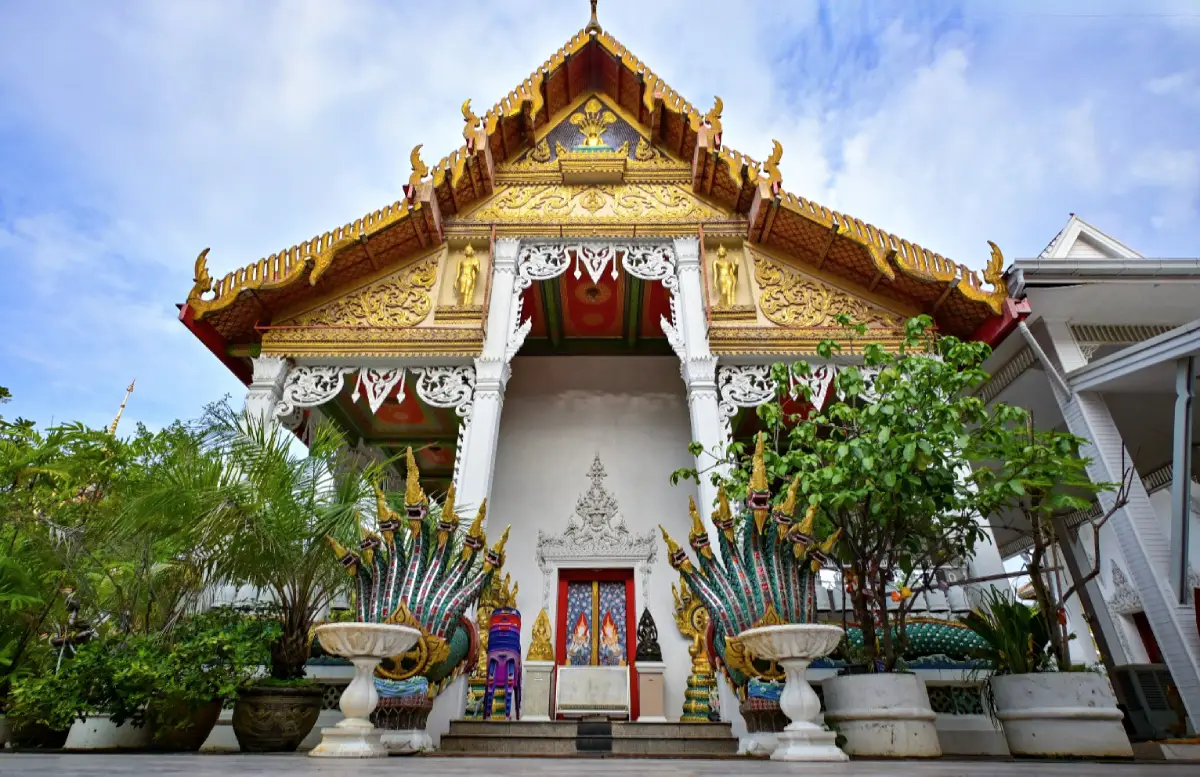
The present ordination hall is bright white and visually striking, with twin naga stairways leading to the entrance. Inside, it continues to preserve the Thai-Chinese artistic character of the temple. The base of the principal Buddha image was redesigned with eight coiling dragons. The five dragons at the front refer to the five powers in Buddhist teaching, while the three dragons at the back refer to the threefold training of morality, concentration, and wisdom. This detail combines Chinese symbolism with Buddhist doctrine.
In 2014, the temple gilded the principal Buddha image and created the new dragon base. In 2016, a five-tiered brass parasol covered with gold leaf was installed above the principal image. These restorations strengthened the ordination hall as both a functioning sacred building and an important artistic landmark within the temple grounds.
One of the temple’s best-known devotional activities is walking beneath the ordination hall. Worshippers follow a prepared route under the raised structure, usually walking three clockwise rounds. Along the way, they pay respect at sacred points such as ancient boundary stones, a replica of the Buddha’s footprint, a sacred water pond, and Buddha images. This practice is associated with renewal, merit-making, asking for forgiveness, and setting one’s mind toward better conduct.
Besides Luang Pho Nak Prok and Luang Pho Chao Sua, Wat Nak Prok has several other sacred points. These include a teakwood Naga Prok Buddha image, Phra Sri Ariya Maitreya, Thao Wessuwan with an ancient four-fanged form, a Buddha footprint, a sacred water pond, a gilding point for old boundary stones, the memorial pavilion of Luang Pu Chu Khongchunam, and the vihara of Luang Pho To and Luang Pho Yai. These features make the temple both a historical site and an active place of worship.
The memorial pavilion of Luang Pu Chu Khongchunam honors an important monastic figure connected with the temple and local community. The vihara of Luang Pho To and Luang Pho Yai is another place where worshippers come to pray and reflect. Together, these areas create a natural walking sequence for visitors: pay respect at the ordination hall, visit the Naga Prok Vihara, then continue to the memorial pavilion and other worship points around the temple.
Wat Nak Prok was registered as an ancient monument by the Fine Arts Department on 13 December 1977. This status reflects the temple’s historical, artistic, and community value. Visitors should avoid touching old murals, decorative details, Buddha images, or architectural features. Inside sacred buildings, keep noise low, move carefully, and respect worshippers who are praying or making merit.
The temple is also active as a place for meditation practice. Wat Nak Prok has a meditation center with programs for youth, adults, organizations, and general practitioners. The practice guidelines emphasize physical and mental readiness, respectful conduct, modest clothing, quiet behavior, and sincere observance of the temple’s rules. This makes Wat Nak Prok more than a sightseeing stop; it is also a place where people can study and practice Buddhism in the middle of Bangkok.
Wat Nak Prok has also received royal attention in modern times. Her Royal Highness Princess Maha Chakri Sirindhorn visited the temple to pay respect to the principal images in the vihara and ordination hall on 16 June 2017. This visit reflects the temple’s significance as a Buddhist site with historical and artistic importance on the Thonburi side of Bangkok.
A recommended visit begins at the front of the temple and the white ordination hall with naga stairways. Visitors can first pay respect to Luang Pho Chao Sua, then observe the Chinese murals and dragon base inside the ordination hall. From there, continue to the Naga Prok Vihara to pay respect to Luang Pho Nak Prok and see the seven-headed naga, the surrounding naga figures, and the zodiac Naga Prok images. After that, visitors can continue to the memorial pavilion, the Luang Pho To Vihara, and other sacred areas.
The atmosphere of Wat Nak Prok is that of an active community temple. It is often visited by local residents, worshippers, and travelers, especially on Buddhist holy days, weekends, and merit-making occasions. Visitors should dress respectfully, keep the space calm, and avoid intrusive photography. The temple is a real place of worship, so its spiritual function should always come before photography or sightseeing.
Getting There is convenient by BTS, bus, taxi, ride-hailing service, or private car. The easiest rail route is to take the BTS Silom Line to Wutthakat Station, then walk or take a motorcycle taxi into Thoet Thai Soi 49 for about 700 meters. Drivers can use Thoet Thai Road, but should check traffic conditions in advance because local roads and community lanes can be busy at certain times of day.
A visit to Wat Nak Prok can be combined with nearby sites such as Wat Nang Chi Chotikaram, Wat Paknam Phasi Charoen, Talat Phlu, Wat Intharam Worawihan, Wat Nang Ratchaworawihan, and Baan Silapin Khlong Bang Luang. This route works well as a half-day or full-day Thonburi cultural trip focused on old temples, Buddhist art, canal communities, and local food.
For travelers interested in Buddhist art, Wat Nak Prok deserves more than a quick stop. The boat-shaped ordination hall, Chinese murals, Thai murals in the vihara, seven-headed naga, Sukhothai Buddha images, dragon base, and contemporary worship route all reveal the layered identity of a Thai-Chinese Buddhist temple in old Bangkok. The temple gives visitors a deeper view of Bangkok’s religious and cultural history beyond the major palace and riverside landmarks.
In summary, Wat Nak Prok is a historic Bangkok temple worth visiting for its late Ayutthaya origins, early Rattanakosin restoration, Thai-Chinese art, sacred Naga Prok Buddha image, living devotional practices, and strong connection with the local Thonburi community. It offers merit-making, calm reflection, artistic appreciation, and a meaningful understanding of Bangkok as a city shaped by canals, temples, trade, and faith.
| Name | Wat Nak Prok |
| Location | Thoet Thai Soi 49, Pak Khlong Phasi Charoen Subdistrict, Phasi Charoen District, Bangkok |
| Address | 99 Thoet Thai Road Soi 49, Pak Khlong Phasi Charoen, Phasi Charoen, Bangkok 10160, Thailand |
| Coordinates | 13.7174, 100.4670 |
| Highlights | Nearly 300-year-old temple with Luang Pho Nak Prok, a Mara-subduing Naga Prok Buddha image, seven-headed naga, boat-shaped ordination hall, Chinese murals, and Naga Prok Vihara |
| History | Founded around 1748 in the late Ayutthaya period; formerly called Wat Pok; later restored in the early Rattanakosin period by Phra Boribun Thanakon, also known as Chao Sua Phuk Sae Tan |
| Name Origin | The name comes from the principal Buddha image in the vihara, sheltered by a seven-headed naga hood |
| Distinctive Features | A Mahanikaya community temple in a former orchard and canal landscape, now surrounded by a large urban community in Phasi Charoen |
| Main Sacred Features | Luang Pho Nak Prok, Luang Pho Chao Sua, teakwood Naga Prok Buddha image, Phra Sri Ariya Maitreya, Thao Wessuwan, Buddha footprint, sacred water pond, ancient boundary stone gilding point, Luang Pu Chu Khongchunam memorial pavilion, and Luang Pho To Vihara |
| Main Areas / Zones | Luang Pho Chao Sua ordination hall, Naga Prok Vihara, zodiac Naga Prok gallery, under-ordination-hall walking route, boundary stone gilding point, memorial pavilion, Luang Pho To Vihara, and meditation center |
| Important Practices | Clockwise walking around the Naga Prok Vihara, walking beneath the raised ordination hall, gilding ancient boundary stones, paying respect to Luang Pho Nak Prok and Luang Pho Chao Sua, and meditation practice |
| Travel Information | Take the BTS Silom Line to Wutthakat Station, then walk or take a motorcycle taxi into Thoet Thai Soi 49 for about 700 meters. The temple is also accessible by private car, taxi, ride-hailing service, and buses on Thoet Thai Road |
| Current Status | Open as a community Buddhist temple in Phasi Charoen District, Bangkok |
| Open Days | Daily |
| Opening Hours | 08.00 – 18.00 |
| Fees | No admission fee |
| Facilities | Parking, toilets, and accessible areas within the temple grounds |
| Abbot / Caretaker | Phra Kittisophonwithet (Setthakit Samahito) |
| Main Contact Number | 02-467-2380 |
| Official Website / Official Page | www.watnakprok.com and Facebook: Wat Nakprok Bangkok |
| Nearby Tourist Attractions | 1. Wat Nang Chi Chotikaram, about 0.2 km 2. Wat Paknam Phasi Charoen, about 1 km 3. Talat Phlu, about 2 km 4. Wat Intharam Worawihan, about 3 km 5. Wat Nang Ratchaworawihan, about 3 km 6. Baan Silapin Khlong Bang Luang, about 4 km |
| Nearby Restaurants | 1. Je Porn Noodle Shop Wat Nak Prok, about 0.2 km, Tel. 065-323-5149, 095-690-1698 2. Mali Home Coffee, Soi Wat Nak Prok, about 0.2 km, Tel. 086-252-7169 3. Bua Loi Yim Lamai, opposite Wat Nak Prok, about 0.2 km, Tel. 080-280-8436 4. Wi Wian Phochana, about 0.3 km, Tel. 084-131-6658 5. Nubtang Pang-Pod, in front of Wat Nak Prok, about 0.2 km, Tel. 091-729-9590 |
| Nearby Accommodations | 1. A House Boutique, about 2 km, Tel. 02-869-1288 2. 28 Place Apartment, about 3 km, Tel. 089-719-2828 3. Bed by Tha-Pra Hotel and Apartment, about 3 km, Tel. 02-868-6888 4. Season Place, about 4 km, Tel. 02-472-5252 5. 14 Resort, about 5 km, Tel. 02-454-9900 6. Bangkok Loft Inn, about 5 km, Tel. 02-862-0300 |
Frequently Asked Questions (FAQ)
Q: Where is Wat Nak Prok located?
A: Wat Nak Prok is located on Thoet Thai Soi 49 in Pak Khlong Phasi Charoen Subdistrict, Phasi Charoen District, Bangkok, near BTS Wutthakat Station.
Q: What is Wat Nak Prok known for?
A: The temple is known for Luang Pho Nak Prok, a Mara-subduing Buddha image sheltered by a seven-headed naga, its boat-shaped ordination hall, Chinese mural paintings, and devotional walking route beneath the raised ordination hall.
Q: What are the opening days and hours of Wat Nak Prok?
A: Wat Nak Prok is open daily from 08.00 to 18.00.
Q: Is there an admission fee at Wat Nak Prok?
A: No. There is no admission fee, but visitors may make merit or donate voluntarily inside the temple.
Q: Why is the temple called Wat Nak Prok?
A: The name comes from the principal Buddha image in the vihara, where a seven-headed naga spreads its hood above the Buddha.
Q: Can visitors reach Wat Nak Prok by BTS?
A: Yes. Take the BTS Silom Line to Wutthakat Station, then walk or take a motorcycle taxi into Thoet Thai Soi 49 for about 700 meters.
Q: What nearby places can be combined with Wat Nak Prok?
A: Nearby places include Wat Nang Chi Chotikaram, Wat Paknam Phasi Charoen, Talat Phlu, Wat Intharam Worawihan, Wat Nang Ratchaworawihan, and Baan Silapin Khlong Bang Luang.
Q: Who is Wat Nak Prok suitable for?
A: It is suitable for travelers interested in Buddhist worship, Thai-Chinese temple art, old Bangkok communities, naga symbolism, and quiet cultural trips on the Thonburi side of Bangkok.
 Category: ●Places of Worship
 Group: ●Temple
Last Update : 1 WeekAgo
 Last Update : 1 WeekAgo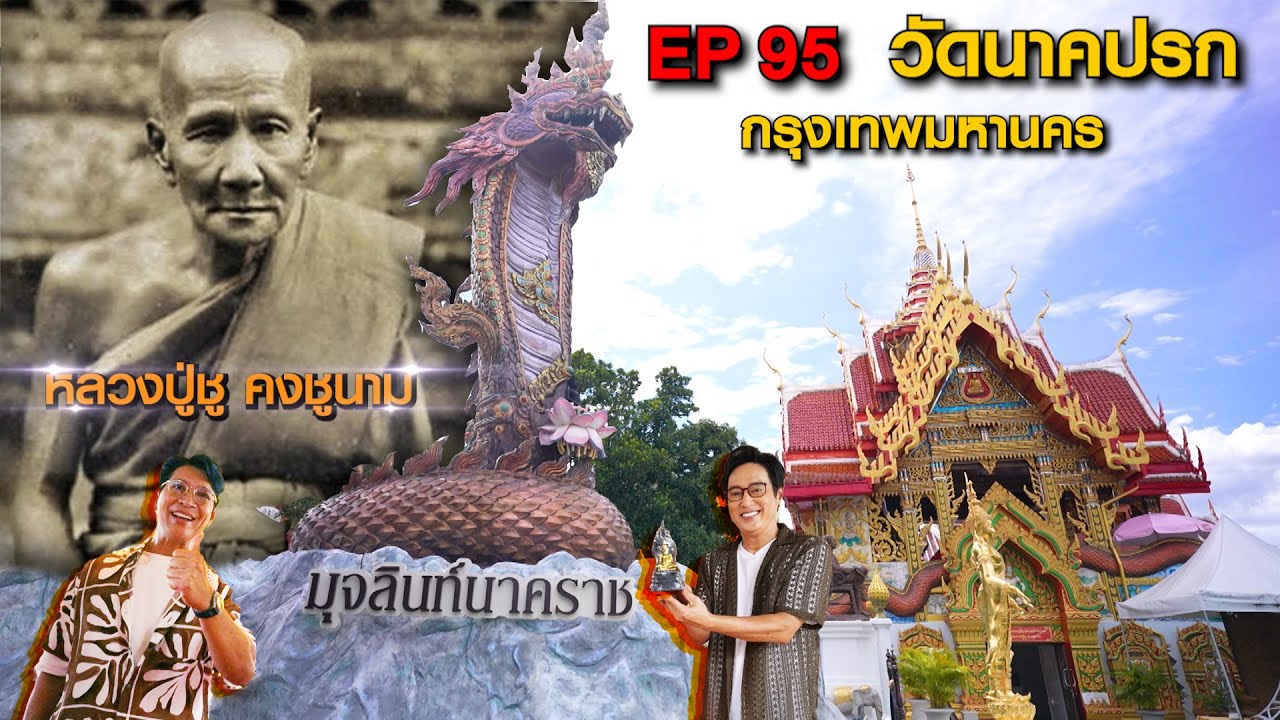
 Click to Access the Navigation Map GPS
Wat Nak Prok Map
Recommend

 Phra Nakhon(24)Dusit(17)Khlong San(7)Khlong Toei(3)Jatujak(2)Don Muang(5)Taling Chan(26)Thon Buri(23)Bangkok Noi(31)Bangkok Yai(13)Bang Kapi(5)Bang Kun Tien(15)Bang Khen(3)Bang Kholam(10)Bang Sue(9)Bang Plad(23)Bang Rak(6)Chom Thong(16)Bung Kum(5)Pra Wet(6)Patum Wan(6)Pom Prap Sattru Phai(11)Paya Thai(1)Pra Kanong(4)Pa Sri Charoen(23)Min Buri(7)Yan Na Wa(8)Ratchathewi(4)Rat Burana(6)Lat Krabang(13)Nong Chok(16)Lat Phrao(4)Sathorn(4)Sam Phan Tha Wong(12)Nong Khaem(7)Huai Khwang(3)Suan Luang(7)Din Daeng(2)Lak Si(1)Sai Mai(8)Khan Na Yao(2)Wang Thong Lang(1)Klong Sam Wa(10)Watthana(2)Bang Na(4)Thawi Watthana(3)Bang Khae(5)Thung Khru(4)Bang Bon(3)


