
lovethailand home >Central Travel Attractions >Bangkok Travel Attractions >Patum Wan >Rong Muang > Wat Chai Mongkhon
TL;DR: Wat Chai Mongkhon is located at Rama I Road / Rama VI Soi 1, Rong Mueang, Pathum Wan, Bangkok, open Daily, hours 08.00 – 17.00.
Wat Chai Mongkhon
Open Days: Daily
Opening Hours: 08.00 – 17.00
Wat Chai Mongkhon is a private Buddhist temple under the Mahanikaya order, located around Rama I Road and Rama VI Soi 1, Rong Mueang Subdistrict, Pathum Wan District, Bangkok 10330. The temple stands in one of Bangkok’s most central urban areas, close to National Stadium BTS Station, Suphachalasai Stadium, MBK Center, Bangkok Art and Culture Centre, Siam Discovery, and Jim Thompson House. It is a convenient temple for merit-making, worship, quiet reflection, and local cultural exploration in the heart of the city.
Wat Chai Mongkhon is valuable as an old community temple of Rong Mueang. Although it is surrounded by major roads, schools, hotels, shopping centers, sports facilities, and cultural venues, the temple continues to function as a living Buddhist site for local residents and visitors. Its importance lies not only in religious worship but also in its role as a historical marker showing how temples, craft communities, and modern Bangkok have existed together over time.
The temple was formerly known as Wat Chang Saeng. The old name is linked with a community of blacksmiths who once lived north of the temple. These craftsmen were known for their metalworking skill and were associated with the making of royal weapons. When a temple was established in the area, the name Wat Chang Saeng reflected the identity of the local craft community. The temple later became known by its present auspicious name, Wat Chai Mongkhon.
The name “Chai Mongkhon” carries the meaning of victory and auspiciousness. This makes the temple meaningful for people who come to pray for blessings, clarity, and good fortune. For residents and workers in Pathum Wan, Rong Mueang, Siam, Ratchathewi, and Rama I Road, the temple is easy to reach for daily merit-making, Buddhist holy days, and important religious occasions.
Wat Chai Mongkhon was registered as a temple in 1847 and received its consecrated boundary for monastic ceremonies in 1861. These dates make it one of the older temples in this part of Bangkok. Its history connects the early Rattanakosin urban community with the modern commercial and cultural district that now surrounds the temple.
The temple compound covers about 4 rai, 1 ngan, and 67 square wah. The grounds are compact but contain the essential elements of a working community temple, including an ordination hall, monks’ residences, a sermon hall, a principal Buddha image, and one pagoda. These structures allow the temple to continue supporting Buddhist ceremonies, merit-making, community activities, and monastic life.
The ordination hall measures about 13 meters wide and 28 meters long. It is a reinforced-concrete building used for formal monastic ceremonies and important Buddhist rites. Inside, the principal Buddha image serves as the main focus of worship. Visitors can pay respect, make merit, and reflect on the meaning of the temple’s auspicious name.
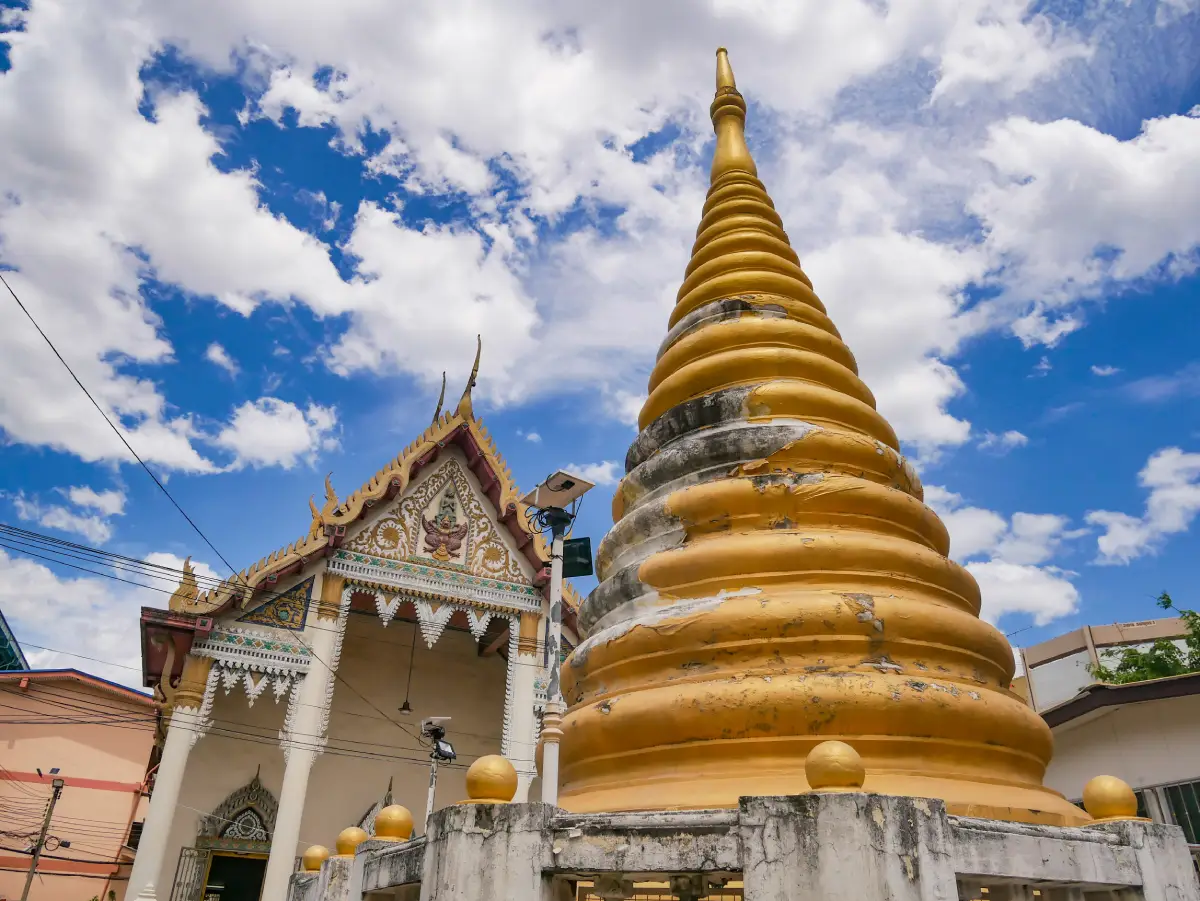
The temple’s pagoda is another important sacred element. While it is not a large tourist landmark, it helps complete the religious character of the temple. In a fast-changing city district, the pagoda stands as a quiet symbol of Buddhist continuity and local devotion.
The sermon hall is a concrete building used for merit-making, Dhamma listening, ceremonies, and community functions. The temple also has 8 monks’ residences, including both concrete and wooden structures. These buildings confirm that Wat Chai Mongkhon is an active temple with resident monks and regular religious use.
Education has also been part of the temple’s role. Wat Chai Mongkhon has long been associated with Buddhist scripture learning in both Dhamma and Pali studies. The temple also allowed public authorities to establish a primary school on temple land, and Wat Chai Mongkhon School remains part of the broader temple-community environment. This reflects the traditional Thai role of temples as places of religion, education, and public benefit.
The current abbot listed in recent Kathin information is Phra Khru Prayut Punyakon, also known as Boonyong. The same recent data records 14 resident monks in 2025 and a Kathin ceremony scheduled for late October. These details confirm that Wat Chai Mongkhon remains an active temple with resident monks and continuing Buddhist ceremonies.
Important activities at Wat Chai Mongkhon include merit-making on Buddhist holy days, Sangha dana offerings, Dhamma listening, candlelight processions on major Buddhist days, Kathin ceremonies, robe offerings, funerals, and community events. In 2026, Pathum Wan District information recorded Songkran activities in the Wat Chai Mongkhon community, including bathing Buddha images, respectfully pouring water for monks, and asking blessings from elderly residents.
The Songkran activities at Wat Chai Mongkhon show the temple’s continuing social role. In an area dominated by main roads, malls, hotels, and public transport, the temple still provides a space for Thai tradition, respect for elders, Buddhist devotion, and neighborhood connection. This makes it a meaningful community anchor in central Bangkok.
The atmosphere of Wat Chai Mongkhon is compact, local, and calm. Visitors will find the temple gate, ordination hall, sermon hall, monks’ residences, pagoda, and merit-making spaces within a walkable compound. Its main appeal is the chance to experience an old neighborhood temple in the middle of one of Bangkok’s busiest districts.
For visitors interested in local history, the temple’s former name, Wat Chang Saeng, is especially important. It preserves the memory of a blacksmith community and links the temple to the craft history of early Bangkok. This gives Wat Chai Mongkhon value beyond worship, making it part of the cultural history of Rong Mueang and Pathum Wan.
Wat Chai Mongkhon can be included in a walking route with nearby sites such as Wat Chamni Hatthakan, Wat Sa Bua, Wat Borom Niwat Ratchaworawihan, Bangkok Art and Culture Centre, Jim Thompson House, MBK Center, and Siam Discovery. This makes the temple suitable for travelers who want to combine worship, local history, contemporary art, shopping, and food in one central Bangkok route.
Getting There is convenient by BTS, car, taxi, local transport, or canal boat. The easiest public transport route is to get off at National Stadium BTS Station and continue on foot or by a short local ride. Drivers can approach via Rama I Road or Rama VI Road. Visitors using the Saen Saep canal boat can get off at Saphan Hua Chang Pier and continue toward the National Stadium area.
Because the temple is close to National Stadium BTS Station, it is suitable for travelers who do not want to use a private car. A good half-day plan is to visit the temple in the morning, then continue to Bangkok Art and Culture Centre, MBK Center, Jim Thompson House, Siam Discovery, or the Banthat Thong food area.
Visitors should dress modestly, keep their voices low, and respect monks’ areas because the temple remains active with resident monks. Avoid making noise around the ordination hall, monks’ residences, and ceremonial spaces. On Buddhist holy days, Kathin days, funerals, or community festivals, allow extra travel time and follow temple instructions.
Those who wish to offer Sangha dana should choose useful items such as drinking water, dry food, basic medicine, cleaning supplies, or donations according to personal faith. Merit-making at a central Bangkok community temple is best done with simplicity, respect, and awareness that the temple is both a sacred site and a daily-use space for monks and residents.
In summary, Wat Chai Mongkhon is an old Mahanikaya private temple in Pathum Wan District with a history linked to the former Wat Chang Saeng and the blacksmith community of Rong Mueang. The temple has an ordination hall, principal Buddha image, pagoda, sermon hall, monks’ residences, Buddhist education history, Kathin activities, and continuing community traditions. It is a worthwhile stop for worship, merit-making, local history, and a walking route around National Stadium, Siam, and Rong Mueang.
| Name | Wat Chai Mongkhon |
| Former Name | Wat Chang Saeng |
| Location | Rama I Road / Rama VI Soi 1, Rong Mueang, Pathum Wan, Bangkok |
| Address | 1 Rama VI Soi 1, Rong Mueang, Pathum Wan, Bangkok 10330 / 375 Rama I Road, Rong Mueang, Pathum Wan, Bangkok 10330, Thailand |
| Coordinates | 13.74795, 100.52280 |
| Temple Type | Private Buddhist Temple Under The Mahanikaya Order |
| Land Area | 4 Rai 1 Ngan 67 Square Wah |
| Highlights | Old community temple in central Bangkok near National Stadium and Siam, with a history linked to a blacksmith community, an ordination hall, principal Buddha image, pagoda, sermon hall, and continuing community activities |
| History | Registered as a temple in 1847 and granted consecrated boundary in 1861; historically linked with the former Wat Chang Saeng and the old blacksmith community of Rong Mueang |
| Name Origin | Formerly called Wat Chang Saeng after the local blacksmith community; later renamed Wat Chai Mongkhon, an auspicious name associated with victory and blessing |
| Original Setting | Flat urban land surrounded by the Rong Mueang community, Rama I Road, Rama VI Road, National Stadium, schools, and the Siam area |
| Main Areas / Zones | Ordination Hall, Principal Buddha Image, Pagoda, Sermon Hall, Monks’ Residences, Merit-Making Areas, Ceremonial Areas |
| Main Buildings | Ordination hall 13 meters wide and 28 meters long, 8 monks’ residences, and a concrete sermon hall |
| Main Buddha Image / Sacred Objects | Principal Buddha image in the ordination hall and one pagoda |
| Abbot / Caretaker | Phra Khru Prayut Punyakon, also known as Boonyong |
| Resident Monks | 14 monks according to 2025 Kathin information |
| Education | Associated with Buddhist scripture education in Dhamma and Pali studies, and with Wat Chai Mongkhon School in the temple-community area |
| Key Activities | Buddhist holy day merit-making, Sangha dana, Dhamma listening, candlelight processions, Kathin ceremonies, robe offerings, funerals, and Songkran community activities |
| Travel Information | Get off at National Stadium BTS Station and walk or take a short local ride. Drivers can use Rama I Road or Rama VI Road. Saen Saep canal boat users can get off at Saphan Hua Chang Pier and continue toward National Stadium |
| Current Status | Open as an active Buddhist temple with resident monks, Kathin activities, merit-making, and continuing community activities in Pathum Wan District |
| Open Days | Daily |
| Opening Hours | 08.00 – 17.00 |
| Facilities | Merit-making areas, sermon hall, ceremonial areas, parking area, and accessible entrance |
| Main Contact Number | 02-219-3554 |
| Nearby Tourist Attractions | 1. National Stadium / Suphachalasai Stadium, about 1 km, Tel. 02-214-0120 2. Bangkok Art and Culture Centre, about 1 km, Tel. 02-214-6630 3. MBK Center, about 1 km, Tel. 1285 4. Jim Thompson House Museum, about 1 km, Tel. 02-216-7368 5. Siam Discovery, about 1 km, Tel. 02-658-1000 6. Wat Pathum Wanaram Ratchaworawihan, about 2 km, Tel. 02-251-6469 |
| Nearby Restaurants | 1. Wang Mai Cafe, National Stadium, about 1 km, Tel. 094-220-5366 2. Krit Thai Residence Restaurant, about 1 km, Tel. 02-219-4100 3. Khanom Chin Bangkok, Rama I Road, about 2 km, Tel. 02-612-4578 4. Je Kiang Banthat Thong, about 2 km, Tel. 086-884-4352 5. ThamMe Banthat Thong, about 2 km, Tel. 063-212-4459 6. Pa Khao Banthat Thong, about 2 km, Tel. 090-986-9789 |
| Nearby Accommodations | 1. Krit Thai Residence, about 1 km, Tel. 02-219-4100 2. ibis Bangkok Siam, about 1 km, Tel. 02-874-7111 3. Mercure Bangkok Siam, about 1 km, Tel. 02-874-7222 4. Holiday Inn Express Bangkok Siam, about 1 km, Tel. 02-217-7555 5. Siam@Siam Design Hotel Bangkok, about 1 km, Tel. 02-217-3000 6. Hua Chang Heritage Hotel, about 1 km, Tel. 02-217-0777 |
Frequently Asked Questions (FAQ)
Q: Where is Wat Chai Mongkhon located?
A: Wat Chai Mongkhon is located around Rama I Road and Rama VI Soi 1, Rong Mueang Subdistrict, Pathum Wan District, Bangkok 10330, near National Stadium BTS Station, MBK Center, and Bangkok Art and Culture Centre.
Q: What are the opening days and hours of Wat Chai Mongkhon?
A: Wat Chai Mongkhon is open daily from 08.00 to 17.00. Visitors who plan to join a specific ceremony, Kathin event, or funeral service should contact the temple before traveling.
Q: What is the history of Wat Chai Mongkhon?
A: Wat Chai Mongkhon is an old temple of Rong Mueang. It was formerly known as Wat Chang Saeng and was historically linked with a blacksmith community north of the temple. It was registered as a temple in 1847 and granted its consecrated boundary in 1861.
Q: What was the former name of Wat Chai Mongkhon?
A: The former name was Wat Chang Saeng, a name connected with the local blacksmith community that once lived near the temple.
Q: Who is the abbot of Wat Chai Mongkhon?
A: The abbot listed in recent Kathin information is Phra Khru Prayut Punyakon, also known as Boonyong.
Q: What are the main areas inside Wat Chai Mongkhon?
A: Main areas include the ordination hall, principal Buddha image, one pagoda, sermon hall, monks’ residences, merit-making spaces, and ceremonial areas.
Q: How can visitors get to Wat Chai Mongkhon?
A: The easiest route is to take the BTS to National Stadium Station and walk or take a short local ride. Drivers can use Rama I Road or Rama VI Road, while canal boat users can get off at Saphan Hua Chang Pier and continue toward the National Stadium area.
Q: What nearby places can be visited with Wat Chai Mongkhon?
A: Nearby places include National Stadium, Bangkok Art and Culture Centre, MBK Center, Jim Thompson House Museum, Siam Discovery, Wat Pathum Wanaram Ratchaworawihan, and the Banthat Thong food area.
 Category: ●Places of Worship
 Group: ●Temple
Last Update : 1 WeekAgo
 Last Update : 1 WeekAgo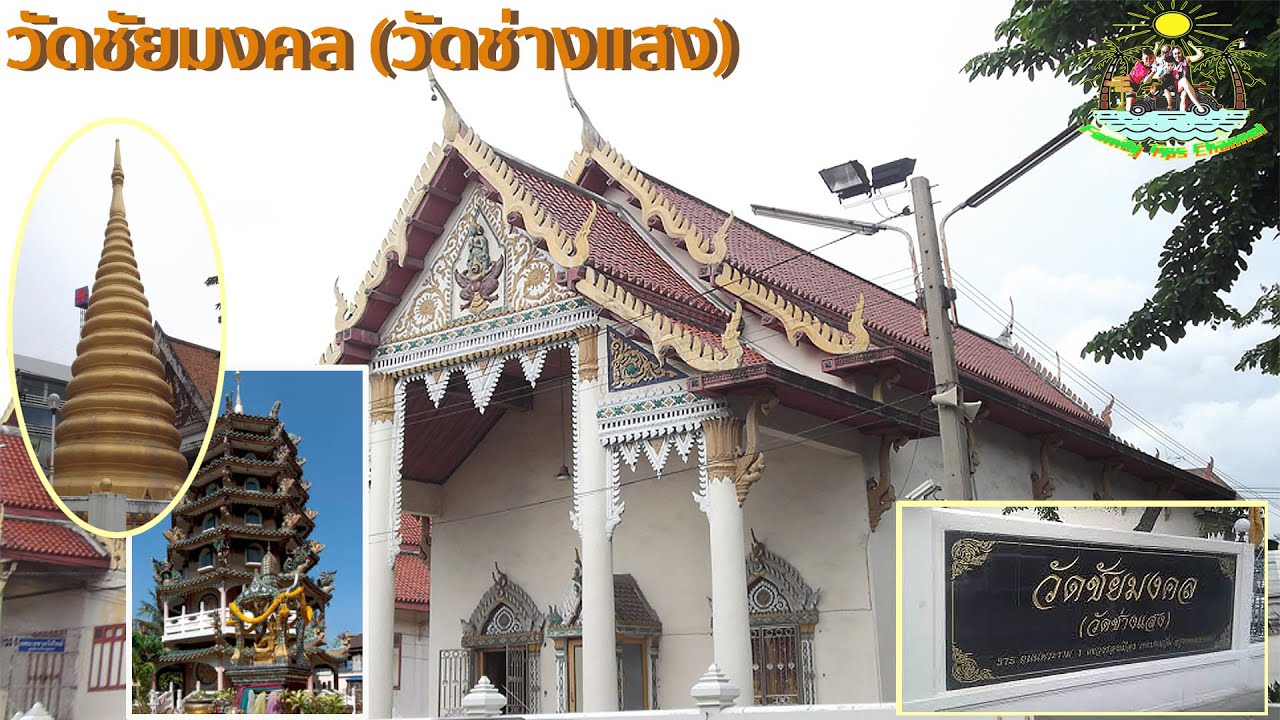
 Click to Access the Navigation Map GPS
Wat Chai Mongkhon Map
Recommend

 Phra Nakhon(24)Dusit(17)Khlong San(7)Khlong Toei(3)Jatujak(2)Don Muang(5)Taling Chan(26)Thon Buri(23)Bangkok Noi(31)Bangkok Yai(13)Bang Kapi(5)Bang Kun Tien(15)Bang Khen(3)Bang Kholam(10)Bang Sue(9)Bang Plad(23)Bang Rak(6)Chom Thong(16)Bung Kum(5)Pra Wet(6)Patum Wan(6)Pom Prap Sattru Phai(11)Paya Thai(1)Pra Kanong(4)Pa Sri Charoen(23)Min Buri(7)Yan Na Wa(8)Ratchathewi(4)Rat Burana(6)Lat Krabang(13)Nong Chok(16)Lat Phrao(4)Sathorn(4)Sam Phan Tha Wong(12)Nong Khaem(7)Huai Khwang(3)Suan Luang(7)Din Daeng(2)Lak Si(1)Sai Mai(8)Khan Na Yao(2)Wang Thong Lang(1)Klong Sam Wa(10)Watthana(2)Bang Na(4)Thawi Watthana(3)Bang Khae(5)Thung Khru(4)Bang Bon(3)


