
lovethailand home >Central Travel Attractions >Bangkok Travel Attractions >Dusit >Thanon Nakhon Chai Yot Ri > Wat Chom Sudaram
TL;DR: Wat Chom Sudaram is located at Nakhon Chai Si Road, near Sawankhalok Road, Khlong Samsen, and Ratchawat, Thanon Nakhon Chai Si, Dusit District, Bangkok, open Daily, hours Open 24 Hours.
Wat Chom Sudaram
Open Days: Daily
Opening Hours: Open 24 Hours
Wat Chom Sudaram in Bangkok, also known locally as Wat Phrai Ngam, is an old private community temple under the Maha Nikaya Order. It is located at 1516 Nakhon Chai Si Road, Thanon Nakhon Chai Si Subdistrict, Dusit District, Bangkok 10300, near Sawankhalok Road, Khlong Samsen, the Ratchawat area, Sam Sen Railway Station, Phramongkutklao College of Medicine, and old residential communities in Dusit. The temple is significant as a historic Rattanakosin-period community monastery connected with Princess Darawadi and Prince Itsaraphong, and as a cultural site preserving an ordination hall with stucco decoration, contemporary Buddhist murals, paired boundary stones, twelve-indented-corner stupas, Chinese stone lions, a Buddha footprint, relic worship areas, and Luang Pho Pho, a revered Sukhothai-style Buddha image.
Wat Chom Sudaram is suitable for visitors who want to understand Bangkok through a quiet neighborhood temple rather than only through major tourist landmarks. The temple compound is not large, but it contains several layers of meaning. It began from a former royal residence area, developed into a Buddhist monastery, carried local names connected with the shaded canal-side environment, and today remains an active community temple with resident monks, Buddhist activities, merit-making, Dhamma practice, and a notable contemporary mural project inside the ordination hall.
The history of Wat Chom Sudaram began in the late reign of King Rama III, around 1847. The site was formerly a royal garden and residence of Princess Darawadi, a daughter of Somdet Phra Bowonratchao Maha Sura Singhanat and later consort of Somdet Phra Bowonratchao Maha Sakdiphonlasep, the Front Palace of King Rama III. This gives the temple a direct connection with the Front Palace lineage and the northern side of old Bangkok during the early Rattanakosin period.
The creation of the temple is closely associated with Prince Itsaraphong, the son of Princess Darawadi. He dedicated the royal garden and residence to Buddhism, and the temple was built over several years before becoming a community monastery. The temple received its consecrated boundary in 1861. Because it originated from a former royal residence, Wat Chom Sudaram is not simply a neighborhood temple; it preserves a memory of royal patronage, personal devotion, and the transformation of a private royal space into a public Buddhist space.
Local people once called the temple Wat Phrai Ngam, Wat Phrai Ngam in variant forms, or Wat Sai Ngam. These names are connected with the old environment beside Khlong Samsen, where the area was shaded, green, and cooled by the canal. In 1899, when King Chulalongkorn, Rama V, visited the canal-side temples of Samsen to offer royal Kathina robes, he bestowed the name Wat Chom Sudaram in memory of Princess Darawadi and Prince Itsaraphong, who had shown strong faith in Buddhism.
The name Wat Chom Sudaram is meaningful because it preserves the memory of a royal woman associated with the temple’s origin. It makes the temple more than a canal-side monastery. It is also a memorial landscape connected with the Front Palace, women in royal history, and the act of dedicating personal space to Buddhist use. The local name Wat Phrai Ngam, meanwhile, preserves the memory of the temple’s former natural surroundings beside Khlong Samsen.
The temple stands on low-lying land beside Khlong Samsen and covers approximately 8 rai, 3 ngan, and 16 square wah. The southern side borders Khlong Samsen, the eastern side is near Sawankhalok Road, the northern and eastern sides connect with dense residential areas, and the western side borders former government-related land. This setting gives the temple the strong character of a neighborhood monastery embedded in an old Dusit community.
The compound contains several functional areas and religious buildings. Important structures include the ordination hall, surrounding gallery, monks’ residences, chanting hall, preaching hall, small viharas, Buddha footprint shrine, bell tower, waterside pavilion, and spaces for Buddhist activities. The monks’ residences are arranged in 8 sections. These elements show that Wat Chom Sudaram serves not only as a place for occasional visitors but also as a living monastery supporting worship, merit-making, chanting, Dhamma study, ordination, and community activity.
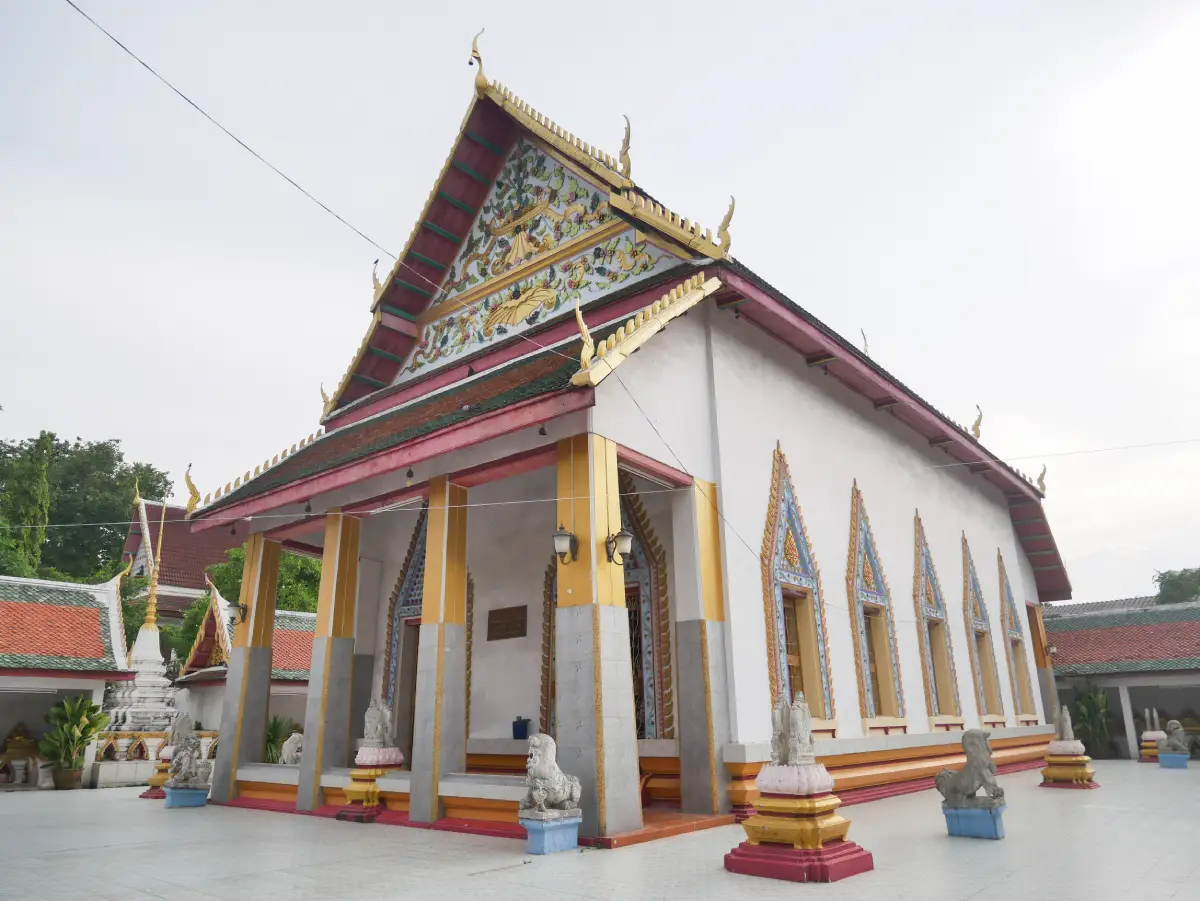
The ordination hall is the temple’s most important structure. It is a masonry building decorated with stucco work on the pediment, doors, windows, walls, and ceiling. Around the exterior are paired boundary stones, twelve-indented-corner stupas, Chinese stone lions, and a crystal wall enclosing the sacred area. These features give the hall a distinctive character as a community-temple ordination hall shaped by Thai Buddhist architecture and Chinese decorative influence, a combination often seen in Rattanakosin-period Bangkok temples.
The beauty of the ordination hall lies in its careful details. Stucco decoration enriches the pediment and architectural frames. The paired boundary stones define the sacred space for monastic rites. The indented-corner stupas create rhythm around the hall. The Chinese stone lions suggest guardianship and reflect the wider Thai-Chinese artistic environment of Bangkok. Visitors should look not only at the building as a whole but also at the small details around the doors, windows, boundary stones, and surrounding wall.
Inside the ordination hall are contemporary Buddhist mural paintings that form one of the temple’s most important modern highlights. The mural project was designed by Panya Vijinthanasarn, a National Artist in visual arts, with the participation of master’s degree students from the Faculty of Painting, Silpakorn University. The work took about 2 years and interprets Buddhist themes through contemporary Buddhist art while respecting the sacred character of the ordination hall.
The murals cover the 4 walls of the ordination hall and present different themes. They include images of the Buddha, white lotus flowers as symbols of Buddhism, and celestial assemblies. Behind the principal Buddha image, deities dressed in royal-style attire gather around the sacred center. The paintings show how an old temple can remain artistically active, allowing contemporary artists to create new Buddhist art within a historic religious setting.
Luang Pho Pho is the temple’s important revered Buddha image. It is an old Sukhothai-style Buddha image in the subduing Mara posture, with a lap width of about 2 sok. Local worshippers pay respect to the image for auspiciousness, peace of mind, and stability in life. Sukhothai-style Buddha images are admired for their serene expression, graceful form, and balanced proportions, and Luang Pho Pho gives Wat Chom Sudaram a strong devotional focus.
Other sacred objects in the temple include a replica Buddha footprint, Buddha relics, and several old Buddha images housed in small viharas and surrounding pavilions. Visitors should therefore not stop only at the ordination hall. A slow walk around the gallery, pavilions, and surrounding sacred spaces reveals how the temple is organized in multiple devotional layers: the main monastic ritual space, smaller worship points, and community merit-making areas.
The Buddha footprint has special meaning because it symbolizes the presence of the Buddha’s teaching and the act of following the path of Dhamma. For visitors in Bangkok, it offers a chance to pay respect to a symbolic footprint without traveling to major Buddha-footprint sites outside the city. The relic worship area adds another layer of reverence and strengthens the temple’s religious identity.
The twelve-indented-corner stupas around the ordination hall are also worth observing. Their form creates elegant edges and shadows, contributing to the sacred rhythm of the ordination-hall compound. Together with the crystal wall, boundary stones, and Chinese stone lions, the stupas define the Buddhist sacred zone and give the temple a distinctive visual character.
The Chinese stone lions around the ordination hall reflect both protective symbolism and Chinese artistic taste. Such figures often function as guardians of sacred or important buildings. At Wat Chom Sudaram, they add a Thai-Chinese layer to the temple’s visual environment, showing the broader cultural exchange that shaped Bangkok temple architecture during the Rattanakosin period.
Wat Chom Sudaram was officially registered as a historic site on 13 September 1996. This status confirms its cultural value and supports the preservation of the ordination hall, sacred objects, architectural features, and historical setting. Visitors should treat the site respectfully, avoid touching stucco work, murals, Buddha images, and old objects, and follow temple instructions when viewing the ordination hall or sacred areas.
The temple atmosphere is clean, bright, peaceful, and shaded. Although the temple stands in a dense urban community and many local people pass through the area, the compound still provides a calm space for worship. Mature trees, orderly monks’ residences, and compact religious buildings give the temple a quiet neighborhood character. This living quality is part of its appeal because visitors encounter not a staged tourist site, but an active Buddhist monastery inside an old Bangkok community.
Wat Chom Sudaram remains active under the abbacy of Phra Khru Methee Chayaphiwat, Phaitun Atthawongso, who has served as abbot since 2016. The temple has resident monks and continues to participate in Kathina activities and important Buddhist occasions. Its official website also refers to merit-making, alms offering, Dhamma listening, and activities on Buddhist holy days, showing that the temple remains a living religious institution rather than only a preserved historic site.
The temple also supports Dhamma learning and ordination-related activities. Its official information includes Brahmin-nun practice and guidance for men who wish to enter Buddhist monastic training. These activities show that Wat Chom Sudaram is valuable not only for art and history, but also as a place for moral training, Dhamma study, and practical Buddhist life.
The temple’s connection with the surrounding community is another important aspect. The neighborhood includes dense residential areas and working families, and the temple remains a shared religious center for local merit-making and ceremonies. Such community temples are essential to Bangkok’s old districts because they preserve social continuity, religious memory, and shared public space amid urban change.
A good visit should begin at the ordination hall. Pay respect inside, observe the contemporary murals quietly, then walk outside to see the paired boundary stones, twelve-indented-corner stupas, Chinese stone lions, crystal wall, pavilions, and Buddha footprint area. Continue to pay respect to Luang Pho Pho and other old Buddha images. This sequence allows visitors to understand both the main sacred space and the surrounding devotional details that give the temple its character.
Getting There is convenient by private car, taxi, public bus, or walking from Sam Sen Railway Station and the Ratchawat area. The clearest destination is Wat Chom Sudaram, 1516 Nakhon Chai Si Road, Thanon Nakhon Chai Si, Dusit District, Bangkok. Useful landmarks include Sam Sen Railway Station, Phramongkutklao College of Medicine, Sawankhalok Road, Khlong Samsen, and Ratchawat Market. Traffic on Nakhon Chai Si Road can be slow during busy periods, so visitors should allow extra time.
Visitors using public transport can take buses serving Nakhon Chai Si Road, Sawankhalok Road, Samsen Road, or the Ratchawat area and continue on foot. The temple can be combined with nearby places such as Sam Sen Railway Station, Ratchawat Market, the Chitralada Palace area from the outside, Wat Benchamabophit Dusitwanaram, Wat Rachathiwat Ratchaworawihan, the National Library of Thailand, and the Bank of Thailand Learning Center.
The best time to visit is in the morning or late afternoon. Morning is suitable for worship and merit-making in a calmer atmosphere. Late afternoon is suitable for viewing the ordination hall and murals in softer natural light. Visitors should dress modestly, speak quietly, avoid blocking worshippers, avoid touching murals and sacred objects, and follow the instructions of monks or temple staff.
Overall, Wat Chom Sudaram is a compact temple with several layers of value. It tells the story of Princess Darawadi’s former residence, Prince Itsaraphong’s dedication of the site to Buddhism, the local name Wat Phrai Ngam, the shaded setting beside Khlong Samsen, a masonry ordination hall with stucco work, paired boundary stones, indented-corner stupas, Chinese stone lions, Luang Pho Pho, a Buddha footprint, relic worship, and contemporary murals created through collaboration between a National Artist and younger artists.
Wat Chom Sudaram is therefore a worthwhile stop for travelers who want to see Bangkok in detail and understand the role of community temples in old districts. Its appeal is not grandeur, but memory, devotion, art, and continuity. A slow visit reveals a temple that functions as a historic site, a living monastery, a contemporary Buddhist art space, and a community religious center in Dusit.
| Name | Wat Chom Sudaram |
| Common Names | Wat Phrai Ngam, Wat Phrai Ngam, Wat Sai Ngam |
| Type | Private Community Temple Under The Maha Nikaya Order |
| Location | Nakhon Chai Si Road, near Sawankhalok Road, Khlong Samsen, and Ratchawat, Thanon Nakhon Chai Si, Dusit District, Bangkok |
| Address | 1516 Nakhon Chai Si Road, Thanon Nakhon Chai Si, Dusit District, Bangkok 10300, Thailand |
| Coordinates | 13.7755, 100.52727 |
| Temple Area | Approximately 8 Rai, 3 Ngan, 16 Square Wah |
| Highlights | Masonry Ordination Hall, Stucco Decoration, Contemporary Murals, Paired Boundary Stones, Twelve-Indented-Corner Stupas, Chinese Stone Lions, Buddha Footprint, Buddha Relics, And Luang Pho Pho |
| History | Founded around 1847 in the reign of King Rama III from the former royal garden and residence of Princess Darawadi; received its consecrated boundary in 1861 |
| Name Origin | The name Wat Chom Sudaram was bestowed by King Rama V in memory of Princess Darawadi and Prince Itsaraphong; the local name Wat Phrai Ngam reflects the temple’s formerly green and shaded canal-side setting |
| Distinctive Features | An old community temple in Dusit combining Front Palace-related history, ordination-hall architecture, sacred objects, and contemporary Buddhist murals in one compound |
| Main Areas / Zones | Ordination Hall, Surrounding Gallery, Pavilions, Twelve-Indented-Corner Stupas, Buddha Footprint Area, Chanting Hall, Preaching Hall, Small Viharas, Bell Tower, Waterside Pavilion, 8 Monks’ Residential Sections, And Religious Activity Areas |
| Main Buddha Images / Sacred Objects | Luang Pho Pho, An Old Sukhothai-Style Buddha Image In The Subduing Mara Posture, Together With The Buddha Footprint, Buddha Relics, And Old Buddha Images In The Pavilions And Small Viharas |
| Important Murals | Contemporary Buddhist murals inside the ordination hall, designed by National Artist Panya Vijinthanasarn and created with master’s degree students from the Faculty of Painting, Silpakorn University |
| Historic-Monument Status | Registered as a historic site on 13 September 1996 |
| Travel Information | Accessible by private car, taxi, public bus, or walking from Sam Sen Railway Station and the Ratchawat area; use Wat Chom Sudaram, Nakhon Chai Si Road, Dusit, Bangkok as the map destination |
| Current Status | Open for regular visits, worship, merit-making, Dhamma listening, and Buddhist religious activities |
| Open Days | Daily |
| Opening Hours | Open 24 Hours |
| Facilities / Functional Areas | Parking Area, Ordination Hall, Preaching Hall, Chanting Hall, Waterside Pavilion, Worship Areas, Dhamma Listening Areas, Brahmin-Nun Practice Area, And Religious Activity Areas |
| Abbot / Caretaker | Phra Khru Methee Chayaphiwat, Phaitun Atthawongso |
| Main Contact Number | 082-465-5525, 092-397-9712 |
| Official Website / Official Page | watchomsudaram.com |
| Nearby Tourist Attractions | 1. Sam Sen Railway Station, about 0.7 km 2. Ratchawat Market, about 1 km 3. Chitralada Palace Area, about 1.4 km 4. Wat Benchamabophit Dusitwanaram, about 2.3 km 5. Wat Rachathiwat Ratchaworawihan, about 2.5 km, Tel. 02-668-7988 6. National Library Of Thailand, about 2.7 km, Tel. 02-280-9828-32 7. Bank Of Thailand Learning Center, about 3.5 km, Tel. 02-356-7766 |
| Nearby Restaurants | 1. Aharn Tam Sang By Ratchawat, about 0.6 km, Tel. 061-012-2904 2. Hat Yai Chickie Ratchawat, about 0.8 km, Tel. 063-114-5656 3. Teacher Nong’s Pork Leg Rice Ratchawat By Namwan, about 1 km, Tel. 099-791-4145 4. Salt And Pepper Stir-Fry Ratchawat, about 1.1 km, Tel. 095-865-5805 5. Rit Ka Prao Ratchawat Branch, about 1.1 km, Tel. 064-292-3155 6. KinSen Nakhon Chai Si Road, about 1.3 km, Tel. 089-821-7579 7. Krua Apsorn Samsen Road Branch, about 3 km, Tel. 02-668-8788 |
| Nearby Accommodations | 1. YANH Ratchawat Hotel, about 1.1 km, Tel. 02-180-6450 2. UMA Residence Bangkok, about 1.8 km, Tel. 02-669-3296 3. The Siam Bangkok, about 2.3 km, Tel. 02-206-6999 4. SSIP Boutique Dhevej Bangkok, about 3.4 km, Tel. 095-514-5151 5. The Raweekanlaya Bangkok, about 3.6 km, Tel. 02-628-5999 6. Penpark Place Hotel, about 4 km, Tel. 02-628-8896 7. SamSenSam Place, about 4.2 km, Tel. 02-628-7067 |
Frequently Asked Questions (FAQ)
Q: Where Is Wat Chom Sudaram Located?
A: Wat Chom Sudaram is located at 1516 Nakhon Chai Si Road, Thanon Nakhon Chai Si Subdistrict, Dusit District, Bangkok 10300, near Sawankhalok Road, Khlong Samsen, Ratchawat, and Sam Sen Railway Station.
Q: What Are The Opening Hours Of Wat Chom Sudaram?
A: The temple is open daily, with listed opening hours as open 24 hours for regular access to the temple compound.
Q: Does Wat Chom Sudaram Have Other Names?
A: Yes. Local names include Wat Phrai Ngam and Wat Sai Ngam, reflecting the temple’s formerly green and shaded canal-side surroundings beside Khlong Samsen.
Q: Why Is Wat Chom Sudaram Important?
A: Wat Chom Sudaram is an old private community temple in Dusit, built from the former royal garden and residence of Princess Darawadi. It was registered as a historic site on 13 September 1996.
Q: What Are The Main Highlights Inside Wat Chom Sudaram?
A: Key highlights include the masonry ordination hall, stucco decoration, contemporary murals, paired boundary stones, twelve-indented-corner stupas, Chinese stone lions, Buddha footprint, Buddha relics, and Luang Pho Pho.
Q: Who Is Luang Pho Pho?
A: Luang Pho Pho is an old Sukhothai-style Buddha image in the subduing Mara posture with a lap width of about 2 sok. It is an important revered image of Wat Chom Sudaram.
Q: Who Is The Current Abbot Of Wat Chom Sudaram?
A: The current abbot is Phra Khru Methee Chayaphiwat, Phaitun Atthawongso.
Q: What Nearby Places Can Be Visited After Wat Chom Sudaram?
A: Nearby places include Sam Sen Railway Station, Ratchawat Market, Wat Benchamabophit Dusitwanaram, Wat Rachathiwat Ratchaworawihan, the National Library of Thailand, and the Bank of Thailand Learning Center.
 Category: ●Places of Worship
 Group: ●Temple
Last Update : 2 WeekAgo
 Last Update : 2 WeekAgo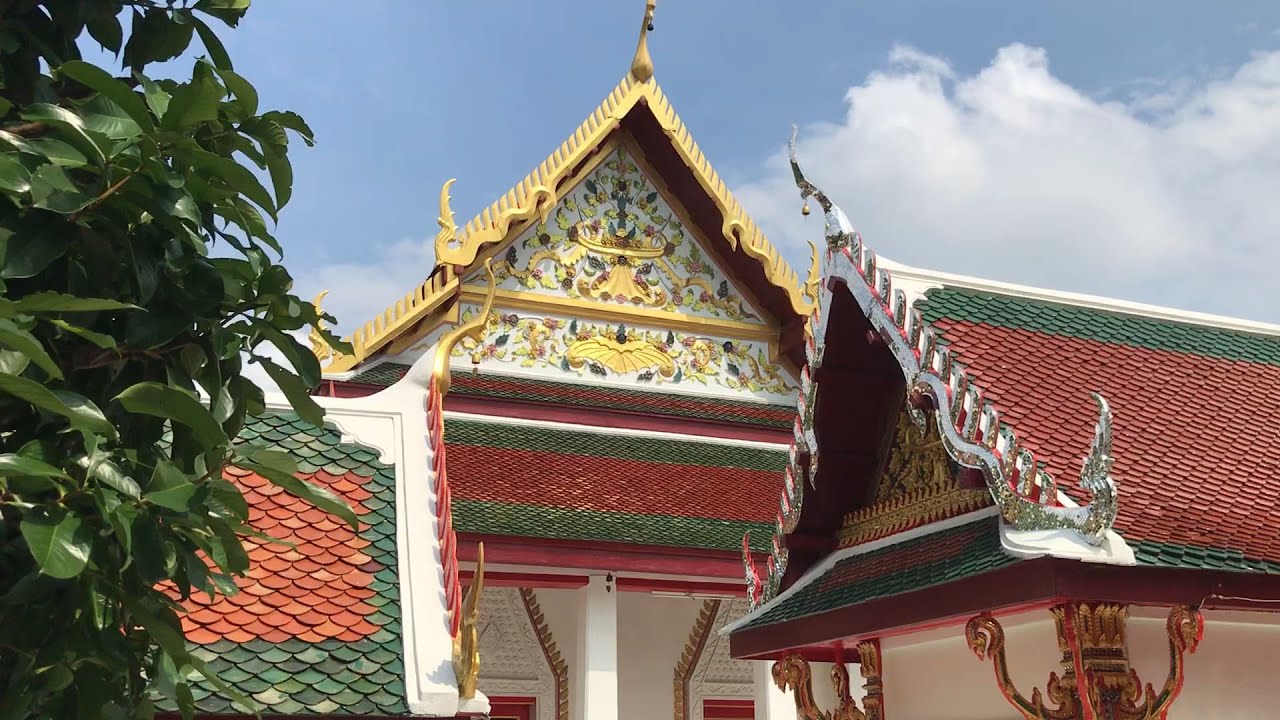
 Click to Access the Navigation Map GPS
Wat Chom Sudaram Map
Recommend

 Phra Nakhon(24)Dusit(17)Khlong San(7)Khlong Toei(3)Jatujak(2)Don Muang(5)Taling Chan(26)Thon Buri(23)Bangkok Noi(31)Bangkok Yai(13)Bang Kapi(5)Bang Kun Tien(15)Bang Khen(3)Bang Kholam(10)Bang Sue(9)Bang Plad(23)Bang Rak(6)Chom Thong(16)Bung Kum(5)Pra Wet(6)Patum Wan(6)Pom Prap Sattru Phai(11)Paya Thai(1)Pra Kanong(4)Pa Sri Charoen(23)Min Buri(7)Yan Na Wa(8)Ratchathewi(4)Rat Burana(6)Lat Krabang(13)Nong Chok(16)Lat Phrao(4)Sathorn(4)Sam Phan Tha Wong(12)Nong Khaem(7)Huai Khwang(3)Suan Luang(7)Din Daeng(2)Lak Si(1)Sai Mai(8)Khan Na Yao(2)Wang Thong Lang(1)Klong Sam Wa(10)Watthana(2)Bang Na(4)Thawi Watthana(3)Bang Khae(5)Thung Khru(4)Bang Bon(3)


