
lovethailand home >Central Travel Attractions >Phranakhon Si Ayutthaya Travel Attractions >Phranakhon Si Ayutthaya >Khlong Sara Bua > Wat Kruttharam
TL;DR: Wat Kruttharam is located at Khlong Sa Bua Subdistrict, Phra Nakhon Si Ayutthaya District, Phra Nakhon Si Ayutthaya Province, open Daily, hours 08.00 – 17.00.
Wat Kruttharam

Open Days: Daily
Opening Hours: 08.00 – 17.00
Wat Khruttharam is a community temple under the Mahanikaya order, located in Khlong Sa Bua Subdistrict, Phra Nakhon Si Ayutthaya District, Phra Nakhon Si Ayutthaya Province. The charm here feels like “an Ayutthaya stop most people don’t intentionally plan for” — it isn’t a constant, busy check-in spot. But if you like temples with stories, traces you can follow, and clearly defined places to pay respect, Wat Khruttharam can give you both calm and depth in a single visit. It is especially appealing to visitors interested in the late Ayutthaya period, because some public sources connect the temple to the reign of King Ekkathat and mention an inscription at the ubosot that states a construction year.
The core narrative of Wat Khruttharam centers on “the founding of the temple and its principal Buddha image.” Public accounts say an inscription at the ubosot records that the temple was established during the reign of Somdet Phra Thinang Suriyasin Amarin (King Ekkathat) around 2302 B.E., and that the principal Buddha image inside the ubosot was created at the same time. The image is described as a white sandstone Buddha in the Mara-Vijaya posture, with dimensions recorded in the traditional craft-and-commission style of that era. There is also information that the temple received a royal boundary (wisungkhamsima) around 2306 B.E. Together, these details frame Wat Khruttharam as a temple that was formally established not long before the fall of Ayutthaya. After the Second Fall of Ayutthaya, the temple is said to have entered a period of abandonment, before later restoration brought it back as a living temple again.
The feature most visitors remember is the principal Buddha image commonly called Luang Pho Khrut. The widely told local story says that at one time, thieves cut off and stole the Buddha’s head. When the community learned what had happened, they wanted to repair the image and began searching for a replacement head. By chance, a Buddha head was found that could be fitted perfectly back onto the body. What made the name “Luang Pho Khrut” stick is the explanation that the mouth of the found head had a shape likened to a “garuda beak” (“pak khrut”), echoing the temple’s name. When you stand close to the image, the sense of sacredness here doesn’t come only from dramatic storytelling. It also comes from the shared feeling that the community “brought the temple back” after a painful incident and returned what was damaged to a state worthy of worship once more.
If you enjoy architecture, the ubosot at Wat Khruttharam is a highlight worth slowing down for. It is described as a Late Ayutthaya-style ubosot: relatively compact, with a gently curved base, and gable features in the Thai temple tradition such as chofa finials, bai raka, and hongsa tail ornaments. The front is often described as having a projecting porch (muk), and a layered, stepped roof (chan-hap). These details make the ubosot interesting not only because it is “beautiful,” but because you can read it as late-period craftsmanship that favors compact proportions while keeping the full classical vocabulary. In simple terms, it’s the kind of building that rewards you for studying lines and ratios rather than rushing past.
Another element many devotees come for is the “Maha Ut Ubosot,” described in local belief as a sacred space for paying respect and making prayers. In Thai cultural belief, the idea of “maha ut” is often tied to places thought to carry protective power, and spaces where you should be especially mindful in posture, speech, and behavior. Whether you believe strongly or just a little, entering respectfully and not disrupting those who are praying allows the temple’s quiet atmosphere to “do its work,” so your stop doesn’t feel like a quick pass-through visit.
Beyond the Buddha images, Wat Khruttharam also has a large statue of Phaya Khrut Song Mahitthanuphap (a powerful Garuda figure) for worship. This reinforces the temple’s identity in a very direct way: the word “khrut” isn’t only on the signboard; it is emphasized through a major symbol on-site. In the context of Thai temple devotion, worshipping Garuda is often associated with beliefs about protection, stability, and progress in work and life. Many visitors therefore choose to complete their worship by paying respect to both “Luang Pho Khrut” and the Garuda figure, then walking around to take in the surrounding structures in order.
If you want to leave feeling like you truly “got something” from the visit, start by worshipping the principal Buddha image first. Then step back to observe the ubosot carefully, letting your eyes move from the curved base up to the gable frame and roof ornaments. After that, go to the Garuda statue to pay respect, and finally take a slow loop around the grounds. This rhythm helps the visit feel like more than prayer alone — you will also see the temple’s overall structure and notice Late Ayutthaya craft details without needing an overly long visit.
Getting There Wat Khruttharam is in Khlong Sa Bua Subdistrict, Phra Nakhon Si Ayutthaya District. The easiest way is by private car, or by local taxi/ride-hailing from central Ayutthaya. If you are coming from Bangkok, drive into Phra Nakhon Si Ayutthaya and use navigation to Khlong Sa Bua directly. If you travel by train, get off at Ayutthaya Railway Station, then take a local taxi or ride-hailing to the temple. The transfer is not long, and it works well as a stop on a route around Khlong Sa Bua or the areas surrounding the island city.
As for traditions and religious activities, Wat Khruttharam is a living temple. In general, community temples may hold activities on major Buddhist holy days such as Makha Bucha, Visakha Bucha, Asalha Bucha, and during the Khao Phansa–Ok Phansa period (for example, alms-giving, candlelit processions, or community ceremonies). If your goal is to join a specific event, it is best to check the temple’s announcements or local notices close to the date, because schedules and formats can change from year to year.
| Place Name | Wat Khruttharam |
| Address | Khlong Sa Bua Subdistrict, Phra Nakhon Si Ayutthaya District, Phra Nakhon Si Ayutthaya Province |
| Overview | A Mahanikaya community temple in the Khlong Sa Bua area, known for late-Ayutthaya narratives tied to inscriptions and local tradition, with key devotional points such as “Luang Pho Khrut” and a large Garuda statue. Ideal for visitors who want a calm temple visit while reading Late Ayutthaya craft details on-site. |
| Highlights | The principal Buddha image known as “Luang Pho Khrut” (story of the stolen head and the replacement head described as having a “garuda-beak” mouth), a Late Ayutthaya-style ubosot, the “Maha Ut Ubosot,” and a large Garuda statue for worship. |
| Period | Late Ayutthaya (public sources mention establishment around 2302 B.E. and wisungkhamsima around 2306 B.E.) |
| Current Status | A living temple with resident monks, open for daytime visits and worship. |
| Abbot / Latest Steward | No “current” abbot name could be verified from publicly available official sources (verifiable information: a previous abbot, “Phra Athikan Sommai,” passed away on 2 Nov 2025). |
| Nearby Tourist Attractions (With Distance) | 1) Wat Yai Chai Mongkhon (approx. 7 km) 2) Wat Maheyong (approx. 6 km) 3) Wat Pradu Song Tham (approx. 8 km) 4) Wat Phra Nyatikaram (approx. 9 km) 5) Japanese Village (approx. 12 km) |
| Popular Restaurants Nearby (Distance + Phone) | 1) Coffee Old City Thai Bistro (approx. 10 km) Tel. 089-889-9092 2) Khanom Jeen Ton Kam Pu (Ayothaya) (approx. 11 km) Tel. 035-243-343 3) Roti Sai Mai Abideen-Pranom Saeng Arune (approx. 12 km) Tel. 080-075-3755 4) sala ayutthaya eatery and bar (approx. 14 km) Tel. 035-242-588 5) Krungsri River Hotel Restaurant (approx. 12 km) Tel. 035-244-333 |
| Popular Accommodations Nearby (Distance + Phone) | 1) Krungsri River Hotel (approx. 12 km) Tel. 035-244-333 2) Classic Kameo Hotel, Ayutthaya (approx. 13 km) Tel. 035-212-535 3) Kantary Hotel Ayutthaya (approx. 14 km) Tel. 035-337-177 4) sala ayutthaya (approx. 14 km) Tel. 035-242-588 5) Centara Ayutthaya (approx. 16 km) Tel. 035-243-555 |
Frequently Asked Questions (FAQ)
Q: Where is Wat Khruttharam?
A: It is in Khlong Sa Bua Subdistrict, Phra Nakhon Si Ayutthaya District, Phra Nakhon Si Ayutthaya Province, and it is easy to reach by private car or a ride from central Ayutthaya.
Q: What are the must-see highlights at Wat Khruttharam?
A: Worship the principal Buddha image known as “Luang Pho Khrut,” take time with the Late Ayutthaya-style ubosot, and pay respect to the large Garuda statue.
Q: Why is the principal Buddha image called “Luang Pho Khrut”?
A: Local tradition says the head was once stolen, and later a different Buddha head was found that fit perfectly when reattached. The mouth was described as resembling a “garuda beak” (“pak khrut”), echoing the temple name, so the principal image became known as “Luang Pho Khrut.”
Q: Is Wat Khruttharam an abandoned temple or a living temple?
A: It is a living temple with resident monks and is open for daytime worship.
Q: What time of day is best for a comfortable visit?
A: Morning or late afternoon is usually more comfortable because the heat is softer, and visitors are encouraged to dress respectfully and follow temple etiquette.
 Category: ●Places of Worship
 Group: ●Temple
Last Update : 4 MonthAgo
 Last Update : 4 MonthAgo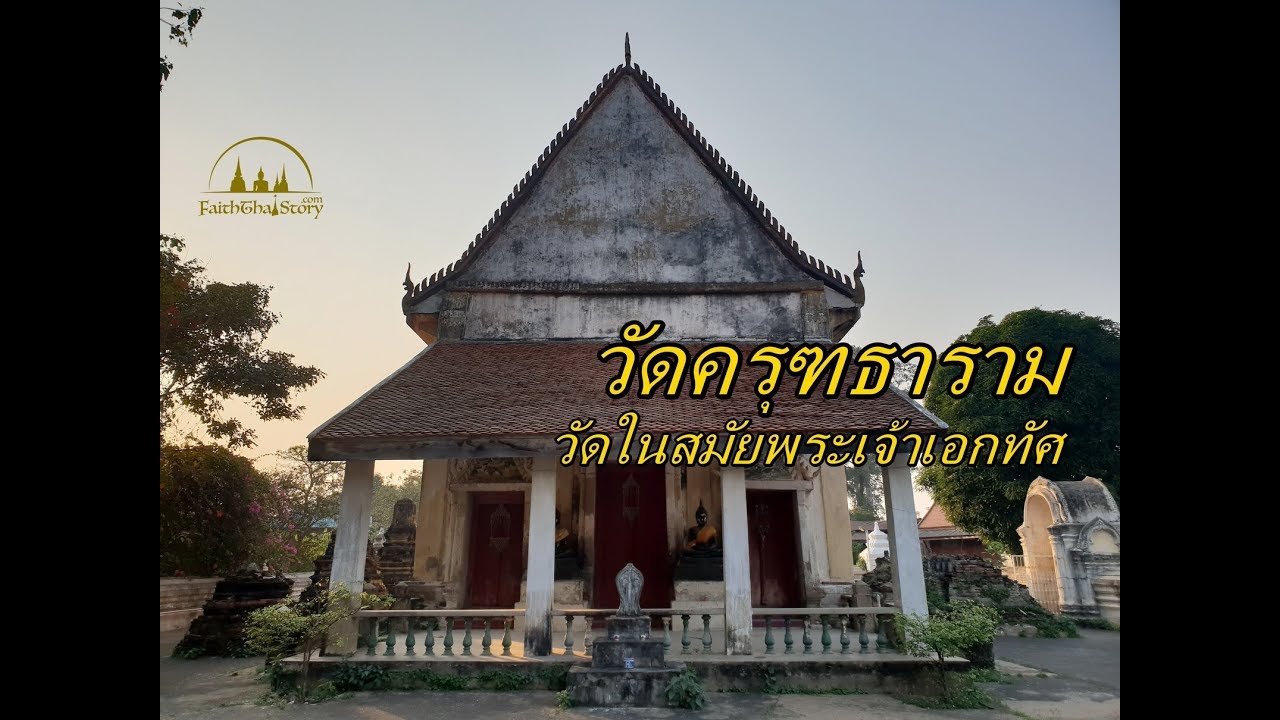
 Click to Access the Navigation Map GPS
Wat Kruttharam Map
Recommend
 Art, Culture and Heritage
 Historical Sites and Monuments(7)
 Landmarks and Memorials(6)
 Royal Palace(4)
 Art, Craft Centres, Tradition(6)
 Museums(9)
 Educational Places
 Museum for Study(1)
 Educational Gardens, Farm(2)
 Training Center(1)
Temple(133)
Training Center(1)
Temple(133)
 Church(2)
 Mosque(2)
 Other religious and spiritural sites(15)
 Research and Development
 Royal Project(4)
 Suburban Living
 Village, Community(10)
 Local Market(7)
 Floating Market(3)
 Nature and Wildlife
 Dam, Reservoir, Lake(1)
 River, Canal(3)
 Islands(2)
 Other natural attractions(1)
 Entertainment and Agricultural
 Animal camps and shows(2)
 Farm, Parks, Gardens and Ecotourism(4)
 Travel Articles, Recipes
 Travel Review, Food Review(2)


