
lovethailand home >Central Travel Attractions >Phranakhon Si Ayutthaya Travel Attractions >Phranakhon Si Ayutthaya >Phai Ling > Wat Pradu Songtham (Wat Pradu Rongtham)
TL;DR: Wat Pradu Songtham (Wat Pradu Rongtham) is located at 83 Moo 4, Phai Ling Subdistrict, Phra Nakhon Si Ayutthaya District, Phra Nakhon Si Ayutthaya 13000, Thailand, open Daily, hours 08.00 – 17.00.
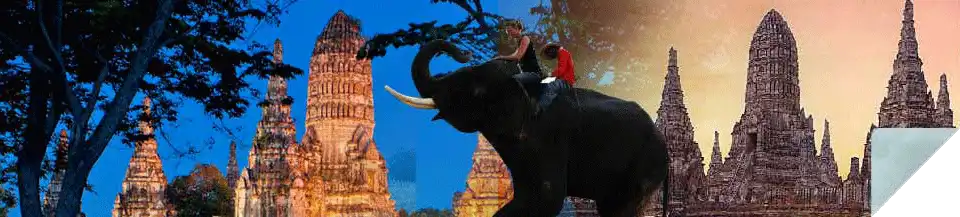
Wat Pradu Songtham (Wat Pradu Rongtham)
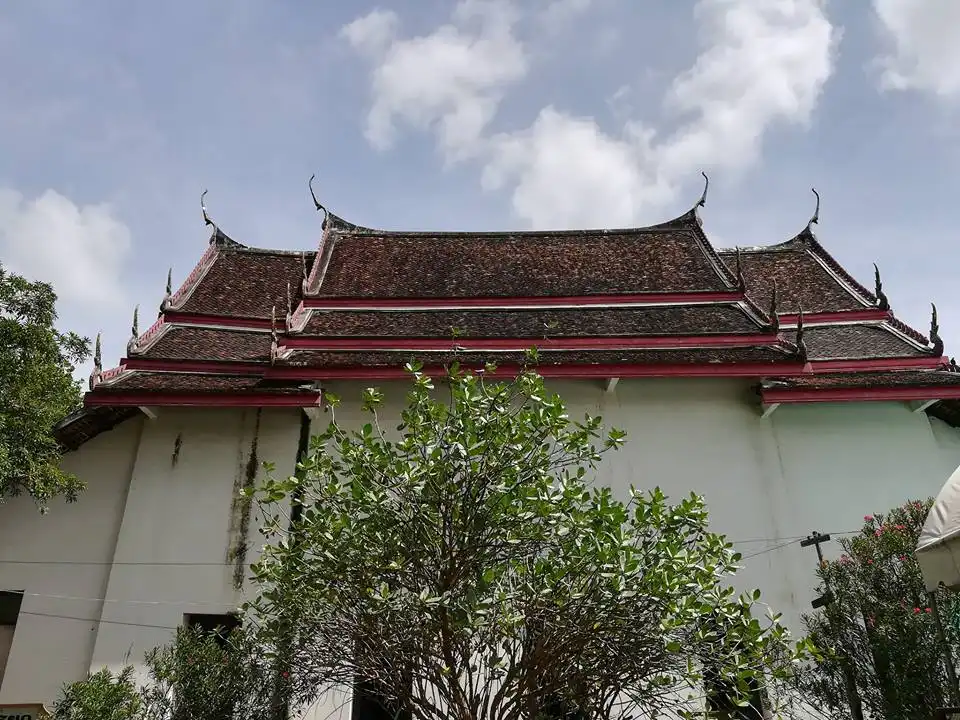
Open Days: Daily
Opening Hours: 08.00 – 17.00
Wat Pradu Songtham (Wat Pradu Rongtham) is an old temple on the Ayothaya side, outside Ayutthaya Island, that many people unknowingly drive past. If you make a deliberate stop, though, you’ll find it has real substance—especially the artistry inside the main vihara (sanctuary hall). This visit doesn’t end with simple calmness from prayer; it pulls you back into the worldview, beliefs, and everyday life of people from an earlier era through full-scale wall paintings. The temple is also remembered by its older name, “Wat Pradu Rongtham,” and the change to “Wat Pradu Songtham” is frequently mentioned across various sources. That layered naming adds to the site’s appeal as a place where different time periods overlap—Ayutthaya’s historic landscape on one hand, and later Rattanakosin-era construction or restoration traces on the other.
The charm of Wat Pradu Songtham is that you don’t have to compete with crowds. You can walk slowly and truly spend time with the details. The overall atmosphere is usually calmer than the famous temples inside the island zone, and that quiet makes the vihara experience sharper: when the outside noise drops away, the paintings on the walls pull you in, panel by panel, like stepping into a massive picture book that belongs to Ayutthaya itself.
In terms of name and background, Wat Pradu Songtham is often discussed alongside its earlier name, “Wat Pradu Rongtham,” which appears in multiple public sources. That alone suggests the temple has been known by more than one designation over time. The best way to handle this part is with a bit of discipline—separating what can be confidently verified from local accounts that help convey a sense of community memory. Done carefully, it keeps the story grounded without dismissing the long relationship between the temple and the people around it.
The clearest highlight of Wat Pradu Songtham is inside the vihara, where the wall murals form the heart of the visit. The paintings commonly present major Buddhist cosmology and narrative themes: scenes of Traiphum (the Buddhist cosmos), gatherings of deities, episodes from the Buddha’s life, and Jataka tales. You may also find processions with elephants, images of folk performances, and slices of village life. That mix is what makes the murals feel more than purely ritual or sacred decoration—they become a window into how people lived and how artistic taste and storytelling worked in that era.
If you want to come away with something deeper than photos, start by stepping back a little to understand the overall composition—how the stories are arranged across the interior. Then move closer and read in sections. Begin with Traiphum and the deity gathering scenes, which tend to be symbol-heavy, then shift to the Buddha’s life and Jataka narratives, which are often easier to follow because the sequence is clearer. Finish with the everyday-life and performance scenes, where you can meet “ordinary people” on the temple walls in a surprisingly vivid way. Seen like this, the murals stop being mere background and become a deliberate teaching and storytelling system.
One of the most thought-provoking aspects is how sacred themes like Traiphum or Buddhist narratives are not strictly separated from village life scenes in a rigid way. Instead, they coexist in the same visual space. This reflects a key role of Thai temples as a kind of community classroom—teaching people through images and symbols in periods when books and formal education were not widely accessible. In that sense, the murals are more than art: they are lessons, stories, moral reminders, and shared memory all at once.
For a calmer experience, morning or late afternoon tends to work best, since crowds are usually lighter than mid-morning, and the light around the temple can make the interior feel softer and easier on the eyes when you are studying details. No matter what time you visit, respect matters—especially inside the vihara. Speak quietly, dress appropriately, and avoid blocking pathways or disturbing people who come to pray.
Getting There From Bangkok, drive into Phra Nakhon Si Ayutthaya via Rojana Road. When you reach the traffic light intersection with the “Wat Sam Pluem chedi” (the chedi in the middle of the road), turn right and continue straight for about 2 km. Then turn left past the Ayothaya Town Municipality area; Wat Pradu Songtham will be on your right. This route is convenient for private vehicles and makes it easy to plan a same-day itinerary across the Ayothaya-side temples and attractions. If you travel by train, get off at Ayutthaya Railway Station and continue by local taxi or a ride-hailing app to the temple; it is often quicker than circling around the island zone during peak hours.
Overall, Wat Pradu Songtham suits travelers who want an Ayutthaya experience that goes deeper than check-ins. If you enjoy murals, love reading stories through small details, and want a temple quiet enough to stand and look for a long time, this is a rewarding stop. It also works well as a starting point for an Ayothaya-side route before crossing into the island zone or continuing to nearby temples depending on your preferred pace.
| Place Name | Wat Pradu Songtham (Wat Pradu Rongtham) |
| Address | 83 Moo 4, Phai Ling Subdistrict, Phra Nakhon Si Ayutthaya District, Phra Nakhon Si Ayutthaya 13000, Thailand |
| Summary | An old temple on the Ayothaya side outside Ayutthaya Island, best known for its vihara wall murals that depict Traiphum, deity gatherings, the Buddha’s life, Jataka tales, and scenes of everyday village life—ideal for both worship and cultural reading. |
| Highlights | Vihara wall murals (Traiphum / deity gatherings / Buddha’s life / Jataka tales / village life), calm atmosphere with fewer crowds, suitable for slow and detailed viewing. |
| Period | Located within Ayutthaya’s historic area, with later-period usage and restoration traces (best described based on verifiable evidence). |
| Key Evidence | The earlier name “Wat Pradu Rongtham” is referenced in multiple public sources; the temple is part of the Ayothaya-side area outside the island zone of Ayutthaya. |
| Name Origin | Known as Wat Pradu Songtham and also referenced by the older name Wat Pradu Rongtham in several sources. |
| Getting There | By car: Bangkok → Rojana Road → turn right at the traffic light near Wat Sam Pluem’s roadside chedi → go straight about 2 km → turn left past the Ayothaya Town Municipality area → temple on the right / By train: Ayutthaya Station, then taxi or ride-hailing. |
| Current Status | An active temple open for visits and daytime worship. |
| Contact Number | 035-235-266 |
| Abbot / Latest Steward | Phra Soem Attadanto (as listed in the contact source) |
| Nearby Tourist Attractions (With Distance) | 1) Wat Kuti Dao (Approx. 2 km) 2) Wat Chakrawat (Wat Chao Mon) (Approx. 3 km) 3) Wat Ayothaya (Wat Doem) (Approx. 4 km) 4) Wat Yai Chai Mongkhon (Approx. 7 km) 5) Wat Phanan Choeng Worawihan (Approx. 9 km) |
| Popular Restaurants Nearby (Distance + Phone) | 1) Khanom Jeen Ton Kam Poo Ayutthaya (Approx. 5 km) Tel. 035-243-343 2) Coffee Old City Thai Bistro (Approx. 8 km) Tel. 089-889-9092 3) Malakor Kitchen and Cafe (Approx. 8 km) Tel. 091-779-6475 4) Roti Sai Mai Abideen + Pranom Saeng Aroon (Approx. 9 km) Tel. 080-075-3755 |
| Popular Accommodations Nearby (Distance + Phone) | 1) Krungsri River Hotel (Approx. 8 km) Tel. 035-244-333 2) Sala Ayutthaya (Approx. 11 km) Tel. 035-242-588 3) Kantary Hotel Ayutthaya (Approx. 12 km) Tel. 035-337-177 4) Classic Kameo Hotel, Ayutthaya (Approx. 12 km) Tel. 035-212-535 |
Frequently Asked Questions (FAQ)
Q: Which side of Ayutthaya is Wat Pradu Songtham on?
A: It is on the Ayothaya side outside Ayutthaya Island, reachable easily from Rojana Road and convenient for building a day route around the eastern historic area.
Q: What is the main highlight of Wat Pradu Songtham?
A: The key highlight is the vihara wall murals depicting Traiphum, deity gatherings, the Buddha’s life, Jataka tales, and everyday-life scenes—so you gain both a peaceful worship experience and a rich cultural reading.
Q: How should I start viewing the murals for the best experience?
A: Begin with the overall layout, then read in sections: Traiphum and deity gatherings first, followed by the Buddha’s life and Jataka narratives, and finish with village life and performance scenes. This approach helps you see both the “belief-world” and “real life” on the same walls.
Q: Is there a contact phone number for the temple?
A: The contact number listed in the available contact source is 035-235-266.
Q: Where should I go next after Wat Pradu Songtham?
A: Good nearby options include Wat Kuti Dao, Wat Chakrawat (Wat Chao Mon), and Wat Ayothaya (Wat Doem), then continuing to Wat Yai Chai Mongkhon or Wat Phanan Choeng Worawihan along the same route.
 Category: ●Places of Worship
 Group: ●Temple
Last Update : 4 MonthAgo
 Last Update : 4 MonthAgo
 Click to Access the Navigation Map GPS
Wat Pradu Songtham (Wat Pradu Rongtham) Map
Recommend
 Art, Culture and Heritage
 Historical Sites and Monuments(7)
 Landmarks and Memorials(6)
 Royal Palace(4)
 Art, Craft Centres, Tradition(6)
 Museums(9)
 Educational Places
 Museum for Study(1)
 Educational Gardens, Farm(2)
 Training Center(1)
Temple(133)
Training Center(1)
Temple(133)
 Church(2)
 Mosque(2)
 Other religious and spiritural sites(15)
 Research and Development
 Royal Project(4)
 Suburban Living
 Village, Community(10)
 Local Market(7)
 Floating Market(3)
 Nature and Wildlife
 Dam, Reservoir, Lake(1)
 River, Canal(3)
 Islands(2)
 Other natural attractions(1)
 Entertainment and Agricultural
 Animal camps and shows(2)
 Farm, Parks, Gardens and Ecotourism(4)
 Travel Articles, Recipes
 Travel Review, Food Review(2)


