
lovethailand home >Central Travel Attractions >Phranakhon Si Ayutthaya Travel Attractions >Bang Pa In >Khanon Luang > Wat Tamle Thai
TL;DR: Wat Tamle Thai is located at Moo 1, Khanon Luang Subdistrict, Bang Pa-In District, Phra Nakhon Si Ayutthaya Province, open Open daily, hours 08:00 – 17:00.
Wat Tamle Thai
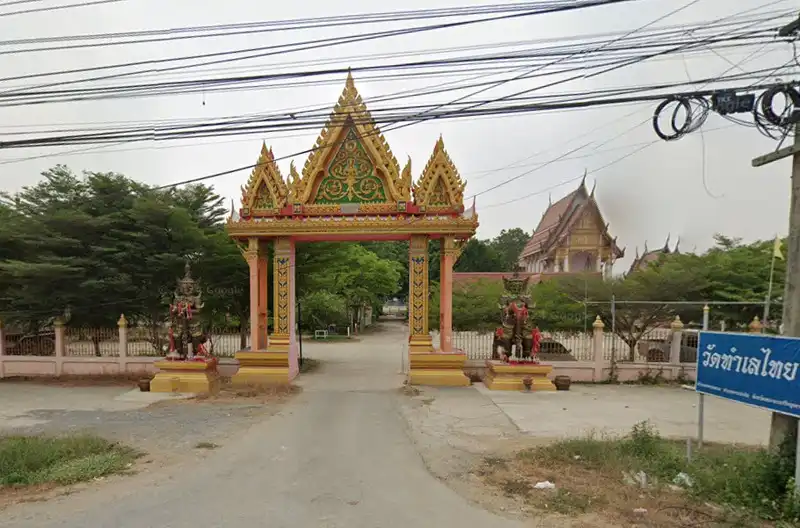
Open Days: Open daily
Opening Hours: 08:00 – 17:00
Wat Tamle Thai is located in Moo 1, Khanon Luang Subdistrict, Bang Pa-In District, Phra Nakhon Si Ayutthaya Province. It is an old temple that reflects the history of settlement along the central plains’ river basin and has long existed as a living religious space intertwined with the community. The highlight of this temple is not only its calm and shady countryside atmosphere near Bangkok, but also the story of migration, the temple name that is connected to local geography and livelihoods, and important sacred objects revered by local people, along with the artistic works inside the ordination hall such as mural paintings of the Vessantara Jataka. These elements make a single visit meaningful in cultural terms, beyond a typical “stop-by-to-pay-respects” temple visit.
In terms of location, Wat Tamle Thai lies in Bang Pa-In District, which functions as an important travel link between Bangkok and Ayutthaya and is also an area where industrial zones, workplaces, and older communities coexist. A visit to Wat Tamle Thai therefore suits both travelers seeking an easy day trip and those who want quiet time to make merit, pay respect to the principal Buddha image, and appreciate Thai temple architecture in a real community setting without excessive crowds. The simplicity of the temple in this area is precisely what makes the visit feel like truly “arriving” in another side of Ayutthaya—the side that represents everyday life, not only the historic monuments on the island city.
Wat Tamle Thai is believed to have been established around 1677 CE (B.E. 2220) during the mid-Ayutthaya period. Some Buddhists migrated from Suphan Buri and settled in this area before joining together to build a temple as the community’s center. The name “Wat Tamle Thai” has been explained as being linked to the geography and livelihood history of these migrants. “Tamle Thai” is said to refer to a place of livelihood for Thai people who migrated and established themselves here. The name is therefore not merely a place name, but a short phrase that preserves the memory of settlement and the determination to begin anew.
Once the temple became firmly established as the community’s center, it was organized in accordance with monastic discipline and ecclesiastical governance. Wat Tamle Thai received a royal grant of Wisungkhamsima (ordination boundary) in 1687 CE (B.E. 2230), which serves as important evidence that the ordination hall area was formally designated for legitimate monastic ceremonies. Early patronage is also mentioned, attributed to Somdet Phra Chao Luk Ya Thoe Krom Phra Nakhon Sawan Phinit, reflecting that the temple’s continuity relied not only on local faith but also on support from influential figures of the time.
Walking around Wat Tamle Thai today allows visitors to read multiple “layers of time,” from its mid-Ayutthaya foundations—a period of movement and new community formation—to later restorations that have kept the temple functioning as a continuing center of faith. These layers appear in tangible components such as the ordination hall, vihara, and sacred objects, and also in intangible elements such as community memory and religious activities carried on over generations.
The key sacred object at the heart of Wat Tamle Thai is the principal Buddha image in the ordination hall. It is a seated Buddha in meditation posture with a lap width of 84 inches, created around 1816 CE (B.E. 2359) by Somdet Phra Wanrat of Chatiphumikhamma Prathet (Bang Phra, Nakhon Chai Si). Chronologically, this places the principal image in the early Rattanakosin period, after the fall of Ayutthaya, showing that although the temple has roots in the Ayutthaya era, major sacred objects continued to be added in later periods. This continuity is a notable characteristic of many Thai community temples: they begin in the distant past, yet are continually renewed, restored, and strengthened through faith by local people and patrons in different eras.
The ordination hall itself has been renovated several times, with records stating that the third major restoration was completed in 1982 CE (B.E. 2525). This was important in keeping the religious buildings functional and able to support key temple activities. For visitors, knowing about these restorations adds depth to viewing the building, because it shows that “oldness” in many Thai temples is an oldness that is cared for, not an oldness left to decay. That care reflects both faith and contemporary community management.
Inside the ordination hall are murals telling the Vessantara Jataka story, one of the most important Jataka tales commonly found in Thai mural painting because it is closely associated with the virtue of giving and the great sacrifice of the Bodhisattva. The Vessantara Jataka is both a literary work and a major preaching text in Thai society, especially connected to the Maha Chat sermon tradition. Seeing this mural cycle at Wat Tamle Thai is therefore not only appreciating artistic beauty, but also encountering traces of how Thai society used “images” to communicate “Dhamma” in ways accessible to ordinary people. These murals are said to be newly painted and beautiful, allowing those interested in Thai art to spend time observing details of scenes, characters, colors, and contemporary Thai composition while still following traditional narrative structure.
In addition to the principal Buddha image and the murals, the northern vihara enshrines a Buddha image that villagers call “Luang Pho Dam,” also known as “Phra Phuttha Siri Chandakasem.” It was created around 1918 CE (B.E. 2461) during the tenure of the first abbot, Luang Pho Fak. A community-given name like “Luang Pho Dam” is a key feature of Thai temples, as such names often reflect the relationship between people and the image—its color, material, lacquer-gilding style, or stories tied to community experiences. For visitors, paying respect to Luang Pho Dam offers a sense of “community-based faith,” a devotion rooted in daily life rather than tourism promotion.
The southern vihara is another interesting spot, as it enshrines statues of former Thai kings: King Naresuan the Great and King Taksin the Great. Having statues of national hero kings within a temple reflects the relationship between religion, history, and collective memory in Thai society. A temple is not only a place for Buddhist rites, but also a space where communities remember key figures and events. Worship of these statues is often associated with prayers for courage, gratitude, perseverance, and overcoming hardship—values many Thais hold dear.
Considering all elements together, Wat Tamle Thai offers a complete “cultural visit structure” for travelers. It has a migration-linked founding story, an important principal Buddha image that reveals historical layers, mural art that reflects Dhamma communication through visual storytelling, and vihara spaces that combine devotion to a revered Buddha image and remembrance of important historical kings. Visitors can therefore plan a meaningful sequence without rushing: first absorb the overall atmosphere, then pay respect to the principal Buddha image and view the murals in the ordination hall, continue to the northern vihara to worship Luang Pho Dam, and finish at the southern vihara to pay respect to the royal statues. All of this can be done in one trip, yet still offers enough depth for a meaningful visit.
In terms of traditions and religious activities found in contemporary Thai temples, Wat Tamle Thai communicates activities through the temple’s online channels. Activities such as “New Year’s Eve chanting” and “New Year merit-making alms-giving” are found in many Thai temples each year. Such activities function both religiously and socially: they provide a space for the community to gather, make merit together, and begin the new year with wholesome intention. For visitors who want to experience a living temple atmosphere, it is recommended to follow the temple’s annual schedule in advance, since festivals such as New Year, Songkran, the Buddhist Lent period, and Kathin offerings are often times when the community is especially active. Participants should dress modestly and follow temple rules to show proper respect.
Getting There Wat Tamle Thai is located along Road 3477, making travel by private car quite convenient. You can set your destination to Khanon Luang Subdistrict, Bang Pa-In District, Phra Nakhon Si Ayutthaya Province, then use Road 3477 to enter the temple area. From Bangkok, several routes connect via Bang Pa-In depending on traffic conditions. When entering the community area, drive carefully as there may be frequent local traffic and motorcycles. For those using public transportation, a common approach is to get off around Bang Pa-In or a connecting point within Bang Pa-In District, then continue by local hired vehicles as convenient. Upon arrival, park only in designated areas and avoid blocking community traffic routes.
For travelers planning a one-day trip, Wat Tamle Thai can be a good stop along a Bang Pa-In–Ayutthaya Island itinerary, as it is not far from several major attractions in Bang Pa-In District and the Ayutthaya city area. Planning a trip that includes both a “community temple” and “main attractions” adds dimension to travel: you get both local tranquility and the grandeur of famous landmarks in the same day, while also spreading your schedule so it does not feel too rushed.
The best time to visit Wat Tamle Thai is generally in the morning, when temperatures are cooler and it is ideal for worship, walking around the temple grounds, and observing mural details in the ordination hall. If visiting late morning to afternoon, bring a hat or umbrella and drink enough water, especially during the central plains’ hot season. Thai temple etiquette also matters: dress modestly, avoid spaghetti straps, tank tops, and shorts or skirts above the knee, keep voices low in the ordination hall and vihara, and refrain from photography in areas where the temple prohibits it or where it may disturb religious activities.
Another point travelers often overlook is understanding the temple’s “rhythm.” Community temples tend to have quiet times and busy times, such as on Buddhist holy days, weekends, or festivals. If you prefer a calm atmosphere for worship and art viewing, choose a weekday or early morning. If you want to see community activities—group merit-making, offering sets, or annual ceremonies—choose weekends or festival periods. Crowds may be larger, but you will see a vivid dimension of living Thai temple culture and community cooperation.
Regarding facilities, community temples generally provide parking, restrooms, and rest pavilions for visitors. Details may vary depending on renovation periods, but for family trips or visits with elderly companions, it is recommended to allow extra time for slower walking and to choose the easiest walking routes within the temple, especially in areas with higher steps typical of Thai temple architecture. If you want to make specific offerings such as robes, alms sets, or donations for restoration, it is best to contact the temple in advance to ensure your offering matches the temple’s needs and avoids redundancy.
In the broader local context, Wat Tamle Thai is in Phra Nakhon Si Ayutthaya Province, an area rich in history, tourism, and local economy. Bang Pa-In District features sites such as Bang Pa-In Royal Palace, Wat Niwet Thammaprawat Ratchaworawihan, and riverside routes along the Chao Phraya River that offer a different atmosphere from Ayutthaya Island. Travelers with extra time can easily extend their trip to these places, creating a one-day itinerary that includes both “community” and “landmark” experiences and making the journey more worthwhile in time and cost.
If you want to plan a storytelling itinerary, you can use the theme of “migration and settlement” as the backbone of your trip. Start by understanding Wat Tamle Thai’s name and the migration narrative from Suphan Buri, then connect to Bang Pa-In sites related to the royal court such as Bang Pa-In Royal Palace and Wat Niwet Thammaprawat, a striking temple with Western architectural elements. End the day by entering Ayutthaya Island to see historic monuments that reflect the former capital’s grandeur. This approach turns a trip to Ayutthaya into more than “check-ins,” creating a coherent narrative linking past and present, and linking community and state history in a gentle and meaningful way.
For those who enjoy photography, Wat Tamle Thai offers several attractive perspectives. First are overall atmosphere shots that capture the simplicity of a community temple. Second are details inside the ordination hall, including the principal Buddha image and episodic mural narratives, which suit documentary-style cultural photography. Third are the northern and southern viharas that reflect local devotion to Luang Pho Dam and to Thailand’s historical kings. Photography in temples should be done respectfully: avoid flash in sacred buildings, avoid close-up photos of people without permission, and be especially mindful during ceremonies or busy merit-making periods.
In terms of meaning, Wat Tamle Thai is an example of a religious space that functions beyond ritual. It is a place where communities build solidarity, communicate religious values through the principal Buddha image, murals, and annual activities, and preserve collective memory through its name and the story of migration from Suphan Buri. This shows visitors that “history” is not only found in museums or major monuments, but also in place names, in people’s faith, and in simple activities repeated each year until they become community culture.
If you are looking for a temple in Ayutthaya that is easy to reach, close to main routes, rich in historical narrative, and offers mural art inside the ordination hall, Wat Tamle Thai is a suitable option—especially for travelers who want to avoid the crowds at major attractions during peak periods. Visiting a community temple like this adds balance to an Ayutthaya trip: you gain both cultural travel and a sense of calm, while also supporting a community faith space that remains alive in the modern world.
Before ending your trip, it is worth spending a moment reflecting on what you saw in the ordination hall, especially the Vessantara Jataka murals, which embody Thai society’s core values of generosity, sacrifice, and doing good without expecting returns. Linking what you see to its meaning transforms a temple visit from simply walking through a place into a journey that brings back “understanding.” If you return during annual events such as New Year’s Eve chanting or New Year merit-making alms-giving, you will experience another dimension of Wat Tamle Thai—the community coming together through tangible shared faith.
| Place Name | Wat Tamle Thai (Wat Tamle Thai) |
| Address | Moo 1, Khanon Luang Subdistrict, Bang Pa-In District, Phra Nakhon Si Ayutthaya Province |
| Open Days | Open daily |
| Opening Hours | 08:00 – 17:00 |
| Contact Number | 035-350-574 |
| Abbot / Person in Charge (Latest) | Phra Bai Dika Kritsana Phokapanyo Watthano |
| Place Overview | An old community temple in Bang Pa-In District reflecting migrant settlement history, featuring a principal Buddha image in the ordination hall and Vessantara Jataka murals. Suitable for merit-making and cultural travel near Bangkok. |
| Highlights | Principal seated Buddha (c. 1816 CE), Vessantara Jataka murals, Luang Pho Dam (Phra Phuttha Siri Chandakasem), and a vihara enshrining statues of King Naresuan the Great and King Taksin the Great |
| History / Period | Established around 1677 CE (mid-Ayutthaya period), received Wisungkhamsima in 1687 CE, with a major third restoration of the ordination hall completed in 1982 CE |
| Traditions / Activities | New Year’s Eve chanting and New Year merit-making alms-giving (please confirm the schedule with the temple before visiting) |
| Getting There | Located along Road 3477; convenient by private car. Set destination to Khanon Luang, Bang Pa-In, then enter via Road 3477. Public transport typically goes to Bang Pa-In first, then continues by local transport. |
| Facilities | Parking area, restrooms, rest pavilion (depending on the temple’s current layout) |
| Nearby Tourist Attractions (Approx. Distance) | 1) Bang Pa-In Royal Palace – 16 km – 035-261-044 2) Wat Niwet Thammaprawat Ratchaworawihan – 17 km – 035-262-139 3) Wat Phanan Choeng Worawihan – 24 km – 035-243-867 4) Ayutthaya Historical Park (Ayutthaya Island Area) – 26 km – 035-245-123 5) Wat Yai Chai Mongkhon – 22 km – 035-242-640 |
| Nearby Restaurants (Approx. Distance) | 1) U-Khao U-Pla (u-khao) – 19 km – 062-793-9993 2) Krua Den – 18 km – 035-728-324 3) Ton Nam Riverview – 26 km – 035-261-006 4) Krua Den (Bang Pa-In Zone Branch) – 20 km – 035-703-660 5) Krua Prasat Thong – 28 km – 035-361-010 |
| Nearby Accommodations (Approx. Distance) | 1) SALA Bang Pa-In – 15 km – 035-246-388 2) Bang Pa-In Resort – 17 km – 035-950-367 3) At Ayutthaya Hotel – 23 km – 035-346-747 4) Daddy’s Homestay (Bang Pa-In) – 18 km – 086-300-4809 5) Ban Saen Sabai Bang Pa-In – 14 km – 064-979-7187 |
Frequently Asked Questions (FAQ)
Q: Where is Wat Tamle Thai located?
A: Wat Tamle Thai is located in Moo 1, Khanon Luang Subdistrict, Bang Pa-In District, Phra Nakhon Si Ayutthaya Province. It sits along Road 3477, making it convenient to reach by private car.
Q: What is the history of Wat Tamle Thai?
A: The temple was established around 1677 CE during the mid-Ayutthaya period and received its Wisungkhamsima in 1687 CE. Its name is connected to the settlement story of migrants from Suphan Buri.
Q: What should you not miss when visiting Wat Tamle Thai?
A: The principal Buddha image in meditation posture, the Vessantara Jataka murals, Luang Pho Dam (Phra Phuttha Siri Chandakasem), and the vihara enshrining statues of King Naresuan the Great and King Taksin the Great.
Q: Who is Luang Pho Dam and where is it located in the temple?
A: Luang Pho Dam is a Buddha image revered by local residents. It is enshrined in the northern vihara and is also known as “Phra Phuttha Siri Chandakasem.”
Q: What traditions or activities are associated with Wat Tamle Thai?
A: In some years, the temple organizes New Year’s Eve chanting and New Year merit-making alms-giving. It is recommended to confirm the latest schedule with the temple before visiting.
Q: What phone number should I use to contact Wat Tamle Thai?
A: The verified contact number for Wat Tamle Thai is 035-350-574.
Q: When is the best time to visit Wat Tamle Thai?
A: Morning is recommended for cooler weather and comfortable temple exploration and mural viewing. If you want a livelier community atmosphere, weekends or festival periods are suitable.
Q: What should I wear when visiting Wat Tamle Thai?
A: Dress modestly. Avoid sleeveless tops, spaghetti straps, tank tops, and shorts/skirts above the knee. Keep your voice low inside the ordination hall and viharas.
Tel : 035795660
 Tel : 035795660
 Category: ●Places of Worship
 Group: ●Temple
Last Update : 4 MonthAgo
 Last Update : 4 MonthAgo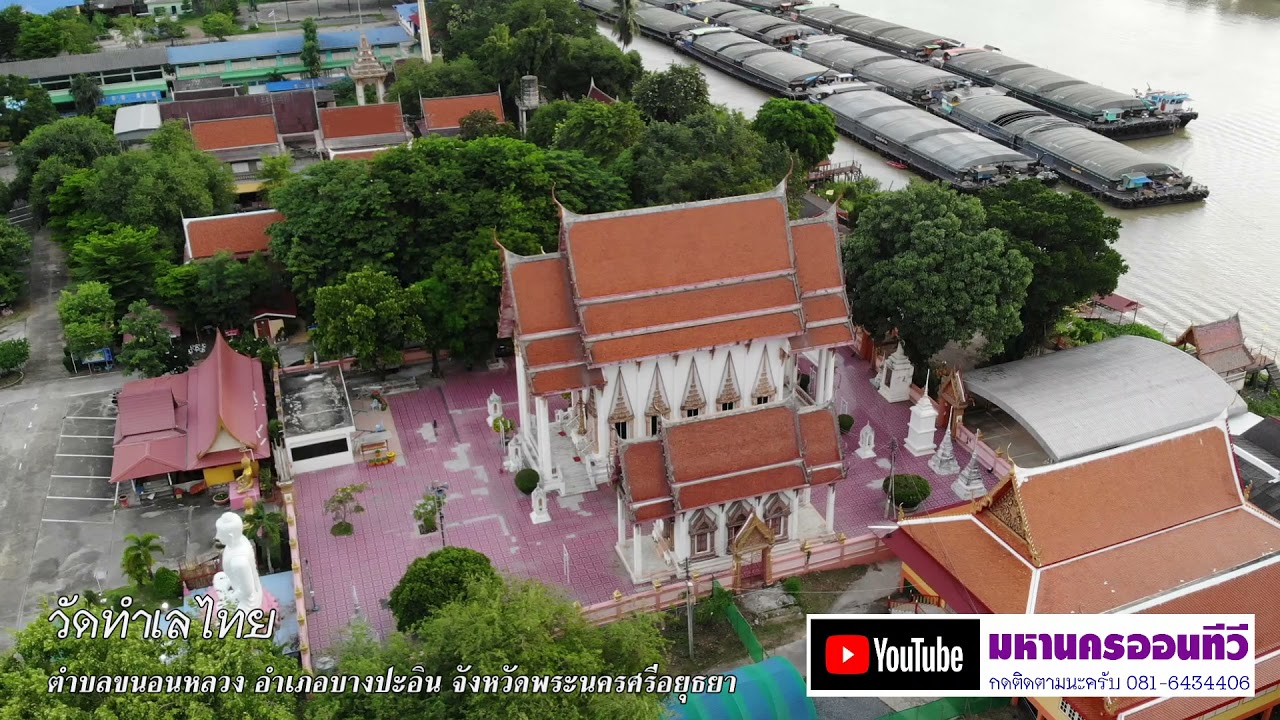
 Click to Access the Navigation Map GPS
Wat Tamle Thai Map
Recommend
 Art, Culture and Heritage
 Historical Sites and Monuments(7)
 Landmarks and Memorials(6)
 Royal Palace(4)
 Art, Craft Centres, Tradition(6)
 Museums(9)
 Educational Places
 Museum for Study(1)
 Educational Gardens, Farm(2)
 Training Center(1)
Temple(133)
Training Center(1)
Temple(133)
 Church(2)
 Mosque(2)
 Other religious and spiritural sites(15)
 Research and Development
 Royal Project(4)
 Suburban Living
 Village, Community(10)
 Local Market(7)
 Floating Market(3)
 Nature and Wildlife
 Dam, Reservoir, Lake(1)
 River, Canal(3)
 Islands(2)
 Other natural attractions(1)
 Entertainment and Agricultural
 Animal camps and shows(2)
 Farm, Parks, Gardens and Ecotourism(4)
 Travel Articles, Recipes
 Travel Review, Food Review(2)


