
lovethailand home >Central Travel Attractions >Phranakhon Si Ayutthaya Travel Attractions >Bang Pahan >Thap Nam > Wat Si Phawang
TL;DR: Wat Si Phawang is located at Moo 1, Ban Khlong San, Thap Nam Subdistrict, Bang Pahan District, Phra Nakhon Si Ayutthaya Province, open Daily, hours 08.00 – 17.00.
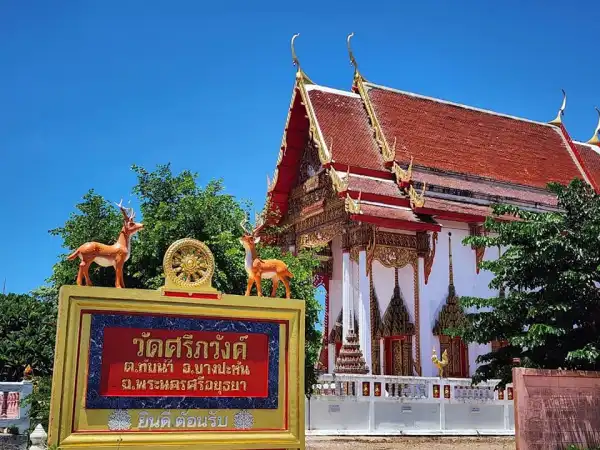
Wat Si Phawang
Open Days: Daily
Opening Hours: 08.00 – 17.00
Wat Si Phawang, located in Moo 1, Thap Nam Subdistrict, Bang Pahan District, Phra Nakhon Si Ayutthaya Province, is an important religious site for the Ban Khlong San community and has long served as a “spiritual center” for local Buddhists. The distinctive character of this temple does not lie in monumental architecture or grand-scale tourism, as seen in major temples on Ayutthaya Island, but rather in its close relationship with the surrounding cultural landscape and the historical use of space in the outer areas of Ayutthaya. Situated beside Nong Sapphakhon Pond and along a canal, the temple is surrounded by a tranquil rural waterside environment, offering visitors an authentic glimpse of community life rather than fast-paced mass tourism.
When locals speak of Wat Si Phawang, they often describe it as being located in “Khlong San Village,” beside Nong Sapphakhon Pond. There are local interpretations suggesting that the name “Sapphakhon” may have evolved from the term “Saprakon,” referring to wooden posts used for tethering elephants. This area was once known as a major zone for elephant keeping in the past. The memory of elephants is not merely folklore but provides insight into the social structure of Ayutthaya and the early Rattanakosin period at the community level, where lowland areas supported state-related activities and the management of vital resources such as royal elephants. Parallel oral histories also mention a northern upland area associated with horse keeping, reflecting a locally imagined spatial division between “elephants and horses” within the historical consciousness of the community.
Another dimension that enhances the significance of Wat Si Phawang lies in its founding story, which is closely linked to individuals involved in elephant administration. Local historical accounts indicate that the temple originally began as a monastic retreat before being formally established as a temple in 2415 BE (1872 CE) by Luang Khachatsak (Mr. Khang), an official responsible for elephant supervision, who later received the noble title “Phra Si Phawang.” The establishment of the temple in this context aligns with traditional Thai practices of religious patronage by officials, where temples functioned as merit-making spaces, communal centers, and shared spiritual anchors for society.
Early documents record the temple’s name as “Wat Si Phawang” spelled slightly differently before it was officially granted Wisungkhamsima on 30 October 2479 BE (1936 CE), marking the formal recognition of its ordination boundary. The temple was later renamed “Wat Si Phawang” in 2483 BE (1940 CE). These milestones are significant in understanding the temple’s status within the ecclesiastical administration, as the granting of Wisungkhamsima allowed the temple to conduct full monastic ceremonies according to Buddhist discipline. For visitors, this historical timeline transforms a simple visit into an opportunity to understand how a community temple evolved alongside broader historical and institutional changes.
Today, Wat Si Phawang occupies an area of approximately 26 rai. Its surroundings clearly reflect its role as a community temple, bordered by rice fields and lowland waterways on one side, an irrigation canal on another, and a village and primary school nearby. This setting enables the temple to function both as a religious space and a communal gathering place, hosting merit-making activities on Buddhist holy days, funerary rites, seasonal festivals, and serving as a spiritual refuge for local residents seeking peace and emotional stability.
Visitors often notice the distinctive atmosphere of outer Ayutthaya upon entering Wat Si Phawang, characterized by simplicity and the rhythm of everyday community life. Temples of this nature do not rely on large landmarks to impress; their value lies in being sacred spaces actively integrated into daily practice. Observing local residents offering prayers, making merit, or participating in seasonal rituals reflects the fact that the temple remains a living institution, continuing to connect people through shared faith and social bonds.
In terms of Thai traditions, Wat Si Phawang follows the customary annual cycle of merit-making activities common to Thai temples. Notably, the Kathina ceremony and events during the Buddhist Lent and the end of Lent are periods when community participation intensifies. During these times, the temple becomes a focal point for social interaction, reinforcing collective identity, shared responsibility, and the transmission of Thai values centered on cooperation and unity.
The temple’s geographical setting also plays a key role in shaping its use. Located in a low-lying area beside a canal, the site historically experienced seasonal flooding, making boat travel essential in earlier periods. As transportation shifted toward road-based travel, adjustments were required, including elevating certain areas, improving access routes, and constructing additional buildings to accommodate religious activities and communal events. These adaptations illustrate how community temples must balance spiritual functions with real environmental conditions in order to continue serving local life effectively.
For those wishing to visit for worship and merit-making, Wat Si Phawang is best approached without haste. The calm surroundings encourage mindful religious practice, whether offering alms, donating necessities, participating in temple-organized events, or engaging in quiet prayer and meditation. Appropriate conduct includes modest attire, soft-spoken behavior, and respect for sacred areas, particularly the ordination hall and ceremonial spaces.
From a cultural tourism perspective, Wat Si Phawang can be incorporated into a “Bang Pahan route,” allowing visitors to experience Ayutthaya beyond the island’s major historical sites. For travelers accustomed to iconic ruins and crowded attractions, exploring outer-community temples offers a gentler pace, deeper local context, and a more authentic encounter with living Buddhist practice—an aspect increasingly valued by cultural travelers.
Getting There Wat Si Phawang can be reached conveniently by private car or rental vehicle from Bang Pahan District. The distance from the district center to Thap Nam Subdistrict is approximately 8 kilometers. The commonly used route involves taking Highway No. 329 and then turning toward Thap Nam Subdistrict and Khlong San Village. The final section follows local roads near water sources; drivers are advised to proceed carefully, reduce speed, and use designated parking areas upon arrival to avoid obstructing community traffic.
Once at the temple, visitors who wish to walk around the grounds should do so respectfully, especially near important structures. Photography should be undertaken discreetly and without disturbing worshippers or ongoing ceremonies. Community temples place high value on tranquility, so small courtesies such as silencing mobile phones, avoiding blocking pathways, and refraining from loud conversation contribute to a positive experience for both visitors and local residents.
At a deeper level, Wat Si Phawang represents a convergence of history, geography, and faith within a single space. Stories of elephants and tethering posts reflect the lowland history of Ayutthaya; the temple’s establishment in 2415 BE (1872 CE) reflects patterns of religious patronage and social hierarchy; its formal recognition and renaming in the early 20th century illustrate modern ecclesiastical organization; and its present-day life reflects the ongoing relationship between community and Buddhism, even as environmental and infrastructural conditions continue to change.
For travelers seeking a peaceful, unhurried place for merit-making and an opportunity to experience Ayutthaya from a local perspective, Wat Si Phawang is well suited for a half-day or one-day visit. It can serve as a starting point or a restful stop along a broader itinerary within the province, offering a balanced travel experience that combines serenity with cultural depth while respecting the community and its living traditions.
| Place Name | Wat Si Phawang |
| Address | Moo 1, Ban Khlong San, Thap Nam Subdistrict, Bang Pahan District, Phra Nakhon Si Ayutthaya Province |
| Overview | A community temple beside Nong Sapphakhon Pond in Thap Nam Subdistrict, with historical narratives linked to elephant keeping in the past. Established as a temple in 2415 BE (1872 CE), granted Wisungkhamsima in 2479 BE (1936 CE), and renamed Wat Si Phawang in 2483 BE (1940 CE). Suitable for peaceful merit-making and cultural tourism beyond Ayutthaya Island. |
| Key Highlights | 1) A tranquil community temple beside Nong Sapphakhon Pond 2) Local narratives connected to “Saprakon” and historical elephant keeping 3) Historical development from 2415 BE (1872 CE) with Wisungkhamsima granted in 2479 BE (1936 CE) 4) A spiritual and communal center for Buddhists in Thap Nam Subdistrict |
| Abbot (Latest) | Phra Khru Phithak Si Phawang (Jirawat) |
| Open Days | Daily |
| Opening Hours | 08.00 – 17.00 |
| Annual Traditions / Activities | Kathina Ceremony |
| Verified Contact Number | 081-801-1973 |
| Nearby Attractions (Actual Distance + Phone) | 1) Bang Pa-In Royal Palace – 22 km – 035-261-548 2) Wat Phanan Choeng Worawihan – 33 km – 035-243-867 3) Wat Yai Chai Mongkhon – 31 km – 035-242-640 4) Ayutthaya Historical Park – 30 km – 035-245-123 5) Wat Chaiwatthanaram – 36 km – 035-245-228 |
| Nearby Restaurants (Actual Distance + Phone) | 1) Ban Mai Rim Nam Ayutthaya – 32 km – 035-242-248 2) Ban Watcharachai (Grilled River Prawns) – 33 km – 035-801-333 3) Krua Han Phalo Ayutthaya – 30 km – 035-245-858 4) Malakor Kitchen and Cafe (Ayutthaya) – 30 km – 061-998-4445 5) Pae Krung Kao (Ayutthaya) – 31 km – 081-852-9990 |
| Nearby Accommodations (Actual Distance + Phone) | 1) Krungsri River Hotel – 29 km – 035-244-333 2) Classic Kameo Hotel & Serviced Apartments, Ayutthaya – 30 km – 035-212-535 3) Centara Ayutthaya Hotel – 30 km – 035-212-222 4) Ayutthaya Retreat – 31 km – 035-246-499 5) Baan Luang Harn (Ayutthaya) – 30 km – 081-994-5663 |
Frequently Asked Questions (FAQ)
Q: Where is Wat Si Phawang located?
A: Wat Si Phawang is located in Moo 1, Ban Khlong San, Thap Nam Subdistrict, Bang Pahan District, Phra Nakhon Si Ayutthaya Province.
Q: How can I get to Wat Si Phawang?
A: From Bang Pahan District, the temple can be easily reached by car. The distance is approximately 8 kilometers. Take Highway No. 329 toward Thap Nam Subdistrict and Ban Khlong San, then follow local signs to the temple.
Q: What is the historical background of Wat Si Phawang?
A: The temple originally functioned as a monastic retreat before being officially established in 2415 BE (1872 CE). It was granted Wisungkhamsima on 30 October 2479 BE (1936 CE) and renamed Wat Si Phawang in 2483 BE (1940 CE).
Q: How are Nong Sapphakhon Pond and the “Saprakon” story connected to the temple?
A: The temple is located beside Nong Sapphakhon Pond, which is believed to be associated with the term “Saprakon,” meaning wooden posts used for tethering elephants, reflecting the area’s historical role in elephant keeping.
Q: What annual traditions or activities are held at Wat Si Phawang?
A: The temple hosts the Kathina Ceremony in accordance with Thai Buddhist tradition and serves as a center for communal merit-making during major religious festivals.
Q: What is the appropriate dress code and behavior when visiting Wat Si Phawang?
A: Visitors should dress modestly, avoiding sleeveless tops and shorts or skirts above the knee. Shoes should be removed before entering sacred buildings, and respectful, quiet behavior should be maintained, especially during religious ceremonies.
 Category: ●Places of Worship
 Group: ●Temple
Last Update : 5 MonthAgo
 Last Update : 5 MonthAgo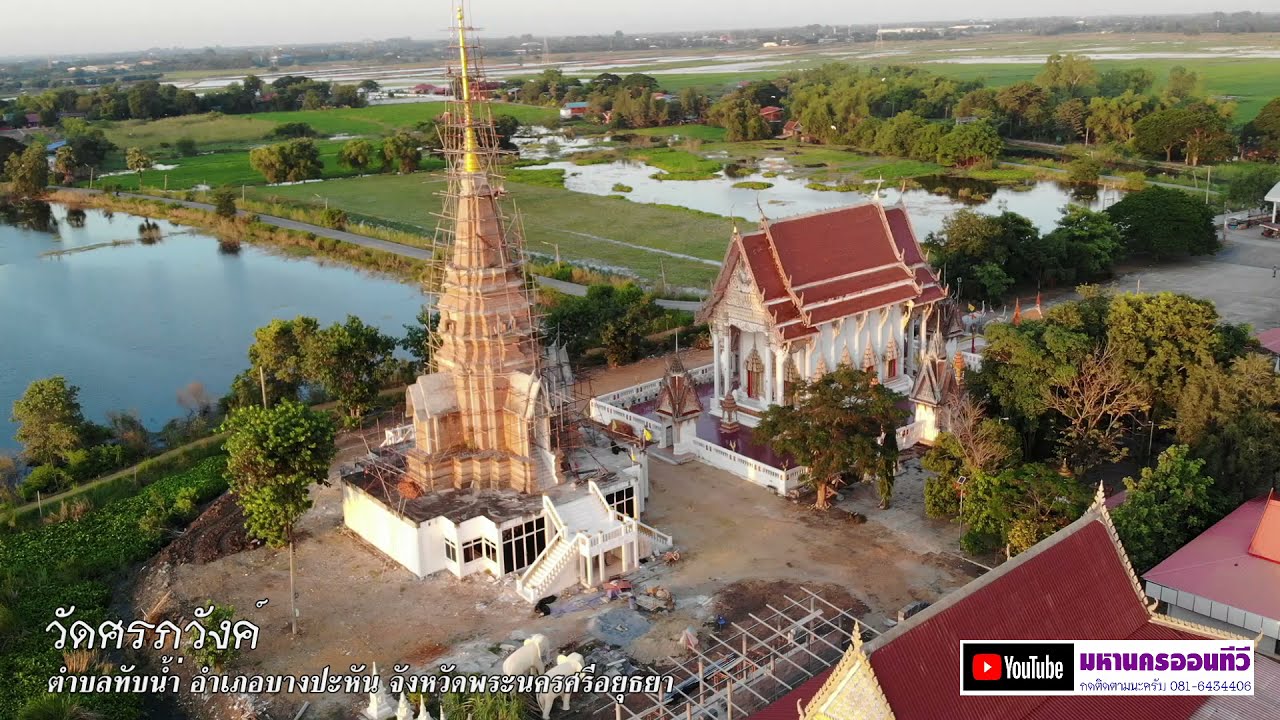
 Click to Access the Navigation Map GPS
Wat Si Phawang Map
Recommend

 Art, Culture and Heritage
 Historical Sites and Monuments(7)
 Landmarks and Memorials(6)
 Royal Palace(4)
 Art, Craft Centres, Tradition(6)
 Museums(9)
 Educational Places
 Museum for Study(1)
 Educational Gardens, Farm(2)
 Training Center(1)
Temple(133)
Training Center(1)
Temple(133)
 Church(2)
 Mosque(2)
 Other Sacred Sites(15)
 Research and Development
 Royal Project(4)
 Suburban Living
 Village, Community(10)
 Local Market(7)
 Floating Market(3)
 Nature and Wildlife
 Dam, Reservoir, Lake(1)
 River, Canal(3)
 Islands(2)
 Other natural attractions(1)
 Entertainment and Agricultural
 Animal camps and shows(2)
 Farms, Parks and Ecotourism(4)
 Travel Articles, Recipes
 Travel Review, Food Review(2)


