
TL;DR: Wat Lamud, Phranakhon Si Ayutthaya attractions : Places of Worship, Temple.
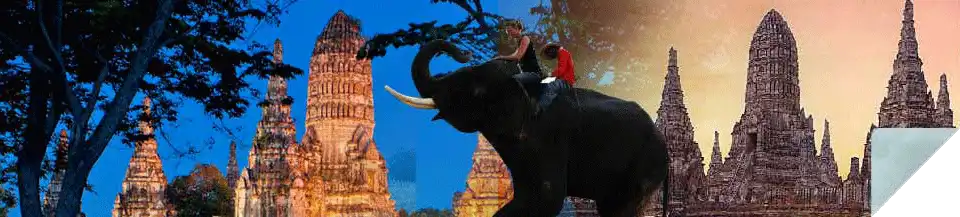
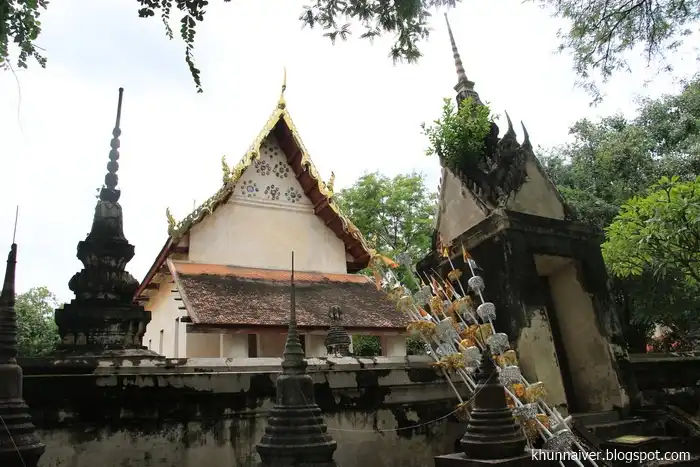
Wat Lamud
Open Days: Daily (recommended to confirm with the temple again on festival days)
Opening Hours: 08:00 – 17:00 (a common time window for merit-making and visiting)
Wat Lamud is located at 138 Ban Lamud, Moo 2, Pak Chan Subdistrict, Nakhon Luang District, Phra Nakhon Si Ayutthaya. It is a community temple under the Mahanikaya order, widely known as one of the long-standing temples along the Pa Sak River basin on the Nakhon Luang side. When people think of Ayutthaya as a historic city, they often picture the major monuments on the island city first, but for anyone who wants to understand the lives and landscapes beyond the island more deeply, a community temple like Wat Lamud becomes a key piece of the puzzle. The temple does not function only as a place for religious rites; it also serves as the village’s shared space, a “heart of the community” that has sustained local life across generations.
Looking at Ayutthaya through the lens of historical geography, it becomes clear that rivers and canals were the lifeblood of settlement for centuries, and the Pa Sak River basin in particular was a primary route for movement and resources for communities on the eastern side of the old capital. Settlement patterns along waterways naturally made the “temple” a crucial structure supporting religion, learning, and social cohesion. Wat Lamud is therefore a representative example of a community temple shaped by this context, continuing alongside everyday village life until it became part of Nakhon Luang’s shared local memory.
Historical information indicates that Wat Lamud was established as a temple around 2100 BE and received its Wisungkhamsima in 2110 BE, reflecting official recognition within Thailand’s monastic system and allowing the temple to conduct ordinations in accordance with the Vinaya. The temple’s land area is recorded at roughly 31 rai, which is relatively spacious for a community temple and helps explain why it has long served as a central ground for village activities, including annual merit-making, ceremonies, funerals, and important Buddhist occasions that communities traditionally support together.
A local story about “Chao Lamud” is often mentioned alongside the temple’s background. It is said that Chao Lamud once stayed in this area while ill, and after recovering, established the temple as an act of dedication and spiritual gratitude. While narratives of this kind should be read carefully as community tradition rather than document-based historical proof, their value lies in how they reflect relationships among authority, belief, and religion in Ayutthaya-era society. Many temples were not created solely through state policy or royal direction, but also through faith, personal experience, and everyday beliefs in sacred protection embedded in local life.
Beyond the dimension of local tradition, public information also mentions Wat Lamud within the context of late-Ayutthaya historical storytelling, and the temple is remembered as a place linked to accounts of ordination, healing, and certain unsettling episodes passed down by residents. When presented appropriately, these memories help readers see that community temples were not isolated from the grand narrative of Ayutthaya. Instead, they were places where the memories of the state, the community, and individuals continuously overlapped. This is part of the appeal of exploring Ayutthaya “off the island route,” because it allows you to encounter history that still feels alive in riverside villages.
In contemporary expressions of faith, Wat Lamud has gained more attention through the trend of worshipping the “Yak of Wat Lamud” and praying for stability, good fortune, and protection from misfortune, as shared by local media and community pages. This is often associated with images and beliefs connected to Tao Wessuwan as a guardian figure. Viewed culturally, the popularity reflects how modern merit-making blends the familiar warmth of a community temple with contemporary ideas of auspiciousness that help ease everyday anxieties. For a strong travel article, the balance matters: it is best framed as living belief and contemporary culture rather than exaggerated claims, while still guiding readers to appreciate the temple’s value as both a community space and a historical landscape.
What makes Wat Lamud compelling for learning-oriented travelers is the sense of layered time within a single place. There is the layer of mid-Ayutthaya conveyed through its founding period and Wisungkhamsima, the layer of local memory told through the story of Chao Lamud, and the layer of present-day devotion expressed through worship practices today. Walking through the temple grounds, you are not only looking at structures; you are moving through stories that have been carried forward by the community.
Wat Lamud continues to function clearly as a community temple. Its relatively wide grounds help accommodate a variety of local activities, including seasonal merit-making, important Buddhist holy days, offerings, daily alms-related practices, and village traditions. For visitors, this is a chance to experience “Ayutthaya through the community lens” in a pace that feels unhurried and less crowded than the main attractions on the island city, yet still rich in atmosphere and stories worth following.
As for a Thai tradition that can be confirmed as being held in connection with the temple, the key activity is the Kathina ceremony (Kathina Samakkhi), one of the most important merit-making events for Thai Buddhists. Kathina is the offering of Kathina cloth to the monastic community after the rains retreat, within a Vinaya-defined time window, and it often becomes a lively, cooperative community occasion, from organizing the Kathina funds and preparing communal support to joining the merit-making together. For Wat Lamud, information inviting participation in the temple’s Kathina has appeared in local sources, and the temple also appears in Kathina activity listings, indicating that it continues to play an active role in community tradition.
If you plan to visit Wat Lamud around the post-rains retreat period, experiencing the Kathina atmosphere can deepen your understanding of Thai community-temple culture. This is a time when the temple is not only a quiet sacred space but also a venue where residents meet, help with preparations, share news, and reinforce kinship and community networks through collective merit-making. From a cultural travel perspective, visiting during a merit-making season does not only add color; it adds real insight into how Thai community life works.
To visit Wat Lamud smoothly, it is best to dress respectfully, avoid overly short or tight clothing, and keep an appropriate speaking volume. If you want to take photos, look for signs in the area and avoid restricted monastic zones or ceremonial spaces. If your visit happens to coincide with a community activity such as merit-making preparations or Kathina work, walking quietly and showing respect helps you be a considerate guest and supports the community’s sense of comfort and safety in their own space.
Getting There Wat Lamud is most convenient by private car. Use the Asia Highway as the main route, head toward Nakhon Luang District, then continue to Pak Chan Subdistrict and Ban Lamud community. The temple is located within the village area, and the final section of the route is on local roads, so drive carefully, reduce speed when passing residential zones, and respect local life. If you travel in a group, park neatly and avoid blocking village access routes.
| Place Summary | A long-standing community temple in Nakhon Luang, connected to the Pa Sak River basin context and Ayutthaya history. |
| Highlights | A Mahanikaya community temple, founded around 2100 BE, granted Wisungkhamsima in 2110 BE, with grounds of about 31 rai, and local narratives that help explain Ayutthaya beyond the island city. |
| Address | 138 Ban Lamud, Moo 2, Pak Chan Subdistrict, Nakhon Luang District, Phra Nakhon Si Ayutthaya 13260 |
| Period | Mid-Ayutthaya period (around 2100 BE) |
| Abbot / Temple Leader | Phra Maha Montri Wallabho |
| Tradition / Key Activities | Kathina Samakkhi (post-rains retreat; confirmed via local invitations and Kathina activity listings) |
| Current Status | Active, with ongoing temple activities and merit-making events indicated in public information. |
| Contact Number | 035-359-332 |
| Nearby Tourist Attractions | 1) Prasat Nakhon Luang – Approx. 10 km 2) Wat Nakhon Luang – Approx. 10 km 3) Wat Yai Chai Mongkhon – Approx. 25 km 4) Wat Phanan Choeng Worawihan – Approx. 28 km 5) Ayutthaya Historical Park (Island City Zone) – Approx. 30 km |
| Popular Restaurants Nearby | 1) Krua Nakhon Luang A. Kung Pao Seafood – Approx. 12 km – Tel. 091-756-1561, 097-105-4555 2) Krua Im Aroi Nakhon Luang – Approx. 12 km – Tel. 087-080-8765 3) Nong Nuch Restaurant (Nong Nuch) – Approx. 13 km – Tel. 081-351-5837, 035-716-331, 081-853-5255 4) Krua Lung X – Approx. 14 km – Tel. 092-897-3754 5) Baan Suan 89 Ayutthaya – Approx. 14 km – Tel. 065-587-8222, 082-812-8999 |
| Popular Accommodations Nearby | 1) Waree Resort (Nakhon Luang) – Approx. 12 km – Tel. 081-987-1804, 035-750-431, 097-221-9418 2) VELA River View Hotel – Approx. 14 km – Tel. 088-088-0188 3) Toh Buk Seng Hotel – Approx. 28 km – Tel. 035-200-335, 098-289-0387 4) RUS Hotel & Convention Ayutthaya – Approx. 30 km – Tel. 099-152-8181, 062-748-3377 5) Lima Hotel Ayutthaya – Approx. 30 km – Tel. 064-282-2354, 035-801-808 |
Frequently Asked Questions (FAQ)
Q: In which period was Wat Lamud founded?
A: Public historical information indicates that the temple was founded around 2100 BE, during the mid-Ayutthaya period.
Q: When did Wat Lamud receive its Wisungkhamsima?
A: The temple is stated to have received Wisungkhamsima in 2110 BE.
Q: Is Wat Lamud still open, or has it permanently closed?
A: Based on public information indicating ongoing temple activities and Kathina-related listings, the temple remains active and is not considered permanently closed.
Q: When is the best time to visit for a Thai tradition atmosphere?
A: Visiting after the rains retreat can coincide with the Kathina Samakkhi season, a major merit-making tradition organized through community participation.
Q: How is Wat Lamud connected to the local story of “Chao Lamud”?
A: Local tradition says Chao Lamud stayed in the area while ill and founded the temple after recovering; it is best understood as community memory reflecting faith and local identity.
Q: What is the “Yak of Wat Lamud” that people mention?
A: It refers to a contemporary belief trend involving worship associated with a guardian figure, often discussed in connection with Tao Wessuwan in terms of protection and auspiciousness.
Q: Is it easy to get to Wat Lamud?
A: Yes, it is convenient by private car via the Asia Highway to Nakhon Luang, then into Pak Chan and the Ban Lamud community, with local roads in the final stretch.
Q: What should visitors wear at Wat Lamud?
A: Dress respectfully, avoid overly short or tight clothing, keep voices appropriate, and follow any posted guidance, especially near ceremonial or monastic areas.
 Category: ●Places of Worship
 Group: ●Temple
 Last Update : 2 MonthAgo
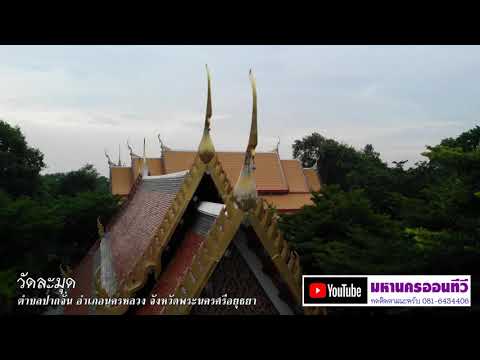
 Click to Access the Navigation Map GPS
 Art, Culture and Heritage
 Historical Sites and Monuments(
 Landmarks and Memorials(
 Royal Palace(
 Art, Craft Centres, Tradition(
 Museums(
 Educational Places
 Museum for Study(
 Educational Gardens, Farm(
 Training Center(
 University
 Church(
 Mosque(
 Other religious and spiritural sites(
 Research and Development
 Royal Project(
 Suburban Living
 Village, Community(
 Local Market(
 Floating Market(
 Nature and Wildlife
 Dam, Reservoir, Lake(
 River, Canal(
 Islands(
 Other natural attractions(
 Entertainment and Agricultural
 Animal camps and shows(
 Farm, Parks, Gardens and Ecotourism(
 Travel Articles, Recipes
 Travel Review, Food Review(


