
lovethailand home >Central Travel Attractions >Ang Thong Travel Attractions >Muang Ang Thong >Champa Lo > Wat Sao Thong Thong
TL;DR: Wat Sao Thong Thong is located at 49 Moo 1, Champa Lo Subdistrict, Mueang Ang Thong District, Ang Thong 14000, Thailand, open Daily, hours 08.00 – 17.00.
Wat Sao Thong Thong
Open Days: Daily
Opening Hours: 08.00 – 17.00
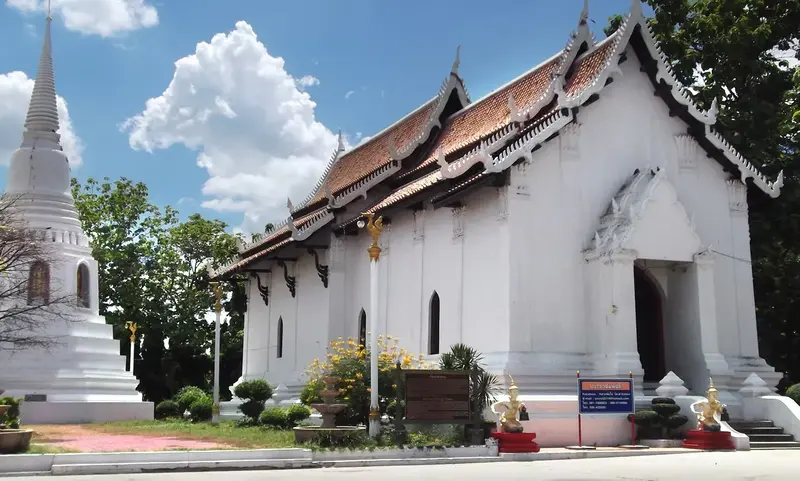
Wat Sao Thong Thong in Moo 1, Champa Lo Subdistrict, Mueang Ang Thong District, Ang Thong Province is a community temple in Thailand’s central river plains that continues to serve as a steady spiritual center for local residents. Visitors will notice a simple, everyday temple atmosphere that still carries clear meaning in community life—from morning alms-giving and merit-making on Buddhist holy days to larger ceremonies tied to the Buddhist calendar. From a traveler’s perspective, Wat Sao Thong Thong is well suited for a calm visit to pay respects, and it also works as a practical “starting point” for exploring Mueang Ang Thong because it is easy to connect onward to key temples and learning sites across the province.
Wat Sao Thong Thong is located in Champa Lo Subdistrict, Mueang Ang Thong District, Ang Thong Province and belongs to the Mahanikaya order. Available records indicate that the temple was established around 1766 (B.E. 2309). In terms of Thailand’s historical timeline, this places the temple in the late Ayutthaya era and the transitional period toward the Thonburi and early Rattanakosin eras. This makes the temple and its surrounding community a living trace of settlement patterns in the central plains, where temples grew alongside local society and functioned as both religious and social centers.
In another sense, Wat Sao Thong Thong is significant not only as a place for formal religious rites, but also as a space where community relationships are formed and maintained. Many community temples in central Thailand function like an informal “public commons”: a place to meet, share news, gather for public-benefit activities, and build shared memories across generations. Wat Sao Thong Thong reflects this role clearly, especially on major Buddhist observance days such as Makha Bucha Day, Visakha Bucha Day, and Asalha Bucha Day, as well as during the Buddhist Lent period (Khao Phansa to Ok Phansa). During these times, community members typically come together to make merit, listen to Dhamma teachings, join candlelit processions, and participate in long-standing traditions passed down over time.
In terms of temple layout, recorded information mentions key monastic structures such as the ordination hall (ubosot), sermon hall (sala kanparian), and monks’ quarters. These essential elements enable the temple to serve complete religious functions—supporting monastic ceremonies, preaching and instruction, Dhamma learning, and the accommodation of resident monks. For this reason, the appeal of visiting Wat Sao Thong Thong does not depend on “seeking grandeur.” Instead, it comes from experiencing a functioning community temple ecosystem: seeing how spaces are arranged by purpose, noticing the flow of daily community life, and observing how faith is woven into routine practice.
Regarding temple administration, the most recently updated information lists Phra Samu Sophon Jattamalo as the abbot of Wat Sao Thong Thong. This provides a clear point of reference for visitors who wish to coordinate merit-making activities or community-related events. The temple also has a direct contact phone number, which is useful for those who want to ask about ceremonies, making offerings, or arranging group visits and activities.
For travelers who want their visit to feel meaningful, a simple step-by-step approach works well: begin at the ubosot to pay respect to the main Buddha image and set a quiet intention, then walk to the sermon hall or activity areas to observe the real atmosphere of a living community temple. Temples that remain active often reveal small details that reflect community life—notice boards announcing ceremonies, donation areas organized by local custom, or corners where residents rest and talk after making merit. These details help transform the visit from a quick photo stop into a more grounded understanding of how people and temple life connect in everyday reality.
During festival periods, community temples like Wat Sao Thong Thong often become especially central. In many central-Thai communities, Songkran is marked by merit-making, alms-giving, and respectful blessings for elders. During Buddhist Lent, the offering of Lent candles and merit-making connected to disciplined practice becomes a key focus. After Lent, and during Kathin ceremonies, community members typically join forces for major merit-making events. As a community temple, Wat Sao Thong Thong therefore provides a clear “rhythm of the year”: when merit-making seasons arrive, the temple becomes livelier and the continuity of tradition becomes easy to see.
In terms of etiquette and dress, even though Wat Sao Thong Thong is easy to visit, it remains a religious site and should be approached respectfully. Dress modestly, avoid overly short or tight clothing, and keep noise low—especially if ceremonies are underway or many elders are present. If you take photos, do so with consideration: avoid disturbing worshippers and avoid any angles or behaviors that would be inappropriate in a sacred space. These basic courtesies help ensure a positive experience for both visitors and the host community.
Getting There To reach Wat Sao Thong Thong, start from Ang Thong town and travel into Champa Lo Subdistrict within Mueang Ang Thong District. Driving by car or motorcycle is recommended for convenience. Use an online map and search “Wat Sao Thong Thong Ang Thong” to pin the location directly. Once in Champa Lo, follow village signage and local community roads, then enter the temple via the route suggested by your navigation. To keep the visit comfortable, plan your travel for the morning or later afternoon when temperatures are generally less intense.
If you want to maximize a one-day trip, Wat Sao Thong Thong can be placed on the same route as several important attractions in Ang Thong—such as well-known temples with notable religious art, or museums that explain the province’s history. This type of plan suits both merit-making travelers and learners, combining the calm of temple worship with broader historical context through nearby learning sites. It is also easy to coordinate meals and accommodation in Ang Thong town for smoother logistics.
For visitors who prefer a relaxed pace, plan about 30–60 minutes at the temple for worship, merit-making, a gentle walk around the grounds, and a quiet moment to absorb the atmosphere. If you visit on major Buddhist observance days, consider allowing extra time to join activities such as candlelit processions or traditional merit-making rituals. In general, morning visits tend to be cooler and calmer, while late afternoon before closing still offers natural light suitable for respectful photography.
Overall, Wat Sao Thong Thong can be understood as a “fully functioning community temple”: a place people rely on for spiritual grounding, a site for merit-making throughout the year, and an anchor of shared memory for Champa Lo residents. For visitors from outside the area, stopping here offers a closer, more human-scale view of Ang Thong—showing how simple temple spaces can still carry lasting meaning, and how local religious life continues to shape community ties today.
| Place Name | Wat Sao Thong Thong |
| Address | 49 Moo 1, Champa Lo Subdistrict, Mueang Ang Thong District, Ang Thong 14000, Thailand |
| Site Summary | A community (local) temple in Champa Lo that serves as a merit-making and religious activity center, with convenient access and easy onward travel to key Ang Thong attractions. |
| Key Highlights | Active community temple atmosphere, a gathering point for Buddhist-calendar ceremonies, and a practical stop within a one-day Ang Thong route. |
| History / Period (Recorded) | Records indicate establishment around 1766 (B.E. 2309). |
| Open Days | Daily |
| Opening Hours | 08.00 – 17.00 |
| Temple Phone | 035-612-520 |
| Custodian / Abbot (Latest) | Phra Samu Sophon Jattamalo |
| Nearby Tourist Attractions (Approx. Driving Distance) | 1) Ang Thong City Legend Museum – approx. 10 km – Tel. 035-873-301 2) Wat Khun Inthapramun (Reclining Buddha) – approx. 20 km – Tel. 035-525-867 3) Wat Chaiyo Worawihan – approx. 22 km – Tel. 089-987-2500 4) Wat Muang – approx. 35 km 5) Wat Ton Son – approx. 12 km |
| Popular Restaurants Nearby (Approx. Driving Distance + Phone) | 1) Ang Thong Boat Noodles (Saneh Ang Thong) – approx. 12 km – Tel. 090-981-1436 2) Look Nai Hua Southern Thai Kitchen – approx. 12 km – Tel. 089-081-1125 3) Krua Ang Thong – approx. 11 km – Tel. 081-851-2952 4) Krua Kai Chon – approx. 12 km – Tel. 089-899-1231 5) Samrab Kub Khao Ang Thong – approx. 14 km – Tel. 094-326-5965 |
| Popular Accommodations Nearby (Approx. Driving Distance + Phone) | 1) Bualuang Boutique Resort (Ang Thong) – approx. 12 km – Tel. 081-495-8884 2) Angthong Hotel – approx. 12 km – Tel. 035-611-667 3) Bualuang Hotel (Ang Thong) – approx. 12 km – Tel. 080-922-4040 4) Parachote Hill Resort – approx. 14 km – Tel. 080-659-5319 5) Palanee Resort – approx. 15 km – Tel. 081-665-4330 |
Frequently Asked Questions (FAQ)
Q: What days and hours is Wat Sao Thong Thong open?
A: It is open daily from 08.00 to 17.00.
Q: What is the direct contact number for Wat Sao Thong Thong?
A: The temple can be reached at 035-612-520.
Q: Who is the current abbot of Wat Sao Thong Thong?
A: The latest listed abbot is Phra Samu Sophon Jattamalo.
Q: How long should I plan to spend at the temple?
A: Plan about 30–60 minutes for worship, merit-making, and a gentle walk around the grounds.
Q: What should I wear and how should I behave when visiting?
A: Dress modestly, keep noise low, and take photos respectfully without disturbing worshippers or ceremonies.
Q: Where can I go after visiting Wat Sao Thong Thong?
A: You can continue your one-day route to Ang Thong City Legend Museum, Wat Khun Inthapramun, Wat Chaiyo Worawihan, or Wat Muang for a combined temple-and-learning itinerary.
 Category: ●Places of Worship
 Group: ●Temple
Last Update : 3 MonthAgo
 Last Update : 3 MonthAgo
 Click to Access the Navigation Map GPS
Wat Sao Thong Thong Map
Recommend
 Art, Culture and Heritage
 Landmarks and Memorials(2)
 Royal Palace(1)
 Art, Craft Centres, Tradition(2)
 Museums(2)
 Historical Houses and The Ancient City(1)
 Educational Places
 Educational Gardens, Farm(1)
Temple(64)
Educational Gardens, Farm(1)
Temple(64)
 Other religious and spiritural sites(4)
 Research and Development
 Royal Project(2)
 Suburban Living
 Village, Community(16)
 Local Market(1)
 Floating Market(1)
 Nature and Wildlife
 River, Canal(5)
 Other natural attractions(3)
 Entertainment and Agricultural
 Farm, Parks, Gardens and Ecotourism(4)
 Outdoor and Adventure Activities(1)
 Shopping
 Shopping and Night Market(1)
 Travel Articles, Recipes
 Travel Review, Food Review(1)
 Central Thai Cuisine, Central Thai food recipes(1)


