
TL;DR: Wat Khok Langka (Abandoned Temple) is located at Moo 3, Champa Lo Subdistrict, Mueang Ang Thong District, Ang Thong 14000, Thailand, open Daily, hours 08.00 – 17.00.
Wat Khok Langka (Abandoned Temple)
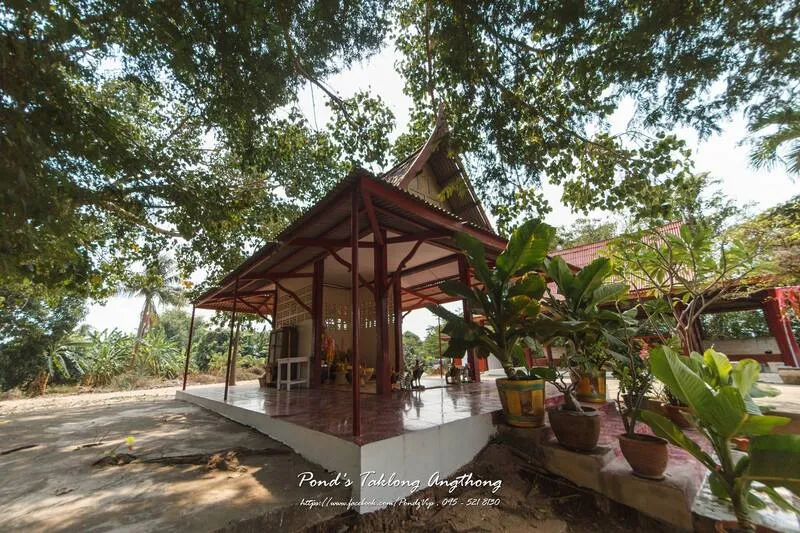
Open Days: Daily
Opening Hours: 08.00 – 17.00
Wat Khok Langka (Abandoned Temple) in Moo 3, Champa Lo Subdistrict, Mueang Ang Thong District, Ang Thong Province offers a clear sense of local “layers of time.” Although it is now an abandoned temple site, the remaining traces of its historic structures still suggest that this area once played an important role for the community—both as a place of faith and ritual, and as part of the way people related to the landscape of the Chao Phraya River basin. The appeal of Wat Khok Langka lies in walking through the site slowly and reading what has been left behind: brick foundations, boundary lines, and fragments of structural remains that allow you to imagine the former religious buildings without relying on the grandeur of a fully functioning temple.
The geography of Champa Lo is typical of Thailand’s central plains and has long been shaped by water systems. In the wider picture, temples in landscapes like this often developed alongside agricultural settlements, water-based travel routes, and the need for a shared spiritual center. A temple was therefore more than a place for religious rites; it functioned as a social hub, a meeting point, a setting for family ceremonies, and a bridge connecting generations. Even though Wat Khok Langka no longer operates as an active temple with resident monks, the “architectural skeleton” that remains still serves as quiet evidence that this place once underwent planning, construction, and long-term community use.
As you begin exploring, the first striking feature is the surviving brickwork and boundary lines of the old structures. The remaining brick alignments are still legible enough to outline the footprint of key temple buildings—areas believed to have been a viharn (assembly hall) or ritual spaces, and zones that may once have held a principal stupa within the temple layout. The experience of viewing a historic site like this is defined by close observation of small details: the thickness of the foundation lines, the way bricks were laid, the raised ground levels, and the orientation of the structures. In many Thai temples, layout and direction are closely linked to traditional beliefs about auspicious orientation. For this reason, Wat Khok Langka is not beautiful in the way “new construction” is; instead, it is beautiful through its remaining traces, gradually embraced by nature, creating a quiet, contemplative atmosphere that invites time and attention.
From the perspective of cultural heritage travel, abandoned temples have a distinct charm because they reveal the relationship between people and time in an honest way. Cracked bricks, peeling plaster, and scattered fragments reflect the realities of social change and the challenges of long-term preservation. When a site stops functioning in certain ways, nature begins to reclaim it. Yet the “core” sense of sacredness often remains for local people. Many abandoned temple sites still receive visitors who stop to pay respect, make wishes, or perform small acts of merit as they are able. Wat Khok Langka is one such place—valued both as a historic site within Champa Lo and as a location where some visitors still come to pay respects.
Another element that keeps Wat Khok Langka in local conversation is the “ancient well,” regarded by people in the area as an important water source of the community. In old Thai temple settings, a well was not merely a practical water supply; it could also represent abundance, continuity of life, and shared community order through collective resource management. In the past, the well may have supported daily use as well as temple-related activities connected to communal ceremonies—such as preparing water for merit-making events or cleaning utensils used during festivals. This is why many visitors feel the well at Wat Khok Langka functions as a “shared trace,” linking the memories of multiple generations. Even if we cannot fully reconstruct how it was used in every detail, the presence of the well makes the structure of community life around the temple easier to understand.
Visiting Wat Khok Langka offers a different experience from the well-known temples of Ang Thong. It is not designed for spectacle or curated photo spots. Instead, it centers on “walking, reading traces, and connecting meanings.” It suits travelers interested in local history, those who prefer quiet settings, and anyone who wants to see a side of Ang Thong beyond its major landmarks. A visit can also be planned as part of a broader temple-hopping or heritage-learning route within Mueang Ang Thong, paired with nearby sites that add historical and cultural context, making your understanding of the Chao Phraya basin landscape in Ang Thong feel more complete.
Getting There To reach Wat Khok Langka, start from Ang Thong town and travel into Champa Lo Subdistrict using local routes connecting the district center to surrounding communities. Once you enter Champa Lo, look for village signage and the smaller road leading to Moo 3. It is most practical to navigate with an online map by searching for “Wat Khok Langka” or “Wat Ko Langka” to reach the most accurate point. Traveling by car or motorcycle is recommended for convenience. For a more comfortable walk and better light, visit in the morning or mid-to-late afternoon when the sun is softer. The site is mostly open-air with limited shade, so dress respectfully and wear footwear suitable for uneven ground, loose bricks, or naturally overgrown grass.
For safety and respectful visitation, avoid climbing on deteriorated brick structures, do not move or take any material from the site, and be cautious on uneven ground—especially after rainfall when surfaces can be slippery. If you wish to take photos, keep a respectful distance, avoid disturbing visitors who may be paying respects, and do not enter areas that appear structurally unstable. These simple practices help ensure that cultural heritage travel remains a form of learning that does not damage community heritage sites.
In terms of cultural interpretation, Wat Khok Langka reflects the idea of a community’s “shared memory” in a compelling way. Although it is called an abandoned temple, the site is not completely disconnected from local life. Many abandoned temple sites continue to be seen as sacred in their own way. Some people still come to make wishes, offer merit according to their means, or simply remember the village’s past. Combined with the surviving structural traces and the important well, Wat Khok Langka becomes a place that has “stopped functioning in one form, but has not stopped holding meaning”—a key concept in community-based heritage tourism.
For travelers who want a serious Ang Thong day trip, Wat Khok Langka can serve as a strong “opening chapter” to learning about Champa Lo. After visiting, you can easily continue to other temples and attractions in Mueang Ang Thong District. Some are major provincial temples, some are museums, and some are riverside relaxation spots along the Chao Phraya River. Planning your route this way creates a balanced one-day trip: the calm atmosphere of an abandoned site, the grandeur of famous temples, and the charm of a small riverside town with local character.
If your goal is to explore the site as a historic ruin, allow at least 30–60 minutes to walk through the key elements and observe details such as foundation lines, brick remains, and the well. For better photography and clearer visibility of textures, visit in the early morning or late afternoon before closing time, when the light is softer and gives depth to the old brick surfaces.
Wat Khok Langka is therefore ideal for travelers seeking “quietness with a story.” You can stand among traces of the past and piece together meaning through observation—without rushing, without competing for photo angles, and without crowds. If you want to see a deeper side of Ang Thong beyond the typical tourist route, Wat Khok Langka deserves a place in your itinerary. Visiting with care and respect also becomes a small but meaningful part of preserving local heritage for the future.
| Place Name | Wat Khok Langka (Abandoned Temple) |
| Address | Moo 3, Champa Lo Subdistrict, Mueang Ang Thong District, Ang Thong 14000, Thailand |
| Site Summary | An abandoned temple ruin in Champa Lo with visible brick foundations and boundary lines, featuring an ancient well as a key landmark of the site. |
| Key Highlights | Temple layout traces and brick ruins, readable boundary lines and foundations, an ancient well as a community landmark, and a quiet atmosphere suited for heritage exploration. |
| Era / Period | Abandoned temple site (official period can be added when a specific reference is available). |
| Key Evidence | Brick foundations and boundary lines, areas believed to have been major temple buildings, and the ancient well within the site. |
| Name Origin | A locally used name (some sources also use “Wat Ko Langka”); documentary confirmation can be added when available. |
| Open Days | Daily |
| Opening Hours | 08.00 – 17.00 |
| Fees | No verified fee information (if any fees are applied, please check before visiting). |
| Facilities | Open-air walking area (no verified information on dedicated restrooms or designated parking at the site). |
| Custodian / Abbot (Latest) | Abandoned temple site – no resident abbot; local coordination: Champa Lo Subdistrict Administrative Organization, Tel. 035-610-720 |
| Nearby Tourist Attractions (Approx. Driving Distance) | 1) Wat Khun Inthapramun (Reclining Buddha) – approx. 12 km 2) Wat Chaiyo Worawihan – approx. 18 km 3) Wat Muang (Big Buddha) – approx. 35 km 4) Ang Thong National Museum – approx. 12 km 5) Rong Thong area / Ang Thong town district – approx. 12 km |
| Popular Restaurants Nearby (Approx. Driving Distance + Phone) | 1) Niramit Restaurant – approx. 13 km – Tel. 081-852-4777, 035-611-238 2) Krua Lung Lor – approx. 12 km – Tel. 065-593-1516 3) Krua Ban Suan Restaurant – approx. 11 km – Tel. 098-531-9546, 089-185-7993 4) Look Nai Hua Southern Thai Kitchen – approx. 12 km – Tel. 089-081-1125 5) Ang Thong Boat Noodles (Saneh Ang Thong) – approx. 10 km – Tel. 090-981-1436 |
| Popular Accommodations Nearby (Approx. Driving Distance + Phone) | 1) Bualuang Hotel Ang Thong – approx. 12 km – Tel. 035-611-116, 080-922-4040 2) Bualuang Boutique Resort Ang Thong – approx. 12 km – Tel. 081-495-8884 3) Samsee Resort Ang Thong – approx. 18 km – Tel. 081-946-8566, 089-699-4793 4) Rachaphruek Apartment Ang Thong – approx. 12 km – Tel. 035-614-144, 092-918-6034 5) Angthong Hotel – approx. 13 km – Tel. 035-611-667 |
Frequently Asked Questions (FAQ)
Q: Is Wat Khok Langka an active temple with resident monks?
A: No. Wat Khok Langka is an abandoned temple site, so there are no resident monks and no resident abbot.
Q: What days and hours is Wat Khok Langka open for visits?
A: It is open daily from 08.00 to 17.00.
Q: What are the main highlights to look for at the site?
A: The main highlights are the brick foundation and boundary traces of the ruins, and the ancient well, which is considered a key landmark of the site.
Q: How much time should I plan for a visit?
A: Most visitors should plan about 30–60 minutes for a slow walk, observation, and photos.
Q: What should I be careful about when visiting an abandoned temple site?
A: Avoid climbing on unstable brickwork, watch for uneven or slippery ground, dress respectfully, and do not remove or move any materials from the site.
Q: Who should I contact for local coordination in Champa Lo?
A: You may contact the Champa Lo Subdistrict Administrative Organization at 035-610-720.
 Category: ●Places of Worship
 Group: ●Temple
 Last Update : 1 MonthAgo
 Click to Access the Navigation Map GPS
 Art, Culture and Heritage
 Landmarks and Memorials(
 Royal Palace(
 Art, Craft Centres, Tradition(
 Museums(
 Historical Houses and The Ancient City(
 Educational Places
 Educational Gardens, Farm(
 Other religious and spiritural sites(
 Research and Development
 Royal Project(
 Suburban Living
 Village, Community(
 Local Market(
 Floating Market(
 Nature and Wildlife
 River, Canal(
 Other natural attractions(
 Entertainment and Agricultural
 Farm, Parks, Gardens and Ecotourism(
 Outdoor and Adventure Activities(
 Shopping
 Shopping and Night Market(
 Travel Articles, Recipes
 Travel Review, Food Review(
 Central Thai Cuisine, Central Thai food recipes(


