
TL;DR: Wat Lat Ped is located at Tha Chang Subdistrict, Wiset Chai Chan District, Ang Thong, Thailand, open Open Daily, hours 08:00 – 17:00.
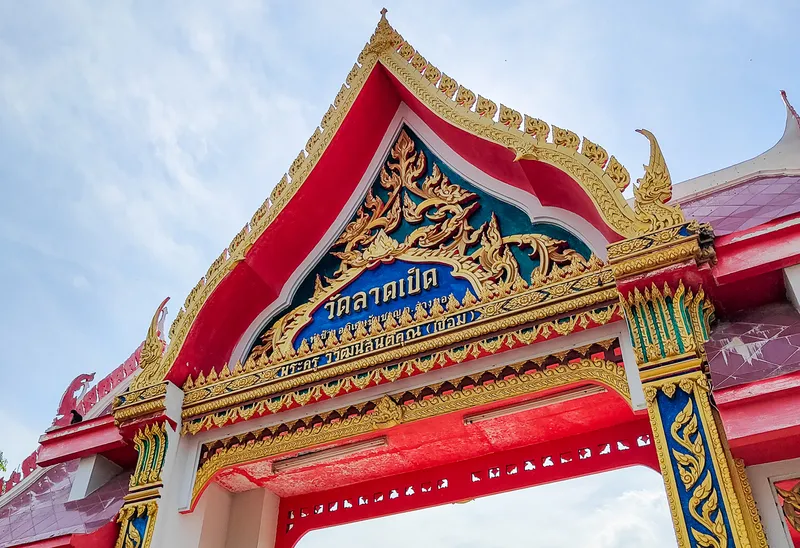
Wat Lat Ped
Open Days: Open Daily
Opening Hours: 08:00 – 17:00
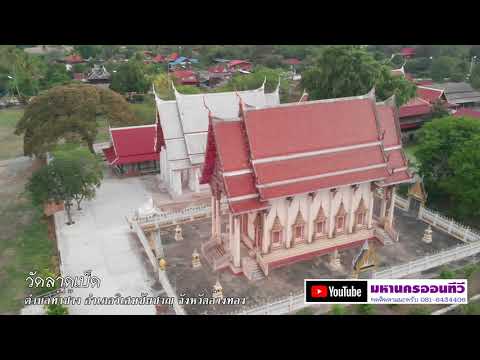
Wat Lat Ped is an old temple in Tha Chang Subdistrict, Wiset Chai Chan District, Ang Thong. It is believed to date back to the late Ayutthaya period, was once abandoned, and was revived and officially re-established in 1792. The temple received its first royal boundary (wisungkhamasima) on 20 June 1910 and a second one in 1989. Today, Wat Lat Ped remains a local religious and educational center. Key highlights include a traditional brick-and-mortar ordination hall (ubosot) with distinctive terracotta gable decorations, a spacious viharn with an open interior (no columns), and supporting buildings such as the sermon hall, chanting hall, and monks’ quarters that reflect everyday temple life in Thailand’s central plains.
Wat Lat Ped is located in Tha Chang Subdistrict, Wiset Chai Chan District, Ang Thong Province. It is a community temple under the Mahanikai sect. The temple grounds cover approximately 28 rai 2 ngan 48 square wah, with three additional plots of monastic land totaling about 16 rai. The surrounding landscape is characteristic of the central plains: low-lying fields, rice paddies, and irrigation canals that frame the temple area. This setting gives the temple a calm, green atmosphere that suits quiet merit-making, respectful worship, and a slower cultural visit.
Historically, Tha Chang was a farming community whose life depended on water and fertile land. Temples in such communities were not only places for religious rites but also shared civic spaces where people gathered, learned, and supported one another through seasonal rituals and community events. Wat Lat Ped emerged within this context as a spiritual anchor for local residents, linking everyday life with Buddhist practice and communal responsibility.
According to historical accounts, Wat Lat Ped is believed to have been founded during the Ayutthaya era. Over time, however, the temple experienced a period of abandonment and deterioration. In 1792, local residents and monks worked together to revive the site and re-establish it as an official temple. This revival is an important turning point in the temple’s timeline because it restored Wat Lat Ped’s role as a functioning center of faith, learning, and community cohesion.
On 20 June 1910, Wat Lat Ped received a royal consecration of the temple boundary (wisungkhamasima), formally defining the sacred precinct for ordination ceremonies. This recognition indicates that the temple had achieved a stable standing within the monastic and local community framework, enabling it to conduct key ecclesiastical rites in accordance with Buddhist discipline.
From 1957 onward, Wat Lat Ped expanded its educational role by opening classes in Buddhist scripture studies (phra pariyatti dhamma). This development strengthened the temple’s contribution to religious education for monks and for the wider community, helping to cultivate Buddhist literacy and ethical grounding among local youth and residents.
In 1989, Wat Lat Ped received a second royal boundary consecration. This later recognition is commonly associated with the growing needs of the community and the expansion of religious activities. It underscores the temple’s continuing importance as both a spiritual institution and a cultural foundation for people in Tha Chang and surrounding areas.
Architecturally, Wat Lat Ped is especially notable for its ordination hall (ubosot), a brick-and-mortar structure in a traditional Thai style. The base is built with a modest “boat-shaped” profile (a subtle yaun-samphao form), giving the building a grounded yet elegant proportion. One of the most distinctive elements is the gable treatment: rather than ornate stucco relief, the gable is adorned with terracotta ornaments that still show traces of careful workmanship. These details are often where visitors can best “read” the age and character of a local temple, because they reflect both aesthetic preference and material culture of the time.
Behind the ubosot stands a viharn with a special structural feature: the interior is described as open without columns, which creates a broad, airy space suitable for gatherings and ceremonies. This kind of interior openness changes how the space feels and functions, making it easier for community members to participate in religious activities together while maintaining a clear line of sight toward the sacred focal points.
The temple complex also includes a wooden sermon hall (sala kan parian), built in 1956, measuring roughly 12 meters wide and 26 meters long. Such halls are central to a community temple’s daily rhythm, supporting sermons, merit-making events, and local ceremonies. There is also a chanting hall (built in 1957) sized about 6 x 6 meters, and eight monks’ residences (kuti), reflecting the lived-in, working nature of Wat Lat Ped as an active monastic community.
Wat Lat Ped continues to serve as a hub for local religious and cultural life. Annual merit-making, Songkran festivities, the Buddhist Lent period, and key holy days are moments when the temple becomes a gathering point that reinforces shared values and community solidarity. In many central Thai villages, this ongoing cycle of temple-based activities is what sustains cultural continuity across generations, and Wat Lat Ped remains part of that living pattern.
Beyond ceremonies, the temple’s educational and moral role remains significant. Teaching Dhamma and supporting ethical learning for children and youth help connect Buddhist principles to everyday life. In practical terms, this is how a community temple continues to shape character, social responsibility, and a sense of belonging, even as the surrounding society changes.
Getting There From Ang Thong city center, drive toward Wiset Chai Chan District and continue to Tha Chang Subdistrict; the trip typically takes about 20 minutes. From Bangkok, take Highway 32 through Ayutthaya to Ang Thong, then continue to Wiset Chai Chan and Tha Chang to reach Wat Lat Ped.
| Name | Wat Lat Ped |
| Place Summary | An old community temple in Tha Chang, Wiset Chai Chan, Ang Thong, believed to date back to the Ayutthaya era and known for its traditional ubosot and educational role in Buddhist studies. |
| Address | Tha Chang Subdistrict, Wiset Chai Chan District, Ang Thong, Thailand |
| Highlights | Traditional Brick Ubosot, Terracotta Gable Ornaments, Open-Plan Viharn (No Columns), Community Temple With Buddhist Education (Pariyatti Studies) |
| Abbot / Temple Lead (Latest) | Phra Khru Wiset Chai Kit |
| Current Status | Active Community Temple Open For Worship And Visits |
| Nearby Tourist Attractions | 1) Wat Khian (10 km) 2) Sala Chao Rong Thong Market (12 km) 3) Wat Oi (13 km) 4) Wat Muang (24 km) 5) Wat Khun Inthapramun (28 km) |
| Popular Restaurants Nearby | 1) Nimit Restaurant (15 km) Tel 081-852-4777 2) Krua Mae Wandi (15 km) Tel 080-099-5688 3) Ruen Rab Khwan (16 km) Tel 081-854-1894 4) DR STEAK (19 km) Tel 035-632-145 5) Samoe Jai Restaurant (21 km) Tel 035-622-755 |
| Popular Accommodations Nearby | 1) Patamanan Residence (18 km) Tel 095-505-1935 2) Wiset Sabai Resort (19 km) Tel 081-587-5993 3) Tee Nee Mee Dee Resort (20 km) Tel 094-131-8081 4) Bualuang Hotel Ang Thong (30 km) Tel 035-611-116 5) Ratchaphruek DC Resort Ang Thong (32 km) Tel 080-193-3277 |
Frequently Asked Questions (FAQ)
Q: Where is Wat Lat Ped located?
A: Wat Lat Ped is in Tha Chang Subdistrict, Wiset Chai Chan District, Ang Thong Province.
Q: When was Wat Lat Ped founded?
A: It is believed to date back to the Ayutthaya period and was revived and officially re-established in 1792.
Q: What are the main highlights of Wat Lat Ped?
A: The key highlights are the traditional brick ubosot with terracotta gable ornaments and the spacious viharn with an open interior.
Q: Why is Wat Lat Ped important to the local community?
A: The temple serves as a religious center and has supported Buddhist education, merit-making activities, and community traditions for generations.
Q: How long should I spend visiting Wat Lat Ped?
A: Most visitors spend about 30–60 minutes for worship and a relaxed walk around the temple grounds.
 Category: ●Places of Worship
 Group: ●Temple
 Last Update : 4 WeekAgo
 Click to Access the Navigation Map GPS
 Art, Culture and Heritage
 Landmarks and Memorials(
 Royal Palace(
 Art, Craft Centres, Tradition(
 Museums(
 Historical Houses and The Ancient City(
 Educational Places
 Educational Gardens, Farm(
 Other religious and spiritural sites(
 Research and Development
 Royal Project(
 Suburban Living
 Village, Community(
 Local Market(
 Floating Market(
 Nature and Wildlife
 River, Canal(
 Other natural attractions(
 Entertainment and Agricultural
 Farm, Parks, Gardens and Ecotourism(
 Outdoor and Adventure Activities(
 Shopping
 Shopping and Night Market(
 Travel Articles, Recipes
 Travel Review, Food Review(
 Central Thai Cuisine, Central Thai food recipes(


