
lovethailand home >North Travel Attractions >Tak Travel Attractions >Mae Sot >Tha Sai Luat > Lae Upad Taka
TL;DR: Lae Upad Taka is located at No. 95, Ban Ngiao Luang, Mae Sot Subdistrict, Mae Sot District, Tak 63110, Thailand, open Held On Wan Kon During The Buddhist Lent Period, Or According To The Annual, hours Morning To Midday, According To The Annual Ritual Schedule.
Lae Upad Taka
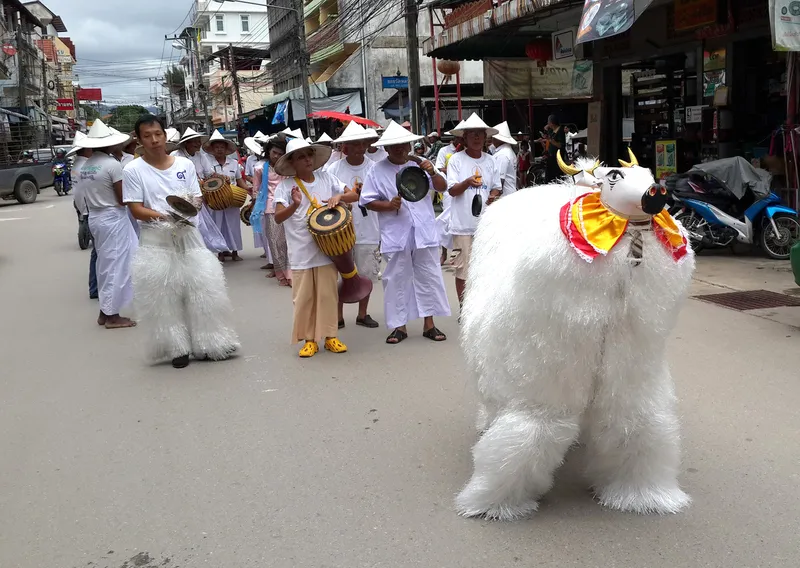
Open Days: Held On Wan Kon During The Buddhist Lent Period, Or According To The Annual Temple And Community Schedule
Opening Hours: Morning To Midday, According To The Annual Ritual Schedule
Lae Upad Taka, also written as Lae Uppat Taka or Lae Upadaka, is a meaningful Tai Yai Buddhist tradition in Mae Sot District, Tak Province. The tradition centers on a procession of lay Buddhist men who collect food offerings from devotees and bring them to the temple for the symbolic offering of rice and food to the Buddha on Buddhist holy days. In the Tai Yai cultural context of Mae Sot, this practice is more than a simple food collection. It is a living expression of faith, generosity, discipline, and the close relationship between homes, temples, and the Buddhist community.
The core meaning of Lae Upad Taka is the preparation of food, sweets, fruit, and monetary offerings for the Buddha. Tai Yai Buddhist families traditionally keep a Buddha image at home, decorate the shrine with flowers, incense, and candles, and offer rice to the Buddha as part of daily devotion. During the Buddhist Lent period, this household practice becomes a community ritual. Lay supporters dress in white, receive the Five Precepts, form a procession, and walk through the community to receive offerings from devotees before bringing them back to the temple for proper arrangement and dedication.
The main temple associated with the tradition is Wat Mae Sot Na Dan, also known as Wat Luang, in Mae Sot Subdistrict, Mae Sot District, Tak Province. The temple is closely connected with the Tai Yai community and has long served as an important spiritual center of Mae Sot. Because Mae Sot is a Thai-Myanmar border town, the tradition reflects a layered cultural identity shaped by Tai Yai, Myanmar-influenced Buddhism, Thai local life, and the daily interaction of diverse border communities.
The tradition is held on Wan Kon, the day before a Buddhist holy day, during the Buddhist Lent period, or according to the annual arrangement of the temple and community. This timing is significant because Wan Kon is a day of preparation. In this tradition, devotees prepare food and offerings so that they can be presented to the Buddha on the following holy day. The ritual therefore turns preparation itself into a sacred act. It reminds the community that Buddhist practice begins before the formal offering, with intention, discipline, and generosity.
Before the procession begins, the lay supporters who will carry the offerings gather at the temple. They wear white clothing as a sign of purity, restraint, and readiness to perform a meritorious act. They then receive the Five Precepts before leaving the temple. This step is important because it establishes the moral frame of the procession. The participants are not merely collecting food; they are acting as representatives of the Buddhist community and must do so with calmness, respect, and sincerity.
The procession has a clear ritual order. It is led by the sound of gongs and bells, which announce to the community that the procession has arrived. These sounds create a sacred atmosphere and call devotees to participate. A Buddha image is carried respectfully on a tray, symbolizing the presence of the Buddha at the center of the ritual. Behind the Buddha image are carriers with wooden trays, plates, baskets, and containers used to receive food, sweets, fruit, and monetary offerings from local households.
When the procession passes through the community, devotees offer cooked food, snacks, fruit, and money according to their faith. Those who wish to donate money place it in a bowl or tray near the Buddha image. The act of giving is performed respectfully because the offerings are understood as food for the Buddha. The people carrying the offerings serve as a link between the household and the temple, allowing every family along the route to participate in the ritual even if they cannot go to the temple themselves.
The procession route usually passes through important Tai Yai community areas in Mae Sot. This gives the tradition a strong social meaning. Instead of keeping the ritual inside the temple, Lae Upad Taka brings the sacred atmosphere into the streets and homes of the community. Elderly people, families, shop owners, and children can all take part. In this way, the procession connects public space, private homes, and temple grounds through a shared act of faith.
After the procession has collected the offerings, participants rest and sort the items into two main categories: monetary offerings and food offerings. This careful separation reflects the organized nature of the tradition. Food, sweets, and fruit are arranged for ritual use, while money is collected as religious support for the temple. The process shows how a traditional ceremony can combine devotion, order, and community management in a practical way.
Tai Yai Buddhists believe that offering food to the Buddha on Buddhist holy days brings great merit. Food is one of the most basic necessities of life, and offering it to the Buddha symbolically means placing faith before personal desire. The practice teaches generosity, mindfulness, and respect for the Triple Gem. When performed collectively through Lae Upad Taka, the act becomes a visible expression of community-wide devotion.
The tradition is also important as a form of Tai Yai cultural heritage in Mae Sot. Tai Yai communities are deeply rooted in Theravada Buddhism, and many religious customs are woven into daily life. The home shrine, morning offerings, white clothing, precept observance, temple festivals, and food offerings all reflect a religious culture that is lived rather than merely remembered. Lae Upad Taka preserves these values in a public and participatory form.
Mae Sot provides an especially meaningful setting for this tradition. The town is home to Thai, Tai Yai, Myanmar, Karen, Mon, and other communities. Temples, markets, food, language, and religious practices all reflect the borderland character of the area. Lae Upad Taka therefore helps visitors understand Mae Sot beyond its markets and border trade. It shows the quiet, devotional side of the town and the role of the temple as a center of cultural continuity.
The white clothing worn by participants is one of the most visible features of the ritual. White represents purity and simplicity. It creates unity among the participants and reminds them to behave with mindfulness. When a group of white-clad lay supporters walks behind the Buddha image with gongs and bells, the procession becomes instantly recognizable as a sacred community ritual rather than an ordinary street activity.
The gongs and bells are also significant. They do not merely provide sound. They announce merit, awaken attention, and invite participation. As the sound moves through the streets, people know that the procession is approaching and prepare their offerings. The sound of the procession becomes part of the spiritual rhythm of the community during the Buddhist Lent period.
The ritual objects used in the procession, such as wooden trays, baskets, plates, bowls, and ceremonial trays, reflect everyday material culture. These are not extravagant objects, but they carry deep meaning because they are used in a sacred context. Their simplicity is part of the beauty of the tradition. It shows that merit-making can arise from ordinary household objects when they are used with faith and intention.
Lae Upad Taka also plays an educational role for children and younger generations. Children see elders prepare food, dress in white, receive precepts, walk in procession, and arrange offerings for the temple. This kind of cultural learning happens through observation and participation. The tradition therefore functions as a community classroom where Buddhist values and Tai Yai identity are passed from one generation to the next.
For cultural travelers, the tradition offers a rare opportunity to observe a living Tai Yai Buddhist practice in Mae Sot. It is not a large commercial festival. It is a quiet community ritual with sincere religious meaning. Visitors should approach it with respect, observe carefully, and avoid interfering with the procession. Photography should be done politely, especially when the Buddha image is carried, precepts are received, or offerings are being arranged.
Travelers who wish to attend should check the annual schedule with Wat Mae Sot Na Dan, Nakhon Mae Sot Municipality, or local community organizers before visiting. Although the tradition is linked with Wan Kon during the Buddhist Lent period, the exact timing, procession route, and starting time may vary each year. Checking in advance helps visitors arrive at the right time and respect the community’s arrangement.
Visitors should dress modestly because the ritual is connected with the temple and the Buddha image. Comfortable shoes are recommended if following the procession route. Those who wish to participate in giving may prepare food, fruit, sweets, or monetary offerings, but should ask local organizers where and how to present them properly. This helps preserve the order and meaning of the ritual.
Getting There is convenient from central Mae Sot. Wat Mae Sot Na Dan is located in the Ban Ngiao Luang area of Mae Sot Subdistrict. Visitors can travel by private car, motorcycle, or local transport. The visit can be combined with other cultural sites in Mae Sot, including Wat Mani Phraison, Wat Thai Wattanaram, Rim Moei Market, and the Thai-Myanmar Friendship Bridge.
Overall, Lae Upad Taka is a meaningful tradition that connects home and temple, elders and children, food and faith, daily life and Buddhism. It reveals the gentle strength of Tai Yai cultural identity in Mae Sot and shows that merit-making is not limited to grand festivals. It can be found in a bowl of rice, a basket of fruit, the sound of a gong, and the quiet steps of lay supporters walking through the community with devotion.
| Name | Lae Upad Taka / Tai Yai Buddha Food Offering Procession, Mae Sot |
| Location / Main Venue | Wat Mae Sot Na Dan / Wat Luang, Mae Sot Subdistrict, Mae Sot District, Tak Province |
| Address | No. 95, Ban Ngiao Luang, Mae Sot Subdistrict, Mae Sot District, Tak 63110, Thailand |
| Coordinates | 16.716000, 98.572000 |
| Festival Period | Held on Wan Kon during the Buddhist Lent period, or according to the annual temple and community schedule |
| Highlights | White-clad lay supporters receiving the Five Precepts, procession with gongs and bells, Buddha image carried on a tray, and collection of food offerings from devotees |
| Importance | A Tai Yai Buddhist tradition for preparing and offering food to the Buddha on Buddhist holy days during the Lent period |
| History / Culture | A long-standing Tai Yai community tradition in Mae Sot, reflecting household Buddha worship, temple-centered merit-making, and Thai-Myanmar border Buddhist culture |
| Name Origin | In the Tai Yai context, Lae Upad Taka refers to a group of lay Buddhist men who process through the community to receive Buddha food offerings from devotees |
| Distinctive Features | A community procession that connects homes with the temple through the collection of food, sweets, fruit, and monetary offerings for Buddha worship |
| Main Rituals | Gathering at the temple on Wan Kon, wearing white, receiving the Five Precepts, forming the procession, carrying the Buddha image, collecting offerings, and sorting monetary and food offerings for dedication |
| Main Materials | Buddha image, tray, bowl, gongs, bells, wooden trays, plates, fruit baskets, cooked food, sweets, fruit, and monetary offerings |
| Travel Information | Travel to central Mae Sot and continue to Wat Mae Sot Na Dan in Ban Ngiao Luang; private car, motorcycle, or local transport is convenient |
| Current Status | A Tai Yai community tradition in Mae Sot preserved during the Buddhist Lent period according to temple and community arrangements |
| Open Days | Held on Wan Kon during the Buddhist Lent period, or according to the annual community schedule |
| Opening Hours | Morning to midday, according to the annual ritual schedule |
| Fees | No admission fee for the festival area |
| Facilities | Temple grounds, ritual area, donation points, local shops, and basic services in central Mae Sot |
| Abbot / Caretaker | Wat Mae Sot Na Dan, Ban Ngiao Luang Tai Yai community, and Nakhon Mae Sot Municipality |
| Main Contact Number | Nakhon Mae Sot Municipality, Tel. 055-531-033 / TAT Tak Office, Tel. 055-514-341-3 |
| Official Website / Official Page | https://www.nakhonmaesotcity.go.th / https://thai.tourismthailand.org |
| Nearby Tourist Attractions | 1. Wat Mae Sot Na Dan / Wat Luang, about 0 km 2. Wat Mani Phraison, about 1 km 3. Chao Pho Phawo Shrine, about 3 km 4. Wat Thai Wattanaram, about 7 km 5. Rim Moei Market, about 10 km |
| Nearby Restaurants | 1. Roti Pae Ong Mae Sot, about 1 km, Tel. 082-769-4529 2. Roti Ong Nai Tamnan, about 1 km, Tel. 085-610-0622 3. Mughal Restaurant Mae Sot, about 1 km, Tel. 091-389-2180 4. Kai Yang Na Cho Kho 34, about 5 km, Tel. 055-563-111, 084-577-7793 5. Ang Ang Lui Fai Tha Sai Luat, about 7 km, Tel. 081-123-0501 |
| Nearby Accommodations | 1. The Teak Hotel, about 1 km, Tel. 055-031-888 2. Maesot Siri Hotel, about 2 km, Tel. 063-645-9094 3. Hop Inn Mae Sot, about 2 km 4. Irawadee Resort Mae Sot, about 3 km, Tel. 055-535-430 5. Centara Life Hotel Mae Sot, about 4 km, Tel. 055-532-601-8 |
Frequently Asked Questions (FAQ)
Q: What is Lae Upad Taka?
A: Lae Upad Taka is a Tai Yai Buddhist procession in Mae Sot in which lay supporters collect food, sweets, fruit, and monetary offerings from devotees for symbolic offering to the Buddha.
Q: When is Lae Upad Taka held?
A: It is held on Wan Kon during the Buddhist Lent period, or according to the annual schedule of the temple and Tai Yai community.
Q: Where is the tradition held in Mae Sot?
A: The tradition is closely associated with Wat Mae Sot Na Dan, also known as Wat Luang, in Mae Sot Subdistrict, Mae Sot District, Tak Province.
Q: What are the main rituals?
A: Main rituals include wearing white, receiving the Five Precepts, forming a procession with gongs and bells, carrying a Buddha image, receiving offerings, and sorting food and monetary donations for dedication.
Q: Why is offering food to the Buddha important?
A: Tai Yai Buddhists regard it as an act of great merit, a way to honor the Buddha, and a practice that encourages generosity and mindfulness in daily life.
Q: Can travelers observe the tradition?
A: Yes, but visitors should check the schedule in advance, dress respectfully, and observe or photograph the procession without disturbing the ritual.
Q: What nearby places can be visited with this tradition?
A: Nearby places include Wat Mae Sot Na Dan, Wat Mani Phraison, Wat Thai Wattanaram, Rim Moei Market, and the Thai-Myanmar Friendship Bridge.
 Category: ●Art, Culture and Heritage
 Group: ●Art, Craft Centres, Tradition
Last Update : 4 MonthAgo
 Last Update : 4 MonthAgo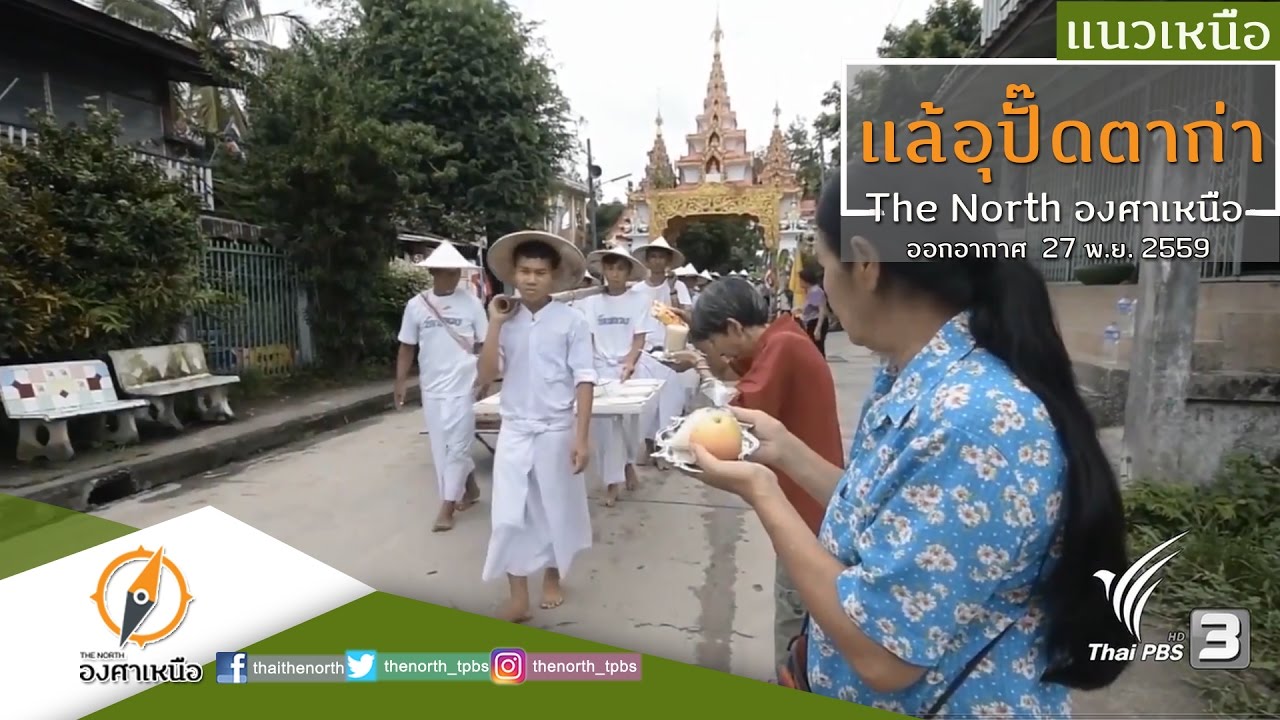
 Click to Access the Navigation Map GPS
Lae Upad Taka Map
Recommend

 Historical Sites and Monuments(2)
 Landmarks and Memorials(3)
Art, Craft Centres, Tradition(6)
Landmarks and Memorials(3)
Art, Craft Centres, Tradition(6)
 Historic Homes and Cities(2)
 Educational Places
 Educational Gardens, Farm(2)
 Places of Worship
 Temple(22)
 Other Sacred Sites(9)
 Suburban Living
 Village, Community(5)
 Local Market(3)
 Nature and Wildlife
 National Parks and Marine Reserves(9)
 Mountain (Doi)(9)
 Dam, Reservoir, Lake(14)
 Waterfalls(23)
 Hot Springs(2)
 Caves(6)
 River, Canal(1)
 Bays and Beaches(1)
 Islands(1)
 Other natural attractions(1)
 Entertainment and Agricultural
 Farms, Parks and Ecotourism(5)
 Outdoor and Adventure Activities(4)


