
lovethailand home >North Travel Attractions >Tak Travel Attractions >Mae Sot >Tha Sai Luat > Lae Sang Long
TL;DR: Lae Sang Long is located at No. 160, Ban Mae Tao Moei, Moo 1, Tha Sai Luat Subdistrict, Mae Sot District, Tak 63110, Thailand, open Usually Held From Mid-March To Early April, hours Morning To Evening, According To The Annual Event Schedule.
Lae Sang Long
Open Days: Usually Held From Mid-March To Early April
Opening Hours: Morning To Evening, According To The Annual Event Schedule
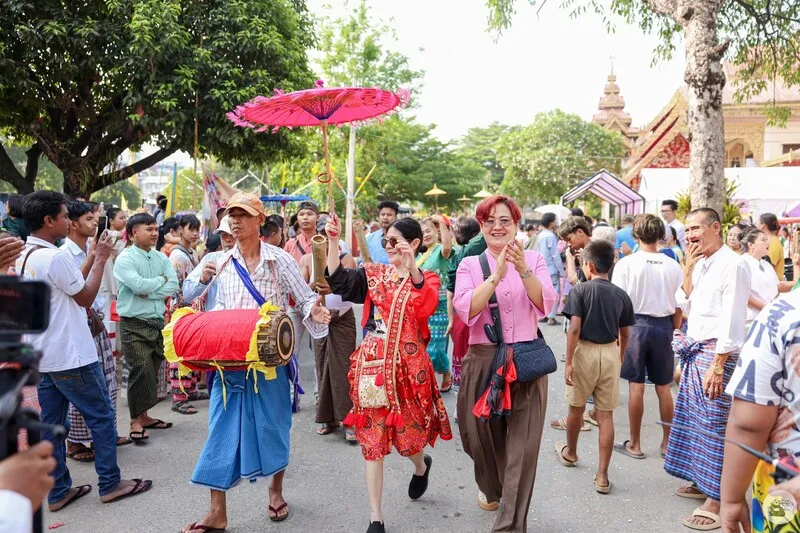
Lae Sang Long, or the Luk Kaew Procession, in Mae Sot, Tak Province is a deeply meaningful Buddhist novice ordination tradition of the Tai Yai community and local Buddhists in the Mae Sot border area. Usually held from mid-March to early April during the school summer break, the tradition allows boys to spend part of their vacation learning Buddhist teachings, practicing discipline, and entering the religious life as novice monks. The festival is also known as Poi Sang Long or the ordination of Luk Kaew, meaning “crystal sons,” and is famous for beautifully dressed boys who are paraded like young princes before their novice ordination.
The word Lae in Tai Yai means a procession, while Sang Long refers to the boy who is about to be ordained as a novice monk. In the broader name Poi Sang Long, the word Poi means a festival or auspicious event, Sang refers to a monk or novice, and Long is associated with Along, meaning a king or prince. Together, the term describes a Buddhist ordination festival in which boys are dressed and honored like princes before leaving the household life for the path of Dhamma. This symbolism reflects both family pride and deep religious devotion.
Mae Sot is one of the most meaningful places to experience this tradition because the district is a borderland where Thai, Tai Yai, Mon, Karen, Myanmar, and other cultural influences meet. Wat Thai Wattanaram in Tha Sai Luat Subdistrict is closely connected with Tai Yai and Myanmar-influenced Buddhist culture. The temple’s golden Burmese-style architecture, sacred Buddha images, and strong community role make it an appropriate center for this tradition. When Poi Sang Long is held here, visitors can clearly see how Buddhist faith and borderland identity are woven together.
The purpose of Lae Sang Long is not only to create a colorful procession. Its deeper meaning is to support boys in studying the teachings of the Buddha during the school break. Parents who sponsor the ordination of their sons are believed to gain great merit, and the boys themselves have an opportunity to learn discipline, gratitude, and Buddhist practice. The event therefore benefits the child, the family, the temple, and the wider community.
In Mae Sot, novice ordination may be practiced in 2 main forms. The first is called Khan Lip, a simple form of ordination. In this form, parents or sponsors take the boy to the temple, where his head is shaved, he wears white clothing, and a simple food offering is presented to the monks. The ordination ritual is then performed without a large procession. This form emphasizes the essence of becoming a novice rather than the ceremonial display.
The second form is the full Lae Sang Long or Luk Kaew procession. This form involves elaborate preparation, decorated ritual spaces, beautiful costumes, musical processions, and community participation. The boys are dressed as Sang Long in splendid clothing and ornaments. After receiving precepts from the monks, they are carried or placed on decorated vehicles, horses, or other ceremonial means of transport and paraded through the community before returning to the temple for the ordination rituals.
The costume of the Sang Long is one of the most striking features of the tradition. The boys are dressed in bright colors, gold ornaments, decorated headpieces, and richly detailed clothing that make them appear like princes. This reflects the story of Prince Siddhartha before renunciation and symbolizes the boy’s transition from worldly life into religious training. The Sang Long is treated with special honor because he is regarded as a blessed child preparing to enter the path of the Buddha.
During the procession, a Sang Long usually does not walk barefoot on the ground. If the boy is small, he may be carried on an adult’s shoulders. In some processions, boys may ride horses, elephants, or decorated vehicles. Music, drumming, dancing, and the scattering of flowers and puffed rice create a joyful atmosphere. The procession becomes a public expression of faith and celebration, allowing the entire community to share in the merit of the ordination.
The Mae Sot version of the procession has a distinctive borderland character. Burmese and Tai Yai musical styles, costumes, ornaments, and ceremonial details give the event a unique identity. The procession is both visually beautiful and socially meaningful. Families, relatives, temple supporters, and local residents all take part in caring for the Sang Long and supporting the ordination. The event is therefore not a private family ceremony alone, but a shared community merit-making occasion.
When the procession visits the home of the parents or sponsors, the Sang Long is presented to the family and relatives. According to the tradition, the Sang Long does not bow to anyone except his parents because he is regarded as a noble and highly honored figure during the ritual period. This moment allows family members to rejoice in the merit of the ordination and shows the special status given to the boy before he becomes a novice monk.
In Mae Sot, the procession may also visit the city spirit shrine near the northern market area before returning to the temple. This reflects the connection between Buddhism, local belief, and the important spaces of the town. The Sang Long procession moves through homes, streets, markets, shrines, and temple grounds, allowing the whole community to witness and participate in the event. Some processions may last 1 day, while more elaborate celebrations can continue for 2 or more days depending on the annual schedule and the sponsors.
After returning to the temple, the Sang Long enters the preparation stage for ordination. The boy’s hair is shaved, he bathes, and he changes into white clothing. A ritual meal of 12 dishes is prepared, and the number is considered important in the ceremony. A blessing or soul-calling ritual is then performed to encourage and protect the boy before ordination. This stage is emotionally important for the family because it marks the final transition before the child becomes a novice monk.
The novice ordination is usually performed either in the evening or in the morning. After the boy becomes a novice monk, the family and community celebrate by offering food to the new novice, the monks of the temple, and the guests who have joined the event. Listening to Dhamma teachings is also part of the final stage. The ceremony therefore ends with merit-making, generosity, Buddhist learning, and communal sharing.
The belief in the merit of sponsoring ordination is a major reason why the tradition remains strong. It is traditionally believed that parents who ordain their own son as a novice receive great merit, while those who sponsor another boy also receive merit. Some devout and well-off supporters therefore help boys from less wealthy families enter the novice life. This creates a shared merit-making relationship between sponsors, families, children, monks, and the wider community.
Lae Sang Long is also a strong expression of social connection. The boy learns Buddhism, the parents make merit, the community helps with the event, the sponsors support the ordination, and the temple serves as the spiritual center. Every participant has a role. This is why the tradition has survived not only as a religious ceremony, but also as a living cultural system that binds people together.
Wat Thai Wattanaram is especially suitable for understanding the tradition in Mae Sot. The temple was historically associated with the Tai Yai community and is known for its Myanmar-influenced architecture. Inside the temple is a replica of the revered Mahamuni Buddha image of Mandalay. The golden halls, Burmese-style decorative elements, and sacred atmosphere create a powerful cultural setting for the Poi Sang Long festival. Visitors can learn about both the ordination tradition and the broader Buddhist art of the Thai-Myanmar border area.
Travelers who want to attend the festival should check the annual schedule in advance with Tha Sai Luat Municipality, Wat Thai Wattanaram, or local authorities. Although the general period is from mid-March to early April, the exact dates vary from year to year. The event may include registration, ceremonial meals, processions, temple rituals, and the ordination day. Checking the schedule helps visitors arrive in time for the most important parts of the festival.
Visitors should observe the ceremony respectfully. The Sang Long boys are children taking part in an important religious event, so photography should be done carefully and politely. Visitors should avoid touching costumes or interrupting the procession. Space should be given to families, relatives, monks, and local participants. Although the event is visually spectacular, its core is still a Buddhist ordination ceremony.
Appropriate clothing is recommended because the event takes place at a temple. Comfortable shoes, water, sun protection, and patience are useful because March and April can be hot in Mae Sot. Those who want to follow the procession should allow extra time, as the streets around the temple and community areas may become crowded during the festival.
Getting There is straightforward from Mae Sot town. Use Highway 105 toward Tha Sai Luat Subdistrict, Rim Moei Market, and the Thai-Myanmar Friendship Bridge. Wat Thai Wattanaram is located at Ban Mae Tao Moei, Moo 1, Tha Sai Luat Subdistrict, before reaching the border-market area. The temple is accessible by private car, rental car, motorcycle, or local transport. The visit can easily be combined with Rim Moei Market, the Thai-Myanmar Friendship Bridge, Khok Chang Phueak Archaeological Site, and Phra That Hin Kio at Doi Din Chi.
The charm of experiencing Lae Sang Long in Mae Sot lies in seeing a living borderland tradition. This is not simply a staged cultural show. It is a real family and community merit-making ceremony. Visitors can see parental love, communal cooperation, Tai Yai identity, Buddhist faith, and the social role of the temple all expressed through one event. The music, costumes, processions, and rituals together reveal the cultural depth of Mae Sot.
The tradition also has educational value. Boys who enter the novice life learn Buddhist teachings and discipline during their school holiday, while other children and young people learn about their heritage by watching and participating. In this way, Lae Sang Long keeps culture alive through practice, not only through words or museum displays.
Overall, Lae Sang Long or the Luk Kaew Procession is one of the most meaningful cultural traditions in Mae Sot. It brings together Buddhist devotion, Tai Yai identity, family merit-making, children’s religious education, and the visual beauty of a ceremonial procession. For travelers visiting Tak Province during March or April, this tradition offers a rare opportunity to experience the living culture of the Thai-Myanmar border region.
| Name | Lae Sang Long / Luk Kaew Procession / Poi Sang Long, Mae Sot, Tak Province |
| Location / Main Venue | Wat Thai Wattanaram, Tha Sai Luat Subdistrict, Mae Sot District, Tak Province |
| Address | No. 160, Ban Mae Tao Moei, Moo 1, Tha Sai Luat Subdistrict, Mae Sot District, Tak 63110, Thailand |
| Coordinates | 16.697547, 98.528400 |
| Festival Period | Usually held from mid-March to early April; exact dates are announced annually |
| Highlights | Sang Long procession, prince-like costumes, Tai Yai and Myanmar-style music, dancing, community parade, and novice ordination ceremony |
| Importance | Encourages boys to study Buddhist teachings during school holidays and allows parents and sponsors to gain great merit through novice ordination |
| History / Culture | A Tai Yai novice ordination tradition in Mae Sot that reflects northern Thai culture and Thai-Myanmar borderland Buddhist identity |
| Name Origin | Lae means procession, while Sang Long refers to the crystal son or boy preparing to be ordained as a novice monk |
| Distinctive Features | Boys are dressed like young princes and paraded through the community before shaving their heads, wearing white, receiving blessings, and becoming novices |
| Main Rituals | Receiving precepts, Sang Long procession, visiting the parents’ home, visiting important community sites, head shaving, bathing, wearing white, 12-dish ritual meal, blessing ceremony, novice ordination, and meal offerings |
| Main Areas / Zones | Wat Thai Wattanaram, Mahamuni Buddha replica, Burmese-style temple halls, ordination area, and procession routes around Tha Sai Luat and Mae Sot communities |
| Travel Information | Use Highway 105 from Mae Sot toward Tha Sai Luat, Rim Moei Market, and the Thai-Myanmar Friendship Bridge. The temple is located at Ban Mae Tao Moei before the border-market area |
| Current Status | An important annual tradition of the Tai Yai and Buddhist communities in Mae Sot, held according to the temple and local authority schedule |
| Open Days | Usually held from mid-March to early April |
| Opening Hours | Morning to evening, according to the annual event schedule |
| Fees | No admission fee for the festival area |
| Facilities | Temple grounds, ritual areas, procession viewing areas, local shops, toilets, and basic services around Wat Thai Wattanaram and Tha Sai Luat |
| Abbot / Caretaker | Wat Thai Wattanaram, Tha Sai Luat Municipality, and the Tai Yai community in Mae Sot |
| Main Contact Number | Tha Sai Luat Municipality, Tel. 055-563-043 / Nakhon Mae Sot Municipality, Tel. 055-531-033 |
| Official Website / Official Page | https://www.thasailoud.go.th / https://www.nakhonmaesotcity.go.th / https://www.facebook.com/WadthiywathnaramMaesod |
| Nearby Tourist Attractions | 1. Wat Thai Wattanaram, about 0 km 2. Rim Moei Market, about 3 km 3. Thai-Myanmar Friendship Bridge No. 1, about 4 km 4. Khok Chang Phueak Archaeological Site, Ban Tha At, about 4 km 5. Phra That Hin Kio at Doi Din Chi, about 12 km |
| Nearby Restaurants | 1. Ang Ang Lui Fai Tha Sai Luat, about 3 km, Tel. 081-123-0501 2. Kai Yang Na Cho Kho 34, about 3 km, Tel. 055-563-111, 084-577-7793 3. Roti Pae Ong Mae Sot, about 7 km, Tel. 082-769-4529 4. Roti Ong Nai Tamnan, about 7 km, Tel. 085-610-0622 5. Mughal Restaurant Mae Sot, about 8 km, Tel. 091-389-2180 |
| Nearby Accommodations | 1. Irawadee Resort Mae Sot, about 5 km, Tel. 055-535-430 2. The Teak Hotel, about 7 km, Tel. 055-031-888 3. Maesot Siri Hotel, about 8 km, Tel. 063-645-9094 4. Hop Inn Mae Sot, about 8 km 5. Centara Life Hotel Mae Sot, about 9 km, Tel. 055-532-601-8 |
Frequently Asked Questions (FAQ)
Q: What is Lae Sang Long or the Luk Kaew Procession?
A: It is a Tai Yai novice ordination tradition in which boys are dressed like princes and paraded through the community before becoming Buddhist novice monks.
Q: When is Lae Sang Long in Mae Sot held?
A: It is usually held from mid-March to early April during the school summer break, with exact dates announced each year.
Q: Where is the festival held in Mae Sot?
A: A major venue is Wat Thai Wattanaram in Tha Sai Luat Subdistrict, Mae Sot District, Tak Province.
Q: Why are the boys dressed like princes?
A: The prince-like costume honors the boys as blessed children preparing to enter the Buddhist path and recalls Prince Siddhartha before his renunciation.
Q: What are the main rituals of the festival?
A: Main rituals include receiving precepts, the Sang Long procession, visiting the parents’ home, head shaving, bathing, wearing white, a 12-dish ritual meal, blessing, novice ordination, and meal offerings.
Q: How should travelers prepare for the event?
A: Travelers should dress respectfully, wear comfortable shoes, bring water and sun protection, and take photographs politely without interrupting the procession or ordination rituals.
Q: What nearby places can be visited with the festival?
A: Nearby places include Wat Thai Wattanaram, Rim Moei Market, the Thai-Myanmar Friendship Bridge, Khok Chang Phueak Archaeological Site, and Phra That Hin Kio at Doi Din Chi.
 Category: ●Art, Culture and Heritage
 Group: ●Art, Craft Centres, Tradition
Last Update : 4 MonthAgo
 Last Update : 4 MonthAgo
 Click to Access the Navigation Map GPS
 Historical Sites and Monuments(2)
 Landmarks and Memorials(3)
Art, Craft Centres, Tradition(6)
Landmarks and Memorials(3)
Art, Craft Centres, Tradition(6)
 Historic Homes and Cities(2)
 Educational Places
 Educational Gardens, Farm(2)
 Places of Worship
 Temple(22)
 Other Sacred Sites(9)
 Suburban Living
 Village, Community(5)
 Local Market(3)
 Nature and Wildlife
 National Parks and Marine Reserves(9)
 Mountain (Doi)(9)
 Dam, Reservoir, Lake(14)
 Waterfalls(23)
 Hot Springs(2)
 Caves(6)
 River, Canal(1)
 Bays and Beaches(1)
 Islands(1)
 Other natural attractions(1)
 Entertainment and Agricultural
 Farms, Parks and Ecotourism(5)
 Outdoor and Adventure Activities(4)


