
lovethailand home >North Travel Attractions >Tak Travel Attractions >Um Phang >Mae Klong > Romklao 7 Reservoir
TL;DR: Romklao 7 Reservoir is located at Ban Mae Klong Mai, Village No. 1, Mae Klong Subdistrict, Umphang District, Tak Province, open Public reservoir area, suitable for daily daytime visits, hours Best visited during daytime and late afternoon before sunset.
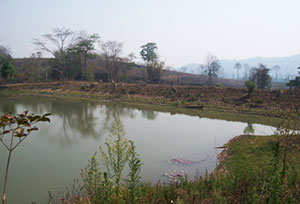
Romklao 7 Reservoir
Open Days: Public reservoir area, suitable for daily daytime visits
Opening Hours: Best visited during daytime and late afternoon before sunset
Romklao 7 Reservoir in Tak Province is a medium-sized reservoir located at Ban Mae Klong Mai, Village No. 1, Mae Klong Subdistrict, Umphang District, Tak Province. It lies within the Mae Klong River Basin and belongs to the mountainous landscape along the Mae Sot-Umphang route. Originally connected with a security-development project along this important mountain corridor, the reservoir now serves as a local water source supporting domestic use and an estimated benefited area of about 500 rai. Although modest in size, Romklao 7 Reservoir is meaningful as a community water-resource site and a quiet stop for travelers entering the remote highlands of Umphang.
The reservoir is suitable for travelers who appreciate simple, peaceful, and less crowded places. It is not a major commercial tourist attraction with extensive facilities. Instead, its value comes from the calm water surface, the compact earth-dam structure, the rural highland setting, and the community atmosphere of Ban Mae Klong Mai and Mae Klong Subdistrict. Visitors can stop here to enjoy the scenery, take photographs, rest from the long mountain road, and observe how a local reservoir supports daily life in a remote highland community.
Ban Mae Klong Mai is located in Mae Klong Subdistrict, an area of Umphang District shaped by mountains, forests, local communities, and long travel routes. Unlike more accessible places near Mae Sot or Phop Phra, this area feels more remote and requires careful travel planning. In such a setting, water infrastructure has a practical role beyond scenery. A reservoir like Romklao 7 helps strengthen community water security and supports local benefited areas in a landscape where settlement, farming, and daily life are closely tied to natural watercourses.
Romklao 7 Reservoir was constructed in 1985. Its background is associated with development for security along the Mae Sot-Umphang route, a region where road access, water resources, and community support were essential for strengthening life in remote areas. The reservoir therefore has value beyond being a body of water. It reflects an important stage of development in western Tak, where water-resource projects helped communities maintain domestic use, support agriculture, and adapt to highland conditions.
The reservoir is an earth dam with a crest height of 12.20 meters and a crest length of 130.00 meters. Its storage capacity is approximately 0.236 million cubic meters. It has no separate canal or pipeline water-distribution system. Instead, water is released into the original natural stream, helping support domestic use and nearby benefited areas. This simple operating pattern reflects a reservoir designed to work with the natural watercourse rather than a large artificial distribution network.
This makes Romklao 7 Reservoir an interesting example of a community-level water project adapted to mountainous terrain. Some reservoirs use long canal systems or extensive pipeline networks, while Romklao 7 relies on releasing water into the existing stream. This approach fits the local geography and practical community needs. For visitors, understanding this function adds depth to the view. The small reservoir, earth dam, and natural stream form a working system that supports people downstream.
The reservoir is part of the Mae Klong River Basin, a major western watershed system in Thailand. The upper areas of the basin include forested mountains, streams, and rural highland communities. In this setting, a medium-sized reservoir in Ban Mae Klong Mai helps strengthen water availability at the local level. A visit to Romklao 7 Reservoir therefore allows travelers to see how a modest water-resource project can have a real impact on local life in a remote district like Umphang.
The atmosphere around Romklao 7 Reservoir is best enjoyed slowly. Morning visits offer cool air, quiet surroundings, and soft light over the water. Late afternoon is suitable for resting, photography, and taking a break before continuing on the Umphang route. The area is generally quiet and local in character. During the cool season or after the rainy season, the surrounding highland landscape can be especially pleasant, with fresher air, greener scenery, and a deeper sense of remoteness.
Romklao 7 Reservoir can be included as a short stop on the Mae Sot-Umphang route. This route is well known for its long distance, mountain curves, and scenic but demanding drive. Most travelers head to Umphang for attractions such as Thi Lo Su Waterfall, Thi Lo Cho Waterfall, Doi Hua Mot, Mae Klong rafting, and forest routes. A quiet stop at Romklao 7 Reservoir can help slow the journey, provide a moment of rest, and add a deeper local dimension to the trip.
For photography, Romklao 7 Reservoir is best suited to natural and documentary-style images. Interesting compositions include the compact water surface, the earth-dam crest, the original stream area, surrounding forest and hills, open sky, and the community landscape of Ban Mae Klong Mai. Morning light gives a calm feeling, while late afternoon light can create warm tones over the water. Visitors should photograph respectfully and avoid entering operational or risky areas just to get a better angle.
For travelers interested in water resources, Romklao 7 Reservoir shows that a reservoir does not need to be large to be important. It has no complex canal network or pipeline system, yet it supports domestic use and a benefited area by releasing water into the natural stream. This demonstrates a practical form of water management shaped by local geography. It also shows the diversity of water-resource projects in Tak Province, from large national dams to small and medium reservoirs that directly serve specific communities.
The reservoir also reflects the variety of water landscapes in Tak Province. Tak has major infrastructure such as Bhumibol Dam, local reservoirs near Mae Sot, reservoirs in Phop Phra such as Romklao 1, Romklao 3, and Romklao 4, and remote highland reservoirs such as Romklao 6 and Romklao 7 in Umphang. Each has different size, purpose, river basin, and distribution system, but all show how water shapes the life and development of communities across the province.
Families can visit the reservoir for a short outdoor stop, but safety should always come first. Children should not walk near the water’s edge, slopes, or water-release areas without close supervision. Elderly visitors should choose stable areas that do not require difficult walking. After rain, the ground may be slippery or soft. Because this is a reservoir and water-resource area rather than a fully developed public park, visitors should focus on sightseeing, resting, and photography rather than entering unsafe areas.
Travelers should prepare for a simple local outdoor setting. Romklao 7 Reservoir is in a remote area of Umphang, so visitors should bring drinking water, sun protection, comfortable shoes, a small trash bag, and any personal necessities. Those who plan to sit for a while may bring a mat or folding chair. However, they should choose safe areas away from the water edge, steep slopes, and water-release points. Responsible preparation helps make the visit safer and more comfortable.
Getting There is most convenient by private car or rental car. From Mae Sot, drive along the Mae Sot-Phop Phra-Umphang route, pass through mountain roads and local communities, then continue toward Mae Klong Subdistrict and Ban Mae Klong Mai, Village No. 1. The route is long and includes many curves, so drivers should check vehicle condition, prepare enough fuel, use appropriate speed, and avoid driving at night or during heavy rain if they are not familiar with the road.
Travelers coming from Tak town should first drive across the Tak-Mae Sot mountain route before continuing toward Phop Phra and Umphang. This makes the overall journey much longer and requires careful planning. The road includes long mountain sections, local traffic, weather changes, and areas where visibility may be limited. Romklao 7 Reservoir is therefore most suitable for visitors who already plan to travel to Umphang rather than those attempting a quick day trip from Tak town.
The best time to visit is in the morning or late afternoon, especially during the late rainy season and cool season. Midday may be hot, and some areas may have limited shade. If visitors want photographs and a relaxed atmosphere, softer light is preferable. Those continuing to Umphang town, waterfalls, or rafting routes should manage time carefully, as the mountain road requires concentration and daylight driving is safer.
A practical travel plan is to use Romklao 7 Reservoir as a short stop within a wider Umphang itinerary. Visitors can combine it with Umphang town, Doi Hua Mot, Thi Lo Cho Waterfall, Mae Klong rafting points, local villages, and forest routes. It is not necessary to treat the reservoir as a stand-alone destination for a long trip from far away. Its best role is as a quiet scenic and community-water stop that adds meaning to the journey into Umphang.
Food options near the reservoir itself may be limited. Travelers should plan meals in Umphang town, in local homestays, or at restaurants along the main route. If traveling from Mae Sot, some food stops are also available in Phop Phra before entering the deeper Umphang route. Bringing drinking water and light snacks is recommended, especially for travelers continuing to waterfalls, rafting points, or remote accommodation areas.
Accommodation is best planned around the wider Umphang trip. Travelers who want to explore the Umphang side should stay in Umphang town or nearby homestays and resorts. Those who want to divide the journey from Mae Sot may stay in Phop Phra before continuing the next day. Mae Sot town offers many more hotel and restaurant options, but it is much farther from Romklao 7 Reservoir and Umphang’s natural attractions. The choice of accommodation should match the driving plan and the traveler’s comfort with mountain roads.
Visitors should keep the reservoir clean. Because Romklao 7 Reservoir supports domestic use and a benefited area, rubbish should never be left near the water or original stream. Plastic bags, food containers, drink bottles, and food waste can affect water quality and damage the quiet character of the place. Taking all waste back is the simplest way to respect both the environment and local communities.
Compared with well-known Umphang attractions such as Thi Lo Su Waterfall or Doi Hua Mot, Romklao 7 Reservoir is much quieter and more local. That quietness is its value. It allows travelers to see a working community water resource, understand one part of the Mae Sot-Umphang development corridor, and experience the highland landscape without crowds. It is not a destination for entertainment, but for rest, observation, and deeper travel.
Overall, Romklao 7 Reservoir in Tak Province is a modest but meaningful medium-sized reservoir at Ban Mae Klong Mai in Mae Klong Subdistrict, Umphang District. Built in 1985 as part of development along the Mae Sot-Umphang route, it is an earth dam 12.20 meters high and 130.00 meters long, with a storage capacity of 0.236 million cubic meters. It releases water into the original stream and helps support domestic use and an estimated benefited area of about 500 rai. For travelers, it is a quiet stop for scenery, photography, and a clearer understanding of how small reservoirs support life in the highlands of western Tak.
| Name | Romklao 7 Reservoir |
| Location | Ban Mae Klong Mai, Village No. 1, Mae Klong Subdistrict, Umphang District, Tak Province |
| Address | Ban Mae Klong Mai, Village No. 1, Mae Klong Subdistrict, Umphang District, Tak Province 63170 |
| Highlights | A peaceful medium-sized highland reservoir in Umphang, suitable for scenery, short rests, photography, and travel breaks on the Mae Sot-Umphang route |
| History | Built in 1985 and originally associated with a security-development project along the Mae Sot-Umphang route |
| Distinctive Features | Earth dam, 12.20 meters high, 130.00 meters long, with a storage capacity of 0.236 million cubic meters |
| Water-Distribution System | No separate canal or pipeline distribution system; water is released into the original natural stream to support local domestic use |
| Benefited Area | About 500 rai |
| River Basin | Mae Klong River Basin |
| Recommended Activities | Sightseeing, walking, photography, relaxing by the water, and taking a short break while traveling on the Mae Sot-Umphang route |
| Travel Information | Best accessed by private car or rental car from Mae Sot toward Umphang District, then to Mae Klong Subdistrict and Ban Mae Klong Mai |
| Current Status | A reservoir in Mae Klong Subdistrict, Umphang District, under local irrigation management |
| Open Days | Public reservoir area, suitable for daily daytime visits |
| Opening Hours | Best visited during daytime and late afternoon before sunset |
| Facilities | Reservoir viewpoints, earth-dam embankment, suitable parking areas, and local shops or restaurants along the Umphang route |
| Main Areas / Zones | Earth dam crest, reservoir edge, water-view area, and water-release area to the original stream |
| Caretaker | Royal Irrigation Department, Ministry of Agriculture and Cooperatives, through Tak Irrigation Project |
| Official Website / Official Page | Tak Irrigation Project website: tak.rid.go.th and Tak Irrigation Project official page |
| Nearby Tourist Attractions | 1. Umphang Town, about 18 km 2. Doi Hua Mot, about 25 km 3. Mae Klong Rafting Points, Umphang, about 30 km 4. Thi Lo Cho Waterfall, about 35 km 5. Thi Lo Su Waterfall, about 50 km 6. Romklao 6 Reservoir, about 40 km 7. Rim Moei Market, Mae Sot, about 135 km |
| Nearby Restaurants | 1. Local restaurants in Ban Mae Klong Mai, about 2 km 2. Restaurants in Umphang town, about 18 km 3. Ban Kru Sun Restaurant, Umphang, about 18 km, Tel. 096-159-9236 4. Restaurants at homestays and resorts in Umphang, about 18 km 5. Local restaurants along the Mae Klong-Umphang route, about 18 km 6. Hey Captain Jack, Phop Phra, about 95 km, Tel. 082-225-1147 |
| Nearby Accommodations | 1. Umphangburi Resort, about 18 km, Tel. 055-561576, 063-9894555, 095-3608209 2. Umphang Country Hut, about 18 km, Tel. 055-561-079, 02-915-7018, 084-139-9927 3. Accommodations and homestays in Umphang town, about 18 km 4. Lodging for Thi Lo Su and rafting trips in Umphang, about 18 km 5. Baan Suan Resort Phop Phra, about 95 km, Tel. 093-223-3886 6. Ma-L Homestay Phop Phra, about 98 km, Tel. 099-638-3889 |
Frequently Asked Questions (FAQ)
Q: Where is Romklao 7 Reservoir located?
A: Romklao 7 Reservoir is located at Ban Mae Klong Mai, Village No. 1, Mae Klong Subdistrict, Umphang District, Tak Province, along the Mae Sot-Umphang route.
Q: Why is Romklao 7 Reservoir important?
A: It is a medium-sized reservoir in the Mae Klong River Basin, originally linked with a security-development project and supporting domestic use for a benefited area of about 500 rai.
Q: When was Romklao 7 Reservoir built?
A: Romklao 7 Reservoir was built in 1985 to support water-resource development along the Mae Sot-Umphang route.
Q: Does Romklao 7 Reservoir have a water-distribution system?
A: No. It does not have a separate canal or pipeline distribution system. Water is released into the original natural stream to support local domestic use.
Q: What activities are suitable at Romklao 7 Reservoir?
A: Visitors can enjoy sightseeing, walking, photography, relaxing by the water, and taking a short rest while traveling to or from Umphang.
Q: How can visitors get to Romklao 7 Reservoir?
A: The most convenient way is by private car or rental car from Mae Sot along the Mae Sot-Phop Phra-Umphang route, then to Mae Klong Subdistrict and Ban Mae Klong Mai.
Q: What is the best time to visit Romklao 7 Reservoir?
A: Morning and late afternoon are the best times because the weather is more comfortable and the light is suitable for photography.
Q: What should visitors be careful about at Romklao 7 Reservoir?
A: Visitors should be careful near the water’s edge, sloping ground, and water-release areas, and should take all rubbish back with them.
 Category: ●Nature and Wildlife
 Group: ●Dam, Reservoir, Lake
Last Update : 4 MonthAgo
 Last Update : 4 MonthAgo
 Click to Access the Navigation Map GPS
Romklao 7 Reservoir Map
Recommend

 Art, Culture and Heritage
 Historical Sites and Monuments(2)
 Landmarks and Memorials(3)
 Art, Craft Centres, Tradition(6)
 Historic Homes and Cities(2)
 Educational Places
 Educational Gardens, Farm(2)
 Places of Worship
 Temple(22)
 Other Sacred Sites(9)
 Suburban Living
 Village, Community(5)
 Local Market(3)
 National Parks and Marine Reserves(9)
 Mountain (Doi)(9)
Dam, Reservoir, Lake(14)
Mountain (Doi)(9)
Dam, Reservoir, Lake(14)
 Waterfalls(23)
 Hot Springs(2)
 Caves(6)
 River, Canal(1)
 Bays and Beaches(1)
 Islands(1)
 Other natural attractions(1)
 Entertainment and Agricultural
 Farms, Parks and Ecotourism(5)
 Outdoor and Adventure Activities(4)


