
lovethailand home >North Travel Attractions >Tak Travel Attractions >Mae Sot >Mae Pa > Huai Luek Reservoir
TL;DR: Huai Luek Reservoir is located at Mae Pa Subdistrict, Mae Sot District, Tak Province, open Daily, hours 08.00 - 17.00.
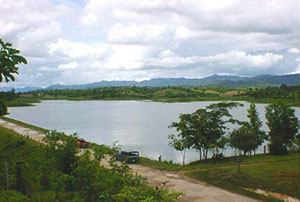
Huai Luek Reservoir
Open Days: Daily
Opening Hours: 08.00 - 17.00
Huai Luek Reservoir in Tak Province is a medium-sized reservoir in the Salween River Basin, located in the Mae Sot area of Tak Province. It is both an irrigation reservoir and a quiet local recreation spot where visitors can enjoy open-water scenery, gentle breezes, rural surroundings, and a slower atmosphere away from the busier parts of Mae Sot town. The reservoir is especially suitable for travelers who enjoy simple nature destinations, scenic viewpoints, photography, and peaceful short trips rather than crowded commercial attractions.
Huai Luek Reservoir began construction in 1985 and was completed in 1988, with a total construction budget including the water-distribution system of 62.00 million baht. The reservoir is an earth dam with a crest height of 26.00 meters and a crest length of 703.00 meters. It has a watershed area of 12 square kilometers and a storage capacity of approximately 5.80 million cubic meters. These figures show that Huai Luek Reservoir is not merely a small scenic pond, but an important medium-scale water-resource project designed to support irrigation and water management in the Mae Sot area.
The reservoir’s engineering components include a Duckbill Type spillway, 10.00 meters wide and 235.19 meters long, a canal outlet structure with a 1.00-meter pipe and a length of 152.70 meters, and a right-side outlet gate with a 0.80-meter diameter pipe and a length of 70.00 meters. The outlet can deliver water at 4.195 cubic meters per second. The water-distribution system consists of the main left-bank canal and five branch canals with a total length of 13.815 kilometers, covering an irrigation area of 5,100 rai. This system allows stored water to be distributed from the reservoir to agricultural land in the surrounding area.
For visitors, these technical details add depth to the experience. The water surface, embankment, and surrounding views are beautiful, but the reservoir also has a practical role in supporting farming communities. Water stored during the rainy season can help supply irrigation areas during drier periods, making the reservoir part of the everyday life of local residents. A visit to Huai Luek Reservoir therefore offers both a scenic nature experience and a glimpse into how medium-sized irrigation projects support rural communities in western Tak Province.
The reservoir is located in the Mae Sot area, a border district known for its trade, cultural diversity, and connection with Myanmar. While central Mae Sot is busy with markets, roads, hotels, and restaurants, the areas around Mae Pa and the outskirts of town have a more relaxed and natural atmosphere. Huai Luek Reservoir fits into this landscape as a local open-water space where people can come to rest, take photographs, enjoy the evening breeze, and spend quiet time near nature without having to travel far from town.
The best time to visit is usually early morning or late afternoon. In the morning, the air is fresher and the light is soft, making the reservoir suitable for walking and photography. In the late afternoon, the sun becomes gentler and the water reflects the sky, creating a calm and pleasant atmosphere. After the rainy season, or during periods when the water level is high, the scenery becomes especially attractive, with a fuller water surface and greener surroundings. This makes the reservoir a good spot for travelers who enjoy slow, scenic travel.
Huai Luek Reservoir is appealing because it is simple and unpretentious. Visitors do not need a complicated itinerary. They can drive to the reservoir, stop along a suitable area, walk along the embankment, take photographs, sit quietly, or simply look across the water. The landscape is shaped by the earth dam, the open reservoir, the sky, and nearby hills. It is a place for slowing down rather than rushing through activities. This kind of destination is well suited to travelers who appreciate real local places rather than heavily developed tourist sites.
The reservoir can easily be included in a half-day or one-day Mae Sot itinerary. Travelers may visit Huai Luek Reservoir in the morning or late afternoon and combine it with nearby cafés, local restaurants, Huai Mae Sot Reservoir, Wat Pho Khun, Wat Thai Wattanaram, Rim Moei Market, or the Thai-Myanmar Friendship Bridge. This route creates a balanced trip that includes water scenery, local culture, border-town atmosphere, and convenient food or accommodation options in Mae Sot.
From a geographical perspective, Huai Luek Reservoir is connected with the Salween River Basin through the Moei River sub-basin. Mae Sot and its surrounding districts have a landscape of valleys, hills, streams, communities, and agricultural areas. A medium-sized reservoir in this setting helps manage local water resources and supports irrigation across the area. For travelers who are interested in landscape and water management, the reservoir provides a clear example of how local water infrastructure is integrated into a wider watershed system.
For local communities, Huai Luek Reservoir is more than a technical project. It supports irrigation for 5,100 rai and also functions as a community recreation area. People may come here to relax, take photos, exercise, or spend time outdoors. This combination of practical water use and public recreation gives the reservoir a special local value. It is not only a place to see water, but a place that shows the relationship between irrigation, agriculture, community life, and leisure.
Families can visit the reservoir for a quiet outdoor break, but safety should always come first. Children should stay away from the water’s edge, sloping ground, and irrigation structures. Elderly visitors should choose areas that are easy to access and do not require long or difficult walking. If visitors plan to sit for a while, they may want to bring drinking water, hats, a mat, or folding chairs. Because shade may be limited in some areas, morning and late afternoon visits are more comfortable than midday visits.
Visitors should be prepared for a simple local outdoor setting. Sun protection, drinking water, comfortable shoes, and a small trash bag are useful. After rain, the ground or slopes may be slippery, so extra care is needed. Visitors should avoid restricted irrigation areas such as spillways, outlets, gates, or canal structures unless access is clearly permitted. These facilities are part of the reservoir’s working water-management system and should be respected for safety reasons.
Keeping the area clean is especially important at a reservoir. Plastic bags, food containers, drink bottles, and food waste can easily affect water quality and the surrounding environment. Visitors should take all rubbish back with them and avoid leaving anything near the water. Responsible behavior helps protect the reservoir for local residents, farmers, wildlife, and future visitors. A clean reservoir also helps maintain the peaceful atmosphere that makes Huai Luek Reservoir worth visiting.
For photography, Huai Luek Reservoir offers several simple but attractive views. The wide water surface, the line of the earth dam, the reflection of the sky, and the hills beyond the reservoir all create good compositions. Late afternoon is particularly suitable for warm light and relaxed scenery. Visitors should photograph respectfully, avoid disturbing others, and not enter risky areas just to get a better angle. The best images here are often quiet and natural: water, sky, embankment, and the everyday rhythm of local life.
Getting There is most convenient by private car or rental car. From central Mae Sot, drive toward Mae Pa Subdistrict and continue along local roads to the reservoir area. The reservoir is close enough to be visited as a short side trip from Mae Sot town. Travelers unfamiliar with the area should use map navigation and check the route before departure, as local roads may include small junctions and conditions may vary by season.
Travelers coming from Tak town should plan more time because the route to Mae Sot crosses a mountainous road. The Tak-Mae Sot route includes curves and uphill sections, so drivers should check their vehicles, avoid speeding, and be especially careful in rain or fog. Once in Mae Sot, continue toward Mae Pa and follow local navigation to Huai Luek Reservoir. This makes the reservoir a practical destination for travelers already staying in Mae Sot or planning a wider western Tak itinerary.
Huai Luek Reservoir can be combined with several nearby attractions. Nature-oriented travelers can pair it with Huai Mae Sot Reservoir or cafés around Mae Pa. Cultural travelers may continue to Wat Thai Wattanaram, Wat Pho Khun, or Wat Chumphon Khiri. Those interested in the border-town atmosphere can continue to Rim Moei Market and the Thai-Myanmar Friendship Bridge. This flexibility makes the reservoir easy to include in different types of Mae Sot travel plans.
For visitors interested in irrigation and water resources, Huai Luek Reservoir is a useful real-world example of a medium-sized reservoir with a clear water-distribution system. The earth dam, spillway, canal outlet, branch canals, and irrigated area all work together to move water from storage to farmland. Seeing the reservoir helps visitors understand that irrigation projects are not only about a body of water but also about careful planning, structures, canals, and long-term community use.
The five-branch water-distribution system, with a total length of 13.815 kilometers, is central to the project’s purpose. It allows the reservoir to support 5,100 rai of irrigated land. This means the water stored in the reservoir continues its journey through the irrigation network to serve farms and communities. Even if travelers do not see every canal, knowing this system adds meaning to the landscape and highlights the reservoir’s role beyond tourism.
During the rainy season, the reservoir receives water from its 12-square-kilometer watershed. The stored water is then managed through the reservoir’s spillway and outlet structures. During drier periods, this stored water becomes especially valuable for agriculture and local water security. This seasonal cycle is one of the reasons medium-sized reservoirs are important in rural landscapes. They help balance wet-season water collection with dry-season use.
For travelers who want a peaceful Mae Sot experience, Huai Luek Reservoir is best enjoyed slowly. Spending 1–2 hours here is usually enough for a relaxed visit. Arriving in the late afternoon, walking along the reservoir, sitting by the water, and watching the light change over the landscape can be more rewarding than rushing through. The reservoir’s quiet setting offers a break from traffic, markets, and border-town activity.
Food and café options are available in the Mae Pa and Mae Sot areas. Travelers can visit a café before going to the reservoir or enjoy the reservoir view first and then return to Mae Sot for dinner. Nearby local cafés and restaurants make it easy to include Huai Luek Reservoir in a casual trip without needing extensive preparation. This convenience is one reason the reservoir works well as a short nature stop.
Accommodation is also convenient because Mae Sot has many hotels and guesthouses in different price ranges. Staying in Mae Sot or Mae Pa makes it easy to visit Huai Luek Reservoir, local temples, cafés, Rim Moei Market, and the Thai-Myanmar Friendship Bridge. Travelers who want more food and transport options may prefer staying in Mae Sot town, while those who want to be closer to the reservoir area can choose accommodation around Mae Pa.
Compared with major attractions in Mae Sot, Huai Luek Reservoir is more understated. That is part of its appeal. It gives visitors a chance to see a place used by local people, shaped by water management, and surrounded by a quiet landscape. It is not a place designed only for tourism. It is a working reservoir that also provides space for rest, scenery, and community use. This makes it a meaningful stop for travelers who want to experience Mae Sot beyond its well-known markets and border landmarks.
Visitors should use the area respectfully. Because Huai Luek Reservoir is a public water resource and an irrigation project, travelers should avoid littering, loud behavior, unsafe access to water-control structures, and any action that may disturb other users. With responsible use, the reservoir can remain a pleasant place for local residents and visitors alike.
Overall, Huai Luek Reservoir in Tak Province combines irrigation value and local recreation in one place. It is a medium-sized reservoir in the Salween Basin, with clear engineering features, a water-distribution system supporting 5,100 rai of irrigated land, and a quiet natural atmosphere near Mae Sot. For travelers seeking a peaceful nature stop in western Tak, Huai Luek Reservoir is a worthwhile place to slow down, enjoy the scenery, and understand how water infrastructure supports local life.
| Name | Huai Luek Reservoir |
| Location | Mae Pa Subdistrict, Mae Sot District, Tak Province |
| Address | Mae Pa Subdistrict, Mae Sot District, Tak Province 63110 |
| Highlights | A peaceful medium-sized reservoir suitable for water views, photography, relaxation, and learning about irrigation in the Mae Sot area |
| History | Construction began in 1985 and was completed in 1988, with a total construction budget including the water-distribution system of 62.00 million baht |
| Distinctive Features | Earth dam, 26.00 meters high, 703.00 meters long, with a 12-square-kilometer watershed and a storage capacity of 5.80 million cubic meters |
| Main Structures | Duckbill Type spillway, 10.00 meters wide and 235.19 meters long, canal outlet structure, and right-side outlet gate |
| Water-Distribution System | Main left-bank canal and five branch canals with a total length of 13.815 kilometers, covering 5,100 rai of irrigated land |
| River Basin | Located in the Salween River Basin, Moei River sub-basin |
| Recommended Activities | Sightseeing, walking, photography, relaxing by the water, enjoying the breeze, and taking a half-day nature trip near Mae Sot |
| Travel Information | Best accessed by private car or rental car from Mae Sot toward Mae Pa Subdistrict, using map navigation to reach the reservoir area |
| Current Status | A medium-sized irrigation reservoir under the Royal Irrigation Department and a local recreation area in Mae Sot |
| Open Days | Daily |
| Opening Hours | 08.00 - 17.00 |
| Facilities | Reservoir viewpoints, earth-dam embankment, suitable parking areas, and cafés or restaurants in nearby communities |
| Main Areas / Zones | Earth dam crest, reservoir edge, water-view areas, spillway, canal outlet structure, and irrigation canal areas |
| Caretaker | Royal Irrigation Department, Ministry of Agriculture and Cooperatives |
| Nearby Tourist Attractions | 1. 7Cats Cafe&Bar Mae Sot, about 2 km 2. Huai Mae Sot Reservoir, about 8 km 3. Wat Pho Khun, about 9 km 4. LaOr Flower Garden, about 10 km 5. Wat Thai Wattanaram, about 15 km 6. Rim Moei Market, about 17 km 7. Thai-Myanmar Friendship Bridge No. 1, about 18 km |
| Nearby Restaurants | 1. View Tawan at Rai Onnalin, about 2 km, Tel. 097-981-6664 2. 7Cats Cafe&Bar Mae Sot, about 2 km 3. De'House Cafe, about 6 km, Tel. 091-838-2988 4. HUB-105 Cafe&Restaurant Mae Sot, about 8 km 5. Khao Mao Khao Fang Mae Sot, about 9 km 6. Coffee Rim Rua, about 7 km |
| Nearby Accommodations | 1. PS Mae Sot Hotel, about 6 km, Tel. 055-536-642 2. Monte Maesot Hotel, about 7 km 3. B2 Mae Sot Boutique & Budget Hotel, about 8 km 4. O2 Hotel Maesot, about 8 km 5. Centara Life Hotel Mae Sot, about 9 km 6. The Teak Hotel Mae Sot, about 10 km |
Frequently Asked Questions (FAQ)
Q: Where is Huai Luek Reservoir located?
A: Huai Luek Reservoir is located in Mae Pa Subdistrict, Mae Sot District, Tak Province, in the Salween River Basin.
Q: Why is Huai Luek Reservoir important?
A: It is important for water storage and irrigation, covering 5,100 rai of irrigated land, while also serving as a local recreation area near Mae Sot.
Q: When was Huai Luek Reservoir built?
A: Construction began in 1985 and was completed in 1988, with a total construction budget including the water-distribution system of 62.00 million baht.
Q: What activities are suitable at Huai Luek Reservoir?
A: Visitors can enjoy sightseeing, walking, photography, relaxing by the water, and including the reservoir in a half-day Mae Sot itinerary.
Q: How can visitors get to Huai Luek Reservoir?
A: The most convenient way is by private car or rental car from Mae Sot toward Mae Pa Subdistrict, using map navigation to reach the reservoir.
Q: What is the best time to visit Huai Luek Reservoir?
A: Morning and late afternoon are the best times because the weather is more comfortable and the light is suitable for photography.
Q: Are there restaurants near Huai Luek Reservoir?
A: Yes. Nearby options include View Tawan, 7Cats Cafe&Bar, De'House Cafe, HUB-105 Cafe&Restaurant, and restaurants in Mae Sot town.
Q: What should visitors be careful about at Huai Luek Reservoir?
A: Visitors should be careful near the water’s edge, slopes, and irrigation structures, avoid restricted areas, keep the site clean, and supervise children closely.
 Category: ●Nature and Wildlife
 Group: ●Dam, Reservoir, Lake
Last Update : 4 MonthAgo
 Last Update : 4 MonthAgo
 Click to Access the Navigation Map GPS
Huai Luek Reservoir Map
Recommend

 Art, Culture and Heritage
 Historical Sites and Monuments(2)
 Landmarks and Memorials(3)
 Art, Craft Centres, Tradition(6)
 Historic Homes and Cities(2)
 Educational Places
 Educational Gardens, Farm(2)
 Places of Worship
 Temple(22)
 Other Sacred Sites(9)
 Suburban Living
 Village, Community(5)
 Local Market(3)
 National Parks and Marine Reserves(9)
 Mountain (Doi)(9)
Dam, Reservoir, Lake(14)
Mountain (Doi)(9)
Dam, Reservoir, Lake(14)
 Waterfalls(23)
 Hot Springs(2)
 Caves(6)
 River, Canal(1)
 Bays and Beaches(1)
 Islands(1)
 Other natural attractions(1)
 Entertainment and Agricultural
 Farms, Parks and Ecotourism(5)
 Outdoor and Adventure Activities(4)


