
lovethailand home >North Travel Attractions >Tak Travel Attractions >Sam Ngao >Yok Krabat > Mae Dood Waterfall
TL;DR: Mae Dood Waterfall, Tak attractions : Nature and Wildlife, Waterfalls.

Mae Dood Waterfall
Open Days: Contact Mae Ping National Park before visiting
Opening Hours: Contact Mae Ping National Park before visiting
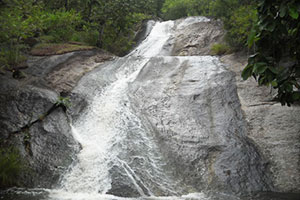
Mae Dood Waterfall in Tak Province is a natural learning site located within Mae Ping National Park Protection Unit No. MP.11, Doi Khun Men, in Ban Nong Chiang Kha, Yok Krabat Subdistrict, Sam Ngao District, Tak Province. It is a quiet forest waterfall destination where visitors can experience a short nature trail, mountain forest, small streams, a multi-tiered waterfall, and viewpoints overlooking the surrounding village landscape. The site is best suited for responsible nature travelers, student groups, scouts, and visitors who want a day trip focused on forest ecology rather than a heavily developed tourist attraction.
Mae Dood Waterfall is not located directly beside the main road. Visitors first travel to Mae Ping National Park Protection Unit No. MP.11 at Doi Khun Men, where they can contact park staff and leave their vehicles before walking to the waterfall. The walking route from the protection unit to the waterfall is about 2 km and takes around 35 minutes. The trail includes a moderately steep uphill section, so visitors should wear proper shoes, carry drinking water, and avoid entering the forest without guidance or advice from park staff.
The protection unit is part of Mae Ping National Park, which is managed by the Department of National Parks, Wildlife and Plant Conservation. Mae Ping National Park covers areas in Doi Tao District of Chiang Mai Province, Li District of Lamphun Province, and Sam Ngao District of Tak Province. The park is known for its mountainous landscape, forest resources, wildlife habitats, and many small streams that flow through the upper Ping River basin. The area around Doi Khun Men is especially valuable because it helps protect forested slopes and water sources on the northern side of Bhumibol Dam Reservoir.
As a natural learning site, Mae Dood Waterfall offers more than a scenic waterfall. It allows visitors to observe how forests, streams, slopes, and nearby communities are connected. The forest helps retain moisture, slow surface runoff, reduce soil erosion, and support the natural flow of small streams. For students and nature groups, the site functions like an outdoor classroom where forest ecology, watershed conservation, local plants, and responsible tourism can be learned through direct experience.
The atmosphere around the waterfall remains peaceful and natural. Visitors can hear flowing water, birds, insects, and forest sounds along the walking route. The waterfall itself is a multi-tiered natural waterfall, and the area around the falls can also serve as a viewpoint overlooking the lower village landscape. This combination of waterfall, forest, and view makes Mae Dood Waterfall different from more accessible roadside waterfalls. The journey into the forest is part of the experience.
Mae Ping National Park Protection Unit No. MP.11 has basic facilities including an office building, a guesthouse, staff housing, toilets, and a large activity ground that can support group activities. This makes the area suitable for environmental education camps, scout and guide activities, interpretation camps, and group learning programs. Groups planning to use the area should coordinate with park staff in advance so that activities can be arranged safely and responsibly.
For visitors interested in forest ecosystems, Mae Dood Waterfall is a useful introduction to the natural environment of Mae Ping National Park. The broader park area includes mixed deciduous forest, dry dipterocarp forest, streamside forest, hills, ridges, and small watersheds. Along the trail, travelers can observe how vegetation changes with moisture, shade, slope, and soil conditions. This makes the site especially suitable for visitors who want to understand the role of protected forests in water conservation and biodiversity.
Visitors should plan to arrive in the morning. The access route includes unpaved road sections, and the final part of the trip requires walking through the forest. Arriving early gives enough time to contact staff, prepare equipment, walk to the waterfall, rest, take photos, and return before evening. The most suitable travel style is a morning-to-evening day trip. Entering the area late in the day is not recommended because the trail requires attention and visibility.
Recommended items include non-slip hiking shoes or sturdy closed shoes, drinking water, a hat, long-sleeved clothing, insect repellent, a waterproof bag for electronics, and a small trash bag for carrying waste back out. Since the waterfall is located in a national park area, visitors should not litter, make loud noise, disturb wildlife, collect plants, remove stones, or enter unsafe water areas. Responsible behavior helps keep the waterfall and forest suitable for future visitors.
Getting There is most convenient by private car. From Sam Ngao District, travelers can follow the route toward Yok Krabat Subdistrict and Ban Nong Chiang Kha. After reaching the sign for Mae Ping National Park Protection Unit No. MP.11, Doi Khun Men, turn onto the unpaved road toward Song Khwae Nuea Reservoir for about 3 km, then continue along another unpaved section for about 4.5 km to the protection unit office. From there, visitors walk about 2 km to the waterfall with staff guidance or advice.
Mae Dood Waterfall can be combined with other attractions in Sam Ngao District, especially Bhumibol Dam, the dam viewpoint, the reservoir area, and nearby natural routes. Travelers with limited time can plan a one-day route around Yok Krabat and Bhumibol Dam. Those with more time can extend the trip to other parts of Mae Ping National Park in Lamphun Province, where well-known natural attractions such as Kaeng Ko and Ko Luang Waterfall are located.
Mae Dood Waterfall is best appreciated by travelers who respect natural places. It is not a commercialized tourist site with extensive facilities, but a protected natural area where the main value lies in the forest atmosphere, short trekking experience, waterfall scenery, and environmental learning. With good planning, proper equipment, and prior contact with park staff, Mae Dood Waterfall offers a meaningful nature trip in Tak Province for visitors who want to experience a quieter side of Mae Ping National Park.
| Name | Mae Dood Waterfall |
| Location | Mae Ping National Park Protection Unit No. MP.11, Doi Khun Men, Ban Nong Chiang Kha, Yok Krabat Subdistrict, Sam Ngao District, Tak Province |
| Address | Moo 11, Ban Nong Chiang Kha, Yok Krabat Subdistrict, Sam Ngao District, Tak Province, Thailand |
| Highlights | Natural waterfall inside Mae Ping National Park, reached by a 2 km forest walk from Protection Unit No. MP.11 |
| Distinctive Features | Short forest trail, natural waterfall, viewpoint over nearby village areas, and outdoor ecological learning environment |
| History / Responsible Agency | Managed under Mae Ping National Park, Department of National Parks, Wildlife and Plant Conservation |
| Name Origin | Named after Mae Dood Waterfall in Yok Krabat Subdistrict, Sam Ngao District, Tak Province |
| Travel Information | Travel by private car to Protection Unit No. MP.11, then walk about 2 km to the waterfall; the walk takes around 35 minutes |
| Current Status | Natural attraction and outdoor learning site within Mae Ping National Park; visitors should contact park staff before entering the area |
| Facilities | Protection unit office, guesthouse, staff housing, toilets, and activity ground for group programs |
| Main Areas / Zones | Protection Unit No. MP.11 office area, activity ground, forest trail, and Mae Dood Waterfall area |
| Caretaker | Mae Ping National Park, Department of National Parks, Wildlife and Plant Conservation |
| Main Contact Number | Mae Ping National Park, Tel. 098-808-2827 |
| Official Website / Official Page | Mae Ping National Park - Official Facebook Page |
| Nearby Tourist Attractions | 1. Song Khwae Nuea Reservoir, about 7 km 2. Bhumibol Dam, about 25 km 3. Bhumibol Dam Crest Viewpoint, about 27 km 4. Phra Phutthabat Doi Lon, about 30 km 5. Bhumibol Dam Pier, about 28 km |
| Nearby Restaurants | 1. Khun Saichon Coffee and Huen Phu Kaew Restaurant, Bhumibol Dam, about 27 km, Tel. 055-881-211 ext. 4436 2. Huen Phu Kaew Restaurant, Bhumibol Dam, about 27 km, Tel. 089-961-6572 3. Phu Kaew Restaurant, about 27 km 4. Krua Kan Eng, Sam Ngao, about 25 km 5. Café Amazon, PTT Sam Ngao Phatthana Branch, about 28 km |
| Nearby Accommodations | 1. Bhumibol Dam Guesthouse, about 27 km, Tel. 055-881237, 055-881221 ext. 4002, 4003 2. Bhumibol Dam Guesthouse, about 27 km, Tel. 055-549509 3. Poonthip Rooms, Sam Ngao District, about 25 km 4. Rim Thara Resort, Sam Ngao, about 25 km 5. Sooksabai Resort Samngao Tak, about 25 km |
Frequently Asked Questions (FAQ)
Q: Where is Mae Dood Waterfall located?
A: Mae Dood Waterfall is located within Mae Ping National Park Protection Unit No. MP.11, Doi Khun Men, in Ban Nong Chiang Kha, Yok Krabat Subdistrict, Sam Ngao District, Tak Province.
Q: What type of trip is Mae Dood Waterfall suitable for?
A: It is suitable for a day trip, short forest trekking, ecological learning, scout activities, and responsible nature travel.
Q: How far is the walk to Mae Dood Waterfall?
A: The walk from Protection Unit No. MP.11 to the waterfall is about 2 km and takes around 35 minutes.
Q: Is the route to Mae Dood Waterfall difficult?
A: The route includes unpaved road sections and a moderately steep forest trail, so visitors should wear suitable shoes and contact park staff before entering.
Q: Is Mae Dood Waterfall suitable for families?
A: It is suitable for families who are prepared for a short forest walk. Children should be closely supervised because the trail may be steep or slippery in some seasons.
Q: What should visitors prepare before going?
A: Visitors should bring sturdy walking shoes, drinking water, a hat, long-sleeved clothing, insect repellent, a waterproof bag, and a trash bag to carry waste out of the park.
Q: Can groups organize nature camps at the protection unit?
A: Yes. The protection unit has basic facilities and an activity ground suitable for interpretation camps, scout activities, and group learning programs, but advance coordination with park staff is required.
Q: Who should visitors contact before traveling to Mae Dood Waterfall?
A: Visitors should contact Mae Ping National Park or staff at Protection Unit No. MP.11 to ask about road conditions, trail safety, and access guidelines before visiting.
 Category: ●Nature and Wildlife
 Group: ●Waterfalls
Last Update : 3 MonthAgo
 Last Update : 3 MonthAgo
 Click to Access the Navigation Map GPS
 Art, Culture and Heritage
 Historical Sites and Monuments(2)
 Landmarks and Memorials(3)
 Art, Craft Centres, Tradition(6)
 Historic Homes and Cities(2)
 Educational Places
 Educational Gardens, Farm(2)
 Places of Worship
 Temple(22)
 Other Sacred Sites(9)
 Suburban Living
 Village, Community(5)
 Local Market(3)
 National Parks and Marine Reserves(9)
 Mountain (Doi)(9)
 Dam, Reservoir, Lake(14)
Waterfalls(23)
Dam, Reservoir, Lake(14)
Waterfalls(23)
 Hot Springs(2)
 Caves(6)
 River, Canal(1)
 Bays and Beaches(1)
 Islands(1)
 Other natural attractions(1)
 Entertainment and Agricultural
 Farms, Parks and Ecotourism(5)
 Outdoor and Adventure Activities(4)


