
lovethailand home >North Travel Attractions >Tak Travel Attractions >Tha Song Yang >Tha Song Yang > Tadoh Kui Waterfall
TL;DR: Tadoh Kui Waterfall is located at Ban Wa Mae Kee / Tadoh Kui village area, Tha Song Yang District, Tak Province, open Contact local guides or local authorities before visiting, hours Contact local guides or local authorities before visiting.

Tadoh Kui Waterfall
Open Days: Contact local guides or local authorities before visiting
Opening Hours: Contact local guides or local authorities before visiting
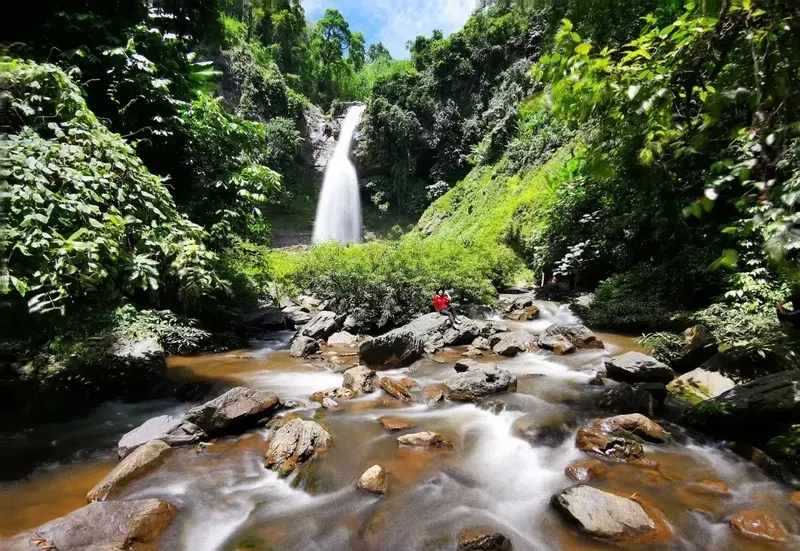
Tadoh Kui Waterfall in Tak Province is a hidden natural waterfall located in the mountainous forest landscape of Tha Song Yang District. Surrounded by lush tropical forest, rocky streams, and deep valley scenery, the waterfall is best suited for trekkers and adventure travelers who want to experience a raw and less-developed natural destination. With a height of about 30 meters, the waterfall drops from a rocky cliff into a natural stream area, creating a refreshing and powerful atmosphere in the middle of the forest.
The waterfall is often mentioned together with Wa Mae Kee Waterfall, another hidden waterfall in the same broader trekking area. These waterfalls are known among hikers as remote forest waterfalls that require real preparation. They are not casual roadside attractions. The route may include forest trails, stream crossings, wet rocks, steep sections, and areas where local guidance is needed. This makes Tadoh Kui Waterfall suitable for physically prepared travelers who understand the risks and responsibilities of trekking in natural terrain.
The main appeal of Tadoh Kui Waterfall is its untouched forest setting. Water falls from a cliff of about 30 meters, forming a white curtain of water against the deep green forest background. Mist rises from the impact of the water, while the sound of the waterfall echoes through the valley. Visitors who reach the waterfall often experience a strong sense of discovery, as the site still feels wild, quiet, and far removed from commercial tourism.
The journey to Tadoh Kui Waterfall is part of the experience. Travelers must pass through local village areas and continue along natural routes before walking into the forest. Some information describes access from Highway 105 around kilometer marker 161, then turning into a local road through Ban So Khae Ra Kla, continuing about 6 km toward the Tadoh Kui village area, and then walking further to the waterfall. Current access conditions can change by season, so travelers should always confirm the route with local guides before visiting.
The forest around the waterfall is rich and humid. Along the route, visitors may encounter streamside plants, mosses, ferns, large trees, wet rocks, and small forest life. The waterfall is a good example of a natural watershed system where mountain forests store moisture and release water into streams. A visit here is therefore not only scenic, but also educational for those interested in forest ecology, stream systems, and conservation travel.
Because the area is not fully developed for general tourism, visitors must prepare carefully. Proper trekking shoes are essential. Quick-dry clothing, drinking water, energy food, insect repellent, waterproof bags, a flashlight, a basic first-aid kit, and a trash bag should be carried. Travelers planning an overnight trekking trip should use suitable camping equipment and travel with people who know the route well.
Getting There requires traveling toward Tha Song Yang District in Tak Province and continuing to the local village area linked with Ban Wa Mae Kee or the Tadoh Kui group of houses. From there, visitors must walk into the forest. The route should be done with a local guide because sections may include slippery rocks, stream crossings, steep terrain, and natural obstacles. Starting early in the day is strongly recommended.
The rainy season makes the waterfall more powerful and dramatic, but it also increases risk. Strong water flow, slippery rocks, mud, and flash-flood potential can make the route unsafe. If heavy rain occurs or water levels rise, visitors should stop the trip immediately. In mountain waterfall areas, weather and water conditions must always take priority over the itinerary.
For photography, Tadoh Kui Waterfall offers striking natural compositions. The waterfall, mist, rocks, forest canopy, stream, and green valley background create a dramatic setting. However, photographers must avoid risky positions near cliffs, wet rocks, and strong water flow. Protecting cameras and phones with waterproof bags is recommended because spray from the waterfall can be strong.
Tadoh Kui Waterfall also has potential for community-based eco-tourism. If managed carefully, local communities can benefit from guiding services, local food, transport, camping support, and nature interpretation. However, development should remain low-impact. Visitor numbers should be controlled, waste should be strictly managed, and local people should remain central to route management and conservation.
Visitors should follow strict conservation practices. All rubbish must be carried out. Soap, shampoo, and chemicals should not be used in streams. Plants, stones, insects, and wildlife should not be disturbed or removed. Loud noise should be avoided. Since this is a less-developed natural area, the behavior of each visitor directly affects the future condition of the waterfall.
Tadoh Kui Waterfall can be combined with Wa Mae Kee Waterfall and nearby natural routes in Tha Song Yang District. Some trekkers plan the route as a 2-day, 1-night trip rather than a short day visit, allowing enough time for walking, resting, and returning safely. Travelers with more time can also connect the route with Mae Moei National Park and other natural viewpoints in the district.
In summary, Tadoh Kui Waterfall is a hidden forest waterfall in Tha Song Yang District, Tak Province, suitable for trekkers, adventure travelers, and responsible nature lovers. With its 30-meter drop, lush forest setting, and challenging natural route, it offers a powerful and memorable experience. Visitors should travel with local guidance, prepare proper equipment, check weather and water conditions, and follow conservation rules carefully.
| Name | Tadoh Kui Waterfall |
| Location | Ban Wa Mae Kee / Tadoh Kui village area, Tha Song Yang District, Tak Province |
| Address | Tha Song Yang District, Tak Province, Thailand |
| Highlights | Hidden forest waterfall about 30 meters high, surrounded by lush mountain forest and suitable for trekking and adventure travel |
| Distinctive Features | Remote waterfall with stream crossings, wet rocks, forest trail sections, and challenging access that may require local guidance |
| History / Area Context | Part of the hidden Tadoh Kui and Wa Mae Kee waterfall trekking area in Tha Song Yang District, Tak Province |
| Name Origin | Named after the Tadoh Kui local area and trekking route in Tha Song Yang District |
| Travel Information | Travel via Highway 105 around kilometer marker 161, continue through local village roads toward the Tadoh Kui area, then walk into the forest with a local guide |
| Current Status | Less-developed natural waterfall suitable for prepared trekkers; route and safety conditions should be confirmed locally before visiting |
| Caretaker / Local Authority | Local community in the Ban Wa Mae Kee / Tadoh Kui area and local authorities in Tha Song Yang District |
| Nearby Tourist Attractions | 1. Tadoh Kui Village Area, about 3 km 2. Ban Wa Mae Kee, about 5 km 3. Wa Mae Kee Waterfall, about 8 km 4. Mae Moei National Park, about 60 km, Tel. 088-290-7964 5. Mon Pui Mok, about 70 km 6. Tha Song Yang Town, about 80 km |
| Nearby Restaurants | 1. Local community restaurants in the Tadoh Kui village area, about 3 km 2. Local community restaurants in Ban Wa Mae Kee, about 5 km 3. Restaurants in Tha Song Yang Subdistrict, about 80 km 4. Krua Khwan Khao, Tha Song Yang, about 80 km 5. Restaurants near Mae Tan Market, about 80 km |
| Nearby Accommodations | 1. Trekking campsite area near Ban Wa Mae Kee, about 5 km 2. Mae Moei National Park Accommodation and Camping Area, about 60 km, Tel. 088-290-7964 3. Ban Suan Charoenrat, Tha Song Yang, about 80 km, Tel. 098-750-4776 4. Ban Suan Sornphet Resort, about 80 km, Tel. 089-267-1298 5. Sabai Dee Resort, Tha Song Yang, about 80 km, Tel. 062-579-5752 |
Frequently Asked Questions (FAQ)
Q: Where is Tadoh Kui Waterfall located?
A: Tadoh Kui Waterfall is located in the forested area of Tha Song Yang District, Tak Province, near Ban Wa Mae Kee and the Tadoh Kui local village area.
Q: What type of traveler is Tadoh Kui Waterfall suitable for?
A: It is suitable for trekkers, adventure travelers, and physically prepared visitors who are comfortable with natural forest routes.
Q: Is a local guide necessary?
A: Yes. A local guide or someone familiar with the route is strongly recommended because the trail includes forest, streams, slippery rocks, and difficult sections.
Q: Is the route to Tadoh Kui Waterfall difficult?
A: Yes. The route can involve trekking, stream crossings, climbing over rocks, and sometimes using ropes, depending on conditions.
Q: When is the best time to visit Tadoh Kui Waterfall?
A: Visitors should go only when weather and water conditions are safe, and should always confirm local conditions before traveling.
Q: What should visitors bring?
A: Visitors should bring trekking shoes, quick-dry clothing, waterproof bags, drinking water, energy food, insect repellent, a flashlight, a first-aid kit, and a trash bag.
Q: Can visitors swim at Tadoh Kui Waterfall?
A: Swimming is possible only in safe areas with calm water. Visitors should avoid entering the water during rain, high flow, or unsafe conditions.
Q: What nearby places can be combined with this trip?
A: Nearby places include Wa Mae Kee Waterfall, Ban Wa Mae Kee, Mae Moei National Park, Mon Pui Mok, and natural routes in Tha Song Yang District.
 Category: ●Nature and Wildlife
 Group: ●Waterfalls
Last Update : 3 MonthAgo
 Last Update : 3 MonthAgo
 Click to Access the Navigation Map GPS
Tadoh Kui Waterfall Map
Recommend

 Art, Culture and Heritage
 Historical Sites and Monuments(2)
 Landmarks and Memorials(3)
 Art, Craft Centres, Tradition(6)
 Historic Homes and Cities(2)
 Educational Places
 Educational Gardens, Farm(2)
 Places of Worship
 Temple(22)
 Other Sacred Sites(9)
 Suburban Living
 Village, Community(5)
 Local Market(3)
 National Parks and Marine Reserves(9)
 Mountain (Doi)(9)
 Dam, Reservoir, Lake(14)
Waterfalls(23)
Dam, Reservoir, Lake(14)
Waterfalls(23)
 Hot Springs(2)
 Caves(6)
 River, Canal(1)
 Bays and Beaches(1)
 Islands(1)
 Other natural attractions(1)
 Entertainment and Agricultural
 Farms, Parks and Ecotourism(5)
 Outdoor and Adventure Activities(4)


