
lovethailand home >North Travel Attractions >Tak Travel Attractions >Wang Jao >Chiang Thong > Pha Phueng Cave
TL;DR: Pha Phueng Cave is located at Moo 6, Ban Pha Phueng, Chiang Thong Subdistrict, Wang Chao District, Tak Province, open Visitors should contact Chiang Thong Subdistrict Administrative Organization or, hours Daytime visits are recommended.
Pha Phueng Cave
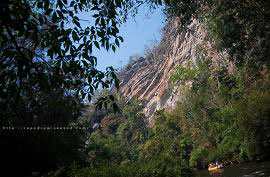
Open Days: Visitors should contact Chiang Thong Subdistrict Administrative Organization or Ban Pha Phueng community leaders before traveling
Opening Hours: Daytime visits are recommended
Pha Phueng Cave in Tak Province is a natural cave and local historical site located in Moo 6, Ban Pha Phueng, Chiang Thong Subdistrict, Wang Chao District. Set in the forested hills behind Ban Pha Phueng village, the cave is surrounded by mountain scenery, community forest, agricultural land, and the atmosphere of a highland community. Its main appeal comes from its spacious natural chamber, beautiful stalactites and stalagmites, and local stories connected with the political and forest history of Tak Province. For travelers who enjoy caves, quiet nature, community routes, and lesser-known destinations, Pha Phueng Cave offers a deeper and more meaningful side of Tak beyond the main tourist routes.
Ban Pha Phueng is Moo 6 of Chiang Thong Subdistrict in Wang Chao District. The village lies within a highland landscape connected with the Pha Phueng–Sri Khiri Rak Royal Project-style highland development area, which covers Ban Pha Phueng and Ban Sri Khiri Rak. The surrounding environment includes community forest, farms, hills, and rural roads. A journey to Pha Phueng Cave is therefore not only a cave visit but also an introduction to the geography and community life of the Wang Chao highlands.
The cave is not a typical roadside tourist cave. Reaching it requires traveling into the area behind the village and walking uphill for about 500 m to the cave entrance. This approach gives the visit a sense of exploration. Travelers pass through a natural and community landscape before reaching the hidden limestone cave. The route makes the experience feel more immersive than a quick stop, especially for visitors who enjoy slow travel and local guidance.
The cave entrance is set within the forest and hillside. Local reports describe the cave as large and spacious inside, with glittering stalactites and stalagmites that reflect beautifully under flashlight. Some sections include separate chambers and formations that resemble natural stone platforms. These features create a dramatic underground atmosphere. The cave should be explored carefully because natural cave surfaces are fragile, uneven, and easily damaged by careless movement.
From a geological perspective, Pha Phueng Cave is interesting because it represents long-term natural processes involving water, minerals, and rock. Over time, water moved through rock layers, slowly forming hollow spaces, cave chambers, and mineral deposits. Stalactites and stalagmites grow extremely slowly, layer by layer. Visitors should therefore avoid touching, breaking, or writing on cave surfaces. Even small damage can leave a long-lasting mark on formations that have taken many years to develop.
Pha Phueng Cave also has local historical value. Local accounts mention that the cave was associated with activities during the period when communist groups operated in parts of Tak Province. The cave was reportedly used as a hidden area for storing weapons and supplies. This gives the cave a historical dimension beyond its natural beauty. It can be viewed as a place where nature, memory, and social history overlap within the forested landscape of western Thailand.
This historical background makes the cave more than a geological feature. It becomes a place of memory, shelter, and strategic use in the past. Caves in forested mountain areas often served practical purposes because they were quiet, concealed, and difficult to access. For visitors, understanding this context adds depth to the experience and helps explain why Pha Phueng Cave is meaningful to the local community.
The name “Pha Phueng” evokes images of cliffs, forest, and wild bees. It reflects the natural character of the village and surrounding landscape. Local place names often arise from visible environmental features, plants, animals, or landforms. In this case, the name helps connect the cave with the identity of Ban Pha Phueng and the highland community where it is located.
Visiting Pha Phueng Cave requires preparation. Travelers should bring non-slip shoes or hiking shoes, a flashlight or headlamp, drinking water, a personal waste bag, and comfortable clothing. The cave should be visited in a small group rather than alone. First-time visitors should travel with local guidance or contact the community in advance because the route involves forest paths, hill walking, and a natural cave environment.
The best time to visit is during the day, especially in the morning or early afternoon. This allows enough time to reach the cave, explore safely, and return before it gets dark. Visitors should avoid traveling after heavy rain, because hillside paths and cave floors may become slippery. The cool season and late rainy season are pleasant for nature walking, but road and trail conditions should still be checked before departure.
For photography, Pha Phueng Cave offers several types of scenes: the forest route behind the village, the hidden cave entrance, the wide cave chamber, stalactites and stalagmites, and the highland community landscape. Photographers should use light carefully, avoid placing equipment on fragile formations, and avoid climbing on unstable rocks. The best photographs are those that preserve the cave exactly as it was found.
The cave can also serve as a learning site. It connects geology, cave conservation, community forest, highland settlement, and modern local history. Students and nature groups can learn how limestone caves form, why mineral formations need protection, how communities live with forest resources, and how landscapes can hold historical memory. This makes Pha Phueng Cave suitable for educational trips when organized responsibly.
Travel to Ban Pha Phueng can be connected with other places in Chiang Thong Subdistrict and Wang Chao District. Visitors can begin from Wang Chao town or Tak town, continue toward Chiang Thong Subdistrict, and then travel onward to Ban Pha Phueng. Some local roads connect with Ban Tha Thong Daeng, Ban Pha Phueng, and nearby community forest areas. Road conditions may vary by season, so checking with local authorities or residents before departure is recommended.
The areas of Ban Pha Phueng and Ban Sri Khiri Rak are also linked to highland agricultural development. Travelers who prefer slow and meaningful trips may appreciate the wider landscape: farms, mountain views, community roads, and local cultural life. Visiting the cave can therefore be part of a broader community travel experience rather than a single isolated stop.
Pha Phueng Cave is not a fully commercialized tourist attraction with extensive facilities. This is part of its appeal, but it also means visitors must be self-prepared. Bring drinking water, snacks, personal medication, a flashlight, and footwear suitable for natural terrain. After the visit, take all rubbish back out of the forest and cave area. Small actions such as leaving plastic bottles or food waste can affect the community forest and wildlife.
Respect for the local community is essential. Visitors should drive slowly through the village, avoid loud noise, respect private land, and ask before entering local areas. If guided by local residents, follow their instructions closely. Community members understand the route, safety conditions, and sensitive areas better than outside visitors.
Pha Phueng Cave can be combined with nearby attractions such as Ban Sri Khiri Rak, the Pha Phueng–Sri Khiri Rak highland development area, Pong Pao Waterfall, and Khlong Wang Chao National Park. A one-day trip may begin in Wang Chao town, continue to Ban Pha Phueng in the morning, visit the cave with local guidance, and return to town for meals and accommodation. Travelers with more time can stay overnight in Wang Chao or nearby areas and continue exploring other nature sites the next day.
Overall, Pha Phueng Cave is a meaningful natural attraction in Ban Pha Phueng, Chiang Thong Subdistrict, Wang Chao District, Tak Province. Its strengths are its spacious cave chamber, natural stalactites and stalagmites, forested setting, community context, and historical stories connected with the area. It is best suited to travelers who appreciate nature, local history, photography, and community-based exploration. With proper preparation and respect for the site, Pha Phueng Cave offers a quiet and memorable experience in the highland landscape of Tak.
| Name | Pha Phueng Cave |
| Location | Moo 6, Ban Pha Phueng, Chiang Thong Subdistrict, Wang Chao District, Tak Province |
| Address | Ban Pha Phueng, Moo 6, Chiang Thong Subdistrict, Wang Chao District, Tak 63180, Thailand |
| Highlights | Natural cave behind Ban Pha Phueng, spacious chamber, beautiful stalactites and stalagmites, community forest setting, and local history connected with the communist period in Tak Province |
| History / Importance | A natural cave of Ban Pha Phueng community with local historical stories, geological value, community forest setting, and links to the past use of forested caves in Tak Province |
| Name Origin | The name comes from Ban Pha Phueng and the local landscape associated with cliffs, forest, and wild bees |
| Distinctive Features | A wide natural cave with sparkling stalactites and stalagmites, internal chambers, and an uphill forest walk of about 500 m to the cave entrance |
| Travel Information | Travel to Ban Pha Phueng, Moo 6, Chiang Thong Subdistrict, then continue via the local forest route behind the village and walk uphill to the cave entrance. Visitors should ask Chiang Thong SAO or community leaders before traveling. |
| Current Status | A community natural attraction in Ban Pha Phueng, Chiang Thong Subdistrict, Wang Chao District, Tak Province. Visitors should contact local caretakers before entering. |
| Open Days | Visitors should contact Chiang Thong Subdistrict Administrative Organization or Ban Pha Phueng community leaders before traveling |
| Opening Hours | Daytime visits are recommended |
| Facilities | This is a community natural site. Visitors should prepare drinking water, flashlight, non-slip shoes, personal waste bag, and basic travel supplies. |
| Main Areas / Zones | Forest route behind Ban Pha Phueng, cave entrance, main cave chamber, internal chambers, stalactite and stalagmite areas, and surrounding community forest |
| Caretaker | Chiang Thong Subdistrict Administrative Organization, Wang Chao District, Tak Province, and Ban Pha Phueng community |
| Main Contact Number | Chiang Thong Subdistrict Administrative Organization, Tel. 055-039-758 |
| Official Website / Official Page | Chiang Thong Subdistrict Administrative Organization: www.chiangthong.go.th |
| Nearby Tourist Attractions | 1. Ban Pha Phueng Community Forest, about 1 km 2. Ban Sri Khiri Rak, about 8 km 3. Pha Phueng–Sri Khiri Rak Highland Development Area, about 8 km 4. Pong Pao Waterfall, about 25 km 5. Wang Chao town, about 40 km 6. Khlong Wang Chao National Park, about 55 km 7. Khlong Wang Chao Waterfall, about 60 km |
| Nearby Restaurants | 1. Khieo Khaji Thai Food, Wang Chao, about 40 km, Tel. 091-839-0454 2. Khrua Ban Suan at Wang Chao, about 41 km, Tel. 061-982-4391 3. Suan Pa Taka, about 45 km 4. Kuai Tiao Ruea Yok Sot Tak, about 42 km 5. Tak Coffee Bar, about 42 km 6. Ban Kaprao @ Na Bot, about 35 km |
| Nearby Accommodations | 1. StationHouse Wang Chao, about 40 km, Tel. 083-270-9696 2. Pakdee Resort Wang Chao, about 40 km, Tel. 088-557-6917, 081-870-3602 3. Orathai Wang Chao Resort, about 41 km 4. Khlong Wang Chao National Park Accommodation, about 55 km, Tel. 093-790-0935 5. Chalida Resort The House, about 60 km 6. Ban Suan Lan Sang Resort, about 65 km |
Frequently Asked Questions (FAQ)
Q: Where is Pha Phueng Cave located?
A: Pha Phueng Cave is located in Moo 6, Ban Pha Phueng, Chiang Thong Subdistrict, Wang Chao District, Tak Province.
Q: What makes Pha Phueng Cave special?
A: The cave is known for its spacious chamber, beautiful stalactites and stalagmites, forest setting, and local stories connected with the communist period in Tak Province.
Q: How should visitors prepare before going to Pha Phueng Cave?
A: Visitors should contact Chiang Thong SAO or community leaders first, bring non-slip shoes, a flashlight, drinking water, and travel with local guidance.
Q: Who is Pha Phueng Cave suitable for?
A: It is suitable for nature lovers, cave travelers, photographers, local history enthusiasts, and visitors interested in community-based exploration.
Q: Is Pha Phueng Cave easy to access?
A: Access requires traveling to Ban Pha Phueng and walking uphill through a natural route for about 500 m, so route conditions should be checked before traveling.
Q: When is the best time to visit Pha Phueng Cave?
A: Daytime visits are best, especially in the morning or early afternoon, to allow enough time for safe access and return.
Q: What nearby places can be visited with Pha Phueng Cave?
A: Nearby places include Ban Pha Phueng Community Forest, Ban Sri Khiri Rak, Pong Pao Waterfall, Wang Chao town, and Khlong Wang Chao National Park.
Q: Who takes care of Pha Phueng Cave?
A: The area is connected with Chiang Thong Subdistrict Administrative Organization and the Ban Pha Phueng community. Visitors should contact local caretakers before entering.
 Category: ●Nature and Wildlife
 Group: ●Caves
Last Update : 4 MonthAgo
 Last Update : 4 MonthAgo
 Click to Access the Navigation Map GPS
 Art, Culture and Heritage
 Historical Sites and Monuments(2)
 Landmarks and Memorials(3)
 Art, Craft Centres, Tradition(6)
 Historic Homes and Cities(2)
 Educational Places
 Educational Gardens, Farm(2)
 Places of Worship
 Temple(22)
 Other Sacred Sites(9)
 Suburban Living
 Village, Community(5)
 Local Market(3)
 National Parks and Marine Reserves(9)
 Mountain (Doi)(9)
 Dam, Reservoir, Lake(14)
 Waterfalls(23)
 Hot Springs(2)
Caves(6)
Hot Springs(2)
Caves(6)
 River, Canal(1)
 Bays and Beaches(1)
 Islands(1)
 Other natural attractions(1)
 Entertainment and Agricultural
 Farms, Parks and Ecotourism(5)
 Outdoor and Adventure Activities(4)


