
lovethailand home >North Travel Attractions >Tak Travel Attractions >Um Phang >Mae Chan > Letongku Karen Hermit Village
TL;DR: Letongku Karen Hermit Village, Tak attractions : Suburban Living, Village, Community.
Letongku Karen Hermit Village
Open Days: The community area can be visited daily, but visitors should coordinate with local authorities or community leaders before traveling
Opening Hours: Daytime travel is recommended; advance coordination is required for cultural study or access to sacred community spaces
Letongku Karen Hermit Village in Tak Province is one of the most culturally distinctive highland communities in Umphang District. Located in Village No. 10, Mae Chan Subdistrict, Letongku is known for its Karen Hermit belief system, locally connected with reverence for the hermit teacher and a spiritual tradition that differs from many other Karen communities. Surrounded by mountains, forests, and remote borderland scenery, the village offers a rare opportunity to learn about a living community where faith, ritual practice, highland life, and cultural identity remain deeply connected.
Letongku is not simply a remote village in the mountains. It is a living cultural community where belief is part of everyday life. The villagers do not maintain their traditions as a tourist performance. Their reverence for the hermit teacher, their rituals, their sacred spaces, their rules of conduct, and their annual ceremonies form the spiritual structure of the community. Visitors who come here should therefore approach the village with humility and respect, understanding that this is a place of faith rather than an ordinary sightseeing destination.
The name Letongku is familiar among travelers, researchers, and people interested in Karen culture because the village is often described as a Karen Hermit community located deep in the mountains of Umphang. The landscape around the village includes forested hills, rugged terrain, and remote border areas. This setting gives Letongku a quiet and solemn atmosphere. Reaching the village requires careful planning, especially during the rainy season when roads may become muddy and difficult. Travelers should never treat the route as a casual drive.
The key identity of Letongku is its reverence for the hermit teacher. This belief is connected with Buddhist-influenced spirituality, local Karen tradition, moral discipline, respect for teachers, and the preservation of community order. The village has a hermit center and sacred areas where important rituals take place. These rituals are not only religious activities; they help maintain community unity, transmit memory, and keep the spiritual identity of the village alive.
One of the most important annual traditions in Letongku is the fire-lighting ceremony to honor the hermit teacher, held in December. The lighting of the sacred fire is a central act of devotion. It represents respect for the hermit teacher, continuity of faith, and the unity of the community. For the villagers, the ceremony is a serious act of spiritual remembrance. Visitors who are permitted to observe should do so quietly and follow all instructions from community leaders.
One sacred object often mentioned in relation to Letongku is an ancient ivory object associated with the spiritual memory of the community. In local belief and storytelling, it is not treated as an ordinary object but as a sacred symbol connected with reverence for the hermit tradition. Because this subject carries deep emotional and spiritual meaning for the community, visitors and writers should speak about it carefully and avoid treating it as a curiosity or decorative object.
The hermit center and ceremonial spaces are central to village life. Community rituals may include specific rules about where people may sit, how they should dress, what they may touch, and which areas are restricted. Men and women may have different roles or designated areas in some ceremonies. These rules should be respected fully. Letongku is not a place where visitors can freely enter every sacred space or photograph every activity.
The reverence for the hermit teacher gives Letongku a strong spiritual structure. Hermit leaders and ritual figures help guide ceremonies, preserve inherited rules, and maintain the moral order of the community. Everyday life is therefore linked with faith. The simple houses, agricultural routines, and quiet village atmosphere are all connected to a deeper set of beliefs that shape how people live together.
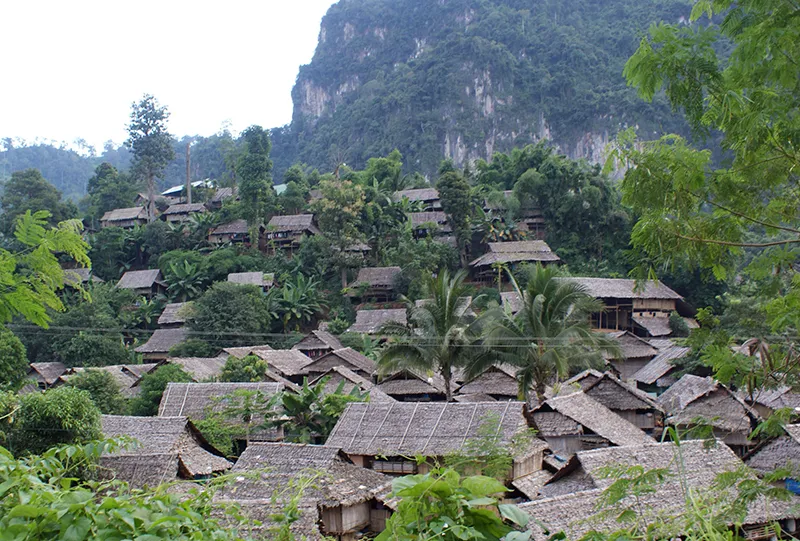
The daily life of the Karen community in Letongku remains closely connected with nature. Villagers farm, raise animals, use local resources, and make practical household items from materials available in the area. Some homes are built with wood, bamboo, or other local materials suited to mountain conditions. The beauty of the village lies not in polished tourism facilities but in the authenticity of highland life.
Local food in a Karen highland community is often based on ingredients from farms, forests, gardens, and streams. Vegetables, rice, chilies, herbs, salt, and seasonal produce give meals a simple but meaningful character. If visitors are invited to share food with the community, they should treat the meal with respect. Eating together is not merely a tourist activity; it is part of hospitality and relationship-building.
Handicrafts also reflect Karen identity. Weaving, bamboo work, and the use of natural materials are part of daily life in many Karen communities. Woven textiles can express gender, age, identity, and social meaning. If visitors have the opportunity to buy handmade items, they should value the time, knowledge, and labor behind them. Handmade community products should not be treated like mass-produced souvenirs.
The natural surroundings of Letongku are part of its appeal. Forests, streams, mountains, and village paths make the area suitable for travelers interested in culture and nature together. However, walking into forest areas or along remote trails should only be done with local permission and guidance. The terrain is complex, and the area is remote. Safety and respect for community rules should always come first.
Traveling to Letongku requires more preparation than visiting a typical village. From Umphang town, the route to Letongku is long, mountainous, and seasonally difficult. A high-clearance pickup truck or four-wheel-drive vehicle may be needed depending on road conditions. Visitors should travel with people who know the route and should not attempt the journey without updated local information.
Getting There should begin from Umphang District in Tak Province. From there, travelers continue toward Mae Chan Subdistrict and the remote border village route. Before departure, visitors should coordinate with Mae Chan local authorities, community leaders, or experienced local drivers. Daytime travel is strongly recommended. Travelers should check the vehicle, carry drinking water, food, medicine, rain gear or warm clothing, and inform someone of the travel plan.
The most suitable travel season is from the late rainy season into the cool season. The weather is comfortable, and the mountain atmosphere is beautiful. The rainy season can be difficult because some parts of the road may become muddy or slippery. Travelers without mountain-road experience should avoid entering the route after heavy rain.
Visitors who wish to observe the December fire-lighting ceremony should coordinate with the community in advance. This is an internal faith ceremony, not a commercial tourist event. Visitors should dress respectfully, avoid entering restricted areas, never touch sacred objects, and ask before taking photographs. If the community gives specific rules about gendered spaces, footwear, silence, or movement, those rules should be followed without argument.
Letongku is suitable for cultural travelers, researchers, students, documentary photographers, and people interested in ethnic studies. It is not suitable for travelers expecting urban convenience or fully developed tourism facilities. The value of the village comes from its living traditions, remote setting, and unique spiritual identity. Visitors should be ready for simplicity, uncertainty, and boundaries set by the community.
As a cultural learning site, Letongku helps visitors understand that Karen culture is not uniform. Karen communities differ by language, religion, belief, settlement history, and local context. The Karen Hermit community of Letongku is an important example of how Buddhist-influenced belief, local spirituality, social order, and highland life can exist together in a borderland setting.
Nearby areas include other remote communities and natural routes such as Ban Poeng Khloeng and the Suriya River area. These places are known among experienced adventure travelers and nature visitors, but they also require planning, local guidance, and updated information. Because the area is remote and close to the border, travelers should always check road, weather, and safety conditions before moving between communities.
A practical travel plan is to stay in Umphang town before entering Letongku. This allows time to prepare supplies, check road conditions, coordinate with local contacts, and arrange a suitable vehicle. After returning from the village, travelers can continue to other Umphang attractions such as Thi Lo Su Waterfall, Doi Hua Mot, or local markets, depending on the season and road conditions.
Umphang District itself is famous for nature travel, especially Thi Lo Su Waterfall. A journey to Letongku can be combined with an Umphang trip, but travelers should not rush the itinerary. Letongku is a remote cultural route, while Thi Lo Su is a nature route with more established tourism services. Each requires time and preparation.
The most important rule for visiting Letongku is respect. Visitors should not photograph people without permission, especially children, elders, or people participating in ceremonies. They should not photograph restricted rituals, mock community beliefs, touch sacred objects, or enter private spaces. Respectful conduct is not optional in a community where sacred tradition remains central to life.
Tourism can support Letongku when it is done responsibly. Visitors can buy local products, use local guides when available, support community services, and share accurate information about the village. Good tourism should never reduce the community to an exotic image. It should help preserve dignity, cultural continuity, and mutual understanding.
Researchers and students should request permission before collecting information, recording images, or documenting rituals. They should explain their purpose clearly and return useful material to the community when possible. Working with ethnic communities requires transparency, respect, and responsibility.
Letongku is meaningful because it is more than a remote and mysterious place. Behind the mountains and difficult roads is a community with faith, rules, history, and identity. The fire-lighting ceremony for the hermit teacher, the sacred memory of the ivory object, the hermit center, simple houses, and the surrounding forest all make Letongku one of the most culturally important Karen communities in Tak Province.
A visit to Letongku should therefore be a journey of understanding. Travelers who come with respect will see a rare dimension of Karen culture, learn how belief sustains community life, and recognize that Thailand’s cultural diversity includes many deep and delicate traditions that deserve careful preservation.
| Name | Letongku Karen Hermit Village |
| Local Name / Other Names | Ban Letongku, Le Tor Kho, Karen Hermit Village, Long-Haired Karen Hermit Village |
| Location | Village No. 10, Mae Chan Subdistrict, Umphang District, Tak Province |
| Address | Ban Letongku, Village No. 10, Mae Chan Subdistrict, Umphang District, Tak Province 63170 |
| Highlights | Karen community that reveres the hermit teacher, December fire-lighting ceremony, hermit center, sacred ceremonial spaces, simple highland life, and remote Umphang borderland nature |
| History | A Karen Hermit community that has preserved a distinctive belief system centered on the hermit teacher, community discipline, sacred ceremonies, and a spiritual identity different from many other Karen villages |
| Main Ethnic Group | Karen / Pgaz K’Nyau community within the Karen Hermit belief tradition |
| Cultural Features | Hermit belief, hermit center, fire-lighting ceremony for the hermit teacher, ritual discipline, sacred spaces, ceremonial dress, and community rules |
| Sacred Beliefs / Important Elements | Hermit teacher, hermit center, ivory hall, and the ancient ivory object in the sacred memory of the community |
| Traditions / Community Activities | December fire-lighting ceremony for the hermit teacher, chanting and prayer, community gathering in sacred spaces, learning about highland farming, handicrafts, and Karen daily life |
| Travel Information | Travel from Umphang District toward Mae Chan Subdistrict and the remote border village route. Use a vehicle suitable for mountain roads, coordinate locally in advance, and travel only during daylight. |
| Current Status | A living Karen Hermit community and sacred cultural area. Visitors should contact local authorities or community leaders before in-depth visits. |
| Open Days | The community area can be visited daily, but visitors should coordinate with local authorities or community leaders before traveling |
| Opening Hours | Daytime travel is recommended; advance coordination is required for cultural study or access to sacred community spaces |
| Facilities | Local community area, village paths, natural surroundings, hermit center, and basic village services. Visitors should bring drinking water, food, medicine, cash, and essential supplies. |
| Main Areas / Zones | Hermit center, ivory hall, ceremonial spaces, Letongku village area, Karen houses, nature routes around the community, and the route toward Ban Poeng Khloeng |
| Caretaker / Information Contact | Mae Chan Subdistrict Municipality, Umphang District, Tak Province, Tel. 084-951-7455, 061-289-1696 |
| Tourism Information | Umphang Subdistrict Municipality, Tel. 055-561-613, 055-561-018; Tourism Authority of Thailand, Tak Office, Tel. 055-514-341 to 055-514-343 |
| Nearby Tourist Attractions | 1. Ban Poeng Khloeng, Mae Chan Subdistrict, about 15 km 2. Suriya River Area, about 20 km 3. Ban Hmong Kwa, Mae Chan Subdistrict, about 25 km 4. Umphang Wildlife Sanctuary, about 95 km 5. Umphang Town, about 102 km 6. Thi Lo Su Waterfall, about 145 km |
| Nearby Restaurants | 1. Local Food Shops in Letongku Village, about 1 km 2. Local Food Shops in Ban Poeng Khloeng, about 15 km 3. Baan Kru Sun Restaurant, Umphang, about 102 km, Tel. 096-159-9236 4. Khrua Khon Ban Hao, Umphang, about 102 km 5. Amo Apa Umphang, about 102 km 6. Khrua Pa Nee Umphang, about 102 km |
| Nearby Accommodations | 1. Community Accommodation or Village Stay in Letongku Area, about 1 km 2. Umphang Buri Resort, about 102 km, Tel. 055-561-576, 063-989-4555, 095-360-8209 3. Thee Lor Su Riverside Resort, about 102 km, Tel. 089-832-1455, 089-016-5666, 055-809-035 4. Phudoi Campsite & Resort, about 102 km, Tel. 055-561-049, 098-456-1914 5. Suan Ruean Kaew Resort, about 102 km, Tel. 055-561-119, 081-886-5226, 081-886-7213 6. Umphang Country Hut, about 102 km, Tel. 055-561-079, 02-915-7018, 084-139-9927 |
Frequently Asked Questions (FAQ)
Q: Where is Letongku Karen Hermit Village located?
A: Letongku is located in Village No. 10, Mae Chan Subdistrict, Umphang District, Tak Province. It is a remote Karen Hermit community in the mountainous border area of western Thailand.
Q: Why is Letongku important?
A: Letongku is important because it preserves the Karen Hermit belief system and the annual fire-lighting ceremony to honor the hermit teacher, making it one of Tak Province’s most distinctive cultural communities.
Q: When is the fire-lighting ceremony for the hermit teacher held?
A: The ceremony is held in December each year. It is a sacred community event dedicated to honoring the hermit teacher and preserving local faith.
Q: Can visitors observe ceremonies in Letongku?
A: Visitors may observe only when permitted by the community. They should coordinate in advance, dress respectfully, avoid restricted spaces, and follow all instructions from community leaders.
Q: How can travelers get to Letongku?
A: Travelers should start from Umphang District, continue toward Mae Chan Subdistrict, and use a vehicle suitable for mountain roads. Local coordination and daytime travel are strongly recommended.
Q: What is the best season to visit Letongku?
A: The late rainy season through the cool season is generally the best period because the weather is comfortable and the route is usually easier than during heavy rain.
Q: What should visitors prepare before traveling to Letongku?
A: Visitors should prepare a suitable vehicle, drinking water, food, medicine, cash, rain gear or warm clothing, and updated road information. They should also inform someone of their travel plan.
Q: What nearby places can be included with a Letongku trip?
A: Nearby and connected places include Ban Poeng Khloeng, the Suriya River area, Ban Hmong Kwa, Umphang Wildlife Sanctuary, Umphang town, and Thi Lo Su Waterfall.
 Category: ●Suburban Living
 Group: ●Village, Community
Last Update : 4 MonthAgo
 Last Update : 4 MonthAgo
 Click to Access the Navigation Map GPS
Letongku Karen Hermit Village Map
Recommend

 Art, Culture and Heritage
 Historical Sites and Monuments(2)
 Landmarks and Memorials(3)
 Art, Craft Centres, Tradition(6)
 Historic Homes and Cities(2)
 Educational Places
 Educational Gardens, Farm(2)
 Places of Worship
 Temple(22)
 Other Sacred Sites(9)
Village, Community(5)
Other Sacred Sites(9)
Village, Community(5)
 Local Market(3)
 Nature and Wildlife
 National Parks and Marine Reserves(9)
 Mountain (Doi)(9)
 Dam, Reservoir, Lake(14)
 Waterfalls(23)
 Hot Springs(2)
 Caves(6)
 River, Canal(1)
 Bays and Beaches(1)
 Islands(1)
 Other natural attractions(1)
 Entertainment and Agricultural
 Farms, Parks and Ecotourism(5)
 Outdoor and Adventure Activities(4)


