
lovethailand home >North Travel Attractions >Tak Travel Attractions >Tha Song Yang >Mae U Su > Mae Usu Cave
TL;DR: Mae Usu Cave is located at Mae Usu Subdistrict, Tha Song Yang District, Tak Province, open Dry season only, from November to April, hours 07.00 – 17.00.
Mae Usu Cave
Open Days: Dry season only, from November to April
Opening Hours: 07.00 – 17.00
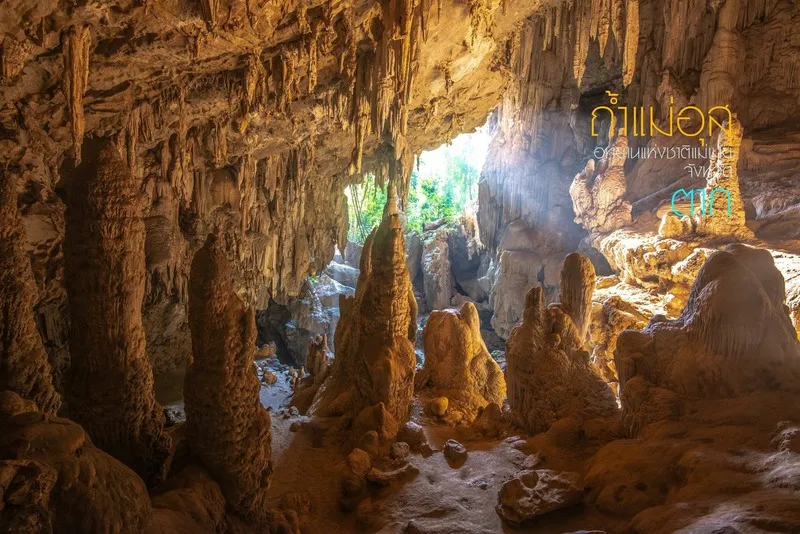
Mae Usu Cave in Tak Province is one of the most remarkable natural attractions in Tha Song Yang District. Located in Mae Usu Subdistrict within Mae Moei National Park, the cave lies about 12–13 km from Tha Song Yang District Office along Highway 105, the Mae Sot–Mae Sariang route. After passing the area around kilometer marker 94, travelers turn into a local access road for about 2 km to reach the cave. Mae Usu Cave is famous for its large limestone chambers, a natural stream flowing through the cave, beautiful rock formations, and sunlight that enters through cave openings in the afternoon, creating a dramatic underground theater-like scene.
The main charm of Mae Usu Cave is the combination of limestone, water, light, and forest. Unlike a dry cave that only offers rock formations, Mae Usu Cave has the Mae Usu stream flowing through it. The stream enters the cave, passes through the interior, and continues toward the Moei River. This gives the cave a cool and humid atmosphere, with the sound of running water accompanying visitors along parts of the route. The experience feels immersive because travelers move from the bright entrance into a large, quiet, and naturally sculpted underground space.
Mae Usu Cave is a limestone cave formed over a long geological period. Water gradually dissolved and shaped the limestone, creating chambers, passages, rock surfaces, and mineral formations. Inside the cave, visitors may see stalactites, stalagmites, flowstone, calcite deposits, old water marks, and evidence of natural rock movement. These features make the cave important not only as a scenic attraction but also as a natural classroom for geology, hydrology, and cave ecology.
The cave is often described as having three large chambers in the main visitor area. The accessible section is shorter than the entire cave system, and visitors should stay within the safe route recommended by officers or local guides. One of the best-known highlights is the western chamber, where sunlight enters the cave during the afternoon and reflects on the rock surfaces and stream. This creates a golden glow that makes the cave look like a natural theater beneath the earth.
The best time to experience this light effect is usually from around 13.00 to 16.00. During this period, sunlight passes through openings in the cave and strikes the cave floor, walls, and water surface. The result is a striking visual scene that attracts photographers and nature travelers. The combination of light, shadow, limestone textures, and flowing water makes Mae Usu Cave one of the most photogenic cave destinations in western Thailand.
Season is very important when visiting Mae Usu Cave. The cave can be explored safely only during the dry season, generally from November to April, with December to April being especially suitable. During the rainy season, the water level inside the cave rises and may become unsafe. Visitors should never enter the cave when water levels are high or after heavy rainfall. Checking with Mae Moei National Park before traveling is essential.
Getting There is straightforward from Tha Song Yang District. Take Highway 105 on the Mae Sot–Mae Sariang route for about 12–13 km. After the kilometer 94 area, turn into the access road and continue for about 2 km to the cave area. The route is suitable for private cars and motorcycles. Travelers without private transport can arrange local transport from Tha Song Yang town, but it is better to confirm the route and cave conditions before departure.
Visitors should prepare carefully before entering the cave. Recommended items include non-slip shoes or water-friendly footwear, a flashlight or headlamp, drinking water, waterproof bags for phones and cameras, and comfortable clothing. Some parts of the cave may be dark, wet, or slippery, and visitors may need to walk through shallow water during the dry season. A personal light source is useful even when natural light enters some sections.
Entering Mae Usu Cave with a park officer or local guide is strongly recommended, especially for first-time visitors. Cave conditions can change depending on season, water level, and weather. A guide can help identify safe walking areas, explain important features, and prevent visitors from entering risky sections. Travelers should not separate from the group, climb unstable rocks, or continue deeper into the cave if officers advise against it.
Mae Usu Cave is also a rewarding place for photography. The cave entrance, stream, large chambers, limestone walls, and natural light all provide strong visual compositions. Photographers should use care when setting up equipment and should avoid blocking walking paths or placing gear on fragile cave surfaces. Flash or strong artificial light should be used respectfully, especially when other visitors are nearby.
The area around Mae Usu Cave is connected to the local Mae Usu community. The community is known for its natural surroundings, the cave, access to Mae Moei National Park, and the cultural landscape of the Pga K’nyau people. A trip to the cave can therefore be combined with local community experiences, viewpoints, temple visits, and national park routes.
Nearby attractions include Wat Phra That Rattanachedi Tham Mae Usu, the Moei River area, Mae Moei National Park, Mon Kio Lom viewpoint, Mon Pui Mok viewpoint, and the Mae Salit Luang area. Travelers with half a day can focus on the cave and nearby temple, while those with one or two days can continue deeper into Mae Moei National Park for misty mountain viewpoints and cool-season scenery.
Responsible travel is especially important in Mae Usu Cave. Visitors should not write on cave walls, break or touch formations unnecessarily, leave rubbish, take stones or minerals from the cave, or disturb animals living inside. Cave environments are fragile and take a very long time to recover from damage. A good visit should leave the cave exactly as it was found.
Families visiting with children or elderly travelers should evaluate water levels and walking conditions before entering. Some parts require walking on wet rocks or through water, so the cave is more suitable for visitors who can walk steadily. Children should be supervised at all times near the stream, cave entrance, and slippery sections.
Overall, Mae Usu Cave is a memorable natural destination in Tak Province. Its strengths are its large limestone chambers, Mae Usu stream, three main cave rooms, stalactites and stalagmites, and the afternoon light that turns the cave into a dramatic underground scene. With proper timing, safe conditions, and respectful behavior, Mae Usu Cave offers one of the most distinctive cave experiences in western Thailand.
| Name | Mae Usu Cave |
| Location | Mae Usu Subdistrict, Tha Song Yang District, Tak Province |
| Address | Mae Usu Cave, Mae Moei National Park, Mae Usu Subdistrict, Tha Song Yang District, Tak 63150, Thailand |
| Coordinates | Approx. 17.304081, 98.155798 |
| Highlights | Large limestone cave, Mae Usu stream flowing through the cave, spacious chambers, stalactites, stalagmites, and dramatic afternoon sunlight |
| History / Importance | An important natural attraction in Mae Moei National Park and a valuable cave site for nature tourism, geology, and cave ecology learning |
| Name Origin | The name comes from the Mae Usu stream and Mae Usu community where the cave is located |
| Distinctive Features | A wet and dry limestone cave with a wide entrance, high ceiling, flowing stream, and three large cave chambers |
| Travel Information | From Tha Song Yang District, take Highway 105 toward Mae Sariang for about 12–13 km, then turn into the access road for about 2 km after the kilometer 94 area |
| Current Status | A seasonal natural attraction in Mae Moei National Park, accessible depending on cave water level and weather conditions |
| Open Days | Dry season only, from November to April |
| Opening Hours | 07.00 – 17.00 |
| Facilities | Parking area, toilets, and park officers or local guides during the visiting season; visitors should bring a flashlight, water-friendly shoes, and waterproof bags |
| Main Areas / Zones | Cave entrance, Mae Usu stream, three main chambers, afternoon light viewpoint, limestone formations, and rear water outlet area |
| Caretaker | Mae Moei National Park, Department of National Parks, Wildlife and Plant Conservation, together with local authorities in Mae Usu Subdistrict |
| Main Contact Number | Mae Moei National Park, Tel. 061-352-3703, 088-290-7964 / Mae Usu Subdistrict Administrative Organization, Tel. 055-508-978 |
| Official Website / Official Page | Mae Moei National Park and Mae Usu Subdistrict Administrative Organization: www.maeusu.go.th |
| Nearby Tourist Attractions | 1. Wat Phra That Rattanachedi Tham Mae Usu, about 2 km 2. Tha Song Yang District Office, about 13 km 3. Moei River and Tha Song Yang riverside community, about 15 km 4. Mae Moei National Park, about 45 km 5. Mon Kio Lom viewpoint, about 55 km 6. Mon Pui Mok viewpoint, about 57 km 7. Mae Salit Luang area, about 48 km |
| Nearby Restaurants | 1. Pak Kai Mae Usu, about 8 km, Tel. 093-593-3840 2. Krua Khwan Khao, about 10 km, Tel. 080-030-6573 3. Kanyer Por Cafe, Ban Mae Salit, about 35 km 4. Local restaurants in Tha Song Yang town, about 13 km 5. Restaurants and cafés along the Mae Sot–Mae Sariang route, about 10–20 km |
| Nearby Accommodations | 1. Pak Kai Mae Usu, about 8 km, Tel. 093-593-3840 2. Mae Moei National Park accommodation, about 45 km, Tel. 088-290-7964, 061-352-3703 3. Tha Song Yang Hill Resort, about 18 km 4. Moei Mang Resort, about 20 km, Tel. 086-205-1883 5. Wasan Guest House, about 16 km, Tel. 082-882-8292 6. Mae Usu community homestays, about 8–12 km |
Frequently Asked Questions (FAQ)
Q: Where is Mae Usu Cave located?
A: Mae Usu Cave is located in Mae Usu Subdistrict, Tha Song Yang District, Tak Province, within Mae Moei National Park.
Q: Can Mae Usu Cave be visited all year?
A: No. The cave is suitable for visits during the dry season, generally from November to April, because water levels rise during the rainy season.
Q: What are the highlights of Mae Usu Cave?
A: Highlights include the large limestone chambers, Mae Usu stream, three main cave rooms, stalactites, stalagmites, and dramatic afternoon sunlight.
Q: How do travelers get to Mae Usu Cave?
A: From Tha Song Yang District, take Highway 105 toward Mae Sariang for about 12–13 km, then turn into the access road for about 2 km.
Q: What should visitors bring?
A: Visitors should bring non-slip or water-friendly shoes, a flashlight, drinking water, waterproof bags, and comfortable clothing.
Q: What time is best for photography inside the cave?
A: Afternoon, especially around 13.00–16.00, is best for seeing sunlight entering through the cave openings.
Q: Is Mae Usu Cave suitable for children and elderly visitors?
A: It is suitable only when water levels are safe and visitors are closely supervised, because some sections require walking through water and on slippery rocks.
Q: What nearby places can be visited with Mae Usu Cave?
A: Nearby places include Wat Phra That Rattanachedi Tham Mae Usu, the Moei River, Mae Moei National Park, Mon Kio Lom, and Mon Pui Mok.
 Category: ●Nature and Wildlife
 Group: ●Caves
Last Update : 4 MonthAgo
 Last Update : 4 MonthAgo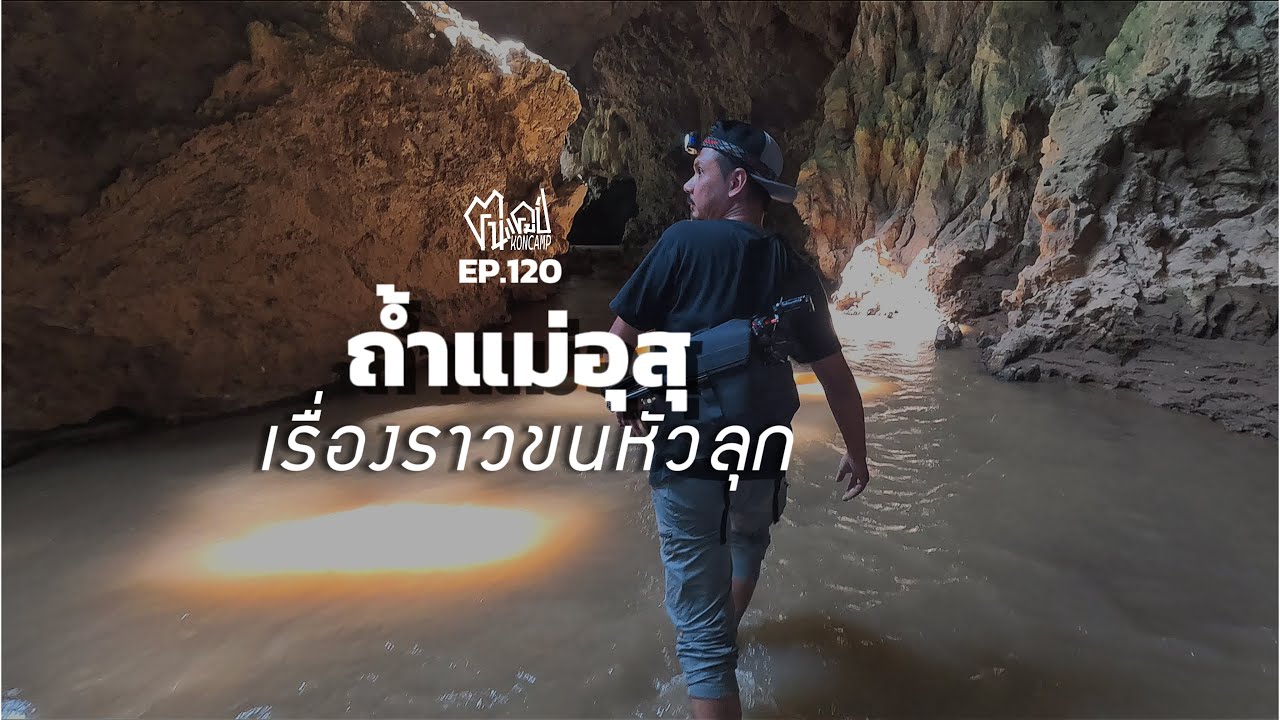
 Click to Access the Navigation Map GPS
Mae Usu Cave Map
Gellery
Recommend

 Art, Culture and Heritage
 Historical Sites and Monuments(2)
 Landmarks and Memorials(3)
 Art, Craft Centres, Tradition(6)
 Historic Homes and Cities(2)
 Educational Places
 Educational Gardens, Farm(2)
 Places of Worship
 Temple(22)
 Other Sacred Sites(9)
 Suburban Living
 Village, Community(5)
 Local Market(3)
 National Parks and Marine Reserves(9)
 Mountain (Doi)(9)
 Dam, Reservoir, Lake(14)
 Waterfalls(23)
 Hot Springs(2)
Caves(6)
Hot Springs(2)
Caves(6)
 River, Canal(1)
 Bays and Beaches(1)
 Islands(1)
 Other natural attractions(1)
 Entertainment and Agricultural
 Farms, Parks and Ecotourism(5)
 Outdoor and Adventure Activities(4)


