
lovethailand home >North Travel Attractions >Tak Travel Attractions >Mae Ramat >Phra That > Khuen That Festival
TL;DR: Khuen That Festival is located at Phra That sacred area, Moo 2, Phra That Subdistrict, Mae Ramat District, Tak 63140, Thailand, open Held Annually In April, hours Morning To Evening, According To The Annual Event Schedule.
Khuen That Festival
Open Days: Held Annually In April
Opening Hours: Morning To Evening, According To The Annual Event Schedule
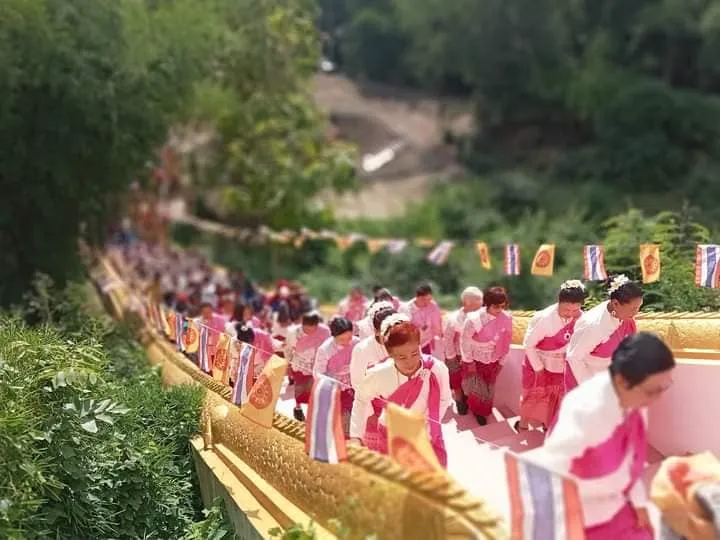
Khuen That Festival in Tak Province is an important northern Thai Buddhist tradition held annually in April at Moo 2, Phra That Subdistrict, Mae Ramat District, Tak Province. The festival centers on the act of walking up to the sacred relic site by climbing 325 steps, a journey that represents faith, perseverance, patience, and spiritual devotion. For local people, Khuen That is more than a temple visit. It is a collective act of worship, merit-making, community gathering, and cultural preservation.
The festival reflects the close relationship between Buddhism and northern Thai local culture. Participants come to make merit, offer food to monks, pour water over the sacred relic site, offer cloth to the relic stupa, and pray for happiness, prosperity, and protection. The event also includes local cultural performances such as traditional dance and folk music, creating a warm community atmosphere while preserving the identity of Phra That Subdistrict.
The most memorable feature of the festival is the 325-step staircase leading up to the relic site. Climbing these steps is not only a physical journey, but also a symbolic spiritual practice. Each step reflects effort and intention. Many visitors walk slowly and mindfully, sometimes with family members or fellow worshippers. By the time they reach the sacred area, the climb itself has become part of the religious experience.
The sacred relic site in Phra That Subdistrict is an important spiritual center for the surrounding community. The annual April festival shows that local faith remains active and meaningful. Because April is also the period of the Thai New Year and Songkran season, the ritual of pouring water over the relic site has additional meaning. Water represents purification, renewal, respect, and blessing at the beginning of a new cycle.
During the festival, villagers and visitors gather for Buddhist rituals and community activities. The morning usually focuses on merit-making and almsgiving, while the main ritual activities include worshipping the relic, pouring water, offering cloth, and praying for good fortune. The atmosphere combines sacredness and local warmth. Elders pass down the meaning of the tradition, while younger generations learn by taking part in the event.
The ritual of pouring water over the relic site is one of the most important practices. Worshippers prepare clean or scented water and offer it respectfully at the designated area. This act expresses devotion to Buddhism and asks for blessings, peace, and purity in life. It also connects the festival with the wider Thai tradition of water rituals during the April New Year period.
Offering cloth to the relic site is another meaningful practice. The cloth is a symbolic offering of respect toward the sacred relic and the Buddhist faith. Preparing, carrying, and presenting the cloth requires cooperation from the community. This shared act of offering demonstrates unity among villagers, temple supporters, local leaders, and participants from surrounding areas.
Cultural performances add color and warmth to the festival. Traditional dance, folk music, local dress, and community participation help make the event more than a religious ceremony. They turn the festival into a living cultural space where local identity is expressed through sound, movement, clothing, and shared memory. For travelers, these details offer a valuable opportunity to experience northern Thai culture in a local setting.
Phra That Subdistrict in Mae Ramat District has a peaceful rural character, surrounded by natural scenery and local community life. Because the relic site is located on higher ground, visitors who reach the top can enjoy views of the surrounding landscape. The combination of a sacred climb, local scenery, and Buddhist rituals gives the festival a distinctive atmosphere that differs from larger commercial events.
The 325 steps are central to the identity of the festival. They are remembered by visitors because the climb requires physical effort and mental focus. Some people climb to make merit, some come to fulfill personal vows, and others join with their families as part of an annual tradition. The staircase therefore becomes a meaningful bridge between the ordinary world below and the sacred space above.
As a northern Thai tradition, Khuen That shows how Buddhism and community life remain closely connected. The relic site is the spiritual center, while the annual festival becomes the moment when people return, gather, make merit, and renew their relationship with the sacred place. This helps keep the temple and relic site alive as a cultural and social center, not simply as a physical landmark.
The festival also shows the relationship between people and landscape. Sacred places in northern Thailand are often located on hills or elevated areas, symbolizing the movement from the ordinary world toward a higher and purer spiritual space. In this festival, that meaning is made concrete through the climb up the 325 steps. The physical act of ascending becomes part of the ritual itself.
April is a meaningful time for this tradition because it coincides with the Thai New Year period. Families often return home, make merit, pay respect to elders, and take part in community rituals. Khuen That therefore has family and social importance as well as religious meaning. It is a time when different generations come together to continue a shared local tradition.
For cultural travelers, Khuen That is a rewarding festival because it is rooted in genuine local practice. It is not only a sightseeing event, but a chance to observe how a community maintains its sacred place, performs Buddhist rituals, and expresses northern Thai cultural identity. Visitors can learn through the atmosphere, the rituals, the climb, and the interaction of local people.
Visitors should dress respectfully because the event takes place at a sacred Buddhist site. Comfortable shoes are strongly recommended because of the 325 steps. Since April can be hot, travelers should also bring drinking water, a hat, or an umbrella. Older visitors or those with health concerns should walk slowly and rest when needed.
Respectful behavior is important during the festival. Visitors should avoid loud behavior during ceremonies, should not interrupt processions or ritual activities, and should take photographs politely. When cultural performances are held, photography is generally suitable from appropriate public areas, but religious rituals should be treated with care and respect.
Getting There is most convenient by private car, rental car, or local transport. Travelers should first reach Mae Ramat District in Tak Province, then continue to Moo 2, Phra That Subdistrict. Those coming from Tak town or Mae Sot should allow enough travel time and check the local route before visiting during the festival period.
The festival can be combined with nearby places in Mae Ramat and Mae Sot. Visitors may explore Mae Ramat town, Wat Don Kaeo, local markets, and community areas, or continue toward Mae Sot for attractions such as Mae Kasa Hot Spring, Rim Moei Market, Wat Thai Wattanaram, and the Thai-Myanmar Friendship Bridge. This creates a broader route through western Tak Province.
For photographers, the festival offers many meaningful scenes: the 325-step stairway, worshippers climbing to the relic site, water-pouring rituals, cloth offerings, local performances, and views from the elevated area. The best photographs are those that show both the sacred site and the community atmosphere, while still respecting the privacy and devotion of participants.
Khuen That also supports cultural tourism and community-based travel. Visitors who attend the event help bring attention to local traditions, support local food vendors, nearby accommodations, and community services. At the same time, tourism should remain respectful and should not disturb the religious meaning of the festival.
Overall, the Khuen That Festival in Tak Province is a meaningful northern Thai tradition that combines relic worship, water rituals, cloth offerings, the symbolic climb of 325 steps, and the unity of the local community. For travelers interested in Thai traditions, Buddhist culture, and local festivals beyond the usual tourist routes, this April event in Phra That Subdistrict is a valuable cultural experience.
| Name | Khuen That Festival, Tak Province |
| Location / Main Venue | Moo 2, Phra That Subdistrict, Mae Ramat District, Tak Province |
| Address | Phra That sacred area, Moo 2, Phra That Subdistrict, Mae Ramat District, Tak 63140, Thailand |
| Highlights | Climbing 325 steps to worship the relic site, water-pouring ritual, cloth offering, merit-making, almsgiving, and local cultural performances |
| Festival Period | Held annually in April |
| Importance | A Buddhist tradition for worshipping the sacred relic site, making merit, pouring water, and praying for happiness and prosperity |
| History | A local tradition of Phra That Subdistrict, Mae Ramat District, preserving northern Thai Buddhist faith and community culture in Tak Province |
| Name Origin | Khuen That means going up to worship the sacred relic site, represented by the 325-step climb |
| Distinctive Features | The relic site is reached by climbing 325 steps, symbolizing faith, perseverance, and spiritual ascent |
| Main Rituals | Merit-making, almsgiving, water pouring over the relic site, cloth offering, prayer, and local cultural performances |
| Travel Information | Travel to Mae Ramat District, then continue to Moo 2, Phra That Subdistrict. Private car, rental car, or local transport is recommended |
| Current Status | An important annual local tradition of Phra That Subdistrict, Mae Ramat District, Tak Province |
| Open Days | Held annually in April |
| Opening Hours | Morning to evening, according to the annual event schedule |
| Fees | No admission fee for the festival area |
| Facilities | Ritual area, relic worship area, 325-step stairway, viewpoint, and basic community services nearby |
| Caretaker / Local Authority | Phra That local community, Phra That Subdistrict Administrative Organization, and Mae Ramat District local authorities |
| Main Contact Number | Phra That Subdistrict Administrative Organization, Tel. 055-585-157 |
| Official Website / Official Page | https://www.phrathat-tak.go.th |
| Nearby Tourist Attractions | 1. Mae Ramat District town and local community, about 9 km 2. Wat Don Kaeo, Mae Ramat District, about 10 km 3. Mae Ramat Market, about 10 km 4. Mae Kasa Hot Spring, Mae Sot District, about 42 km 5. Rim Moei Market, Mae Sot District, about 64 km |
| Nearby Restaurants | 1. Local food stalls at Mae Ramat Market, about 10 km 2. Local restaurants in Mae Ramat town, about 10 km 3. Cafes and small eateries in Mae Ramat District, about 10 km 4. Kai Yang Na Cho Kho 34, Mae Sot, about 58 km, Tel. 055-563-111, 084-577-7793 5. Roti Pae Ong Mae Sot, about 60 km, Tel. 082-769-4529 |
| Nearby Accommodations | 1. Local accommodations in Mae Ramat town, about 10 km 2. Community homestays and local lodgings in Mae Ramat District, about 10 km 3. Irawadee Resort Mae Sot, about 57 km, Tel. 055-535-430 4. The Teak Hotel, about 60 km, Tel. 055-031-888 5. Centara Life Hotel Mae Sot, about 62 km, Tel. 055-532-601-8 |
Frequently Asked Questions (FAQ)
Q: Where is the Khuen That Festival in Tak held?
A: It is held at Moo 2, Phra That Subdistrict, Mae Ramat District, Tak Province.
Q: When is the Khuen That Festival held?
A: It is held annually in April. The exact schedule depends on the annual announcement by the local organizers.
Q: Why do visitors climb 325 steps?
A: The 325-step climb symbolizes faith, perseverance, and the spiritual journey toward worshipping the sacred relic site.
Q: What are the main rituals of the festival?
A: Main rituals include merit-making, almsgiving, pouring water over the relic site, offering cloth, praying, and watching local cultural performances.
Q: Who should visit this festival?
A: It is suitable for travelers interested in northern Thai traditions, Buddhist culture, local festivals, and community-based cultural tourism in Tak Province.
Q: How should visitors prepare before attending?
A: Visitors should dress respectfully, wear comfortable walking shoes, bring drinking water, and be prepared to climb 325 steps.
Q: What nearby places can be visited with the festival?
A: Nearby places include Mae Ramat town, Wat Don Kaeo, Mae Ramat Market, Mae Kasa Hot Spring, and attractions in Mae Sot District.
 Category: ●Art, Culture and Heritage
 Group: ●Art, Craft Centres, Tradition
Last Update : 4 MonthAgo
 Last Update : 4 MonthAgo
 Click to Access the Navigation Map GPS
Khuen That Festival Map
Recommend

 Historical Sites and Monuments(2)
 Landmarks and Memorials(3)
Art, Craft Centres, Tradition(6)
Landmarks and Memorials(3)
Art, Craft Centres, Tradition(6)
 Historic Homes and Cities(2)
 Educational Places
 Educational Gardens, Farm(2)
 Places of Worship
 Temple(22)
 Other Sacred Sites(9)
 Suburban Living
 Village, Community(5)
 Local Market(3)
 Nature and Wildlife
 National Parks and Marine Reserves(9)
 Mountain (Doi)(9)
 Dam, Reservoir, Lake(14)
 Waterfalls(23)
 Hot Springs(2)
 Caves(6)
 River, Canal(1)
 Bays and Beaches(1)
 Islands(1)
 Other natural attractions(1)
 Entertainment and Agricultural
 Farms, Parks and Ecotourism(5)
 Outdoor and Adventure Activities(4)


