
TL;DR: Wat Nam Pu is located at Ban Nam Pu, Moo 3, Tak Tok Subdistrict, Ban Tak District, Tak Province, open Daily, hours Open for daytime religious visits and community worship.
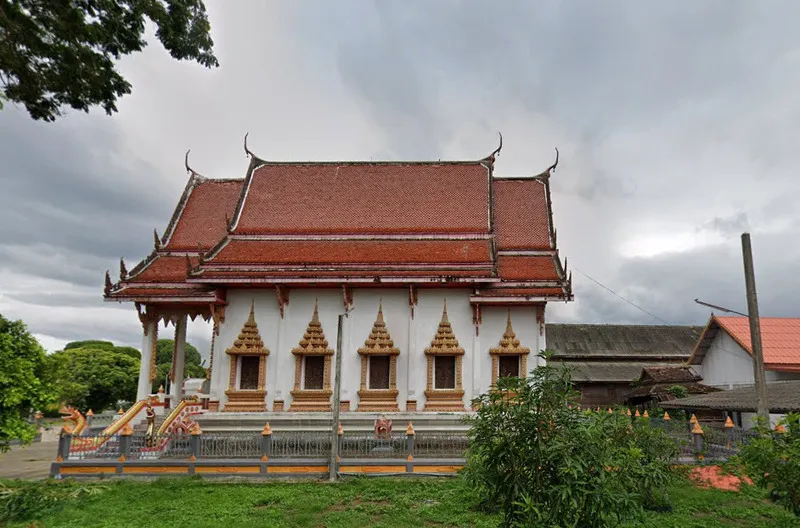
Wat Nam Pu
Open Days: Daily
Opening Hours: Open for daytime religious visits and community worship
Wat Nam Pu is a long-established community temple in Ban Nam Pu, Tak Tok Subdistrict, Ban Tak District, Tak Province. It is not a large tourist temple, but it carries strong cultural value as a local Buddhist sanctuary closely connected with the daily life, faith, and traditions of the surrounding community. For travelers who want to understand Ban Tak beyond its major attractions, Wat Nam Pu offers a quiet and meaningful glimpse into a local temple that has served villagers for generations.
The temple is located at No. 53, Ban Nam Pu, Moo 3, Tak Tok Subdistrict, Ban Tak District, Tak Province. It is a Buddhist temple under the Mahanikaya order. The temple grounds cover 1 rai, 1 ngan, and 62 square wah, making it a compact but historically important religious site. Its modest size reflects the character of many local temples in northern and upper-central Thailand, where the value of a temple is measured not by grandeur but by continuity, community use, and the depth of local faith.
The name “Wat Nam Pu” is closely linked to the old name of Ban Nam Pu and to the natural features of the area. Local history records that a natural spring once emerged within the temple grounds. Because of this, the temple was originally associated with the name “Wat Nam Phu,” meaning a temple connected with spring water. Over time, the pronunciation shifted in local speech and became “Wat Nam Pu.” This name preserves an important memory of the landscape, showing how water, settlement, and Buddhist faith were connected in the formation of the local community.
Wat Nam Pu was established around 1672 CE, corresponding to B.E. 2215, and later received its royal boundary for Buddhist ordination on 2 August 1934. The granting of a consecrated boundary marked the temple’s formal status as a place where important monastic ceremonies could be performed. This historical timeline shows that Wat Nam Pu has been part of the religious landscape of Ban Tak for a very long period, surviving changes in transportation, settlement patterns, and local administration while continuing to serve its community.
The temple stands on flat land in the middle of the village, near community roads and a nearby waterway. This location makes it easy for local residents to reach the temple for merit-making, Buddhist holy days, ordination ceremonies, Kathin offerings, and other religious activities. Unlike large tourist temples where visitors often come mainly for architecture or photography, Wat Nam Pu is best appreciated as a living community temple. Its atmosphere is calm, simple, and closely tied to the rhythm of local life.
The temple’s boundary information also reflects its close connection with the surrounding village. The northern boundary extends 40 wa and borders private land, the southern boundary extends 50 wa and connects with a public road, the eastern boundary extends 66 wa and is adjacent to a road and waterway, while the western boundary extends 81 wa and borders local residents’ land. These details show that the temple was not isolated from the community but embedded within it, functioning as a shared spiritual and social space.
Important structures within Wat Nam Pu include the ordination hall, the sermon hall, and monks’ residences. The ordination hall measures 8 meters wide and 15 meters long. The sermon hall measures 16 meters wide and 30 meters long and was built in B.E. 2524, or 1981 CE. The temple also has several monks’ residences, including two wooden buildings, one half-concrete and half-wooden building, and one two-storey concrete building. These structures represent the gradual development of the temple and its continuing role in supporting Buddhist practice.
The ordination hall is one of the most important areas of the temple because it is connected with formal monastic ceremonies. Although it is not monumental in scale, it carries deep religious significance. In a local temple, the ordination hall is a symbol of the temple’s spiritual completeness and its ability to preserve monastic discipline. It also reflects the effort of generations of villagers who helped maintain the temple as a proper Buddhist institution.
The sermon hall serves as a gathering place for the community. On Buddhist holy days and important occasions, villagers use this space for making merit, listening to sermons, offering food to monks, and joining temple activities. In this sense, the hall is more than an architectural feature. It is a social and spiritual meeting place where elders, families, and younger generations come together through shared Buddhist customs.
Wat Nam Pu has also played a role in Buddhist education and practice. The temple has been associated with the teaching of Buddhist scriptures, helping to preserve religious knowledge at the local level. A community temple that supports learning does more than host ceremonies. It helps transmit Buddhist values, discipline, and moral education to monks, novices, and laypeople. This educational role is an important part of why Wat Nam Pu remains meaningful to the surrounding community.
The historical list of abbots and caretakers includes Khru Ba Tan, Khru Ba Leng, Khru Ba But, Khru Ba Phoe, Khru Ba Un, Khru Ba Wan, Phra Khru Si Rattanophat (Um), who served from B.E. 2487 to B.E. 2522, and Phra Rak Le Siri Thammo, recorded as acting caretaker from B.E. 2523 onward. These names represent the continuity of religious leadership at the temple. They also show that Wat Nam Pu’s survival has depended not only on buildings but also on monks, community supporters, and local faith.
For local residents of Tak Tok Subdistrict and nearby areas, Wat Nam Pu has long been a place for merit-making, meditation, Buddhist observance, and traditional religious gatherings. Villagers come to the temple during major Buddhist days such as Makha Bucha, Visakha Bucha, Asalha Bucha, Buddhist Lent, the end of Buddhist Lent, and Kathin season. These events help reinforce community relationships and allow Buddhist customs to continue from one generation to the next.
Buddhist Lent is one of the meaningful periods for a community temple such as Wat Nam Pu. During this season, monks remain in the temple for the rainy-season retreat, while local people often make merit, offer candles, observe precepts, and participate more actively in religious practice. After Buddhist Lent, Kathin offerings bring villagers and supporters together to help maintain the temple. These traditions show how the temple functions as a living center of both faith and community cooperation.
Wat Nam Pu is also valuable for cultural travelers because it represents a type of temple that is often overlooked. Many visitors to Tak Province focus on famous temples, waterfalls, mountains, or historical sites. However, small local temples like Wat Nam Pu reveal the deeper structure of Thai cultural life. They show how Buddhist practice is woven into village identity, how place names preserve memories of the landscape, and how community temples continue to shape local society.
Ban Tak District itself has several important cultural and historical attractions, including Wat Phra Borommathat Ban Tak, Chedi Yutthahatthi, Kad Ta Tong, Ban Tak Market, and natural attractions in the wider area. Wat Nam Pu can be included in a cultural route through Ban Tak for travelers who want to move beyond the main tourist stops and understand the area through its local temples, riverside communities, and traditional places of worship.
The temple is best visited during the daytime. Travelers should dress modestly, speak quietly, and respect monks and local worshippers. Since Wat Nam Pu is still a functioning temple, visitors should avoid treating the site merely as a photo stop. A respectful visit allows travelers to appreciate the atmosphere of a real community temple and to understand why such places remain important in rural and small-town Thailand.
Getting There is most convenient by private car or rental car. From Tak town, visitors can drive toward Ban Tak District and continue into Tak Tok Subdistrict, following local roads to Ban Nam Pu. The temple can be combined with nearby attractions such as Kad Ta Tong, Ban Tak Market, Wat Phra Borommathat Ban Tak, and Chedi Yutthahatthi. This makes it suitable for a half-day cultural route around Ban Tak District.
For travelers interested in quiet cultural experiences, Wat Nam Pu is a rewarding stop. It does not present itself through spectacular architecture or crowded tourism. Instead, it tells its story through its old name, its connection with a natural spring, its long history, its ordination boundary, its monastic buildings, and its continuing role in village religious life. Visiting Wat Nam Pu helps travelers see Tak Province from a more local and human perspective.
| Name | Wat Nam Pu |
| Location | Ban Nam Pu, Moo 3, Tak Tok Subdistrict, Ban Tak District, Tak Province |
| Address | No. 53, Ban Nam Pu, Moo 3, Tak Tok Subdistrict, Ban Tak District, Tak Province |
| Highlights | Long-established community temple connected with Ban Nam Pu, local Buddhist traditions, and the story of a natural spring |
| History | Established around B.E. 2215 and received its royal consecrated boundary on 2 August 1934 |
| Name Origin | The name comes from Ban Nam Pu and a natural spring that once emerged in the temple area; the earlier name “Wat Nam Phu” later shifted to “Wat Nam Pu” |
| Distinctive Features | A peaceful local Buddhist temple under the Mahanikaya order, located on flat village land and closely connected with community religious life |
| Main Areas / Zones | Ordination hall, sermon hall, monks’ residences, merit-making area, and meditation area |
| Temple Area | 1 rai, 1 ngan, 62 square wah |
| Travel Information | Accessible by private car from Tak town toward Ban Tak District, then into Tak Tok Subdistrict and Ban Nam Pu |
| Current Status | Active Buddhist community temple under the Mahanikaya order |
| Open Days | Daily |
| Opening Hours | Open for daytime religious visits and community worship |
| Facilities | Sermon hall, temple courtyard, religious activity areas, and parking space according to local temple conditions |
| Abbot / Caretaker According To Historical Records | Khru Ba Tan, Khru Ba Leng, Khru Ba But, Khru Ba Phoe, Khru Ba Un, Khru Ba Wan, Phra Khru Si Rattanophat (Um), and Phra Rak Le Siri Thammo |
| Nearby Tourist Attractions | 1. Kad Ta Tong, about 4 km 2. Ban Tak Market, about 4 km 3. Wat Phra Borommathat Ban Tak, about 8 km 4. Chedi Yutthahatthi, about 8 km 5. Huai Mae Khai Waterfall Forest Park, about 20 km 6. Doi Soi Malai, about 50 km |
| Nearby Restaurants | 1. Bantak Coffee Boom, about 3 km, Tel. 094-708-6066 2. Caffeine Cafe, about 4 km, Tel. 095-353-4030, 096-860-2807 3. Thai Egg Noodle Ban Tak, about 5 km, Tel. 089-329-8999 4. Krua Ran Yui, about 8 km, Tel. 089-272-5944 5. Tak A Kard Coffee, about 18 km, Tel. 086-209-4322 |
| Nearby Accommodations | 1. Bantak Homestay, about 4 km, Tel. 096-939-2241, 089-641-7475 2. Bansuansiriwat, about 5 km, Tel. 093-236-3971, 064-698-2961 3. Bussachat Homestay, about 8 km, Tel. 063-642-6254 4. Baan Prachan Resort, about 8 km, Tel. 082-610-8568 5. Phongphak Resort, about 5 km, Tel. 081-290-9956 |
Frequently Asked Questions (FAQ)
Q: Where is Wat Nam Pu located?
A: Wat Nam Pu is located at No. 53, Ban Nam Pu, Moo 3, Tak Tok Subdistrict, Ban Tak District, Tak Province.
Q: What is Wat Nam Pu known for?
A: Wat Nam Pu is known as an old community temple of Ban Nam Pu, with a history linked to a natural spring and long-standing Buddhist traditions in Tak Tok Subdistrict.
Q: How old is Wat Nam Pu?
A: The temple was established around B.E. 2215 and received its royal consecrated boundary on 2 August 1934.
Q: What does the name Wat Nam Pu mean?
A: The name is connected with Ban Nam Pu and a natural spring that once emerged in the temple area. The earlier name “Wat Nam Phu” later shifted into “Wat Nam Pu.”
Q: What can visitors see inside Wat Nam Pu?
A: Visitors can see the ordination hall, sermon hall, monks’ residences, and the peaceful atmosphere of a local Buddhist temple.
Q: What attractions can be combined with a visit to Wat Nam Pu?
A: Travelers can combine the visit with Kad Ta Tong, Ban Tak Market, Wat Phra Borommathat Ban Tak, Chedi Yutthahatthi, and Huai Mae Khai Waterfall Forest Park.
Q: Is Wat Nam Pu suitable for foreign travelers?
A: Yes. It is suitable for travelers interested in quiet temples, local Buddhist culture, community history, and non-commercial cultural routes in Tak Province.
 Category: ●Places of Worship
 Group: ●Temple
Last Update : 3 MonthAgo
 Last Update : 3 MonthAgo
 Click to Access the Navigation Map GPS
 Art, Culture and Heritage
 Historical Sites and Monuments(2)
 Landmarks and Memorials(3)
 Art, Craft Centres, Tradition(6)
 Historic Homes and Cities(2)
 Educational Places
 Educational Gardens, Farm(2)
Temple(22)
Educational Gardens, Farm(2)
Temple(22)
 Other Sacred Sites(9)
 Suburban Living
 Village, Community(5)
 Local Market(3)
 Nature and Wildlife
 National Parks and Marine Reserves(9)
 Mountain (Doi)(9)
 Dam, Reservoir, Lake(14)
 Waterfalls(23)
 Hot Springs(2)
 Caves(6)
 River, Canal(1)
 Bays and Beaches(1)
 Islands(1)
 Other natural attractions(1)
 Entertainment and Agricultural
 Farms, Parks and Ecotourism(5)
 Outdoor and Adventure Activities(4)


