
lovethailand home >North Travel Attractions >Tak Travel Attractions >Ban Tak >Mae Salit > Wat Yang Ong Nam
TL;DR: Wat Yang Ong Nam is located at Ban Yang Ong Nam, Moo 5, Mae Salid Subdistrict, Ban Tak District, Tak Province, open Daily, hours Daytime visits are recommended.

Wat Yang Ong Nam
Open Days: Daily
Opening Hours: Daytime visits are recommended
Wat Yang Ong Nam in Tak Province is an old local Buddhist temple located at No. 136, Ban Yang Ong Nam, Moo 5, Mae Salid Subdistrict, Ban Tak District. Affiliated with the Mahā Nikāya order, the temple stands on 4 rai, 3 ngan, and 72 square wah of temple land, with an additional 2 plots of monastic land totaling 15 rai. It is a meaningful community temple that reflects the long relationship between Buddhism, riverside settlement, village life, and local faith in Ban Tak District.
The temple was established around 1772 and was named after the old village of Ban Yang Ong. In the past, the area was associated with Yang On Subdistrict in the former Sam Ngao minor district area before being identified with Mae Salid Subdistrict in present-day Ban Tak District. With a history of more than 250 years, Wat Yang Ong Nam is not only a place for worship, but also an important record of local settlement and Buddhist community life.
The temple’s land boundaries show its strong connection with the surrounding community and landscape. To the north and south, the temple borders public roads. To the east, it borders a river. To the west, it also borders a public road. This setting reflects a traditional pattern of Thai village temples, where temples were often located near water, local routes, and residential areas. Wat Yang Ong Nam therefore belongs directly to the living geography of the village.
The temple is located on lowland ground, making it suitable for religious buildings and community activities. Important temple structures include an ordination hall measuring 9 meters wide and 22 meters long, built in 1983; a sermon hall measuring 24 meters wide and 22 meters long, built in 1982; a viharn measuring 9 meters wide and 12 meters long; and 2 monks’ residences. These structures support worship, merit-making, Buddhist ceremonies, community gatherings, and monastic residence.
The ordination hall is one of the temple’s most important sacred spaces. Wat Yang Ong Nam received its consecrated boundary on July 3, 1985, with a boundary area measuring 25 meters wide and 50 meters long. This consecrated boundary gives the temple the proper sacred space for formal monastic acts according to Buddhist discipline and shows the temple’s development as a complete community religious center.
The sermon hall plays an important role in everyday temple life. In rural Thai temples, a sermon hall is used for merit-making, listening to Dhamma teachings, local meetings, annual ceremonies, and communal activities. At Wat Yang Ong Nam, the sermon hall built in 1982 represents the continued participation of local people in maintaining the temple as a shared spiritual and social space.
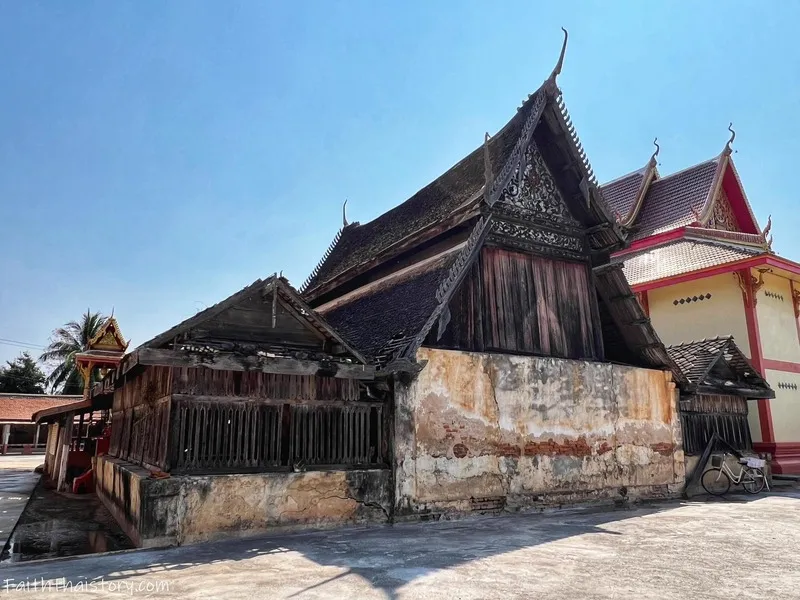
The old viharn is one of the most interesting features of Wat Yang Ong Nam. Local heritage sources mention that the viharn has a distinctive traditional character. An inscription at the entrance records that Chao Athikan Khiao and a group of faithful supporters built the viharn in 1946. Although the structure is less than 100 years old, its atmosphere, local craftsmanship, and aged appearance give it strong cultural value.
The reference to Chao Athikan Khiao is also important because temple history records a long line of former abbots, including Phra In Ta, Phra Panya, Phra Wong, Phra Chi, Phra Chuen, Phra Chan, Phra Rat, Phra La, Phra Pia, Phra Chu, Phra Athikan Khiao, Phra Ai, and Phra Athikan Pun Thitasilo. These names show the continuity of monastic leadership and the role of monks in guiding the temple and community across generations.
Inside the temple are Buddha images of various sizes and postures. These sacred objects serve as focal points for worship, merit-making, and meditation. The variety of Buddha images reflects the faith of local people, as many such images in community temples are created, donated, or restored through the devotion of villagers over time.
Wat Yang Ong Nam is more than a religious building complex. It is a community center for Ban Yang Ong Nam and nearby villages. Religious activities such as annual merit-making, group chanting, offerings, and local ceremonies continue to keep the temple active. The temple brings together elders, families, children, monks, and villagers, allowing Buddhist values and local traditions to be passed from one generation to the next.
For cultural travelers, the temple offers a quiet look at rural Buddhist life in Tak Province. It is not a large commercial tourist attraction, and that is part of its value. Visitors can see a functioning village temple, old religious structures, a local viharn, Buddha images, and a riverside community atmosphere without the crowds of major tourist sites.
Wat Yang Ong Nam is also suitable for travelers interested in local architecture. The old viharn reflects village craftsmanship and the faith of ordinary people rather than royal or monumental architecture. Its value lies in its simplicity, age, and connection with local builders and supporters. Such structures help preserve the visual character of rural temples in western northern Thailand.
Getting There is most convenient by private car. From Tak town, travel toward Ban Tak District and continue to Mae Salid Subdistrict. The temple is located at Ban Yang Ong Nam, Moo 5. Since it is a local community temple rather than a major commercial attraction, visitors should check the route in advance and may contact Mae Salid Subdistrict Administrative Organization for local information.
The best time to visit is in the morning or late afternoon when the weather is more comfortable. Since the temple is located on lowland ground near a river, visitors traveling during the rainy season should pay attention to road and ground conditions. A visit of around 30 minutes to 1 hour is suitable for worship, quiet walking, and observing the temple buildings.
For photographers, interesting subjects include the old viharn, sermon hall, ordination hall, Buddha images, village-temple atmosphere, and the riverside setting. Photography should be done respectfully. Visitors should avoid disturbing monks, novices, or local people during religious activities and should not climb on or touch old structures unnecessarily.
Families can use the temple as a simple cultural learning stop. Children can learn that a temple is not only a place for worship, but also a place connected with village history, land records, river settlement, temple buildings, former abbots, and community activities. Visiting a real community temple makes local history easier to understand.
Senior travelers may find Wat Yang Ong Nam comfortable because it is located on flat ground and does not require climbing hills. The temple is suitable for a calm visit, merit-making, and quiet reflection. Visitors should still walk carefully around older structures and uneven areas.
Wat Yang Ong Nam can be combined with other places in Ban Tak District, such as Wat Yang Ong Bon, Wat Yang Ong San Klang, Wat Phra Borommathat Ban Tak, Bhumibol Dam, and the Petrified Wood National Park. This route connects old community temples, important district-level sacred sites, and natural attractions in Tak Province.
Overall, Wat Yang Ong Nam is a valuable old community temple in Ban Tak District. Its long history from around 1772, detailed temple land records, religious buildings, old viharn, Buddha images, and role as a local spiritual center make it a meaningful destination for visitors who want to understand Tak Province through village Buddhism, riverside settlement, and community heritage.
| Name | Wat Yang Ong Nam |
| Location | Ban Yang Ong Nam, Moo 5, Mae Salid Subdistrict, Ban Tak District, Tak Province |
| Address | No. 136, Ban Yang Ong Nam, Moo 5, Mae Salid Subdistrict, Ban Tak District, Tak Province 63120, Thailand |
| Approximate Coordinates / Area | Ban Yang Ong Nam, Mae Salid Subdistrict, Ban Tak District, Tak Province |
| Highlights | Old community temple established around 1772, with an ordination hall, sermon hall, old viharn, monks’ residences, various Buddha images, and a riverside village setting |
| History | Established around 1772 and named after the old village of Ban Yang Ong; formerly associated with Yang On Subdistrict in the former Sam Ngao minor district area |
| Name Origin | Named after Ban Yang Ong Nam, the local village where the temple is located |
| Distinctive Features | Mahā Nikāya local temple on lowland ground near a river, serving as a spiritual and community center for Ban Yang Ong Nam |
| Sacred Objects / Key Features | Buddha images of various sizes and postures used for worship, merit-making, and meditation |
| Temple Buildings | Ordination hall measuring 9 meters by 22 meters, built in 1983; sermon hall measuring 24 meters by 22 meters, built in 1982; viharn measuring 9 meters by 12 meters; and 2 monks’ residences |
| Old Viharn | The old viharn has local architectural character. An inscription states that Chao Athikan Khiao and faithful supporters built it in 1946. |
| Temple Land | Temple land area of 4 rai, 3 ngan, and 72 square wah, with 2 monastic land plots totaling 15 rai and land document N.S.3 No. 1397 |
| Consecrated Boundary | Granted on July 3, 1985, with a boundary area measuring 25 meters wide and 50 meters long |
| Former Abbots Mentioned In Temple History | Phra In Ta, Phra Panya, Phra Wong, Phra Chi, Phra Chuen, Phra Chan, Phra Rat, Phra La, Phra Pia, Phra Chu, Phra Athikan Khiao, Phra Ai, and Phra Athikan Pun Thitasilo |
| Travel Information | From Tak town, travel toward Ban Tak District and continue to Mae Salid Subdistrict. The temple is located at Ban Yang Ong Nam, Moo 5, and is best reached by private car or local transport. |
| Current Status | Active Mahā Nikāya local Buddhist temple and community religious center of Ban Yang Ong Nam |
| Open Days | Daily |
| Opening Hours | Daytime visits are recommended |
| Facilities | Temple grounds for worship, merit-making, ordination hall, sermon hall, viharn, monks’ residences, and surrounding community area |
| Main Areas / Zones | Ordination hall, sermon hall, old viharn, monks’ residences, Buddha images, and riverside community temple area |
| Caretaker / Local Information | Wat Yang Ong Nam and Mae Salid Subdistrict Administrative Organization, Tel. 055-587112 |
| Nearby Tourist Attractions | 1. Wat Yang Ong Bon, about 2 km 2. Wat Yang Ong San Klang, about 3 km 3. Wat Phra Borommathat Ban Tak, about 18 km 4. Bhumibol Dam, about 35 km 5. Petrified Wood National Park, about 45 km |
| Nearby Restaurants | 1. Tak a Kard Coffee, about 18 km 2. TONKHOI CAFÉ, about 18 km 3. Mee Coffee Ban Tak, about 19 km 4. Bantak Café and Wine Garden, about 20 km 5. Riverside Park Tak Restaurant, about 30 km |
| Nearby Accommodations | 1. Guesthouses and accommodation around Bhumibol Dam, about 35 km 2. Baan Chang Hotel & Coffee House, about 42 km, Tel. 055-512981 3. HOP INN Tak, about 43 km, Tel. 02-0802222 4. White House Hotel Tak, about 44 km, Tel. 099-2347774 5. Viang Tak Riverside Hotel, about 45 km, Tel. 055-512507, 055-512508 |
Frequently Asked Questions (FAQ)
Q: Where is Wat Yang Ong Nam located?
A: Wat Yang Ong Nam is located at No. 136, Ban Yang Ong Nam, Moo 5, Mae Salid Subdistrict, Ban Tak District, Tak Province.
Q: When was Wat Yang Ong Nam established?
A: The temple was established around 1772 and is one of the old community temples in Mae Salid Subdistrict.
Q: What are the main highlights of Wat Yang Ong Nam?
A: Highlights include its long history, ordination hall, sermon hall, old viharn, Buddha images, and its role as a riverside community temple.
Q: Why is the old viharn important?
A: The old viharn reflects local craftsmanship, and an inscription states that Chao Athikan Khiao and faithful supporters built it in 1946.
Q: When did Wat Yang Ong Nam receive its consecrated boundary?
A: The temple received its consecrated boundary on July 3, 1985, with a boundary area measuring 25 meters wide and 50 meters long.
Q: How can travelers get to Wat Yang Ong Nam?
A: From Tak town, travel toward Ban Tak District and continue to Mae Salid Subdistrict. The temple is located at Ban Yang Ong Nam, Moo 5, and is most convenient by private car or local transport.
Q: What nearby places can be visited with Wat Yang Ong Nam?
A: Nearby places include Wat Yang Ong Bon, Wat Yang Ong San Klang, Wat Phra Borommathat Ban Tak, Bhumibol Dam, and Petrified Wood National Park.
Q: How should visitors behave at the temple?
A: Visitors should dress modestly, speak quietly, avoid disturbing monks or local worshippers, avoid entering private monastic areas without permission, and keep the temple clean.
 Category: ●Places of Worship
 Group: ●Temple
Last Update : 3 MonthAgo
 Last Update : 3 MonthAgo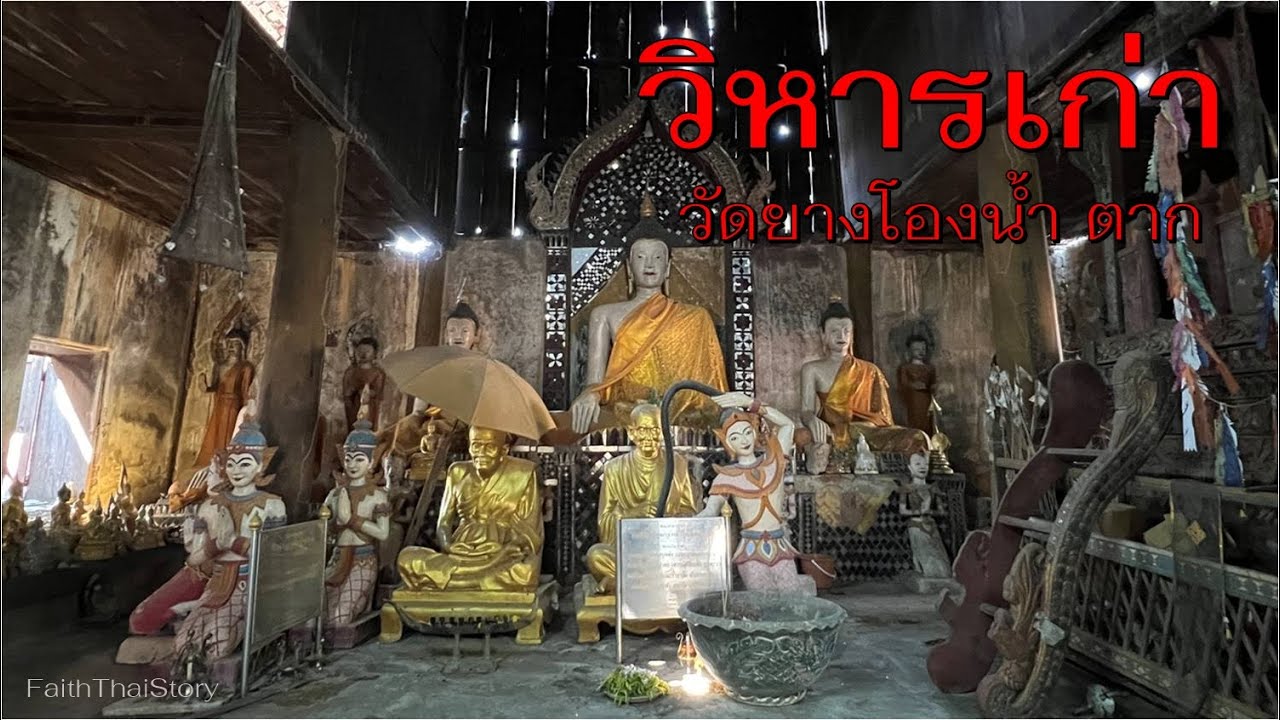
 Click to Access the Navigation Map GPS
Wat Yang Ong Nam Map
Recommend

 Art, Culture and Heritage
 Historical Sites and Monuments(2)
 Landmarks and Memorials(3)
 Art, Craft Centres, Tradition(6)
 Historic Homes and Cities(2)
 Educational Places
 Educational Gardens, Farm(2)
Temple(22)
Educational Gardens, Farm(2)
Temple(22)
 Other Sacred Sites(9)
 Suburban Living
 Village, Community(5)
 Local Market(3)
 Nature and Wildlife
 National Parks and Marine Reserves(9)
 Mountain (Doi)(9)
 Dam, Reservoir, Lake(14)
 Waterfalls(23)
 Hot Springs(2)
 Caves(6)
 River, Canal(1)
 Bays and Beaches(1)
 Islands(1)
 Other natural attractions(1)
 Entertainment and Agricultural
 Farms, Parks and Ecotourism(5)
 Outdoor and Adventure Activities(4)


