
lovethailand home >North Travel Attractions >Tak Travel Attractions >Muang Tak >Nong Bua Tai > Tha Le Waterfall
TL;DR: Tha Le Waterfall, Tak attractions : Nature and Wildlife, Waterfalls.

Tha Le Waterfall
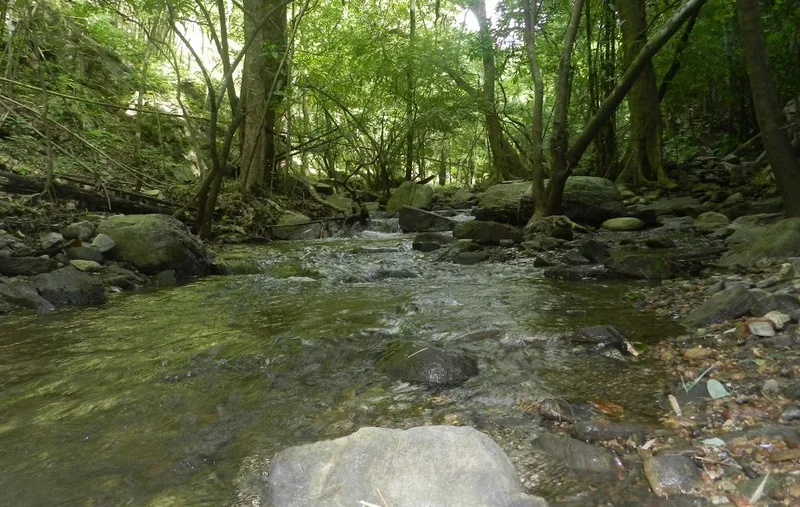
Open Days: Natural waterfall area; visitors should travel during daytime and check route conditions before departure
Opening Hours: Best visited from morning to early afternoon, and visitors should leave the area before dark
Tha Le Waterfall in Tak Province is a natural waterfall located in Ban Tha Le, Nong Bua Tai Subdistrict, Mueang Tak District, Tak Province. Although it is not far from Tak town, the waterfall still offers a quiet forest atmosphere, a local community setting, and a refreshing natural environment. The main charm of Tha Le Waterfall is the approach route, which feels like a short forest walk. Visitors pass bamboo groves, mixed woodland, sloping ground, small streams, rocks, and shaded natural areas before reaching the waterfall. This makes the destination suitable for travelers who enjoy simple nature, light trekking, quiet forest scenery, and eco-style travel close to Tak town.
The route to Tha Le Waterfall begins from the Tak-Mae Sot road. From the main road, turn left onto the Mae Sot-Na Bot road for about 5 km, then turn right toward the waterfall for another 7 km. After reaching the parking or stopping point, visitors need to continue on foot for more than 1 km through a natural trail with slopes and stream crossings. This final walking section is an important part of the experience. The beauty of Tha Le Waterfall is not only at the waterfall itself, but also along the trail, where visitors can observe the forest, listen to the stream, and experience the ecosystem at a slower pace.
Tha Le Waterfall is not a large waterfall and is not a highly commercialized tourist attraction with many facilities. Its value lies in its natural simplicity, quiet atmosphere, and relatively healthy surrounding ecosystem. Much of the area is covered by bamboo forest mixed with standing trees, creating shade and a cool feeling along the trail. As visitors walk deeper into the area, the sound of traffic gradually disappears and is replaced by the sound of flowing water, wind through bamboo leaves, insects, birds, and the natural rhythm of the forest. Even though the waterfall is modest in scale, the surrounding atmosphere feels fresh and peaceful.
The ecological character of Tha Le Waterfall is one of its most important features. The surrounding forest, stream, rocks, and shaded vegetation form a small but meaningful natural habitat. Along the route, visitors may notice birds, small animals, insects, and signs of life around the stream. This reflects the richness of the local ecosystem. For this reason, visitors should walk quietly, avoid disturbing wildlife, avoid collecting plants or stones, and never leave rubbish behind. Small actions can directly affect the balance of a natural waterfall environment.
For nature lovers, Tha Le Waterfall is best visited as a half-day trip rather than a rushed stop. Visitors should start in the morning or before noon to allow enough time for the drive, the walk in, photography, rest, and the return walk before the light becomes too low. Some parts of the trail can be slippery or steep, especially after rain or when the stream level is high. Travelers should check weather conditions, assess their physical readiness, avoid visiting alone, and inform someone about their travel plan before entering the area.
The atmosphere at the waterfall is suitable for people who want to slow down and spend quiet time in nature. The waterfall is not dramatic in size, but it gives visitors a close and personal sense of place. The stream, rocks, bamboo shade, and modest cascade create a calm forest setting. Travelers who appreciate peaceful, less-developed destinations may find Tha Le Waterfall more rewarding than heavily managed tourist sites. Its charm is subtle, natural, and local.
The best season to visit Tha Le Waterfall is generally from the rainy season to the early cool season, when the surrounding forest is greener and the stream has more water. However, safety should always come first. Visitors should avoid entering the area during heavy rain, after prolonged rainfall, or when there is any risk of flash flood. Since the walking route includes stream crossings and natural slopes, the trail may become slippery or unsafe during wet conditions. In the dry season, the trail may be easier to walk, but the waterfall flow may be lower. The best trip should balance scenery with safety.
For photography, Tha Le Waterfall is better suited to natural and documentary-style images rather than large landmark-style photos. Interesting subjects include the bamboo trail, stream crossings, rocks, green forest, filtered light through the canopy, and the waterfall itself. Morning light is usually softer and more comfortable for walking. In the afternoon, visitors should be careful with timing because walking out of the forest after the light fades is not recommended. Camera equipment should be kept light and protected from moisture, especially during the rainy season.
Tha Le Waterfall is also a good destination for eco-tourism because the Ban Tha Le area and its community forest are connected with local natural-resource care. A visit should therefore include respect for the forest, the stream, the walking trail, and the local community. Travelers should not treat the waterfall as only a photo spot. It is part of a broader landscape where villagers, forest, water, wildlife, and local tourism are connected. Responsible travel helps keep the area useful and beautiful for both local residents and future visitors.
The walking section is one of the defining experiences of Tha Le Waterfall. Unlike places where visitors can drive directly to a viewpoint, reaching this waterfall requires effort. Visitors walk uphill and downhill, cross small streams, and move through forested terrain. This gradual transition from road travel to foot travel makes the experience more meaningful. Along the way, visitors can notice small details such as bamboo leaves, water sounds, wet stones, forest scents, soil texture, and the changing light under the trees.
Families with children or elderly visitors should carefully consider the walking conditions before visiting. The trail includes slopes and stream crossings, so children should be supervised closely at all times. Elderly visitors or people who are not used to forest walking should avoid visiting after rain or when the ground is slippery. Walking sticks, shoes with good grip, and a slow pace can make the trip safer. Visitors should not rush, should take breaks when needed, and should turn back if the weather or trail conditions become unsafe.
Useful items to prepare include trekking shoes or sports shoes with good grip, drinking water, a hat, quick-drying clothing, mosquito repellent, a waterproof pouch for phones or cameras, light snacks, and a personal rubbish bag. Heavy bags are not recommended because parts of the trail are steep and may require balance. During the rainy season, a lightweight raincoat may be useful. If rain is continuous or there are signs of flash flood risk, the visit should be postponed.
The most important precautions involve trail and stream safety. Visitors should not leave the main path, separate from the group, climb slippery rocks, or enter water with unknown depth or strong current. If the water level rises suddenly or the sound of flowing water becomes unusually strong, visitors should move away from low areas and return to safer ground immediately. At natural waterfalls, safety should always be more important than photography or getting close to the cascade.
Getting There is most convenient by private car or rental car. From the Tak-Mae Sot road, turn left onto the Mae Sot-Na Bot road and continue for about 5 km. Then turn right toward the waterfall for about 7 km before reaching the stopping or parking point. From there, visitors continue on foot through a natural trail with slopes and stream crossings for more than 1 km. The final road section may vary by season, especially after rain, so drivers should proceed carefully and ask local residents or the local authority for current route conditions if needed.
From Tak town, Tha Le Waterfall is about 30 km away, making it suitable for a half-day trip. Visitors who leave early can walk to the waterfall, enjoy the forest, take photographs, rest, and return to town in the afternoon or early evening. The route can also be combined with nearby attractions such as Lan Sang National Park, Lan Sang Waterfall, Chao Pho Phra Wo Shrine, or the Doi Muser route depending on time, weather, and road conditions.
In terms of travel style, Tha Le Waterfall is best for visitors who like quiet nature, short forest walks, and less-developed places. It is not ideal for travelers who expect complete facilities or easy access directly to the waterfall. The appeal of the place comes from the forest, stream, walking trail, and the sense of reaching a natural place through personal effort. Eco-travelers, hikers, photographers, and people who enjoy peaceful local destinations will likely appreciate it most.
A practical one-day plan can begin in Tak town in the morning, followed by a drive to Tha Le Waterfall and a short forest walk during the cooler part of the day. After returning from the waterfall, visitors can have lunch in Nong Bua Tai or return to Tak town for more dining options. In the afternoon, they may continue to Lan Sang National Park or Lan Sang Waterfall if the weather and timing are suitable. For a slower trip, Tha Le Waterfall should be treated as the main activity of the morning, with the afternoon reserved for rest or an easy meal in town.
Food options near Tha Le Waterfall include local restaurants in Ban Tha Le, Nong Bua Tai Subdistrict, and Tak town. Because the waterfall area is not a full-service tourist zone, visitors should prepare drinking water and light snacks before entering the trail. After the visit, they can eat at local restaurants along the return route or choose from a wider range of restaurants in Tak town, including riverside restaurants, Thai restaurants, noodle shops, cafés, and family dining options.
Accommodation is most convenient in Tak town, where travelers can find hotels, resorts, riverside stays, and budget options. Staying in town is practical for visitors who want to combine Tha Le Waterfall with other Tak attractions, such as Lan Sang National Park, King Taksin Shrine, the Ping River suspension bridge, or the route toward Mae Sot. Travelers who prefer a quieter setting can also look for resorts around Mae Tho or the outskirts of Tak, depending on their onward travel plan.
Cleanliness is especially important at Tha Le Waterfall. The area is a natural ecosystem with a stream, forest, wildlife, and community-linked resources. Small pieces of rubbish such as snack wrappers, plastic bottles, tissues, food scraps, and plastic bags can harm wildlife, affect the stream, and reduce the natural quality of the place. Visitors should take all rubbish back with them, avoid washing containers with chemicals in the stream, and avoid damaging plants along the trail.
Tha Le Waterfall is therefore a worthwhile destination for travelers who want to experience nature near Tak town in a deeper way than a roadside viewpoint. The trail requires some physical effort, but that effort gives the destination more meaning. The bamboo forest, stream crossings, rocks, and modest waterfall create a calm and authentic outdoor experience. With proper preparation, respect for the area, and attention to safety, Tha Le Waterfall can add a rich natural and ecological dimension to a trip in Tak Province.
Overall, Tha Le Waterfall in Tak Province is a natural waterfall in Ban Tha Le, Nong Bua Tai Subdistrict, Mueang Tak District. It is known for its bamboo forest, stream landscape, small-scale forest trail, and peaceful ecosystem. Although the waterfall is not large, it offers a cool, shaded, and natural atmosphere suitable for hikers, eco-tourists, photographers, and travelers who enjoy quiet places. Visitors should travel during daylight, use proper walking shoes, check weather conditions, and keep the area clean so that this natural site remains healthy and enjoyable for future visitors.
| Name | Tha Le Waterfall |
| Location | Ban Tha Le, Nong Bua Tai Subdistrict, Mueang Tak District, Tak Province |
| Address | Ban Tha Le, Nong Bua Tai Subdistrict, Mueang Tak District, Tak Province 63000 |
| Approximate Coordinates | 16.7800, 99.0900 |
| Highlights | A natural waterfall near Tak town with a shaded forest atmosphere, rich ecosystem, bamboo trail, sloping path, and stream crossings before reaching the waterfall |
| Distinctive Features | A modest-sized waterfall in a quiet forest setting, suitable for light trekking, nature photography, and eco-style relaxation |
| Ecosystem | The surrounding area includes bamboo forest, standing trees, streams, rocks, and small wildlife such as birds and squirrels along some parts of the trail |
| Recommended Activities | Short forest walk, waterfall viewing, nature photography, ecosystem study, quiet relaxation, and half-day nature travel from Tak town |
| Travel Information | From the Tak-Mae Sot road, turn left onto the Mae Sot-Na Bot road for about 5 km, then turn right toward the waterfall for about 7 km. From the parking or stopping point, continue on foot through slopes and stream crossings for more than 1 km |
| Distance From Tak Town | About 30 km |
| Best Visiting Period | Morning to early afternoon, especially from the rainy season to early cool season when the forest is fresh and weather conditions are safe |
| Current Status | A natural waterfall in Ban Tha Le, Nong Bua Tai Subdistrict, Mueang Tak District, and a local eco-tourism site connected with the surrounding community forest |
| Open Days | Natural waterfall area; visitors should travel during daytime and check route conditions before departure |
| Opening Hours | Best visited from morning to early afternoon, and visitors should leave the area before dark |
| Facilities | Parking or stopping point before the walking trail, natural trail, and seasonal local shops or restaurants in nearby communities |
| Main Areas / Zones | Parking area, bamboo forest trail, sloping path, stream crossings, rocks, and waterfall area |
| Caretaker / Local Information Contact | Nong Bua Tai Subdistrict Municipality, Mueang Tak District, Tak Province |
| Main Contact Number | Nong Bua Tai Subdistrict Municipality, Tel. 055-897-077 |
| Official Website / Official Page | Nong Bua Tai Subdistrict Municipality website: www.nongbuatai.go.th |
| Nearby Tourist Attractions | 1. Ban Tha Le Community Forest, about 2 km 2. Lan Sang National Park, about 18 km 3. Lan Sang Waterfall, about 20 km 4. Chao Pho Phra Wo Shrine, about 22 km 5. New Doi Muser Market, about 35 km 6. King Taksin the Great Shrine, about 32 km 7. Rattanakosin 200 Years Bridge, about 33 km |
| Nearby Restaurants | 1. Khon Len Sen Tha Le, about 10 km, Tel. 093-131-9981 2. Tim Pa Tha Le, about 10 km 3. Wandee Restaurant, about 28 km, Tel. 090-965-2469 4. Chid Chol Restaurant, about 32 km, Tel. 055-512-366, 089-540-2546 5. Ping View Restaurant & Resort, about 33 km, Tel. 080-044-1133 6. Shabu Indy Tak, about 32 km, Tel. 055-032-161 |
| Nearby Accommodations | 1. Ping View Villa Resort, about 33 km, Tel. 080-044-1133 2. Ban Rai Chern Ma Resort, about 30 km, Tel. 055-893-030 3. Home Paradise Resort Tak, about 31 km, Tel. 055-880-189 4. Viang Tak Riverside Hotel, about 33 km, Tel. 055-512-507 5. Mae Ping Hotel, about 33 km, Tel. 055-511-807 6. Accommodations in Tak town, about 30-35 km |
Frequently Asked Questions (FAQ)
Q: Where is Tha Le Waterfall located?
A: Tha Le Waterfall is located in Ban Tha Le, Nong Bua Tai Subdistrict, Mueang Tak District, Tak Province, about 30 km from Tak town.
Q: How can visitors get to Tha Le Waterfall?
A: From the Tak-Mae Sot road, turn left onto the Mae Sot-Na Bot road for about 5 km, then turn right toward the waterfall for about 7 km. From the stopping point, visitors continue on foot through slopes and stream crossings for more than 1 km.
Q: What activities are suitable at Tha Le Waterfall?
A: Suitable activities include short forest walking, waterfall viewing, nature photography, ecosystem study, and quiet relaxation in a natural setting near Tak town.
Q: Is the trail to Tha Le Waterfall difficult?
A: The trail includes slopes and stream crossings, so visitors should wear suitable walking shoes, walk carefully, and avoid visiting during heavy rain or slippery conditions.
Q: When is the best time to visit Tha Le Waterfall?
A: The rainy season to early cool season is usually attractive because the forest is green and the stream has water, but visitors should only go when the weather is safe and there is no heavy rain or flash-flood risk.
Q: Is Tha Le Waterfall suitable for children and elderly visitors?
A: It is suitable only for visitors who can manage a natural walking trail. Children and elderly visitors should be closely supervised because the route includes slopes and stream crossings.
Q: Are there restaurants near Tha Le Waterfall?
A: There are local restaurants in Ban Tha Le and Nong Bua Tai, such as Khon Len Sen Tha Le, while more dining options are available in Tak town.
Q: What should visitors prepare before going to Tha Le Waterfall?
A: Visitors should prepare drinking water, trekking shoes, quick-drying clothing, mosquito repellent, a waterproof pouch for devices, and a personal rubbish bag to help keep the area clean.
 Category: ●Nature and Wildlife
 Group: ●Waterfalls
Last Update : 3 MonthAgo
 Last Update : 3 MonthAgo
 Click to Access the Navigation Map GPS
 Art, Culture and Heritage
 Historical Sites and Monuments(2)
 Landmarks and Memorials(3)
 Art, Craft Centres, Tradition(6)
 Historic Homes and Cities(2)
 Educational Places
 Educational Gardens, Farm(2)
 Places of Worship
 Temple(22)
 Other Sacred Sites(9)
 Suburban Living
 Village, Community(5)
 Local Market(3)
 National Parks and Marine Reserves(9)
 Mountain (Doi)(9)
 Dam, Reservoir, Lake(14)
Waterfalls(23)
Dam, Reservoir, Lake(14)
Waterfalls(23)
 Hot Springs(2)
 Caves(6)
 River, Canal(1)
 Bays and Beaches(1)
 Islands(1)
 Other natural attractions(1)
 Entertainment and Agricultural
 Farms, Parks and Ecotourism(5)
 Outdoor and Adventure Activities(4)


