
lovethailand home >North Travel Attractions >Tak Travel Attractions >Mae Sot >Mae Sot > Mae Sot District
TL;DR: Mae Sot District is located at Tak Province, western Thailand, on the Thai–Myanmar border, open Mae Sot District can be visited daily, hours The town area and general travel routes are accessible throughout the day.
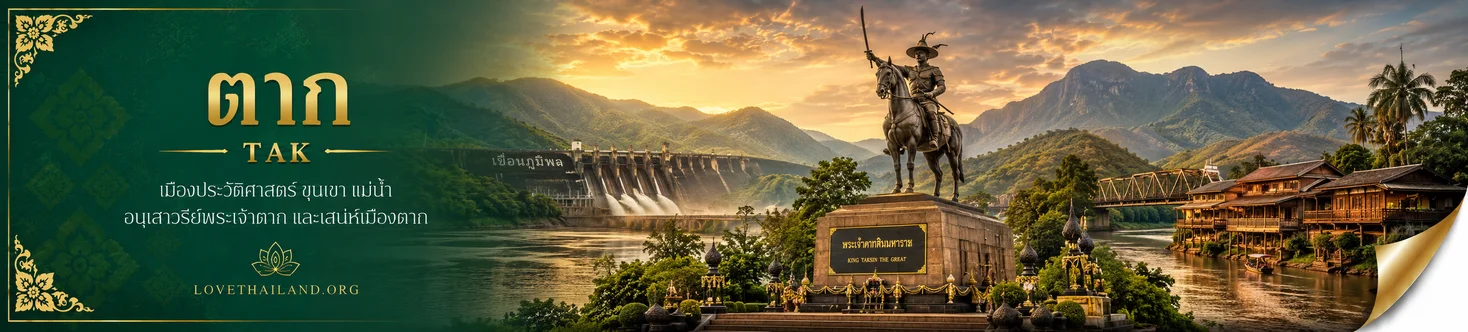
Mae Sot District
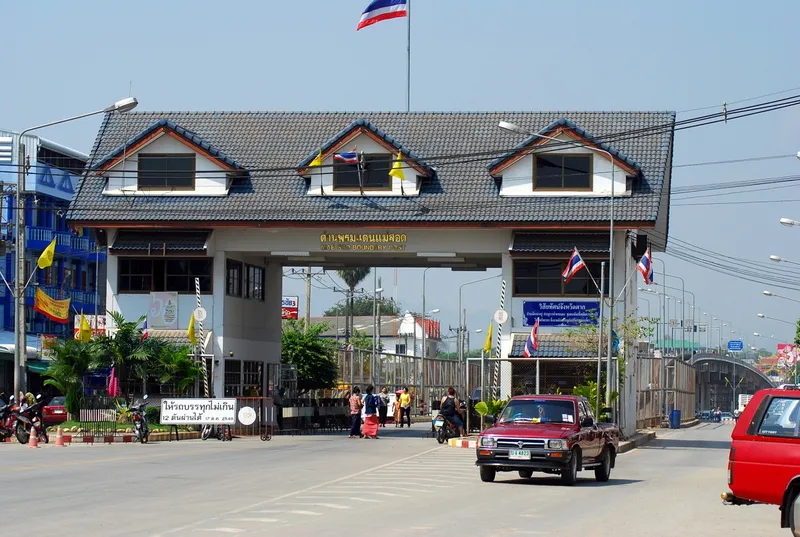
Open Days: Mae Sot District can be visited daily
Opening Hours: The town area and general travel routes are accessible throughout the day; opening hours vary by individual attraction
Mae Sot District in Tak Province is one of the most important border districts in western Thailand. Located near the Thai–Myanmar border, Mae Sot plays a major role in trade, transportation, culture, and tourism. It connects Thailand with Myawaddy in Myanmar through the Thai–Myanmar Friendship Bridge and serves as a lively gateway for goods, people, food, language, and cultural exchange. For travelers, Mae Sot is not simply a border town. It is a destination where mountain scenery, ethnic diversity, temples, markets, waterfalls, and cross-border commerce come together in a distinctive way.
Mae Sot was established as a district in 1898 and covers an area of approximately 1,986 square kilometers. Its landscape is mainly a valley between mountain ranges, with the Thanon Thong Chai Range on the Thai side and mountains across the border in Myanmar. This geography gives Mae Sot a unique character. The town sits in a natural basin surrounded by mountains, while roads, markets, communities, and border checkpoints connect it to both inland Thailand and Myanmar. The result is a place that feels both remote and highly connected at the same time.
Mae Sot is about 86 kilometers from Tak town. The main route is Highway 105, the Tak–Mae Sot road, a mountain road known for its curves, slopes, forested scenery, and cool highland atmosphere. The drive is one of the memorable parts of visiting Mae Sot. Along the way, travelers can stop at Doi Muser Hill Tribe Market, Chao Pho Phawo Shrine, Chao Pho Khun Sam Chon Shrine, and mountain viewpoints. Although the route is beautiful, drivers should be cautious because the road includes many curves and elevation changes.
The strongest identity of Mae Sot is its role as a border economic center. The district is close to the Thai–Myanmar Friendship Bridge, which links Tha Sai Luat in Mae Sot with Myawaddy in Myanmar. This location has made Mae Sot a major place for cross-border trade. Goods moving through the area include agricultural products, consumer goods, gems, clothing, household items, spices, and products from both Thailand and Myanmar. For visitors, this trade culture is most visible at Rim Moei Market and the areas near the border bridge.
Mae Sot is also highly diverse in terms of population and culture. The district is home to local Thai communities, highland and ethnic groups such as Karen, Hmong, Lisu, and Akha, as well as Myanmar people and families connected to both sides of the border. This diversity appears in everyday life: spoken languages, street food, temples, markets, dress, religious spaces, and local festivals. Travelers can find Thai food, Burmese food, Muslim food, roti, tea shops, Karen-influenced dishes, local cafés, and border-style markets within the same town.
Historically, Mae Sot has served as a frontier and trading area. Its position between mountain routes and the Moei River made it important for movement between the Thai interior and Myanmar. Over time, the district developed into a border town with strong economic functions. Today, it continues to grow through trade, transport, tourism, and its connection to Myawaddy. This gives Mae Sot a faster and more international rhythm than many other districts in Tak Province.
The Thai–Myanmar Friendship Bridge is one of Mae Sot’s key landmarks. It crosses the Moei River and connects Thailand with Myanmar. The area around the bridge is closely linked with border trade and travel. Even visitors who do not cross the border can still experience the atmosphere of the frontier by visiting Rim Moei Market and the surrounding area. This part of Mae Sot allows travelers to see how neighboring countries are connected through everyday commerce and movement.
Rim Moei Market is one of the most popular places to visit in Mae Sot. Located near the end of Highway 105 close to the Thai–Myanmar Friendship Bridge, the market is known for border products, gems, jade, jewelry, textiles, household goods, spices, souvenirs, and items from Myanmar. Many travelers come here to shop for gifts and experience the energy of border trade. A visit of 1 to 2 hours is recommended for those who want to walk through the market without rushing.
Mae Sot also has important temples and sacred places. Wat Thai Wattanaram is one of the most famous temples in the district, known for its Myanmar-influenced Buddhist art and architecture. It is an excellent place for visitors interested in borderland Buddhist culture. Other important places include King Naresuan the Great Shrine in Mae Sot and Chao Pho Phawo Shrine on the Tak–Mae Sot route. These sites add historical and spiritual depth to a Mae Sot itinerary.
Nature is another major part of Mae Sot travel. The district and nearby areas include waterfalls, hot springs, caves, and mountain landscapes. Namtok Pha Charoen is a well-known waterfall attraction in the area, while Mae Kasa Hot Spring offers a relaxing natural stop surrounded by greenery. Other places such as Thararak Waterfall and Blue Cave can also be included depending on the travel route. These natural sites show that Mae Sot is not only a market town but also a base for exploring western Tak’s landscape.
Mae Kasa Hot Spring is suitable for travelers who want a calmer nature experience. The area offers warm mineral water and a relaxed atmosphere, making it a good stop between cultural and market visits. Combining Mae Kasa with local food or nearby nature sites can make a Mae Sot trip more varied and less rushed.
Khao Tae Viewpoint and other elevated points around the district allow visitors to see the wider landscape of Mae Sot, including mountains, town areas, and border geography. These viewpoints help travelers understand why Mae Sot is both a natural basin and a strategic border district. The geography explains much of the town’s history, trade, and cultural diversity.
Food is one of the best ways to experience Mae Sot. The district offers more than standard Thai cuisine. Visitors can try Burmese-style dishes, roti, tea, local fish dishes, vegetarian food, garden restaurants, and highland-influenced ingredients. Borderline Tea Garden is known for its creative café and restaurant atmosphere, Khaomao-Khaofang Mae Sot is known for its garden setting, Pla Sod Mueang Chot is popular for fish dishes, and Roti Ong Nai Tamnan is a well-known breakfast stop. Eating in Mae Sot is part of understanding the town’s multicultural identity.
A good Mae Sot itinerary should allow at least 2 days and 1 night. On the first day, travelers can drive from Tak town along Highway 105, stop at Doi Muser, Chao Pho Phawo Shrine, and Chao Pho Khun Sam Chon Shrine, then enter Mae Sot. In the afternoon, they can visit Rim Moei Market and the Thai–Myanmar Friendship Bridge before staying overnight in town. On the second day, they can visit Wat Thai Wattanaram, King Naresuan Shrine, Namtok Pha Charoen, or Mae Kasa Hot Spring.
For a one-day visit, it is better to focus on the town and border area. A practical route includes Wat Thai Wattanaram, King Naresuan Shrine, Rim Moei Market, and the Thai–Myanmar Friendship Bridge. Travelers who prefer nature can choose Namtok Pha Charoen or Mae Kasa Hot Spring as the main stop and reduce time in the market. Mae Sot has many types of attractions, so the best plan depends on whether the traveler prefers markets, temples, food, culture, or nature.
Getting There from Tak town is most convenient by private car or rental car via Highway 105. The distance is about 86 kilometers. The road passes through mountains and has many curves, so travelers should check brakes, tires, lights, and fuel before departure. Daytime driving is recommended, especially for those unfamiliar with the route. Public transport is also available from Tak to Mae Sot, and local transport can be used within Mae Sot town and to the border market area.
Drivers should allow more time than the distance suggests because the mountain road should not be driven too fast. Stops at Doi Muser Hill Tribe Market or Chao Pho Phawo Shrine can make the journey safer and more enjoyable. During the rainy season, extra caution is needed because the road may be slippery and visibility may be reduced. The cool season is one of the most pleasant times to visit because the mountain air is comfortable and the scenery is especially attractive.
When shopping in border markets, visitors should check prices carefully, compare product quality, and buy from reliable shops. This is especially important for gems and jewelry. Visitors should also follow local rules near the border area and avoid taking photographs where signs prohibit photography. Anyone planning to cross into Myanmar should check official border and document requirements before traveling.
Mae Sot is suitable for many types of travelers. Cultural travelers will enjoy its ethnic diversity and borderland identity. Food travelers will find a wide range of Thai, Myanmar, and local dishes. Nature travelers can use Mae Sot as a base for waterfalls, hot springs, and mountain routes. Travelers interested in economy and border trade will find Mae Sot one of the clearest examples of a Thai border town shaped by commerce and international connection.
Accommodation in Mae Sot ranges from standard hotels and budget hotels to small resorts and garden-style stays. Travelers who want convenience should stay in town, where restaurants, shops, Mae Sot Airport, and the route to Rim Moei Market are easy to access. Those who prefer a quieter atmosphere may choose accommodation slightly outside the town center. For multi-day trips, staying near main roads can save travel time.
Mae Sot’s economic role is important not only for Tak Province but also for western Thailand. Its growth is tied to border trade, logistics, investment, labor movement, and transport links with Myanmar. This makes the district busier and more dynamic than many ordinary travel destinations. Trucks, markets, hotels, traders, travelers, and local residents all contribute to the town’s constant movement.
At the same time, Mae Sot remains culturally distinctive. Temples, food markets, ethnic communities, and local neighborhoods preserve strong local identity even as the town grows. This balance between old and new is one of the reasons travelers often find Mae Sot memorable. It is a modern border economy, but it still carries the atmosphere of a local town shaped by mountains, faith, food, and people from many backgrounds.
For photography, Mae Sot offers a wide range of subjects: Rim Moei Market, the Thai–Myanmar Friendship Bridge, Wat Thai Wattanaram, local food shops, mountain roads, and border-town street scenes. Visitors should photograph respectfully, especially in markets, temples, and border areas. Asking permission before photographing people is recommended.
Mae Sot can also serve as a base for exploring western Tak. From town, travelers can continue to Phop Phra, Namtok Pha Charoen National Park, Mae Ramat, Doi Muser, or return to Tak town through the mountain route. Staying in Mae Sot allows visitors to combine border markets, temples, nature, and food without moving accommodation every day.
Overall, Mae Sot District is one of the most complete destinations in Tak Province. It combines economy, border trade, nature, culture, food, and everyday life in one place. It is lively but local, international but still rooted in its own identity. For travelers who want to understand Tak more deeply, Mae Sot is essential because it shows how mountains, borders, markets, temples, and multicultural communities can shape a town.
A visit to Mae Sot should include more than one type of experience. Travelers can shop at Rim Moei Market, visit Wat Thai Wattanaram, see the Thai–Myanmar Friendship Bridge, try Burmese and local food, explore waterfalls or hot springs, and learn how people from different cultures live together in a border district. Mae Sot is therefore not only a place to pass through. It is a destination that reveals one of the most distinctive sides of western Thailand.
| Name | Mae Sot District |
| Location | Tak Province, western Thailand, on the Thai–Myanmar border |
| Main Administrative Address | Mae Sot District Office, Prasat Withi Road, Mae Sot Subdistrict, Mae Sot District, Tak Province 63110 |
| Highlights | Thai–Myanmar border economy, Rim Moei Market, Thai–Myanmar Friendship Bridge, Wat Thai Wattanaram, Namtok Pha Charoen, border food culture, and multicultural communities |
| History | Mae Sot was established as a district in 1898 and has developed into a major Thai border trade center. The district covers approximately 1,986 square kilometers. |
| Geography | A valley area surrounded by mountains, with the Thanon Thong Chai Range on the Thai side and mountain ranges across the border in Myanmar |
| Cultural Features | A multicultural district with local Thai communities, ethnic groups such as Karen, Hmong, Lisu, and Akha, and Myanmar communities reflected in food, language, dress, temples, and border markets |
| Travel Information | From Tak town, follow Highway 105 for about 86 km. The route passes through mountains and curves, so careful daytime driving is recommended. |
| Current Status | A major border economic district and a destination for culture, nature, food, and Thai–Myanmar border travel |
| Open Days | Mae Sot District can be visited daily |
| Opening Hours | The town area and general travel routes are accessible throughout the day; opening hours vary by individual attraction |
| Caretaker / Information Contact | Mae Sot District Office, Tel. 055-531-077 |
| Tourism Information | Tourism Authority of Thailand, Tak Office, Tel. 055-514-341 to 055-514-343 |
| Nearby Tourist Attractions | 1. King Naresuan the Great Shrine, Mae Sot, about 1 km 2. Wat Thai Wattanaram, about 4 km 3. Rim Moei Market, about 7 km 4. Thai–Myanmar Friendship Bridge No. 1, about 7 km 5. Mae Kasa Hot Spring, about 20 km 6. Namtok Pha Charoen, about 38 km 7. Chao Pho Phawo Shrine, about 11 km 8. Chao Pho Khun Sam Chon Shrine, about 19 km |
| Nearby Restaurants | 1. Borderline Tea Garden, about 1 km, Tel. 055-546-584, 093-719-6598 2. Roti Ong Nai Tamnan Mae Sot, about 1 km, Tel. 085-610-0622 3. Khaomao-Khaofang Mae Sot, about 3 km, Tel. 065-242-2248, 081-443-8141 4. Pla Sod Mueang Chot Restaurant, about 7 km, Tel. 089-839-1747 5. The Happy Café, about 6 km, Tel. 092-591-2777 |
| Nearby Accommodations | 1. B2 Mae Sot Boutique & Budget Hotel, about 2 km, Tel. 1328, 055-030-515 2. HOP INN Mae Sot Building A, about 2 km, Tel. 02-080-2222 3. Irawadee Resort, about 3 km, Tel. 055-535-430 4. Centara Life Hotel Mae Sot, about 3 km, Tel. 055-532-601 to 055-532-608 5. J2 Hotel Maesot, about 3 km, Tel. 055-536-161, 085-090-4111 |
Frequently Asked Questions (FAQ)
Q: Where is Mae Sot District located?
A: Mae Sot District is located in Tak Province in western Thailand, along the Thai–Myanmar border and opposite Myawaddy in Myanmar.
Q: Why is Mae Sot important?
A: Mae Sot is a major border trade and economic center, connected to Myanmar through Rim Moei Market and the Thai–Myanmar Friendship Bridge.
Q: How far is Mae Sot from Tak town?
A: Mae Sot is about 86 km from Tak town via Highway 105, a scenic mountain road with many curves and viewpoints.
Q: How many days are recommended for visiting Mae Sot?
A: A 2-day, 1-night trip is recommended for visiting border markets, temples, natural attractions, and local restaurants. A 1-day trip is possible if focusing on the town and border area.
Q: What are the main attractions in Mae Sot?
A: Major attractions include Rim Moei Market, the Thai–Myanmar Friendship Bridge, Wat Thai Wattanaram, King Naresuan the Great Shrine, Mae Kasa Hot Spring, Namtok Pha Charoen, and Chao Pho Phawo Shrine.
Q: What makes Mae Sot culturally unique?
A: Mae Sot is home to local Thai communities, ethnic groups such as Karen, Hmong, Lisu, and Akha, and Myanmar communities, creating a distinctive mix of languages, food, temples, markets, and traditions.
Q: What should travelers be careful about when driving to Mae Sot?
A: Travelers should drive carefully on Highway 105 because it is a mountain road with many curves and slopes. Vehicle brakes, tires, lights, and fuel should be checked before departure.
Q: Where should travelers buy souvenirs in Mae Sot?
A: Rim Moei Market is the most popular place for souvenirs, including gems, jade, jewelry, textiles, spices, Myanmar products, and border-market goods.
 Category: ●Suburban Living
 Group: ●Village, Community
Last Update : 4 MonthAgo
 Last Update : 4 MonthAgo
 Click to Access the Navigation Map GPS
 Art, Culture and Heritage
 Historical Sites and Monuments(2)
 Landmarks and Memorials(3)
 Art, Craft Centres, Tradition(6)
 Historic Homes and Cities(2)
 Educational Places
 Educational Gardens, Farm(2)
 Places of Worship
 Temple(22)
 Other Sacred Sites(9)
Village, Community(5)
Other Sacred Sites(9)
Village, Community(5)
 Local Market(3)
 Nature and Wildlife
 National Parks and Marine Reserves(9)
 Mountain (Doi)(9)
 Dam, Reservoir, Lake(14)
 Waterfalls(23)
 Hot Springs(2)
 Caves(6)
 River, Canal(1)
 Bays and Beaches(1)
 Islands(1)
 Other natural attractions(1)
 Entertainment and Agricultural
 Farms, Parks and Ecotourism(5)
 Outdoor and Adventure Activities(4)


