
lovethailand home >North Travel Attractions >Tak Travel Attractions >Ban Tak >Ko Taphao > Yutthahatthi Pagoda (Chedi King Ramkhamhaeng)
TL;DR: Yutthahatthi Pagoda (Chedi King Ramkhamhaeng) is located at Doi Chang, Ko Taphao Subdistrict, Ban Tak District, Tak Province, Approximately 200 Meters From Wat Phra Borommathat Ban Tak, open Daily, hours Open For Exterior Viewing Throughout The Day.
Yutthahatthi Pagoda (Chedi King Ramkhamhaeng)
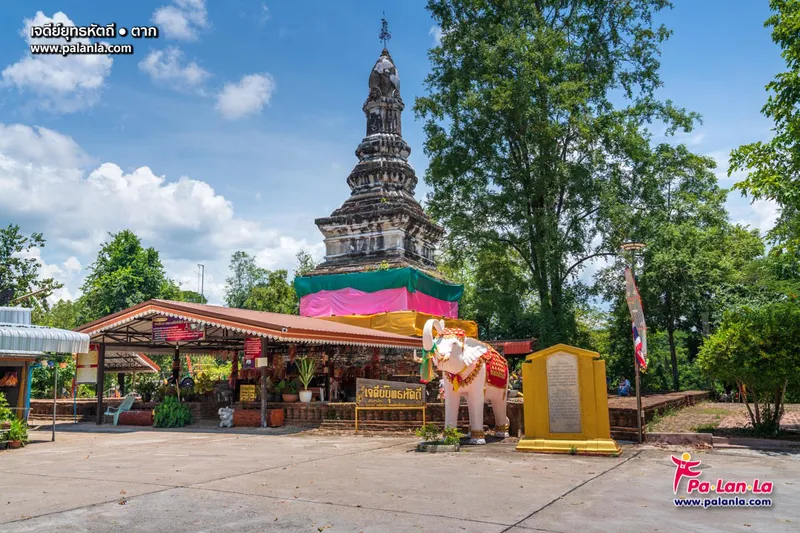
Open Days: Daily
Opening Hours: Open For Exterior Viewing Throughout The Day
Yutthahatthi Chedi, also known as King Ramkhamhaeng The Great Commemorative Chedi, is an important ancient monument in Tak Province. It stands on Doi Chang, Ko Taphao Subdistrict, Ban Tak District, approximately 200 meters from Wat Phra Borommathat Ban Tak. Local people also call it “Chedi Chon Chang” or the Elephant Duel Chedi because it is associated with the story of King Ramkhamhaeng The Great and his elephant duel with Khun Sam Chon, the ruler of Chot. The chedi is a Sukhothai-style brick-and-plaster structure over 700 years old, with a base about 12 meters wide and a height of about 16 meters. Its square indented body and lotus-bud-shaped top make it an important site for learning about Sukhothai art, local memory, and the historical identity of Tak.
Yutthahatthi Chedi, or King Ramkhamhaeng The Great Commemorative Chedi, is an ancient monument in Tak Province. It is located on Doi Chang in Ko Taphao Subdistrict, Ban Tak District. Local residents commonly call it “Chedi Chon Chang,” meaning the Elephant Duel Chedi, because the site is associated with the historical narrative of King Ramkhamhaeng The Great’s elephant duel with Khun Sam Chon, the ruler of Chot, during the Sukhothai period. The chedi stands approximately 200 meters from Wat Phra Borommathat Ban Tak, making it easy to include both places in the same cultural and historical travel route.
Doi Chang is a small earthen hill located slightly north of Doi Phra That. Although it is not a large mountain, it holds considerable historical and cultural importance because it is home to an ancient chedi believed to be more than 700 years old. Yutthahatthi Chedi is therefore not merely an old structure standing alone on a hill. It is an architectural trace that reflects power, memory, and the commemorative traditions of the Sukhothai period, one of the most important eras in Thai history.
Ban Tak District has long been important to the history of Tak because of its connection with ancient travel routes, the Ping River basin, and old communities. Tak was an old frontier town associated with military movement, trade, and the expansion of political influence in earlier periods. The presence of Yutthahatthi Chedi and Wat Phra Borommathat Ban Tak in the same area shows that this locality once held significance in religion, politics, and local historical memory.
Architecturally, Yutthahatthi Chedi is a Sukhothai-style monument built of brick and plaster. The base is approximately 12 meters wide and the structure is about 16 meters high. The main body is a square form with indented corners, rising upward into a continuous indented square shaft. The top takes the form of a lotus-bud-shaped finial, and the summit is crowned with a tiered umbrella. These features link the chedi to Sukhothai artistic forms found in several ancient cities, including Sukhothai, Si Satchanalai, and other areas influenced by Sukhothai art in the Lower North.
The beauty of Yutthahatthi Chedi does not lie in flawless preservation, but in the ancient form that still retains its original character. Although the chedi has undergone repairs over time, its main structure has not lost its original shape. Visitors can still clearly see the Sukhothai-style composition: the base, the main body, the indented corners, and the lotus-bud-shaped top. These features make the monument distinct from Lanna, Ayutthaya, or Rattanakosin-period chedis found in other parts of Thailand.
The base of the chedi is decorated with stucco lion-face motifs. The lion face on the northern side remains more complete than those on the other sides, while the other faces show signs of deterioration and repair. These stucco details are important artistic elements that allow visitors to appreciate the craftsmanship of ancient artisans and the decorative concepts used in early chedi construction. Although some details have been damaged, the surviving portions still carry significant historical and artistic value, reflecting the refinement of the craftsmen and the intention to make the monument dignified and beautiful.
Much of the chedi surface is covered with moss, algae, and traces of natural weathering. This condition is common for outdoor ancient monuments exposed to sunlight, rain, humidity, and seasonal changes over centuries. These marks give the chedi an aged and solemn atmosphere, while also showing why the conservation of ancient monuments must be handled carefully. Before the annual Wat Phra That Ban Tak worship festival, the area around the chedi is usually cleaned and maintained so that it is ready for visitors and participants in the local ceremony.
The name “Yutthahatthi Chedi” refers to an elephant duel, a form of battle mounted on war elephants that occupies an important place in Thai historical memory. The name “King Ramkhamhaeng The Great Commemorative Chedi” emphasizes the honor given to King Ramkhamhaeng The Great, the important monarch of the Sukhothai Kingdom. The local name “Chedi Chon Chang” is easier to remember and directly reflects the oral tradition of the community. These 3 names give the same chedi multiple layers of meaning: ancient monument, Sukhothai art, historical memorial, and local narrative.
The story of King Ramkhamhaeng The Great’s elephant duel with Khun Sam Chon, the ruler of Chot, is deeply significant in the memory of Tak. According to historical narratives, during the reign of King Si Inthrathit of Sukhothai, Khun Sam Chon led forces into the area. Prince Ramkhamhaeng, then the royal son, fought an elephant duel against Khun Sam Chon and emerged victorious. This event became one of the stories demonstrating his courage, royal ability, and leadership before he later ascended the throne.
Although the question of whether King Ramkhamhaeng The Great personally built this chedi, or whether it was constructed later in relation to the memory of the event, is not fully confirmed by direct evidence in every detail, local belief and the names used by villagers have strongly connected Yutthahatthi Chedi with the elephant duel. From the perspective of cultural tourism, the value of the site does not rest only on documentary proof. It also lies in being a place where the community continues to tell historical stories, preserve memory, and connect itself with the past of Tak.
Visitors to Yutthahatthi Chedi should therefore view the site both as an ancient monument and as a landscape of memory. The walk up to the chedi on Doi Chang does not take long, but it helps visitors see the relationship between Doi Chang, Doi Phra That, Wat Phra Borommathat Ban Tak, and the surrounding landscape of Ban Tak District. From this point, it becomes clearer why the area was suitable for religious and commemorative structures. It is close to the community, near travel routes, and slightly elevated, giving the site visual prominence.
The atmosphere around the chedi is quiet, simple, and less crowded than major tourist attractions. Visitors interested in history and art can spend time examining the details of the monument closely: the wide base, the square indented body, the lotus-bud-shaped top, the stucco lion-face motifs, and the aged surface of brick and plaster that has endured for hundreds of years. Viewing an ancient monument like this should be done slowly, because its importance is not only in its size but also in small traces that reveal the past.
Yutthahatthi Chedi is especially suitable to visit together with Wat Phra Borommathat Ban Tak because the 2 sites are very close to each other. Wat Phra Borommathat Ban Tak is an important temple of Ban Tak District and a spiritual center for local people. Many visitors come to pay respect to Phra Borommathat and Luang Pho Tanjai inside the temple, then continue to Yutthahatthi Chedi nearby. This route allows visitors to experience religion, art, and history in the same area.
Wat Phra Borommathat Ban Tak is also associated with the annual worship festival of Phra That Ban Tak, an important local tradition. Before the festival, the surrounding area is cleaned and prepared, including the area around Yutthahatthi Chedi. The image of the community helping maintain the site before the ceremony shows that the ancient monument is not merely an old structure left behind. It remains connected with local people through care, cleaning, festivals, and the return of visitors to their cultural roots.
In terms of art history, Yutthahatthi Chedi is a useful example for those who wish to study Sukhothai-style chedis outside the old city of Sukhothai itself. The base form and lotus-bud top show the artistic influence that spread from the center of the Sukhothai Kingdom to important towns in the region. The presence of such a chedi in Ban Tak reflects the cultural, religious, and political networks of the Sukhothai period.
From the perspective of landscape, Yutthahatthi Chedi is positioned in relation to Doi Phra That and the community around Wat Phra Borommathat Ban Tak. Doi Chang is not a very high hill, so it is easier to access than a large mountain, yet it is elevated enough to serve as a place of faith and memory. Building a chedi on such a rise affects how people perceive the site, making it slightly separated from ordinary ground and suitable as a place for commemorating an important event or for spiritual reflection.
Visitors should behave respectfully when visiting Yutthahatthi Chedi because it is an ancient monument and a place respected by local people. Do not climb on the chedi. Do not scratch, write on, or unnecessarily touch the stucco details. Visitors should also be careful when walking around the monument, especially after rain, when the ground may be slippery. Photography is allowed, but visitors should avoid poses or actions that are inappropriate for a sacred and historical site.
Important details to observe include the overall Sukhothai-style form of the chedi, the square indented main body, the lotus-bud-shaped top, traces of the umbrella finial, the stucco lion face on the northern side, and evidence of repairs in different parts of the structure. Observing these details helps make the visit more meaningful than simply walking past or taking photographs. It allows visitors to better understand the artistic form and history of the monument.
Getting There to Yutthahatthi Chedi is most convenient by private car or rental car. From Tak city, travelers can use Phahonyothin Road or the main route toward Ban Tak District, then continue to Ko Taphao Subdistrict and Wat Phra Borommathat Ban Tak. Once at the temple, it is easy to continue to Yutthahatthi Chedi, located approximately 200 meters away. This route is suitable for a half-day trip from Tak city or as part of a wider itinerary covering Ban Tak District and the Ping River area.
Travelers from Bangkok or the Central Region can use Phahonyothin Road toward Tak Province, then enter Ban Tak District before reaching Tak city, or visit Ban Tak after touring the city. Those coming from Chiang Mai, Lampang, or Kamphaeng Phet can use the main routes into Tak and connect to Ban Tak District. Visitors using public transport should get off at Tak Bus Terminal or in Ban Tak town, then continue by local transport, hired vehicle, or rental car to Wat Phra Borommathat Ban Tak and Yutthahatthi Chedi.
The best time to visit is in the morning or late afternoon, when the weather is not too hot and the natural light is suitable for viewing an ancient monument. The morning offers a calm atmosphere, ideal for paying respect at Wat Phra Borommathat Ban Tak before walking to Yutthahatthi Chedi at a relaxed pace. Late afternoon is suitable for photography and enjoying the surroundings. If visiting near the annual Wat Phra That Ban Tak worship festival, visitors may see the area being cleaned and prepared, along with a more active community atmosphere.
Yutthahatthi Chedi is suitable for several types of visitors. The first group includes those interested in Sukhothai history and the story of King Ramkhamhaeng The Great. The second group includes those interested in ancient chedi architecture and stucco art. The third group includes visitors who come to worship at Wat Phra Borommathat Ban Tak and want to see a nearby historical site. Families can also use the site as an outdoor learning space, telling children about the elephant duel, the ruler of Chot, and the importance of Tak during the Sukhothai period.
A visit to Yutthahatthi Chedi can be combined with nearby attractions for a worthwhile route. Start by paying respect at Wat Phra Borommathat Ban Tak, then visit Yutthahatthi Chedi on Doi Chang. After that, continue to the old Ban Tak area or return to Tak city to visit King Taksin The Great Shrine, the Four Great Kings City Pillar Shrine, Trok Ban Chin, and the Rattanakosin Bicentennial Bridge. This route allows visitors to see Tak through the lenses of the Sukhothai period, old towns, faith, and riverside community life.
For travelers with 1 day in Tak Province, a good plan is to begin in Ban Tak District in the morning by visiting Wat Phra Borommathat Ban Tak and Yutthahatthi Chedi. Then have lunch in Ban Tak or near the Ping River. In the afternoon, enter Tak city to pay respect at King Taksin The Great Shrine and walk through Trok Ban Chin. End the day with photos at the Tak suspension bridge or dinner in the city. This route is not too rushed and offers a well-rounded understanding of Tak.
The value of Yutthahatthi Chedi lies in its role as a connection between national history, local history, and ancient art. The story of King Ramkhamhaeng The Great and Khun Sam Chon gives the place a heroic dimension. The Sukhothai-style architecture gives it artistic value. Meanwhile, community care and its relationship with the Wat Phra That Ban Tak worship festival keep the chedi connected to the lives of local people rather than separating it as an isolated ruin.
Overall, Yutthahatthi Chedi, or the Elephant Duel Chedi, is a place worth visiting when traveling to Ban Tak District. It is not a large monument, but it carries deep meaning through Sukhothai history, the memory of King Ramkhamhaeng The Great, lotus-bud-style chedi architecture, and its close relationship with Wat Phra Borommathat Ban Tak. Visitors can experience the quiet atmosphere of Doi Chang, see traces of time on the ancient chedi, and understand that Tak has a deeper historical identity than merely being a transit province or a route toward Northern Thailand.
Visiting Yutthahatthi Chedi is therefore more than viewing an old chedi. It is a journey into a landscape of memory shaped by names, stories, ancient architecture, and local traditions. Standing before the chedi, visitors can see both the architectural traces of the Sukhothai period and the power of stories that the community continues to preserve. Historical tourism of this kind gives Tak greater meaning and allows visitors to connect the past with the present through a real place.
| Place Name | Yutthahatthi Chedi Or King Ramkhamhaeng The Great Commemorative Chedi |
| Local Name | Chedi Chon Chang, Or Elephant Duel Chedi |
| Location | Doi Chang, Ko Taphao Subdistrict, Ban Tak District, Tak Province, Approximately 200 Meters From Wat Phra Borommathat Ban Tak |
| Address | Ko Taphao Subdistrict, Ban Tak District, Tak Province 63120 |
| Highlights | A Sukhothai-Period Ancient Monument Over 700 Years Old, Associated With The Story Of King Ramkhamhaeng The Great’s Elephant Duel With Khun Sam Chon, The Ruler Of Chot |
| History / Period / Era | An Ancient Sukhothai-Style Chedi Over 700 Years Old, Believed Locally To Be Connected With The Commemoration Of King Ramkhamhaeng The Great’s Elephant Duel |
| Architecture | A Brick-And-Plaster Chedi With A Base About 12 Meters Wide And A Height Of About 16 Meters. The Main Body Is Square With Indented Corners, Rising To A Lotus-Bud-Shaped Top And A Tiered Umbrella Finial. |
| Important Artistic Details | The Base Is Decorated With Stucco Lion-Face Motifs. The Northern Lion Face Remains More Complete Than The Others, While Other Sides Show Traces Of Damage And Repair. |
| Significance | An Important Ancient Monument Of Ko Taphao Subdistrict And Ban Tak District, Reflecting Sukhothai Art, Historical Narrative, And Local Memory Connected With King Ramkhamhaeng The Great |
| Traditions / Related Activities | The Area Around The Chedi Is Cleaned And Prepared Before The Wat Phra That Ban Tak Worship Festival. Local Ceremonies Also Include Worship Of King Ramkhamhaeng The Great And Respect Paid To Yutthahatthi Chedi In Ko Taphao Subdistrict. |
| Getting There | From Tak City Or Ban Tak District, Travel To Wat Phra Borommathat Ban Tak In Ko Taphao Subdistrict, Then Continue To Yutthahatthi Chedi, Located About 200 Meters From The Temple. Private Car, Rental Car, Or Local Transport Is Recommended. |
| Current Status | An Ancient Monument And Historical Attraction In Ban Tak District, Open For Visitors To View The Exterior And Study Sukhothai-Style Architectural Traces |
| Open Days | Daily |
| Opening Hours | Open For Exterior Viewing Throughout The Day |
| Admission Fee | Free Admission |
| Visitor Guidelines | Do Not Climb On The Chedi, Do Not Write On Or Touch Stucco Details Unnecessarily, Keep The Area Clean, And Visit The Ancient Monument With Respect. |
| Administrator / Information Contact | Ko Taphao Subdistrict Administrative Organization, Tel. 055-898-232 |
| Main Contact Number | 055-898-232 |
| Nearby Tourist Attractions | 1. Wat Phra Borommathat Ban Tak, Approximately 0.2 Km. 2. Ancient Ban Tak Town, Approximately 0.5 Km. 3. Luang Pho Tanjai At Wat Phra Borommathat Ban Tak, Approximately 0.2 Km. 4. Ban Tak Bridge / Ping River Area, Ban Tak, Approximately 5 Km. 5. King Taksin The Great Shrine, Approximately 33 Km. 6. Trok Ban Chin, Approximately 34 Km. |
| Nearby Restaurants | 1. Yui Ahan Tam Sang, Approximately 1 Km. 2. Khrua Lung Cha Pa Nong, Approximately 1 Km. 3. Marony Cafe, Approximately 1 Km. Tel. 087-147-4831 4. Caffeine Cafe Ban Tak, Approximately 5 Km. 5. MindsetCafe.Tak, Approximately 5 Km. 6. Wattana Hip Restaurant, Approximately 5 Km. |
| Nearby Accommodations | 1. Bantak House, Approximately 5 Km. 2. Suksamranbantak, Approximately 7 Km. 3. White House Hotel, Approximately 25 Km. Tel. 055-514-444, 099-234-7774 4. B-Rich Hotel, Approximately 30 Km. 5. Viang Tak Riverside Hotel, Approximately 33 Km. Tel. 055-512-507, 081-887-2905 6. Suansin Garden Hotel, Approximately 33 Km. Tel. 055-893-444 |
Frequently Asked Questions (FAQ)
Q: Where Is Yutthahatthi Chedi Located?
A: Yutthahatthi Chedi is located on Doi Chang, Ko Taphao Subdistrict, Ban Tak District, Tak Province, approximately 200 meters from Wat Phra Borommathat Ban Tak.
Q: What Other Names Is Yutthahatthi Chedi Known By?
A: Yutthahatthi Chedi is also known as King Ramkhamhaeng The Great Commemorative Chedi. Local people commonly call it Chedi Chon Chang, or the Elephant Duel Chedi.
Q: How Is Yutthahatthi Chedi Connected With King Ramkhamhaeng The Great?
A: Local people believe the chedi is connected with the story of King Ramkhamhaeng The Great’s elephant duel with Khun Sam Chon, the ruler of Chot. This is why it is locally called the Elephant Duel Chedi and is associated with King Ramkhamhaeng The Great.
Q: What Architectural Style Is Yutthahatthi Chedi?
A: Yutthahatthi Chedi is a Sukhothai-style brick-and-plaster chedi. It has a base about 12 meters wide, a height of about 16 meters, a square indented main body, and a lotus-bud-shaped top.
Q: How Old Is Yutthahatthi Chedi?
A: Yutthahatthi Chedi is an ancient monument from the Sukhothai period and is believed to be more than 700 years old.
Q: Is There An Admission Fee To Visit Yutthahatthi Chedi?
A: No. Admission is free. Visitors can view the exterior and study the architectural remains, but should keep the area clean and avoid climbing on the chedi.
Q: Which Nearby Site Should Be Visited Together With Yutthahatthi Chedi?
A: Wat Phra Borommathat Ban Tak and Luang Pho Tanjai are the best nearby places to visit together with Yutthahatthi Chedi because they are very close. Visitors can then continue to Ancient Ban Tak Town, the Ping River area, or Tak city.
Q: How Can Visitors Travel To Yutthahatthi Chedi?
A: From Tak city or Ban Tak District, travel to Wat Phra Borommathat Ban Tak in Ko Taphao Subdistrict. Yutthahatthi Chedi is located about 200 meters from the temple and is best reached by private car, rental car, or local transport.
 Category: ●Places of Worship
 Group: ●Other Sacred Sites
Last Update : 4 MonthAgo
 Last Update : 4 MonthAgo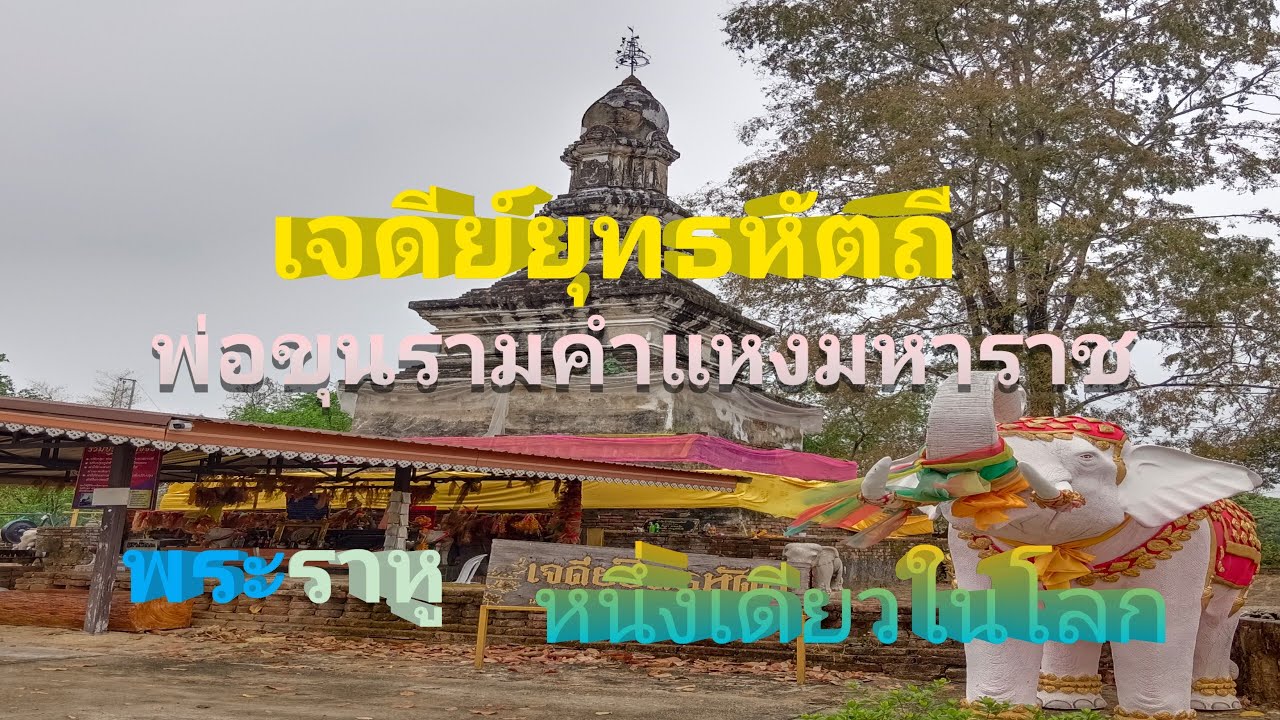
 Click to Access the Navigation Map GPS
Yutthahatthi Pagoda (Chedi King Ramkhamhaeng) Map
Recommend

 Art, Culture and Heritage
 Historical Sites and Monuments(2)
 Landmarks and Memorials(3)
 Art, Craft Centres, Tradition(6)
 Historic Homes and Cities(2)
 Educational Places
 Educational Gardens, Farm(2)
 Temple(22)
Other Sacred Sites(9)
Temple(22)
Other Sacred Sites(9)
 Suburban Living
 Village, Community(5)
 Local Market(3)
 Nature and Wildlife
 National Parks and Marine Reserves(9)
 Mountain (Doi)(9)
 Dam, Reservoir, Lake(14)
 Waterfalls(23)
 Hot Springs(2)
 Caves(6)
 River, Canal(1)
 Bays and Beaches(1)
 Islands(1)
 Other natural attractions(1)
 Entertainment and Agricultural
 Farms, Parks and Ecotourism(5)
 Outdoor and Adventure Activities(4)


