
lovethailand home >North Travel Attractions >Tak Travel Attractions >Muang Tak >Mae Tho > Taksin Maharat National Park
TL;DR: Taksin Maharat National Park is located at The park covers Mae Tho Forest in Mae Tho Subdistrict and Phawo Subdistrict, Mueang Tak District, and Mae Lamao Forest in Mae Sot District, open Daily, hours 08.30 – 16.30.

Taksin Maharat National Park
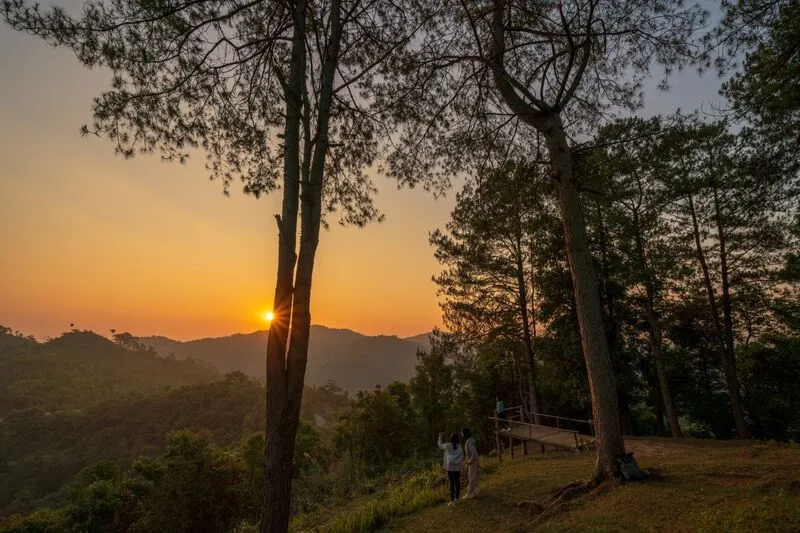
Open Days: Daily
Opening Hours: 08.30 – 16.30
Taksin Maharat National Park in Tak Province is one of the most important national parks in western Thailand, known for its cool mountain climate, rich forest ecosystems, historical significance, nature trails, waterfalls, caves, and one of Thailand’s most remarkable giant trees. The park covers forest areas in Mae Tho Subdistrict and Phawo Subdistrict of Mueang Tak District, as well as Mae Lamao Forest in Mae Sot District. With an area of approximately 165,250 rai, it was officially declared a national park on December 23, 1981. Located along Highway 105, the Tak–Mae Sot route, the park is an accessible nature destination for travelers who want to experience forest scenery, study highland ecology, and visit a historic landscape connected with old military routes between Thailand and Myanmar.
The park was formerly well known for its giant krabak tree, one of the most impressive natural landmarks in Tak Province. Later, the national park was named in honor of King Taksin the Great, whose historical connection with Tak Province remains deeply significant in Thai history. This makes the park more than a protected forest area. It is a landscape where nature, history, local memory, and the travel route between Tak and Mae Sot come together in one meaningful destination.
The geography of Taksin Maharat National Park is dominated by steep and complex mountain ranges, valleys, streams, evergreen forests, mixed forests, and open woodland areas. The park contains several forest types, including hill evergreen forest, pine forest, tropical evergreen forest, dry dipterocarp forest, and mixed deciduous forest. This diversity creates rich habitats for plants and wildlife, while also giving the park a cool and refreshing atmosphere throughout the year. The average temperature is around 20 degrees Celsius, while the cool season from November to January can bring temperatures down to around 6 degrees Celsius in some areas.
The rainy season usually occurs from August to October. During this period, the forest becomes lush and green, waterfalls flow strongly, and streams are full of water. It is a beautiful time for forest photography and waterfall visits, although visitors should be careful because trails may become slippery and stream levels can rise quickly. The cool season from November to January is the most comfortable period for nature walks, camping, overnight stays, and outdoor activities. Clearer skies and lower temperatures make this season especially popular among travelers who enjoy mountain air and forest scenery.
The forest area of Taksin Maharat National Park also carries historical importance. In the past, this region was part of military routes used by Thai and Burmese armies. In 1762, King Alaungpaya of Myanmar led an army to besiege Ayutthaya. During the return march, he became ill and died in this forested region. This historical association gives the park an additional layer of meaning. Visitors are not only entering a natural forest, but also a landscape connected with military movement, frontier geography, and the wider history of mainland Southeast Asia.
The Giant Krabak Tree is the most iconic natural landmark in the park. This tree grows in a valley area of tropical evergreen forest and is a softwood species with a tall, straight trunk. Its trunk rises cleanly without branches along the lower section, while the canopy forms a rounded crown. The bark is brownish grey, and the tree is estimated to be around 700 years old. Its circumference measures approximately 16.10 meters, or about 12 people joining hands around it, and its height is around 50 meters. It is considered one of the largest krabak trees in Thailand. The tree was discovered by Sawat Na Nan, a Level 2 technician from the Tak Telecommunications Station.
The walking route to the Giant Krabak Tree has been developed as a nature study trail, allowing visitors to observe forest ecology, plants, and the surrounding environment along the way. The tree is located about 2.5 kilometers from the park headquarters, and visitors must walk downhill along a trail for about 400 meters to reach it. The trail is fairly steep, so visitors should be physically prepared, wear shoes with good grip, carry drinking water, and walk carefully, especially after rain when soil, roots, and leaves along the path may become slippery.
The significance of the Giant Krabak Tree lies not only in its size but also in the feeling of standing beneath an ancient forest giant. A tree that has lived for hundreds of years reminds visitors that the timeline of nature is far longer than that of human life. Visiting the Giant Krabak Tree is therefore more than a photo opportunity. It is a chance to understand the value of ancient trees, old-growth forest, and long-term conservation.
The Natural Stone Bridge is another major attraction in Taksin Maharat National Park. It is a large natural rock formation connecting 2 cliff faces, with a width and height of about 25 meters. A stream flows beneath it, creating an impressive natural landscape. About 50 meters beyond the bridge, there is a cave with stalactites and stalagmites. The Natural Stone Bridge is suitable for visitors interested in geology, mountain scenery, and adventurous nature travel, because reaching the site requires both road travel and walking.
To reach the Natural Stone Bridge, visitors use Highway 105 to around kilometer marker 35, then turn toward the Tak seedling nursery area and continue for about 6 kilometers. From there, visitors walk for another 2 kilometers to reach the bridge. This route is suitable for travelers who have enough time and are prepared for a forest walk. Visitors should ask park staff about current route conditions before traveling, especially during the rainy season or when trails may be slippery and difficult.
Pang A Noi Waterfall is a medium-sized waterfall with water flowing throughout the year. It is about 20 meters high and located approximately 1 kilometer east of the Giant Krabak Tree. The waterfall is suitable for visitors who want to experience a quiet forest stream without traveling too far from the nature trail area. The surrounding forest creates a cool and peaceful atmosphere, making it a pleasant place for relaxation, photography, and observing stream ecosystems.
Tham Than Lot Pha Khao–Pha Daeng is located about 35 kilometers from the park headquarters. This natural site includes both a waterfall and a stream cave. The waterfall is formed by Huai Pha Khao–Pha Daeng and is about 30 meters high. The stream cave is formed by Huai Pha Daeng, which flows down into the cave below. Inside the cave are beautiful stalactites and stalagmites. This area is suitable for visitors who enjoy adventurous nature travel, but proper preparation and updated route information from park staff are necessary before visiting.
Mae Ya Pa Waterfall is a medium-sized waterfall formed by Huai Mae Ya Pa. It lies in dense forest, with water flowing down in layers along a small valley before joining Huai Mae Tho. Access to Mae Ya Pa Waterfall is not very convenient, so visitors who want to trek to this waterfall should contact park staff and request a local guide in advance. This helps ensure safety and reduces the risk of getting lost in the forest.
Sam Muen Thung Waterfall is a large waterfall formed by Huai Sam Muen Luang. It is about 30 meters high and has water throughout the year. It is another important water feature within the park, reflecting the richness of the forest and watershed system. This waterfall is suitable for travelers looking for a more natural and quieter environment than typical tourist spots. Visitors should ask park staff about current route conditions because access may vary by season.
Beyond these main attractions, Taksin Maharat National Park is also suitable for birdwatching, plant study, nature photography, and quiet forest recreation. Because the park contains several forest types, visitors can observe differences in vegetation at different elevations and moisture levels, from mixed deciduous and dry dipterocarp forest in drier areas to evergreen and pine forest in cooler zones. This makes the park a valuable nature study area for families, students, researchers, and travelers interested in the forest ecosystems of western Thailand.
The cool climate is one of the park’s most attractive features. Visitors planning to stay overnight during the cool season should prepare warm clothing, socks, blankets, and other cold-weather items. During the rainy season, raincoats, suitable walking shoes, and waterproof bags for electronic devices are useful. Anyone planning to walk nature trails should check weather conditions and current advice from park staff before entering the forest.
Getting There to Taksin Maharat National Park is straightforward via Highway 105, the Tak–Mae Sot route. From Tak town, drive toward Mae Sot. At around kilometer marker 26, there is a right-hand turn leading about 2 kilometers to the park headquarters. Travelers using public vans or buses on the Tak–Mae Sot route can get off at the park entrance road, then walk about 2 kilometers to the headquarters. Visitors without private vehicles should plan carefully because walking from the entrance can take time and may be inconvenient with heavy luggage.
Highway 105 is a scenic mountain road with many curves and slopes. Drivers should check brakes, tires, fuel, and general vehicle condition before traveling. Daytime driving is recommended for those unfamiliar with the route. Rest stops along the way, such as Doi Muser Market, Chao Pho Phawo Shrine, or scenic viewpoints, can make the journey safer and more enjoyable. Careful driving is important because the route is used by private cars, public transport, and freight vehicles throughout the day.
General entrance fees for the park are 40 Baht for Thai adults and 20 Baht for Thai children. Foreign visitors pay 200 Baht for adults and 100 Baht for children. The 4-wheel vehicle fee is 30 Baht. Visitors should prepare cash for entrance fees, camping fees, or expenses within the park, because mobile signal and electronic payment systems may not be reliable in all natural areas. Groups should prepare payment before entering the park to avoid delays.
The park provides accommodation facilities, including park bungalows, dormitory-style accommodation, camping areas, and campfire areas under park regulations. Visitors bringing their own tents can camp in designated areas. Advance contact is recommended, especially during long holidays and the cool season when visitor numbers increase. The park has food services or welfare shops, but some services may require advance arrangement. Visitors should still prepare snacks, drinking water, and necessary personal items before entering the park.
Facilities in the park are suitable for simple nature-based travel. They include a visitor center, parking areas, toilets, camping areas, park accommodation, nature study trails, and access to major natural attractions. However, visitors should understand that a national park is not a full commercial resort. Proper preparation remains important. Useful items include a flashlight, personal medicine, suitable walking shoes, warm clothing, personal trash bags, rain protection, and drinking water.
Responsible travel in Taksin Maharat National Park requires respect for nature. Visitors should not collect plants, disturb wildlife, make loud noises, leave trash, carve trees or rocks, or feed wild animals. Walking should be limited to designated trails. For harder-to-access sites such as Mae Ya Pa Waterfall, Tham Than Lot Pha Khao–Pha Daeng, or Sam Muen Thung Waterfall, visitors should ask park staff for current route information and use a guide where appropriate. Following park rules protects both visitors and the natural environment.
For families with children or older travelers, suitable activities include relaxing around the park headquarters, walking short nature trails, and visiting the Giant Krabak Tree if all members are physically prepared. Those who cannot manage steep trails should avoid routes that require downhill hiking or long forest walks. More active travelers, hikers, and photographers may choose more demanding routes, but preparation and route updates are essential.
Taksin Maharat National Park can be combined with other attractions along Highway 105. Nearby and connected places include Doi Muser Market, the Highland People Development Center in Tak Province, the Black Lahu Museum, Chao Pho Phawo Shrine, and Chao Pho Khun Sam Chon Shrine. Travelers continuing to Mae Sot can also visit Rim Moei Market, Wat Thai Wattanaram, and the Thai–Myanmar Friendship Bridge. Those staying in Tak town can visit the park as a half-day or full-day trip.
Food options near the park include the park welfare shop or food service, small restaurants along the Tak–Mae Sot route, Muser Coffee, roadside food stalls on Doi Muser, Ban Suan Lan Sang Café, and restaurants in Tak town. Travelers who want certainty should carry snacks and drinking water, especially when planning to visit deeper natural sites or spend several hours in the forest. Those who prefer more comfortable dining with multiple choices should plan meals in Tak town or Mae Sot.
For accommodation, visitors can stay inside the park in bungalows, dormitory accommodation, or camping areas if they want to experience cool air and the quiet forest atmosphere. Travelers who prefer more convenience can stay in Tak town, Doi Muser, or Mae Sot and visit the park as a half-day or 1-day trip. The choice should match the itinerary. Those who want morning forest atmosphere and nature immersion should stay inside the park, while families or older visitors may find city accommodation more convenient.
Overall, Taksin Maharat National Park is a complete nature destination with mountains, cool weather, giant trees, waterfalls, caves, a natural stone bridge, nature study trails, and historical associations. It is ideal for travelers who want to rest in the forested landscape of Tak Province, especially those traveling along the Tak–Mae Sot route and looking for a meaningful stop with natural beauty, ecological richness, and historical depth.
A visit to Taksin Maharat National Park is therefore more than a stop to see the Giant Krabak Tree or a short break between Tak and Mae Sot. It is an opportunity to understand how one forest landscape can preserve ecosystems, historical memory, and local identity at the same time. Travelers who arrive prepared and respect the natural environment will find the experience peaceful, beautiful, and far more meaningful than an ordinary nature trip.
| Name | Taksin Maharat National Park |
| Location | The park covers Mae Tho Forest in Mae Tho Subdistrict and Phawo Subdistrict, Mueang Tak District, and Mae Lamao Forest in Mae Sot District, Tak Province. |
| Address | P.O. Box 10, Mueang Tak District, Tak Province 63000, near Highway 105, Tak–Mae Sot Route |
| Area | Approximately 165,250 rai |
| Declared As A National Park | December 23, 1981 |
| Highlights | Giant Krabak Tree, Natural Stone Bridge, Pang A Noi Waterfall, Tham Than Lot Pha Khao–Pha Daeng, Mae Ya Pa Waterfall, Sam Muen Thung Waterfall, cool mountain forest, and nature study trails |
| Geography | Steep and complex mountain ranges with rich forests, streams, waterfalls, valleys, and several forest ecosystems |
| Forest Types | Hill Evergreen Forest, Pine Forest, Tropical Evergreen Forest, Dry Dipterocarp Forest, and Mixed Deciduous Forest |
| Historical Importance | The area was historically connected with Thai–Burmese military routes. In 1762, King Alaungpaya of Myanmar became ill and died while returning through this forested region after the Ayutthaya campaign. |
| Important Sites Inside The Park | 1. Giant Krabak Tree, about 700 years old, approximately 16.10 meters in circumference and 50 meters high 2. Natural Stone Bridge, about 25 meters wide and 25 meters high 3. Pang A Noi Waterfall, about 20 meters high 4. Tham Than Lot Pha Khao–Pha Daeng, with a waterfall about 30 meters high 5. Mae Ya Pa Waterfall 6. Sam Muen Thung Waterfall, about 30 meters high |
| Recommended Activities | Nature study walks, visiting the Giant Krabak Tree, waterfall visits, Natural Stone Bridge exploration, nature photography, camping, park accommodation, and learning about mountain forest ecosystems |
| Travel Information | Use Highway 105, the Tak–Mae Sot route. At around kilometer marker 26, turn right and continue about 2 km to the park headquarters. Travelers using Tak–Mae Sot public vans can get off at the entrance road and walk about 2 km to the headquarters. |
| Current Status | Open as a national park, natural attraction, camping area, and nature study destination in Tak Province |
| Open Days | Daily |
| Opening Hours | 08.30 – 16.30 |
| Fees | Thai Visitors: Adults 40 Baht, Children 20 Baht / Foreign Visitors: Adults 200 Baht, Children 100 Baht / 4-Wheel Vehicle Fee: 30 Baht |
| Facilities | Visitor center, park bungalows, dormitory accommodation, camping ground, camp area, welfare shop, food service by advance contact, toilets, parking area, and nature study trails |
| Main Areas / Zones | Park headquarters, Giant Krabak Tree trail, camping ground, park accommodation, Natural Stone Bridge, Pang A Noi Waterfall, Tham Than Lot Pha Khao–Pha Daeng, Mae Ya Pa Waterfall, and Sam Muen Thung Waterfall |
| Caretaker / Information Contact | Taksin Maharat National Park, Tel. 055-511-429 |
| Central Agency Information | Department of National Parks, Wildlife and Plant Conservation, Tel. 02-562-0760 |
| Nearby Tourist Attractions | 1. Giant Krabak Tree, about 2.5 km 2. Pang A Noi Waterfall, about 3.5 km 3. Muser Market / Doi Muser Market, about 4 km 4. Highland People Development Center, Tak Province, about 8 km 5. Black Lahu Museum, about 10 km 6. Chao Pho Phawo Shrine, about 33 km 7. Chao Pho Khun Sam Chon Shrine, about 41 km |
| Nearby Restaurants | 1. Taksin Maharat National Park Welfare Shop, about 0.1 km, Tel. 055-511-429 2. Muser Coffee, about 3 km 3. Z Surf Z Food, about 5 km 4. Ban Suan Lan Sang Café, about 11 km 5. Tim Phochana, about 14 km 6. Ban Kiang Nam Restaurant, Tak, about 35 km, Tel. 055-894-069, 081-953-9441 7. Pridi Phochana, about 37 km, Tel. 081-707-3800, 082-595-8145 |
| Nearby Accommodations | 1. Taksin Maharat National Park Accommodation, about 0.1 km, Tel. 055-511-429 2. Taksin Maharat National Park Campground, about 0.1 km, Tel. 055-511-429 3. Doi Muser Homestay, about 8 km, Tel. 083-335-9963, 086-209-6848 4. Viang Tak Riverside Hotel, about 35 km, Tel. 055-512-507 to 055-512-508, 081-887-2905 5. SOHO Boutique Hotel Tak, about 37 km, Tel. 055-039-988, 095-939-2871 6. Berich Hotel, about 37 km, Tel. 055-516-444, 082-444-6242 7. Silayok Grand Hotel, about 37 km, Tel. 055-515-555 |
Frequently Asked Questions (FAQ)
Q: Where is Taksin Maharat National Park located?
A: Taksin Maharat National Park is located in Tak Province. It covers Mae Tho Forest in Mae Tho and Phawo Subdistricts of Mueang Tak District, as well as Mae Lamao Forest in Mae Sot District. The park is located along Highway 105, the Tak–Mae Sot route.
Q: What are the opening hours of Taksin Maharat National Park?
A: The park is open daily from 08.30 to 16.30. Visitors who want to stay overnight or camp should contact the park in advance at 055-511-429.
Q: What is the entrance fee for Taksin Maharat National Park?
A: General entrance fees are 40 Baht for Thai adults and 20 Baht for Thai children. Foreign visitors pay 200 Baht for adults and 100 Baht for children. The 4-wheel vehicle fee is 30 Baht.
Q: Why is the Giant Krabak Tree important?
A: The Giant Krabak Tree is about 700 years old, approximately 16.10 meters in circumference and around 50 meters high. It is one of the park’s most important natural landmarks and reflects the richness of the evergreen forest in the area.
Q: Is it difficult to visit the Giant Krabak Tree?
A: The Giant Krabak Tree is about 2.5 km from the park headquarters, with a downhill nature trail of about 400 meters. The trail is fairly steep, so visitors should be physically prepared and wear suitable walking shoes.
Q: What are the main attractions in Taksin Maharat National Park?
A: Main attractions include the Giant Krabak Tree, Natural Stone Bridge, Pang A Noi Waterfall, Tham Than Lot Pha Khao–Pha Daeng, Mae Ya Pa Waterfall, and Sam Muen Thung Waterfall.
Q: How can travelers get to Taksin Maharat National Park?
A: Travelers can use Highway 105, the Tak–Mae Sot route. At around kilometer marker 26, turn right and continue about 2 km to the park headquarters. Public van passengers can get off at the park entrance road and walk about 2 km to the headquarters.
Q: Does Taksin Maharat National Park have accommodation?
A: Yes. The park has bungalows, dormitory-style accommodation, camping areas, and camp facilities. Visitors should contact the park in advance for accommodation, camping, and food service information.
Q: When is the best time to visit Taksin Maharat National Park?
A: The cool season from November to January is ideal for overnight stays, nature walks, and cool weather. The rainy season from August to October is suitable for lush forest and waterfall scenery, but visitors should be careful of slippery trails and changing weather.
Tel : 025620760, 055511429
 Tel : 025620760, 055511429
 Category: ●Nature and Wildlife
 Group: ●National Parks and Marine Reserves
Last Update : 5 MonthAgo
 Last Update : 5 MonthAgo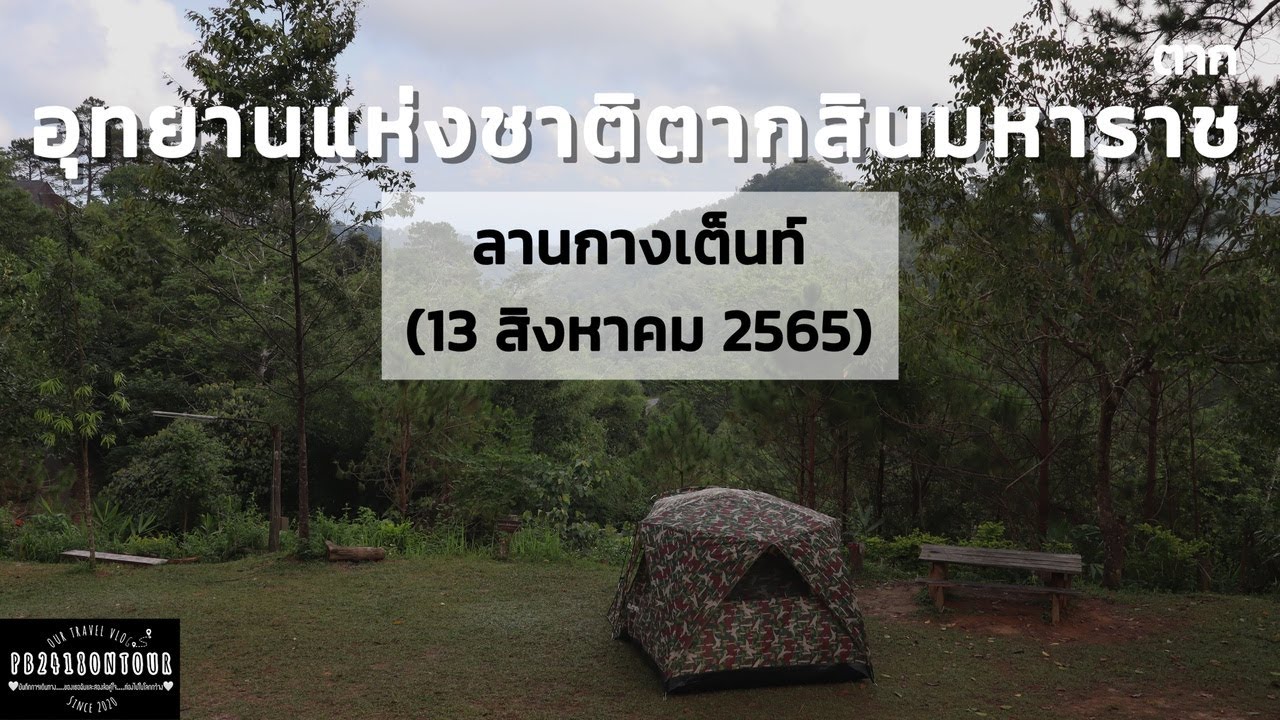
 Click to Access the Navigation Map GPS
Taksin Maharat National Park Map
Recommend

 Art, Culture and Heritage
 Historical Sites and Monuments(2)
 Landmarks and Memorials(3)
 Art, Craft Centres, Tradition(6)
 Historic Homes and Cities(2)
 Educational Places
 Educational Gardens, Farm(2)
 Places of Worship
 Temple(22)
 Other Sacred Sites(9)
 Research and Development
 Royal Project(1)
 Suburban Living
 Village, Community(5)
 Local Market(3)
National Parks and Marine Reserves(11)
Local Market(3)
National Parks and Marine Reserves(11)
 Mountain (Doi)(9)
 Dam, Reservoir, Lake(14)
 Waterfalls(23)
 Hot Springs(2)
 Caves(6)
 River, Canal(1)
 Bays and Beaches(1)
 Islands(1)
 Other natural attractions(1)
 Entertainment and Agricultural
 Farms, Parks and Ecotourism(5)
 Outdoor and Adventure Activities(4)
 Travel Articles, Recipes
 Travel Review, Food Review(1)


