
lovethailand home >North Travel Attractions >Tak Travel Attractions >Ban Tak >Ko Taphao > Old Tak Historical Park
TL;DR: Old Tak Historical Park is located at Ko Taphao Subdistrict, Ban Tak District, Tak Province, open Daily, hours Open-Air Historical Site; Daytime Visits Are Recommended.
Old Tak Historical Park
Open Days: Daily
Opening Hours: Open-Air Historical Site; Daytime Visits Are Recommended
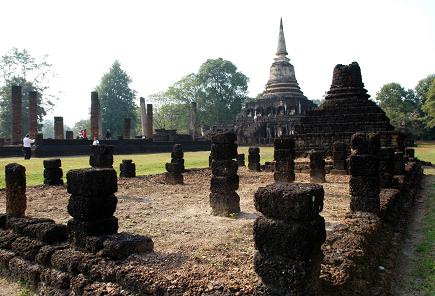
Old Tak Historical Park is located in Ko Taphao Subdistrict, Ban Tak District, Tak Province. It is one of the most important ancient urban sites along the Ping River basin and represents the historical depth of western Lanna and lower northern Thailand. With a history of more than 2,000 years, the site was once part of a strategic landscape desired by major powers in the past, especially Lanna and Sukhothai. Today, Old Tak is not just a quiet archaeological area with earthen ramparts, moats, temple ruins, and ancient traces; it is a place where visitors can understand how geography, defense, trade routes, waterways, and Buddhist faith shaped an early city in this part of Thailand.
The most distinctive feature of Old Tak is its location on an elevated earthen mound about 20 meters high. The ancient town follows an oval-shaped layout that conforms to the natural hill on which it was built. Inside the ramparts, the old city covers approximately 172 rai. Several sections still show traces of earthen walls and moats, with some sides having 2 to 3 layers of defensive lines. Although much of the area is now covered by bamboo groves, slopes, and natural vegetation, the remaining landscape still allows visitors to visualize the structure of the ancient city.
Old Tak lies about 1 kilometer from the Ping River, a position that explains much of its historical importance. In the past, the Ping River was a major transportation route linking communities in the lower north with Lanna, Sukhothai, and other riverine settlements. By choosing a high mound near the river, the ancient city could benefit from water transport while remaining safer from flooding. This combination of elevation, water access, and defensibility made Old Tak a highly strategic location.
Historically, Old Tak was an important frontier and transition zone between cultural and political spheres. Its location connected northern Thai, lower northern, and western routes, making it significant for movement, trade, military affairs, and cultural exchange. The city was not merely a settlement that faded into ruins; it was part of a larger regional story involving power, waterways, Buddhism, and the shifting centers of ancient towns along the Ping River.
Within the old city area, several important archaeological sites are associated with the ancient settlement, including Chedi Yutthahatthi, Wat San Ya Pha Khao, Wat Khong Phra Mot, Wat Ong Mong, and Wat Nong Chang Phueak. These remains show the role of Buddhism in the old community and help visitors understand how religious spaces were placed within the city. Like many historic towns in Thailand, temples and stupas were not only places of worship but also markers of community life, memory, and urban organization.
Chedi Yutthahatthi is one of the key historical landmarks near Old Tak. It is also known as the commemorative chedi of King Ramkhamhaeng the Great or locally as Chedi Chon Chang. Located on Doi Chang in Ko Taphao Subdistrict, the chedi is associated with memories of Sukhothai-era history and the strategic role of Tak. Architecturally, the chedi reflects Sukhothai-style construction, with brick and stucco elements, a prominent base, and a tall structure that remains historically significant.
The surrounding landscape also plays an important role in understanding Old Tak. To the south lies Huai Long Li, a natural feature modified by human use. To the north is a large water body known as Nong Lem, while to the east lies the Ping River. These natural and modified features show that Old Tak was closely connected to water management, settlement planning, agriculture, and defense. The city was designed not in isolation, but as part of a wider environmental system.
Visiting Old Tak requires careful observation. Unlike some ancient cities where stone or brick walls remain highly visible, Old Tak is defined mainly by earthen ramparts, moats, slopes, and subtle traces in the landscape. Travelers should look at the shape of the land, the lines of the ditches, the raised embankments, and the locations of ancient religious sites. The experience is quiet, reflective, and best suited to visitors who enjoy historical interpretation rather than fast sightseeing.
The charm of Old Tak Historical Park lies in its calm and uncommercialized atmosphere. The site still feels close to its natural setting, with bamboo groves, earthworks, and old traces blending into the terrain. For travelers interested in archaeology, ancient city planning, Thai history, and cultural landscapes, Old Tak offers a valuable learning experience. It shows how an ancient community used elevation, water, religious centers, and defensive structures to create a settlement that lasted through many historical layers.
A visit to Old Tak is best combined with Wat Phra Borommathat Ban Tak and Chedi Yutthahatthi. These three sites form a meaningful cultural and historical route within Ban Tak District. Wat Phra Borommathat is a revered local temple, while Chedi Yutthahatthi connects the area with Sukhothai-era memory. Visiting them together provides a fuller understanding of the old town, its sacred landscape, and the historical identity of Tak Province.
The area is also connected with local religious traditions, especially ceremonies associated with Wat Phra Borommathat Ban Tak. This continuity of faith shows that although the ancient city has changed over time, the spiritual identity of the surrounding community remains active. For cultural travelers, this connection between ancient ruins and living traditions makes Old Tak more meaningful than a simple archaeological stop.
For visitors interested in ancient urban planning, Old Tak is particularly useful because its oval plan follows the natural terrain rather than a rigid geometric pattern. This reflects how early communities adapted settlement design to real landscapes. The city was shaped by hills, water sources, access routes, and the need for defense. Walking through the site with this understanding makes the ancient earthworks and moats much easier to appreciate.
The earthen ramparts and moats are among the most important features to observe. Even though they may look simple today, they are significant archaeological evidence of the city’s boundary and defensive system. Multiple layers of moats and embankments show that Old Tak was important enough to require planned protection. These features also reveal construction methods based on local materials and the intelligent use of natural terrain.
Old Tak is also important for understanding the shifting history of Tak Province. The ancient town represents an earlier settlement center before later movements of the town center further south along the Ping River. As a result, Old Tak helps explain the long-term development of Tak from an ancient town in Ban Tak District to the modern provincial center known today.
Travelers should prepare for an open-air visit. Comfortable walking shoes, drinking water, sun protection, and appropriate clothing are recommended. Morning or late afternoon visits are more comfortable because the site includes open ground, slopes, natural paths, and bamboo areas. Visitors should respect the archaeological site by not climbing on ancient structures, digging, moving bricks, or removing any fragments from the area.
Getting There is most convenient by private car or rental car. From Tak town, travelers can drive toward Ban Tak District and continue to Ko Taphao Subdistrict. The route can be arranged together with Wat Phra Borommathat Ban Tak, Chedi Yutthahatthi, and the Old Tak city area. Travelers without private transportation should plan ahead, as local attractions are spread across the area and are easiest to visit by car.
A half-day trip is recommended for visitors who want to understand the area properly. A good route starts at Wat Phra Borommathat Ban Tak, continues to Chedi Yutthahatthi, and ends with the old city area and its earthen ramparts. This route allows travelers to experience sacred heritage, historical memory, and the physical landscape of the ancient town in one journey.
For photography, Old Tak is best suited to documentary-style images rather than dramatic postcard views. Interesting subjects include the earthen ramparts, bamboo groves, old paths, historical traces, and quiet archaeological corners. Early morning or late afternoon light helps reveal the contours of the land and gives the site a calm historical atmosphere.
Old Tak Historical Park is suitable for history lovers, students, families, cultural travelers, and visitors who prefer peaceful historical sites away from crowds. It reminds travelers that Tak Province is not only known for mountains, waterfalls, and border towns, but also for deep historical roots in the Ping River basin and the western Lanna cultural zone.
Overall, Old Tak Historical Park is a meaningful place where the past remains visible through landforms, moats, ramparts, temples, stupas, and waterways. It shows that ancient towns were carefully created through knowledge of geography, water, defense, and community life. For anyone exploring the historical side of Tak Province, Old Tak is one of the most important sites to include in the journey.
| Name | Old Tak Historical Park |
| Location | Ko Taphao Subdistrict, Ban Tak District, Tak Province |
| Address | Ancient town area in Ko Taphao Subdistrict, Ban Tak District, Tak Province 63120 |
| Coordinates | Approximately 17.060000, 99.050000 |
| Highlights | An ancient city over 2,000 years old with earthen ramparts, moats, temple ruins, and a historic hilltop urban landscape |
| History | An important ancient settlement in the Ping River basin and western Lanna zone, linked to strategic roles between Lanna and Sukhothai |
| Name Origin | The name refers to the old town of Tak before the later development and relocation of the provincial center |
| Distinctive Features | Oval-shaped ancient town on a mound about 20 meters high, covering about 172 rai inside the ramparts and located about 1 km from the Ping River |
| Main Areas / Zones | City ramparts, moats, Chedi Yutthahatthi, Wat San Ya Pha Khao, Wat Khong Phra Mot, Wat Ong Mong, Wat Nong Chang Phueak, Huai Long Li, Nong Lem, and the Ping River area |
| Travel Information | Best reached by private car or rental car via Ban Tak District and Ko Taphao Subdistrict; can be combined with Wat Phra Borommathat Ban Tak and Chedi Yutthahatthi |
| Current Status | Open-air ancient town and historical learning site in Ko Taphao Subdistrict |
| Open Days | Daily |
| Opening Hours | Open-air historical site; daytime visits are recommended |
| Facilities | Basic parking and visitor facilities are available in the surrounding community and nearby attractions |
| Caretaker / Local Authority | Ko Taphao Subdistrict Administrative Organization and relevant heritage authorities |
| Main Contact Number | Ko Taphao Subdistrict Administrative Organization, Tel. 055-898-232 |
| Official Website / Official Page | https://www.kohtaphao.go.th |
| Nearby Tourist Attractions | 1. Chedi Yutthahatthi, about 1 km 2. Wat Phra Borommathat Ban Tak, about 1 km 3. Kat Ta Tong Market, Ban Tak District, about 7 km 4. Wat Phra Phutthabat Doi Lon, about 11 km 5. King Taksin the Great Shrine, Mueang Tak District, about 31 km |
| Nearby Restaurants | 1. Marony & Khlang Tao Manut Hin Cafe, about 1 km, Tel. 087-147-4831 2. Krua Yui Restaurant, Ko Taphao Subdistrict, about 3 km, Tel. 089-272-5944 3. Wattana Hip - Restaurant, about 3 km 4. Ruean Son Noi, about 9 km 5. MindsetCafe.Tak, about 10 km |
| Nearby Accommodations | 1. Ban Suan Siriwat Resort, Ban Tak District, about 8 km, Tel. 064-698-2961 2. Mor Nee Ban Tak Homestay, about 8 km, Tel. 089-641-7475 3. Suk Samran Ban Tak Rooms, about 10 km 4. White House Hotel, about 30 km 5. Viang Tak Riverside Hotel, about 32 km |
Frequently Asked Questions (FAQ)
Q: Where is Old Tak Historical Park located?
A: Old Tak Historical Park is located in Ko Taphao Subdistrict, Ban Tak District, Tak Province.
Q: Why is Old Tak historically important?
A: It is an ancient city over 2,000 years old and was a strategic settlement connected with Lanna, Sukhothai, and the Ping River basin.
Q: What can visitors see inside Old Tak Historical Park?
A: Visitors can see earthen ramparts, moats, ancient temple sites, Chedi Yutthahatthi, old water features, and the historic landscape of the former city.
Q: What nearby places should be visited together with Old Tak?
A: Wat Phra Borommathat Ban Tak and Chedi Yutthahatthi are the best nearby sites to visit together because they form part of the same historical area.
Q: Is Old Tak Historical Park suitable for foreign travelers?
A: Yes. It is suitable for travelers interested in Thai history, ancient cities, archaeology, local culture, and quiet off-the-main-route destinations.
Q: How should visitors prepare for a trip to Old Tak?
A: Visitors should wear comfortable walking shoes, bring drinking water, use sun protection, and visit during the morning or late afternoon for a more comfortable experience.
Q: Is there an admission fee for Old Tak Historical Park?
A: The site is an open-air historical area in the local community. Travelers should check the latest visiting details with Ko Taphao Subdistrict Administrative Organization before arrival.
 Category: ●Art, Culture and Heritage
 Group: ●Historical Sites and Monuments
Last Update : 4 MonthAgo
 Last Update : 4 MonthAgo
 Click to Access the Navigation Map GPS
Old Tak Historical Park Map
Recommend
 Historical Sites and Monuments(2)
 Landmarks and Memorials(3)
 Art, Craft Centres, Tradition(6)
 Historic Homes and Cities(2)
 Educational Places
 Educational Gardens, Farm(2)
 Places of Worship
 Temple(22)
 Other Sacred Sites(9)
 Suburban Living
 Village, Community(5)
 Local Market(3)
 Nature and Wildlife
 National Parks and Marine Reserves(9)
 Mountain (Doi)(9)
 Dam, Reservoir, Lake(14)
 Waterfalls(23)
 Hot Springs(2)
 Caves(6)
 River, Canal(1)
 Bays and Beaches(1)
 Islands(1)
 Other natural attractions(1)
 Entertainment and Agricultural
 Farms, Parks and Ecotourism(5)
 Outdoor and Adventure Activities(4)


