
lovethailand home >North Travel Attractions >Tak Travel Attractions >Mae Sot >Dan Mae La Mao > Doi Muser Horticultural Experiment Station
TL;DR: Doi Muser Horticultural Experiment Station is located at Ban Muser, Moo 6, Mae Tho Subdistrict, Mueang Tak District, Tak Province, open Monday – Sunday, hours 08.00 – 16.30.
Doi Muser Horticultural Experiment Station
Open Days: Monday – Sunday
Opening Hours: 08.00 – 16.30
Doi Muser Horticultural Experiment Station, officially known today as Tak Agricultural Research and Development Center, Doi Muser, is one of Tak Province’s most important highland agricultural learning sites. Located at Ban Muser, Moo 6, Mae Tho Subdistrict, Mueang Tak District, along the Tak – Mae Sot route, the center sits on the Thanon Thong Chai mountain range at about 900 meters above sea level. Its cool climate makes it suitable for research and development of cold-climate crops, arabica coffee, tea, fruits, vegetables, seeds, and winter flowers.
This destination is more than a scenic mountain stop. It is a working agricultural research area where highland crops are studied, tested, and developed for real farming conditions. The mountain climate, humidity, soil, and elevation create a useful environment for understanding how different plants respond to highland conditions. For visitors, the center offers a meaningful combination of agricultural knowledge, cool mountain air, seasonal flowers, and local produce.
Many Thai travelers still know the place by its former name, Doi Muser Horticultural Experiment Station. Today, it functions as part of Tak Agricultural Research and Development Center under the Department of Agriculture. The site continues to support research, plant trials, and agricultural knowledge transfer. Visitors can learn about cold-climate crops, tea, coffee, fruits, vegetables, and ornamental plants in a real highland setting rather than through classroom theory alone.
Arabica coffee is one of the major crops associated with Doi Muser. The altitude of around 900 meters and the cool climate make the area suitable for coffee cultivation and experimentation. Coffee research here is connected not only with yield, but also with bean quality, disease resistance, flavor potential, and post-harvest management. For coffee lovers, a visit to Doi Muser helps explain why highland conditions matter so much to the character of the final cup.
Tea is another important crop that benefits from the cool highland environment. Testing tea varieties in mountain conditions helps researchers and farmers understand the relationship between plants, soil, temperature, humidity, and pest management. This type of research supports more sustainable agriculture because it focuses on choosing suitable crops and managing them properly within the local environment.
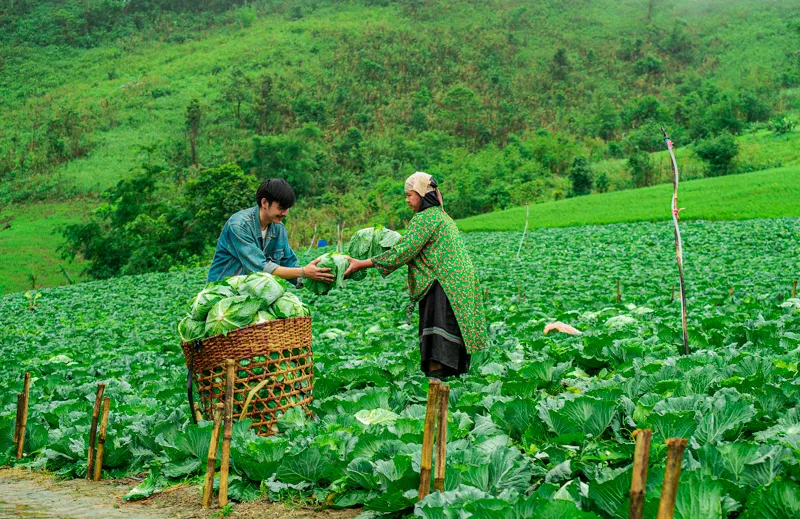
The center is also connected with cold-climate fruits and vegetables. Crops such as strawberries, plums, apples, cabbage, salad greens, and leafy vegetables require growing conditions that differ from lowland areas. By studying varieties and cultivation methods, the center helps build practical knowledge that can support farmers, improve produce quality, and reduce the risks of growing unsuitable crops.
Doi Muser is especially attractive from November to December, when wild sunflowers, locally known as bua tong, bloom across the surrounding mountain slopes. The bright yellow flowers create a striking contrast against the cool-season sky and green mountain scenery. During this period, travelers along the Tak – Mae Sot route often stop to take photographs, enjoy the fresh air, and experience the seasonal beauty of the highlands.
The nearby Doi Muser Market adds another important dimension to the visit. The market sells fresh vegetables, fruits, coffee, and hill-tribe products from the surrounding highland communities. By visiting both the research center and the market, travelers can see how plant research, cultivation, local livelihoods, and tourism are connected. It is one of the best ways to understand Doi Muser as both an agricultural and cultural landscape.
Getting There is most convenient by private car or rental vehicle. From Tak town, follow the Tak – Mae Sot road toward Doi Muser Market and Taksin Maharat National Park. The route passes through mountainous terrain with slopes and curves, so travelers should check their vehicle, allow enough travel time, and drive carefully, especially during rain, fog, or early morning conditions.
For overnight stays, older travel information mentions guesthouses, tent rental, and camping areas at the center. Because service conditions can change according to management, season, and official duties, visitors should contact the center directly before traveling to confirm availability, rates, and current rules. This is especially important during the cool season and wild sunflower season, when visitor demand may be higher.
The value of Doi Muser Horticultural Experiment Station lies in its role as a bridge between research and real agriculture. Studies on coffee, tea, fruits, and cold-climate vegetables help farmers choose suitable crops, manage disease and pests, improve yields, and develop higher-quality produce. The center therefore supports both agricultural knowledge and local livelihoods in the highland areas of Tak Province.
The site is also suitable for eco-agricultural tourism. Visitors can enjoy mountain scenery, cool air, morning mist, and seasonal landscapes while learning about plant cultivation. This type of travel is ideal for people who want more than a quick photo stop. It gives depth to the journey by showing how the mountains are connected with food production, research, and community life.
Families can use the visit as an outdoor learning experience for children. Seeing coffee, tea, vegetables, fruits, flowers, and seeds in a real setting makes agricultural knowledge easier to understand. A visit to the research center followed by a stop at Doi Muser Market can help children connect plants in the field with food and products sold by local communities.
For photographers, Doi Muser offers mountain views, seasonal wild sunflowers, plant study plots, coffee and tea landscapes, and nearby market scenes. Morning and late afternoon light can be especially beautiful. However, visitors should avoid entering research plots or working areas without permission and should respect the staff and the plants under study.
Nearby attractions that can be combined with a visit include Doi Muser Market, Taksin Maharat National Park, the Giant Krabak Tree, Lan Sang Waterfall, and Mae Sot town. This route gives travelers a broad view of Tak Province, from highland agriculture and mountain forests to local markets and the cultural diversity of the border area.
Responsible travel is important at Doi Muser because the area is both a tourist site and a working agricultural center. Visitors should follow staff instructions, avoid damaging plants, keep the area clean, and respect restricted zones. This helps ensure that tourism and agricultural research can continue together in a balanced way.
Doi Muser Horticultural Experiment Station is suitable for nature lovers, coffee enthusiasts, students, farmers, families, photographers, and travelers interested in highland agriculture. Its strength lies in the way it combines mountain scenery, cool weather, arabica coffee, tea, cold-climate crops, winter flowers, research, and local livelihoods in one destination.
| Name | Doi Muser Horticultural Experiment Station / Tak Agricultural Research and Development Center, Doi Muser |
| Location | Ban Muser, Moo 6, Mae Tho Subdistrict, Mueang Tak District, Tak Province |
| Address | No. 65, Moo 6, Mae Tho Subdistrict, Mueang Tak District, Tak Province 63000, Thailand |
| Coordinates | 16.7642, 98.9166 |
| Highlights | Highland agricultural learning site for arabica coffee, tea, fruits, vegetables, seeds, winter flowers, and wild sunflowers from November to December |
| History | Formerly known as Doi Muser Horticultural Experiment Station, the site now functions as Tak Agricultural Research and Development Center under the Department of Agriculture |
| Name Origin | Named after the Doi Muser highland area along the Tak – Mae Sot route |
| Distinctive Features | Located on the Thanon Thong Chai mountain range at about 900 meters above sea level, with cool weather suitable for cold-climate crops and arabica coffee |
| Travel Information | From Tak town, follow the Tak – Mae Sot road toward Doi Muser Market and Taksin Maharat National Park. The road is mountainous and should be driven carefully. |
| Current Status | Open as an agricultural learning and agro-tourism site for visitors and the general public |
| Open Days | Monday – Sunday |
| Opening Hours | 08.00 – 16.30 |
| Facilities | Guesthouses, camping area, and tent rental are available according to current service conditions; visitors should contact the center directly before traveling |
| Main Areas / Zones | Horticultural research plots, cold-climate crops, arabica coffee, tea, fruits, vegetables, seeds, winter flowers, and seasonal wild sunflower areas |
| Caretaker | Tak Agricultural Research and Development Center, Department of Agriculture, Ministry of Agriculture and Cooperatives |
| Main Contact Number | 055-508987 |
| Accommodation / Visitor Information Number Previously Published | 055-512131 |
| Fax | 055-514034 |
| Nearby Tourist Attractions | 1. Doi Muser Market, about 2 km 2. Taksin Maharat National Park, about 7 km 3. Giant Krabak Tree at Taksin Maharat National Park, about 8 km 4. Lan Sang Waterfall, about 35 km 5. Mae Sot town, about 40 km |
| Nearby Restaurants | 1. Jae Aon Restaurant, Doi Muser Market, about 2 km 2. Muser Coffee, about 3 km 3. Z Surf Z Food, about 11 km 4. Baan Suan Lan Sang Cafe, about 15 km 5. Thai Finn Food, about 13 km |
| Nearby Accommodations | 1. Guesthouses at Tak Agricultural Research and Development Center, within the center, Tel. 055-512131 2. Doi Muser Homestay, about 4 km, Tel. 083-335-9963, 086-209-6848 3. Lung Sor Coffee Farm Homestay Doi Muser, about 4 km 4. Mok Fa Sai Resort, about 20 km 5. Suansin Lanna, about 30 km |
Frequently Asked Questions (FAQ)
Q: Where is Doi Muser Horticultural Experiment Station located?
A: It is located at Ban Muser, Moo 6, Mae Tho Subdistrict, Mueang Tak District, Tak Province, along the Tak – Mae Sot route near Doi Muser Market and Taksin Maharat National Park.
Q: What can visitors see at Doi Muser?
A: Visitors can learn about highland horticulture, arabica coffee, tea, fruits, vegetables, seeds, winter flowers, and seasonal wild sunflowers.
Q: When do the wild sunflowers bloom at Doi Muser?
A: The wild sunflowers usually bloom beautifully around November to December during the cool season.
Q: What are the opening hours?
A: The center is open Monday to Sunday from 08.00 to 16.30.
Q: Is accommodation available at the center?
A: Guesthouses, camping areas, and tent rental have been published for visitor use, but travelers should contact the center directly to confirm current availability, rates, and conditions.
Q: How do travelers get to Doi Muser?
A: From Tak town, follow the Tak – Mae Sot road toward Doi Muser Market and Taksin Maharat National Park. The road is mountainous, so careful driving is recommended.
Q: What nearby places can be visited together with Doi Muser?
A: Travelers can combine the visit with Doi Muser Market, Taksin Maharat National Park, the Giant Krabak Tree, Lan Sang Waterfall, and Mae Sot town.
Q: Who is this destination suitable for?
A: It is suitable for nature lovers, coffee enthusiasts, students, farmers, families, photographers, and travelers interested in highland agriculture and agro-tourism.
 Category: ●Educational Places
 Group: ●Educational Gardens, Farm
Last Update : 4 MonthAgo
 Last Update : 4 MonthAgo
 Click to Access the Navigation Map GPS
Doi Muser Horticultural Experiment Station Map
Recommend

 Art, Culture and Heritage
 Historical Sites and Monuments(2)
 Landmarks and Memorials(3)
 Art, Craft Centres, Tradition(6)
 Historic Homes and Cities(2)
Educational Gardens, Farm(2)
Historic Homes and Cities(2)
Educational Gardens, Farm(2)
 Places of Worship
 Temple(22)
 Other Sacred Sites(9)
 Suburban Living
 Village, Community(5)
 Local Market(3)
 Nature and Wildlife
 National Parks and Marine Reserves(9)
 Mountain (Doi)(9)
 Dam, Reservoir, Lake(14)
 Waterfalls(23)
 Hot Springs(2)
 Caves(6)
 River, Canal(1)
 Bays and Beaches(1)
 Islands(1)
 Other natural attractions(1)
 Entertainment and Agricultural
 Farms, Parks and Ecotourism(5)
 Outdoor and Adventure Activities(4)


