
lovethailand home >North Travel Attractions >Tak Travel Attractions >Mae Sot >Mae Pa > Chao Pho Khun Sam Chon Shrine
TL;DR: Chao Pho Khun Sam Chon Shrine is located at Mae Sot District, Tak Province, Thailand, open Daily, hours 08.00 – 16.00. Highlights include A sacred roadside shrine on the Tak–Mae Sot route, commonly visited for blessings, good fortune, and safe travel.
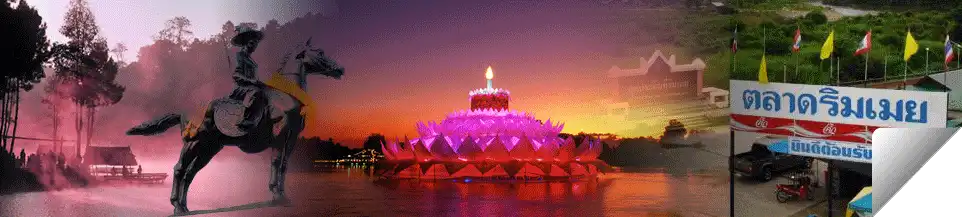
Chao Pho Khun Sam Chon Shrine
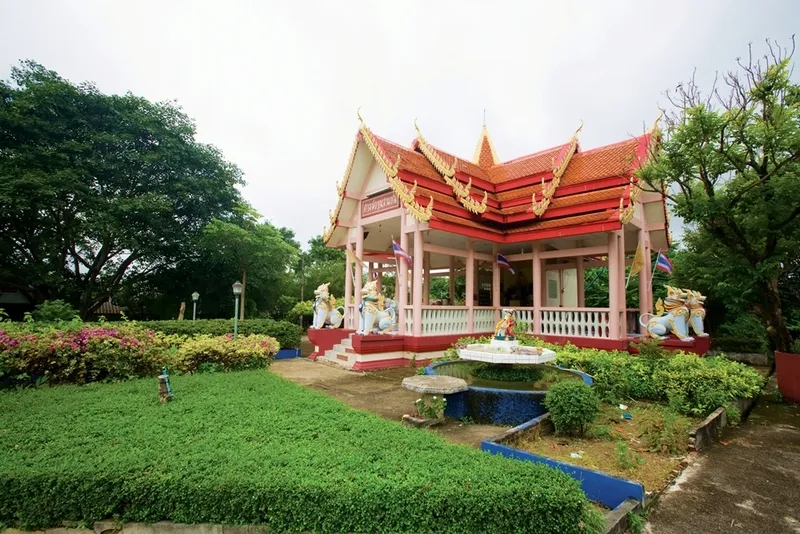
Open Days: Daily
Opening Hours: 08.00 – 16.00
Chao Pho Khun Sam Chon Shrine in Tak Province is a sacred roadside shrine located along Highway 105, the main route connecting Tak town with Mae Sot District. The shrine stands between kilometer markers 70 and 71 on the Tak–Mae Sot road, a mountain route that many travelers use when heading toward Mae Sot, Rim Moei Market, the Thai–Myanmar Friendship Bridge, and the border area between Thailand and Myanmar. Although it is not a large attraction, this shrine has long been respected by local residents and travelers as a place to stop, pay respect, and ask for safe passage before continuing through the winding mountain road.
For travelers driving from Tak to Mae Sot, Chao Pho Khun Sam Chon Shrine is a meaningful stop along the journey. The route includes slopes, bends, and long mountain sections, so many people prefer to pause at the shrine to rest briefly, calm their mind, and pray for a safe trip. This makes the shrine more than a roadside landmark. It is part of the cultural landscape of the Tak–Mae Sot route, where faith, travel, and local belief come together naturally.
The history of Chao Pho Khun Sam Chon Shrine is closely connected with a local story that has been passed down for decades. The shrine was completed and officially opened in late 1980. According to local belief, a wealthy man who had suffered from paralysis for a long time once had a dream in which someone told him to build a shrine at the present location. After he built the shrine as an offering and named it Chao Pho Khun Sam Chon Shrine, his condition returned to normal. This story strengthened local faith in the shrine, and since then many villagers and travelers have treated it with deep respect.
The name “Khun Sam Chon” gives the shrine a strong cultural identity. It evokes the image of a respected protective figure associated with courage, strength, and spiritual guardianship. While the shrine itself was built in the modern period, its importance comes from the faith of the community and the travelers who continue to stop here. In Thai culture, roadside shrines often become spiritual anchors for difficult routes, especially in mountainous areas where people traditionally seek protection before or during travel.
The shrine is modest in size and stands close to the road in a location that is easy to notice from the main route. Its atmosphere is simple, quiet, and respectful. Visitors usually stop for a short time to offer flowers, incense, candles, or other appropriate offerings. The shrine has a sacred image of Chao Pho Khun Sam Chon, and the surrounding area is used for worship and brief rest during the journey. Its value lies not in architectural grandeur, but in the sincerity of the faith attached to it.
One of the most memorable aspects of Chao Pho Khun Sam Chon Shrine is the origin story connected with the wealthy man who recovered from paralysis after building the shrine. In Thai belief, dreams, vows, offerings, and the creation of sacred places are often linked together. When a person believes they have received help from a spiritual force, building or maintaining a shrine becomes a way to express gratitude. Over time, when the wider community accepts the story, the shrine becomes a shared place of reverence.
For visitors interested in Thai cultural beliefs, this shrine is a useful example of how local faith shapes travel routes. Many roadside shrines in Thailand are not designed as conventional tourist attractions. Instead, they emerge from stories, memories, and the shared experiences of people who use the route regularly. Paying respect at such a shrine is a way of connecting with the road, the landscape, and the belief that spiritual protection can support a safe journey.
Highway 105 is one of the most important roads in Tak Province. It links the provincial town with Mae Sot, a major border district known for trade, multicultural communities, local markets, and cross-border travel. Along this road, travelers encounter not only natural scenery and mountain terrain but also sacred sites that local people regard as protectors of the route. Chao Pho Khun Sam Chon Shrine is one of those places, adding cultural depth to what might otherwise appear to be only a transit road.
When traveling from Tak town toward Mae Sot, the shrine is located on the right-hand side of Highway 105 between kilometer markers 70 and 71. It is best visited by private car or rental car, as the shrine is a roadside stop rather than a destination served by regular public transport. Visitors should slow down carefully, choose a safe stopping point, and avoid obstructing traffic. The road is used by private cars, buses, trucks, and local vehicles, so safety should always come first.
Getting There is most convenient by private car. From Tak town, follow Highway 105 toward Mae Sot District. Continue along the mountain road until reaching the area between kilometer markers 70 and 71, where the shrine stands on the right-hand side when traveling toward Mae Sot. Those coming from Mae Sot toward Tak should plan the turn and parking carefully. Because the route includes mountain sections and continuous curves, travelers should check their brakes, tires, fuel level, and vehicle condition before departure. Daytime travel is recommended for better visibility.
Visitors who wish to worship at the shrine may prepare flowers, incense, candles, or simple offerings. The visit should be conducted respectfully. Travelers should keep the area clean, avoid loud behavior, and park without blocking other vehicles. Since the shrine is a sacred place for local residents and passersby, appropriate conduct helps preserve its peaceful atmosphere and allows others to pay respect comfortably.
The atmosphere at Chao Pho Khun Sam Chon Shrine is suitable for travelers who appreciate local stories and cultural meaning rather than only large tourist sites. The shrine may be small, but it carries strong emotional value for many people. Its sacredness is not measured by size or age alone. It is shaped by continuous faith, repeated visits, and the belief that this place offers protection to those who pass along the Tak–Mae Sot route.
For a cultural travel route in Tak Province, the shrine can be combined with several nearby attractions. Travelers heading onward to Mae Sot may also stop at Chao Pho Phawo Shrine, another important sacred site on the Tak–Mae Sot road. From there, the journey can continue into Mae Sot town, where visitors can explore local temples, border markets, and multicultural neighborhoods. Popular stops include Wat Thai Wattanaram, Rim Moei Market, and the Thai–Myanmar Friendship Bridge.
From a traveler’s perspective, Chao Pho Khun Sam Chon Shrine is best included as a short but meaningful stop. It does not require a long visit, yet it gives travelers a better understanding of the beliefs surrounding this mountain route. Families can use the stop to explain how many Thai roads are connected with sacred places, local legends, and community memory. These elements form part of Thailand’s cultural landscape, particularly in provinces with mountain roads and border districts such as Tak.
Some travelers stop at the shrine to pray for good health, because the origin story of the shrine is linked with recovery from paralysis. Others pray for safe travel, smooth business, personal success, or general good fortune. The variety of wishes reflects the shrine’s broad spiritual role. It is a place where people express hope, gratitude, and respect, whether they are local residents, regular road users, or first-time visitors passing through the area.
Chao Pho Khun Sam Chon Shrine is also suitable for travelers interested in photographing roadside sacred sites, but photography should be done with restraint and respect. Visitors should avoid disruptive poses, should not interfere with people who are worshipping, and should remember that the shrine is first and foremost a place of faith. Respectful travel is especially important at sacred sites because these places continue to serve the spiritual needs of local communities.
A practical travel plan can begin in Tak town in the morning, following Highway 105 toward Mae Sot. After stopping at Chao Pho Khun Sam Chon Shrine, travelers can continue to Chao Pho Phawo Shrine and then enter Mae Sot town. Around midday, Mae Sot offers a variety of dining options, including Thai food, Burmese-influenced dishes, local cafés, and restaurants serving travelers on the border route. In the afternoon or evening, visitors can continue to Rim Moei Market or the Thai–Myanmar Friendship Bridge, then stay overnight in Mae Sot to avoid driving back through the mountain route at night.
The strength of Chao Pho Khun Sam Chon Shrine lies in its simplicity, its story, and its position on one of Tak Province’s most important travel routes. It gives travelers a chance to pause, pay respect, and recognize the local beliefs that remain embedded in everyday journeys. A visit here is not only an act of worship but also a way to understand how roads, mountains, communities, and faith are connected in western northern Thailand.
For travelers interested in sacred shrines in Tak Province, Mae Sot attractions, roadside worship sites, and local Thai beliefs, Chao Pho Khun Sam Chon Shrine is a worthwhile stop on the Tak–Mae Sot route. It reveals a quieter side of travel in Mae Sot, beyond border markets and natural scenery, and shows how deeply local faith can be woven into the experience of the road itself.
| Name | Chao Pho Khun Sam Chon Shrine |
| Location | Mae Sot District, Tak Province, Thailand |
| Address | Along Highway 105, Tak–Mae Sot Road, between kilometer markers 70 and 71, Mae Sot District, Tak Province 63110 |
| Highlights | A sacred roadside shrine on the Tak–Mae Sot route, commonly visited for blessings, good fortune, and safe travel |
| History | The shrine was completed and officially opened in late 1980. Local belief tells of a wealthy man who had suffered from paralysis and dreamed that he was told to build a shrine at this location. After building it as an offering, his condition returned to normal, and local people came to deeply respect the shrine. |
| Name Origin | The shrine is named after Chao Pho Khun Sam Chon, a revered protective figure respected by local residents and travelers. |
| Distinctive Features | A compact sacred shrine located beside a mountain highway, serving as a short worship and rest stop for travelers between Tak and Mae Sot |
| Travel Information | Follow Highway 105 from Tak town toward Mae Sot. The shrine is on the right-hand side between kilometer markers 70 and 71. Private car or rental car is the most convenient way to visit. |
| Current Status | Open for travelers and visitors to stop and pay respect |
| Open Days | Daily |
| Opening Hours | 08.00 – 16.00 |
| Main Areas / Zones | Worship area, sacred image of Chao Pho Khun Sam Chon, and roadside resting area |
| Nearby Tourist Attractions | 1. Chao Pho Phawo Shrine, about 8 km 2. King Naresuan Shrine, Mae Sot, about 19 km 3. Wat Thai Wattanaram, about 22 km 4. Rim Moei Market, about 26 km 5. Thai–Myanmar Friendship Bridge No. 1, about 26 km 6. Doi Muser Hill Tribe Market, about 41 km |
| Nearby Restaurants | 1. The Happy Café, about 15 km, Tel. 092-591-2777 2. Pla Sod Mueang Chot Restaurant, about 16 km, Tel. 089-839-1747 3. Khaomao-Khaofang Mae Sot, about 18 km, Tel. 063-665-5838 4. Roti Pae Ong Mae Sot, about 19 km, Tel. 082-769-4529 5. Borderline Tea Garden, about 20 km, Tel. 055-546-584 |
| Nearby Accommodations | 1. Centara Life Hotel Mae Sot, about 17 km, Tel. 055-532-601 to 055-532-608 2. B2 Mae Sot Boutique & Budget Hotel, about 18 km, Tel. 055-030-515 3. HOP INN Mae Sot Building A, about 18 km, Tel. 02-080-2222 4. Irawadee Resort, about 19 km, Tel. 055-535-430 5. J2 Hotel Maesot, about 20 km, Tel. 055-536-161, 085-090-4111 |
Frequently Asked Questions (FAQ)
Q: Where is Chao Pho Khun Sam Chon Shrine located?
A: Chao Pho Khun Sam Chon Shrine is located along Highway 105 on the Tak–Mae Sot route, between kilometer markers 70 and 71 in Mae Sot District, Tak Province.
Q: What is the history of Chao Pho Khun Sam Chon Shrine?
A: The shrine was completed and officially opened in late 1980. Local belief says it was built by a wealthy man who had suffered from paralysis after he dreamed that someone told him to build a shrine at the present location. After the shrine was built, his condition returned to normal, leading local people to deeply respect the site.
Q: How can travelers get to Chao Pho Khun Sam Chon Shrine?
A: The most convenient way is by private car or rental car. From Tak town, follow Highway 105 toward Mae Sot. The shrine is on the right-hand side between kilometer markers 70 and 71.
Q: When is the best time to visit Chao Pho Khun Sam Chon Shrine?
A: Daytime is the most suitable time to visit because the road, stopping point, and surrounding traffic are easier to see. Travelers should slow down carefully before stopping.
Q: What should visitors prepare for worship at the shrine?
A: Visitors may bring flowers, incense, candles, or simple offerings. They should behave respectfully, keep the area clean, avoid loud noise, and park without blocking traffic.
Q: What nearby attractions can be visited with Chao Pho Khun Sam Chon Shrine?
A: Nearby attractions include Chao Pho Phawo Shrine, King Naresuan Shrine in Mae Sot, Wat Thai Wattanaram, Rim Moei Market, and the Thai–Myanmar Friendship Bridge.
Q: Who should visit Chao Pho Khun Sam Chon Shrine?
A: The shrine is suitable for travelers driving between Tak and Mae Sot, visitors interested in sacred roadside shrines, and those who want to learn more about local beliefs in Tak Province.
 Category: ●Places of Worship
 Group: ●Other religious and spiritural sites
Last Update : 2 WeekAgo
 Last Update : 2 WeekAgo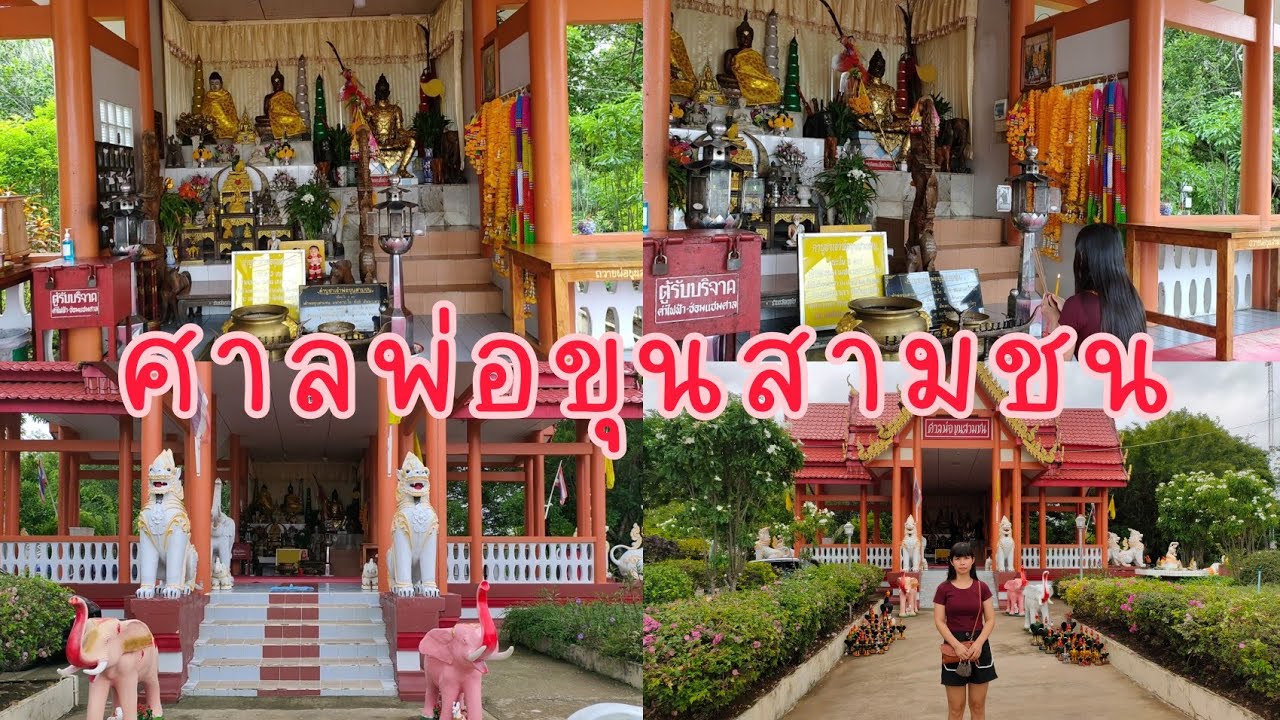
 Click to Access the Navigation Map GPS
Chao Pho Khun Sam Chon Shrine Map
Recommend
 Art, Culture and Heritage
 Historical Sites and Monuments(2)
 Landmarks and Memorials(3)
 Art, Craft Centres, Tradition(6)
 Historical Houses and The Ancient City(2)
 Educational Places
 Educational Gardens, Farm(2)
 Temple(22)
Other religious and spiritural sites(9)
Temple(22)
Other religious and spiritural sites(9)
 Suburban Living
 Village, Community(5)
 Local Market(3)
 Nature and Wildlife
 National Parks and Marine Reserves(9)
 Mountain (Doi)(9)
 Dam, Reservoir, Lake(14)
 Waterfalls(23)
 Hot Springs(2)
 Caves(6)
 River, Canal(1)
 Bays and Beaches(1)
 Islands(1)
 Other natural attractions(1)
 Entertainment and Agricultural
 Farm, Parks, Gardens and Ecotourism(5)
 Outdoor and Adventure Activities(4)


