
lovethailand home >North Travel Attractions >Tak Travel Attractions >Ban Tak >Ko Taphao > Shrine of King Taksin the Great
TL;DR: Shrine of King Taksin the Great is located at Charot Withi Thong Road, Nong Luang Subdistrict, Mueang Tak District, Tak Province, Near The Tourism Authority Of Thailand, Tak Office, open Daily, hours 06.00 – 17.30.
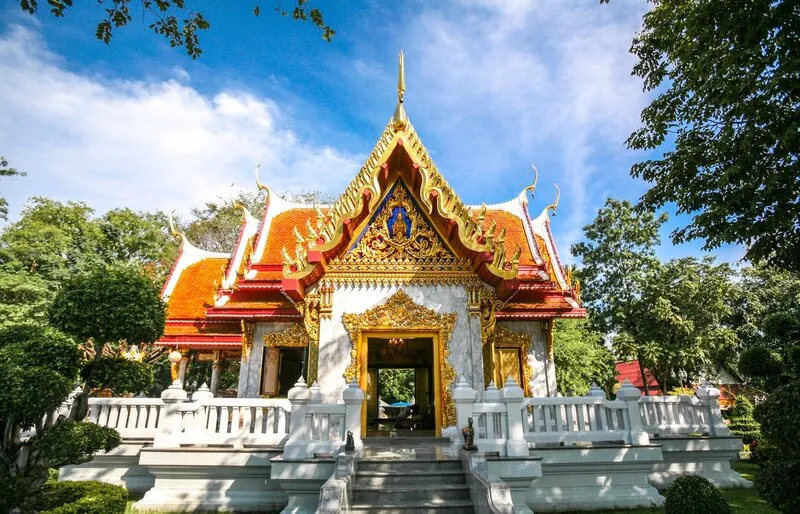
Shrine of King Taksin the Great
Open Days: Daily
Opening Hours: 06.00 – 17.30
King Taksin The Great Shrine, Tak Province is located on Charot Withi Thong Road, Nong Luang Subdistrict, Mueang Tak District, near the Tourism Authority of Thailand, Tak Office. It is one of the most important sacred sites in Tak and is regarded as the first King Taksin The Great shrine in Thailand. The present shrine was built in 1947 after the people of Tak agreed that the original shrine at Wat Doi Khao Kaeo was not sufficiently dignified for His Majesty. Inside the shrine is a royal statue of King Taksin The Great seated on a royal throne, with a royal sword resting across his lap. This shrine is an important place for worship, blessings, and learning about the history of Tak.
King Taksin The Great Shrine is one of the most important sacred landmarks in Tak Province. It is located on Charot Withi Thong Road, Nong Luang Subdistrict, Mueang Tak District, near the Tourism Authority of Thailand, Tak Office, and not far from the Tak Provincial Hall. The shrine is a spiritual center for the people of Tak and for visitors who travel to the province. It commemorates the royal benevolence of King Taksin The Great, one of the most important monarchs in Thai history, who is remembered as a former governor of Tak, a great military leader, the liberator of Siam, and the king of the Thonburi Kingdom.
For visitors traveling into Tak city, King Taksin The Great Shrine is often one of the first places to pay respect. The shrine reflects the history, faith, and identity of Tak in a complete way. Tak is not merely a transit city on the way to Northern Thailand or Mae Sot District. It is a historically significant town associated with military routes, regional administration, and major events in Thai history. This shrine therefore serves as a meaningful starting point for understanding Tak through one of the most important figures in Thai history.
Originally, King Taksin The Great Shrine was located at Wat Doi Khao Kaeo, across from Tak city. Later, in 1947, the people of Tak agreed that the original shrine was not sufficiently dignified for His Majesty. They therefore joined together to build a new shrine at the present location and commissioned the Fine Arts Department to cast a royal statue of King Taksin The Great. The statue is slightly larger than life size and depicts the king seated gracefully on a royal throne, with a royal sword resting across his lap. This posture expresses royal authority, determination, and military genius, qualities for which King Taksin The Great remains deeply remembered by Thai people today.
At the base of the royal statue is an inscription stating: “King Taksin of Thonburi was born in 1734 and passed away in 1782 at the age of 48.” This short inscription summarizes the span of his life for worshippers standing before the statue. Yet behind these dates lies the story of a monarch who lived through one of the most critical periods in Thai history. He gathered people after the second fall of Ayutthaya, broke through enemy encirclement, restored national independence, and established Thonburi as the new capital of the Thai kingdom.
What makes King Taksin The Great Shrine in Tak Province especially significant is that it is regarded as the first King Taksin The Great shrine in Thailand. This shrine is therefore more than a provincial memorial. It carries national significance because it reflects the long-standing devotion of the people of Tak toward the king. Tak was the town where King Taksin was once appointed governor before he later played a decisive role in restoring Thai independence. The name of Tak is therefore inseparably connected with his royal name.
The shrine is built in a four-gabled pavilion style, with red Chinese lanterns decorating the front and adding an auspicious atmosphere to the sacred site. Inside, the royal statue of King Taksin The Great is enshrined for public worship. The shrine also contains images and accounts of his royal biography for visitors to learn from. Behind the shrine are many statues and votive offerings, including war horses, war elephants, fighting roosters, and other items brought by devotees. These objects show that the shrine is not merely a static memorial, but a living place of faith where people continue to come to pray, ask for blessings, and return to fulfill vows.
Upon entering the shrine area, visitors can feel a combination of devotion, respect, and steady activity. Although the shrine is located in the city and close to important transport routes, the worship area still maintains a solemn and orderly atmosphere. Visitors include local people from Tak, tourists from other provinces, travelers passing through the city toward Mae Sot, and devotees who come specifically to pray. Many people stop to pay respect before beginning business in the city, before a long journey, or before starting a trip around Tak Province, seeking good fortune and peace of mind.
King Taksin The Great is deeply connected with Tak. At one point in his life, he was appointed governor of Tak, making the town an important part of his biography before the restoration of the kingdom. His role as governor reflected his ability in administration, leadership, and management of people in a strategically important frontier town. In the past, Tak was located on a route linking the Ping River basin, northern towns, and the western border area. It was therefore a town that required a leader with courage, ability, and strong judgment.
After the second fall of Ayutthaya, King Taksin The Great became the key leader who gathered people and military forces to restore independence. He broke through the encirclement of the Burmese army, established a power base, and led his forces back to fight until Thai independence was restored. He later founded Thonburi as the new capital. This role made him highly revered as a warrior king, a self-sacrificing leader, and the liberator of the Thai nation. Public devotion to him is therefore not limited to Tak Province but is found throughout Thailand.
The location of King Taksin The Great Shrine in Tak Province carries meaning beyond the construction of a memorial. It connects the king’s past with the real landscape associated with his life. When visitors stand before the royal statue inside this shrine, they are not merely looking at a cast image of a monarch. They are also encountering the memory of a town that was once part of his official life and historical path. This makes the act of worship more emotionally powerful, especially for visitors who are interested in Thai history.
The royal statue of King Taksin The Great inside the shrine shows him seated on a royal throne, with a sword resting across his lap. This image represents royal authority, stability, and the readiness of a military commander. The sword is not merely a decorative element of the statue. It symbolizes struggle, courage, and the protection of the land. Many worshippers therefore pray here for strength, the ability to overcome obstacles, career progress, victory in life’s challenges, and success in new beginnings.
In addition to the royal statue, one of the most striking sights for visitors is the large number of war horse, war elephant, and fighting rooster figures offered within the shrine area. War horses and war elephants are associated with armies, military campaigns, and battlefield leadership. Fighting roosters are connected with beliefs and stories that people associate with the king. These offerings are therefore not merely votive objects, but expressions of faith that reflect the relationship between worshippers and the royal charisma of King Taksin The Great.
Visitors who pay respect at King Taksin The Great Shrine often pray for victory and success, as well as safe travel, work, trade, health, stability, and new beginnings. Many believe that paying respect to him in Tak, a city directly connected with his royal biography, brings special encouragement and auspiciousness. This belief keeps the shrine active throughout the day, especially during weekends, holidays, festivals, and the annual celebration period.
Every year, around the transition from the end of the year to the New Year, Tak Province holds celebrations at King Taksin The Great Shrine. People from many areas travel to pay respect and join the activities. This annual event is both an expression of faith and a cultural occasion that reinforces the shrine’s role as a spiritual center of Tak. During the celebration, the atmosphere is livelier than usual, with many people bringing offerings, paying homage, and remembering the king’s royal benevolence.
King Taksin The Great Shrine is also a suitable place for learning history outside the classroom. Children, young people, and travelers can use their time at the shrine to understand why King Taksin The Great is so important to Thailand, why Tak is closely connected with him, and why people still come to pay respect without interruption. Learning through a real place helps make history more than a text in a book. It becomes an experience that can be felt through the location, atmosphere, and living faith of the people.
Architecturally, the four-gabled shrine pavilion is dignified and appropriate for an important city shrine. Its design places the royal statue in a prominent position while allowing visitors to enter and pay respect conveniently. The surrounding area is orderly, with places for flowers, incense, candles, and offerings. The front of the shrine is often decorated with auspicious elements, giving the site both solemnity and accessibility for the general public.
Another reason King Taksin The Great Shrine is popular is its convenient location. It is situated in Tak city, near the Tourism Authority of Thailand, Tak Office, close to main roads, and easily connected to other attractions in the city. Nearby places include Trok Ban Chin, the Rattanakosin Bicentennial Bridge, the Four Great Kings City Pillar Shrine, Wat Sitalaram, Wat Bot Mani Si Bunrueang, and the Ping River area. Even visitors with only half a day can plan a meaningful Tak city route starting from this shrine.
Trok Ban Chin is a nearby attraction that is suitable to visit after paying respect at the shrine. It is an old riverside community along the Ping River, known for old houses and the traditional atmosphere of Tak. Travelers interested in old-town history, local ways of life, and vernacular architecture can stroll, take photographs, and experience a calmer rhythm of life. When King Taksin The Great Shrine and Trok Ban Chin are included in the same route, visitors can understand Tak in both national historical and local community dimensions.
The Rattanakosin Bicentennial Bridge, also known as the Tak suspension bridge, is another attraction that pairs well with the shrine. The bridge is one of the symbols of Tak city and is located by the Ping River. It is suitable for walking, photography, and enjoying the riverside atmosphere, especially in the evening when the light is soft and the air is more relaxed. Visitors who begin with worship at King Taksin The Great Shrine in the late afternoon can continue to the riverside area or nearby restaurants with ease.
The Four Great Kings City Pillar Shrine is another important site to include in the same itinerary. It is a major shrine of Tak Province that commemorates 4 great kings: King Ramkhamhaeng The Great, King Naresuan The Great, King Narai The Great, and King Taksin The Great. Visiting King Taksin The Great Shrine together with the Four Great Kings City Pillar Shrine helps travelers see Tak’s wider importance in Thai history, including its connections with Thai monarchs, military routes, and city guardian beliefs.
Wat Sitalaram and Wat Bot Mani Si Bunrueang are temples in Tak city that can also be visited by those interested in local culture and old temples. These sites add to the image of Tak as a town with Buddhist roots and long-established communities. Travelers planning a cultural trip can begin at King Taksin The Great Shrine, continue to the temples, and end the day with a meal by the Ping River in the evening.
Getting There to King Taksin The Great Shrine is very convenient. By private car, travelers can enter Tak city from Phahonyothin Road and head toward Charot Withi Thong Road in Nong Luang Subdistrict. The shrine is located near the Tourism Authority of Thailand, Tak Office, and is not difficult to find. Travelers using public transport can get off at Tak Bus Terminal and continue by hired vehicle, songthaew, local taxi, or ride-hailing service to the shrine. The ride from the city area takes only a short time.
Travelers from Bangkok can use Phahonyothin Road toward Tak Province, then enter Tak city and proceed to Charot Withi Thong Road. Those coming from Chiang Mai, Lampang, or Kamphaeng Phet can also use main routes into Mueang Tak District and continue to the shrine. Because the shrine is located in the city, it is convenient to visit before beginning a Tak city itinerary, before continuing to Mae Sot District, or after returning from natural attractions in Tak Province.
The best times to visit are in the morning and late afternoon. Morning visits offer a calm atmosphere suitable for beginning the day with prayer. Late afternoon visits are convenient for travelers who wish to continue to riverside restaurants or explore Tak city when the heat has eased. During festivals or the annual celebration around the New Year period, visitors should allow extra travel time and plan parking in advance, as many people come to pay respect at the shrine.
Paying respect at King Taksin The Great Shrine should be done with composure and politeness. Visitors should dress modestly, light incense and candles only at designated points, place flowers and offerings neatly, and avoid loud noise inside the shrine area. If other people are worshipping or participating in a ceremony, visitors should keep a respectful distance. Photography should be done appropriately and never in a manner that shows disrespect toward the shrine or the royal statue.
Common offerings include flowers, incense, candles, garlands, and votive objects according to personal faith. Those who come to pray or fulfill vows should follow the customs of the place and keep the area clean after worship. If bringing offerings such as war horses, war elephants, or fighting roosters, visitors should place them in the appropriate area according to the guidance of the shrine caretakers. Meaningful worship does not require excessive offerings. What matters most is respect, sincerity, and gratitude for the king’s royal benevolence.
King Taksin The Great Shrine is suitable for many types of visitors. The first group includes those who revere King Taksin The Great and wish to pray for blessings. The second group includes people interested in Thai history who want to learn about his role in Tak. The third group includes travelers planning a half-day or full-day Tak city trip, because the shrine is close to several important places and can be connected easily with other attractions without spending much travel time.
For families traveling with children, the shrine is a meaningful learning space. Parents can explain the role of King Taksin The Great in Thai history, from his time as governor of Tak to his gathering of people after the fall of Ayutthaya, his restoration of independence, and the founding of Thonburi. This kind of learning helps children understand that history is not distant. It is connected with real places, real people, and a city that still exists today.
King Taksin The Great Shrine also helps visitors understand Tak on several levels. The first level is the faith of local people. The second is the role of Tak in national history. The third is contemporary cultural tourism that connects visitors from different places with the story of the city. When visitors spend time at the shrine with attention, they will see that this place is more than a check-in point. It is a space where the community remembers the past, prays in the present, and passes memory on to future generations.
For travelers who have only 1 day in Tak city, a good route can begin at King Taksin The Great Shrine in the morning. Afterward, continue to Trok Ban Chin to see the old community and local way of life, then visit Wat Sitalaram or Wat Bot Mani Si Bunrueang. Have lunch at a restaurant in the city, then spend the afternoon at the Four Great Kings City Pillar Shrine or the Rattanakosin Bicentennial Bridge before ending the day with dinner by the Ping River. This route allows visitors to experience Tak through history, religion, community life, and riverside scenery in one day.
For those continuing to Mae Sot District, King Taksin The Great Shrine is also a suitable stop before leaving the city. Visitors can pray for safe travel before entering the mountainous route toward western Tak. Travelers returning from Mae Sot can also stop at the shrine before staying overnight in Tak city or continuing to another province. The shrine’s location is therefore convenient both for those intentionally exploring Tak city and for those using Tak as a transit stop.
Visitors interested in the annual celebration should follow the event period around the end of the year and the beginning of the New Year in Tak Province. During this time, the shrine has a more special atmosphere than usual, with many people gathering to pay respect and join commemorative activities. It clearly reflects the deep faith of the people of Tak and visitors from across the country. However, those who prefer a quiet atmosphere should visit on weekdays or in the morning to have more time for worship and to observe the shrine details without hurry.
Overall, King Taksin The Great Shrine in Tak Province is a place that should not be missed when visiting Tak. It is a city shrine, a spiritual center, a historical learning site, and a strong starting point for exploring Tak city. The dignified royal statue, the story of the shrine’s relocation from Wat Doi Khao Kaeo, the construction of the new shrine in 1947, and the lasting devotion of the people all give this site a value far beyond that of an ordinary tourist attraction. Visitors can gain auspiciousness, historical understanding, and a deeper appreciation of Tak’s role in Thai history.
| Place Name | King Taksin The Great Shrine |
| Location | Charot Withi Thong Road, Nong Luang Subdistrict, Mueang Tak District, Tak Province, Near The Tourism Authority Of Thailand, Tak Office |
| Address | Charot Withi Thong Road, Nong Luang Subdistrict, Mueang Tak District, Tak Province 63000 |
| Coordinates | Latitude 16.886033, Longitude 99.121247 |
| Highlights | The First King Taksin The Great Shrine In Thailand, A Sacred Landmark Of Tak Province, And A Place Where Visitors Pay Respect To The Royal Statue Of King Taksin The Great Seated On A Royal Throne |
| History / Period / Era | The Original Shrine Was Located At Wat Doi Khao Kaeo, Across From Tak City. In 1947, The People Of Tak Built A New Shrine In A More Dignified Location And Commissioned The Fine Arts Department To Cast The Royal Statue Of King Taksin The Great. |
| Name Origin | Named After King Taksin The Great, The Monarch Of The Thonburi Kingdom, Who Was Closely Connected With Tak As A Former Governor And As The Leader Who Restored Thai Independence |
| Distinctive Features | A Four-Gabled Shrine Pavilion Housing A Royal Statue Slightly Larger Than Life Size, With A Royal Sword Resting Across The King’s Lap. Behind The Shrine Are Offerings Such As War Horses, War Elephants, And Fighting Roosters. |
| Important Inscription | “King Taksin Of Thonburi Was Born In 1734 And Passed Away In 1782 At The Age Of 48.” |
| Significance | A Spiritual Center Of Tak Province, A Place To Remember The Royal Benevolence Of King Taksin The Great, And A Historical Learning Site Related To Tak City |
| Traditions / Rituals | Annual Celebrations And Worship Activities Are Held Around The End Of The Year And The New Year Period, Drawing Visitors From Many Areas To Pay Homage And Commemorate The King’s Royal Benevolence. |
| Common Offerings | Flowers, Incense, Candles, Garlands, War Horse Figures, War Elephant Figures, Fighting Rooster Figures, And Other Votive Offerings According To Personal Faith |
| Getting There | Accessible By Private Car Or Local Transport In Tak City. From Phahonyothin Road, Enter Tak City And Head Toward Charot Withi Thong Road, Nong Luang Subdistrict. Public Bus Travelers Can Get Off At Tak Bus Terminal And Continue By Local Transport Or Hired Vehicle. |
| Current Status | A Sacred City Shrine And Historical Attraction Of Tak Province, Open Daily For Local People And Visitors To Pay Respect |
| Open Days | Daily |
| Opening Hours | 06.00 – 17.30 |
| Facilities | Worship Area, Flower And Incense Offering Points, Nearby Parking, And Shops / Restaurants Around The Area During Busy Worship Periods |
| Administrator / Information Contact | King Taksin The Great Shrine, Tel. 055-516-121, And Tourism Authority Of Thailand, Tak Office, Tel. 055-514-341-3 |
| Main Contact Number | 055-516-121 |
| Nearby Tourist Attractions | 1. King Taksin The Great Public Park, Approximately 0.1 Km. 2. Rattanakosin Bicentennial Bridge, Approximately 2 Km. 3. Trok Ban Chin, Approximately 2 Km. 4. Wat Sitalaram, Approximately 2 Km. 5. Wat Bot Mani Si Bunrueang, Approximately 3 Km. 6. Four Great Kings City Pillar Shrine, Approximately 4 Km. |
| Nearby Restaurants | 1. Chidchon Restaurant, Approximately 0.3 Km. Tel. 089-540-2546, 055-512-366 2. Rim Ping Terrace Restaurant, Viang Tak Riverside Hotel, Approximately 2 Km. Tel. 055-512-507-8, 081-887-2905 3. Ban Khiang Nam Restaurant, Tak, Approximately 3 Km. Tel. 055-894-069, 081-953-9441 4. Iyarawadee Restaurant, Approximately 3 Km. Tel. 096-636-4542, 094-242-6441 5. Predee Phochana, Approximately 3 Km. Tel. 081-707-3800, 082-595-8145 6. Hia Auan Khao Tom Tor Rung, Approximately 3 Km. Tel. 085-846-1117, 094-081-2954 |
| Nearby Accommodations | 1. B2 Tak Boutique & Budget Hotel / B-Rich Hotel Area, Approximately 0.3 Km. 2. HOP INN Tak, Approximately 0.7 Km. Tel. 02-080-2222 3. Viang Tak Riverside Hotel, Approximately 2 Km. Tel. 055-512-507, 081-887-2905 4. Suansin Garden Hotel, Approximately 3 Km. Tel. 055-893-444 5. White House Hotel Tak, Approximately 5 Km. Tel. 055-514-444, 099-234-7774 |
Frequently Asked Questions (FAQ)
Q: Where Is King Taksin The Great Shrine In Tak Located?
A: King Taksin The Great Shrine is located on Charot Withi Thong Road, Nong Luang Subdistrict, Mueang Tak District, Tak Province, near the Tourism Authority of Thailand, Tak Office.
Q: Why Is King Taksin The Great Shrine In Tak Important?
A: The shrine is a sacred landmark of Tak Province and is regarded as the first King Taksin The Great shrine in Thailand. It was built to commemorate the royal benevolence of King Taksin The Great, a former governor of Tak and the monarch who restored Thai independence.
Q: When Was King Taksin The Great Shrine Built?
A: The present shrine was built in 1947 after the people of Tak agreed that the original shrine at Wat Doi Khao Kaeo was not sufficiently dignified for His Majesty.
Q: What Is Important Inside King Taksin The Great Shrine?
A: Inside the shrine is a royal statue of King Taksin The Great, slightly larger than life size, seated on a royal throne with a royal sword across his lap. The shrine also contains many votive offerings, including war horse, war elephant, and fighting rooster figures.
Q: What Are The Opening Hours Of King Taksin The Great Shrine?
A: King Taksin The Great Shrine is open daily from 06.00 to 17.30.
Q: What Is The Best Time To Visit King Taksin The Great Shrine?
A: Morning is ideal for peaceful worship, while late afternoon is suitable for visiting before continuing to nearby restaurants or attractions in Tak city. During the New Year celebration period, visitors should allow extra time because the shrine can be crowded.
Q: How Can Visitors Travel To King Taksin The Great Shrine?
A: By private car, enter Tak city and head toward Charot Withi Thong Road in Nong Luang Subdistrict. Travelers using public buses can get off at Tak Bus Terminal and continue by local transport or hired vehicle to the shrine.
Q: Where Should Visitors Go After Visiting King Taksin The Great Shrine?
A: Visitors can continue to King Taksin The Great Public Park, Rattanakosin Bicentennial Bridge, Trok Ban Chin, Wat Sitalaram, Wat Bot Mani Si Bunrueang, and the Four Great Kings City Pillar Shrine, all of which can be included conveniently in a Tak city itinerary.
 Category: ●Places of Worship
 Group: ●Other Sacred Sites
Last Update : 4 MonthAgo
 Last Update : 4 MonthAgo
 Click to Access the Navigation Map GPS
Shrine of King Taksin the Great Map
Recommend

 Art, Culture and Heritage
 Historical Sites and Monuments(2)
 Landmarks and Memorials(3)
 Art, Craft Centres, Tradition(6)
 Historic Homes and Cities(2)
 Educational Places
 Educational Gardens, Farm(2)
 Temple(22)
Other Sacred Sites(9)
Temple(22)
Other Sacred Sites(9)
 Suburban Living
 Village, Community(5)
 Local Market(3)
 Nature and Wildlife
 National Parks and Marine Reserves(9)
 Mountain (Doi)(9)
 Dam, Reservoir, Lake(14)
 Waterfalls(23)
 Hot Springs(2)
 Caves(6)
 River, Canal(1)
 Bays and Beaches(1)
 Islands(1)
 Other natural attractions(1)
 Entertainment and Agricultural
 Farms, Parks and Ecotourism(5)
 Outdoor and Adventure Activities(4)


