
lovethailand home >North Travel Attractions >Tak Travel Attractions >Mae Sot >Mae Pa > King Naresuan The Great Shrine
TL;DR: King Naresuan The Great Shrine is located at Opposite Mae Sot Municipal Stadium And Next To Dipangkorn Rasmijoti Science And Environmental Learning Park, Mae Sot District, Tak Province, open Daily, hours Open For Worship Throughout The Day.
King Naresuan The Great Shrine
Open Days: Daily
Opening Hours: Open For Worship Throughout The Day
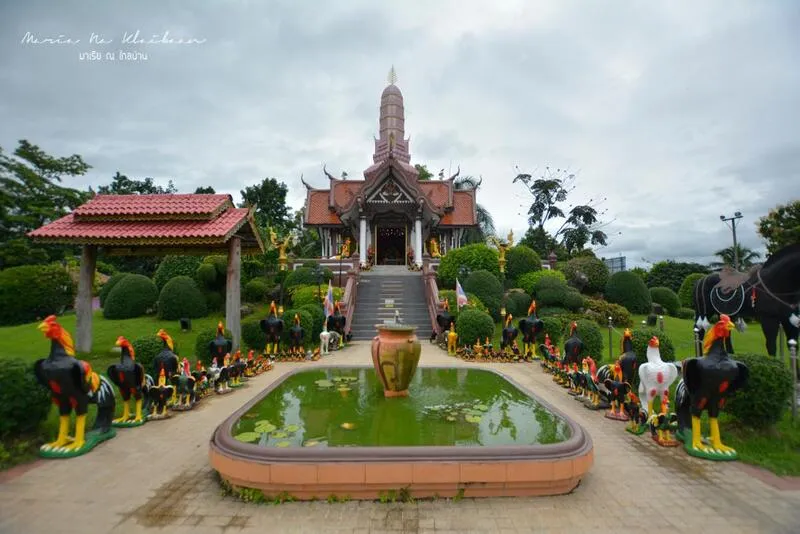
King Naresuan The Great Shrine, Tak Province, is located in Mae Sot District, opposite Mae Sot Municipal Stadium and next to Dipangkorn Rasmijoti Science and Environmental Learning Park. The shrine was built in 2002 to commemorate the royal benevolence of King Naresuan The Great. It is associated with the historical route after the king declared independence at Mueang Khraeng and returned through Mae Lamao Pass in Mae Sot as the first point into Thai territory. Within the shrine area are a life-size war elephant statue, a beautifully landscaped garden, and many fighting rooster statues offered by devotees as vow fulfillments. It is a meaningful place to pay respect for auspiciousness before entering or leaving Mae Sot.
King Naresuan The Great Shrine in Tak Province is an important sacred site in Mae Sot District. It is located opposite Mae Sot Municipal Stadium and next to Dipangkorn Rasmijoti Science and Environmental Learning Park. The shrine stands in an accessible part of Mae Sot town, making it easy to connect with nearby attractions, restaurants, accommodations, and the main routes of the district. Many travelers entering or leaving Mae Sot stop here to pay respect for good fortune, especially those traveling along the Tak-Mae Sot route, toward Mae Sot Border Checkpoint, or through the Thai-Myanmar border area. The shrine is closely tied to the historical route of King Naresuan The Great and his return after declaring independence.
The shrine was built in 2002 to commemorate the royal benevolence of King Naresuan The Great, one of Thailand’s most revered monarchs and a key figure in the declaration of independence and restoration of Ayutthaya’s sovereignty. The connection between the king and Mae Sot is linked to the route after his declaration of independence at Mueang Khraeng in present-day Myanmar. On his return to the Thai kingdom, King Naresuan passed through Mae Lamao Pass in Mae Sot as the first area on Thai land. This gives Mae Sot historical significance as a frontier gateway connected with one of the most important royal episodes in Thai history.
King Naresuan The Great is highly respected by Thai people because he was a warrior king with exceptional ability in warfare, governance, and the restoration of national independence. He declared independence from Hanthawaddy at Mueang Khraeng in 1584. This event marked a decisive turning point in Thai history because it expressed Ayutthaya’s determination to regain sovereignty and stand independently. The fact that his return route passed through Mae Lamao Pass and the Mae Sot area gives this border town an important place in the national historical memory.
Mae Sot has long been an important border district. Its geography connects northern Thailand with the Myanmar side, and routes through Mae Lamao Pass and Mae Sot Border Checkpoint have long supported travel, trade, cultural exchange, and security. King Naresuan The Great Shrine is therefore more than a place of worship in town. It is a symbol of memory connected with frontier routes, the return to independence, and the courage of a monarch who led the Thai kingdom through a crucial historical period.
The shrine area has a peaceful and reverent atmosphere. Within the grounds is a life-size statue of King Naresuan’s war elephant, set within a well-maintained and beautifully landscaped garden. The war elephant is an important symbol associated with the king’s military genius. The image of the elephant allows visitors to connect visually with the grandeur of Ayutthaya-period warfare and gives the shrine a strong historical identity that goes beyond an ordinary place of worship.
At the front of the shrine are many fighting rooster statues offered by devotees as vow fulfillments. Fighting roosters are commonly associated with King Naresuan The Great in Thai popular belief, representing courage, contest, intelligence, and victory. The large number of rooster statues reflects the continuing faith of visitors. When worshippers make vows and later receive what they prayed for, they often return with rooster figures as offerings, giving the shrine a visibly active atmosphere of devotion.
What makes King Naresuan The Great Shrine in Mae Sot interesting is that it is located in a lively border town while still preserving a sense of reverence and auspiciousness. Visitors include local residents, tourists, border traders, travelers going to or from Mae Sot Border Checkpoint, and people traveling along the Mae Sot-Tak route. Many stop here before a long journey or before important business, believing that paying respect to King Naresuan The Great brings strength, confidence, and safety on the road.
Prayers at King Naresuan The Great Shrine often concern victory, success, overcoming obstacles, courage, career progress, safe travel, and auspiciousness in life. People involved in border trade, travel, or new undertakings often regard this shrine as an appropriate place to ask for blessings because the royal name of King Naresuan The Great represents determination, decisive leadership, and the ability to overcome difficulty.
The area around the shrine includes a garden and open space, allowing visitors to walk around comfortably. The atmosphere is not rushed like a typical transit point. Although the shrine is near a stadium and urban community areas, it remains calm enough for visitors to pray and reflect. Families can use the visit as an opportunity to teach children about King Naresuan The Great, the declaration of independence, and Mae Sot’s role as the area connected with Mae Lamao Pass. A stop at the shrine therefore becomes not only a moment of worship but also an outdoor history lesson.
The shrine’s location beside Dipangkorn Rasmijoti Science and Environmental Learning Park also makes the area interesting as a learning zone. In the same area, visitors can encounter history, faith, science, environment, and community activity. Travelers in Mae Sot can therefore design a route that covers more than one theme: paying respect at the shrine, visiting the nearby learning park, continuing to important temples in Mae Sot, or heading toward Rim Moei Market and the First Thai-Myanmar Friendship Bridge.
Historically, King Naresuan The Great is strongly associated with military campaigns, the declaration of independence, and the defense of the kingdom. He was born in Phitsanulok in 1555, the son of King Maha Thammaracha and Queen Wisutkasat. He ascended the throne in 1590 and became a monarch who expanded Ayutthaya’s power and strengthened the kingdom extensively. The declaration of independence at Mueang Khraeng is one of the defining events that made his royal name a symbol of freedom and victory.
Mae Lamao Pass and Mae Sot District are central to the story of this shrine because they connect the land of Myanmar with the Thai kingdom. King Naresuan’s passage through Mae Lamao was not simply a geographic detail. It symbolized the return to Thai territory after the declaration of independence, a crossing from political pressure back toward the mission of restoring Ayutthaya’s strength. This gives Mae Sot a powerful historical meaning as a place of return and transition.
King Naresuan The Great Shrine therefore serves as a tangible place of remembrance in Mae Sot. Visitors standing before the shrine do not see only sacred images and offerings. They also encounter the relationship between a Thai monarch and a border landscape, the memory of a military route, and the meaning of independence expressed through a real place in the present.
For travelers interested in history, the shrine is a suitable starting point for a Mae Sot itinerary. It helps explain that Mae Sot is not only a contemporary trading town or border district, but also a place connected with national history through military routes and the return to independence. When visitors continue to Rim Moei Market, the Thai-Myanmar Friendship Bridge, or Wat Thai Wattanaram, they can see Mae Sot through several dimensions: faith, border history, blended culture, and local economy.
Wat Thai Wattanaram is a nearby place that pairs well with the shrine because of its distinctive Tai Yai and Burmese-influenced art and culture. It adds to the image of Mae Sot as a district of ethnic and cultural diversity. After paying respect at King Naresuan The Great Shrine, visitors can continue to this temple to see Buddhist images, architecture, and the borderland faith that clearly reflects Mae Sot’s cultural character.
Rim Moei Market and the First Thai-Myanmar Friendship Bridge are also suitable stops after the shrine. They reflect Mae Sot’s role as a border town with long-standing trade and international movement. Beginning the trip with worship at King Naresuan The Great Shrine helps connect the historical meaning of Mae Lamao Pass and cross-border routes with the present-day market and bridge that continue to connect people, goods, and cultures between Thailand and Myanmar.
Wat Chumphon Khiri and Wat Manee Praison are important temples in Mae Sot town that can be included in the same itinerary. Wat Chumphon Khiri has the atmosphere of an old temple and artistic features that reflect Mae Sot’s character. Wat Manee Praison is respected by local people and located not far from the town area. Visiting these temples together with King Naresuan The Great Shrine helps travelers see Mae Sot as a historical town, a place of faith, and a border community.
Getting There to King Naresuan The Great Shrine is easiest by private car, rental car, or local hired vehicle. From Tak city, take Highway 12, the Tak-Mae Sot route, toward Mae Sot District. Once in Mae Sot town, head toward Mae Sot Municipal Stadium. The shrine is located opposite the stadium and next to Dipangkorn Rasmijoti Science and Environmental Learning Park. This location is easy to find and suitable for a worship stop before continuing to other attractions in Mae Sot.
Travelers using public buses can get off at Mae Sot Bus Terminal or a stop in Mae Sot town, then continue by hired vehicle, songthaew, or ride-hailing service to the shrine. The distance within town is not far, and it is easy to plan a continued route to nearby attractions. Travelers arriving by air can land at Mae Sot Airport, then take local transport into town and continue to the shrine.
The best times to visit are in the morning and late afternoon. Morning offers a calm atmosphere suitable for praying before starting a journey or beginning activities in Mae Sot. Late afternoon is suitable for stopping before dinner or before returning to accommodation. During strong sun, visitors should bring a hat or umbrella because parts of the shrine area are open garden spaces.
Visitors should dress modestly and behave respectfully. Although the shrine is an open urban site and easy to access, it remains a sacred place respected by local people. Incense, candles, and offerings should be placed only in designated areas. Visitors should avoid loud noise, climbing on statues or structures, moving votive offerings unnecessarily, and littering around the shrine.
Common offerings include flowers, incense, candles, garlands, and fighting rooster figures for vow fulfillment. Those who come to pray should do so with respect and do not need excessive offerings. What matters most is sincerity, gratitude, and remembrance of the royal benevolence of King Naresuan The Great. Simple but sincere worship is most appropriate for this sacred place.
King Naresuan The Great Shrine is suitable for several types of visitors. The first group includes those who revere King Naresuan The Great and wish to pray for blessings. The second includes travelers interested in Thai history and the Mae Sot-Mae Lamao route. The third includes people passing through Mae Sot who want to stop for auspiciousness before continuing their journey. The fourth includes families or student groups who want to learn history through a real place in Mae Sot town.
For a 1-day Mae Sot trip, visitors can begin at King Naresuan The Great Shrine in the morning, then continue to Wat Thai Wattanaram, Wat Chumphon Khiri, or Mae Sot Market to experience border-town life. Around midday, enjoy a meal in Mae Sot town. In the afternoon, continue to Rim Moei Market and the First Thai-Myanmar Friendship Bridge before returning to walk around or stay in town. This route allows visitors to see Mae Sot through history, faith, community, and border culture in one day.
For those continuing to Mae Sot Border Checkpoint or Rim Moei Market, stopping at the shrine before departure is a suitable beginning. It gives the trip a dimension of faith and history before entering the contemporary trade and travel zone of the border town. Mae Sot is a city where old and new coexist. King Naresuan The Great Shrine serves as a landmark reminding travelers of the historical roots of this area.
Overall, King Naresuan The Great Shrine in Tak Province is a worthwhile stop when traveling to Mae Sot. It was built to commemorate the royal benevolence of a king who declared independence and whose historical route passed through Mae Lamao Pass. The shrine contains a life-size war elephant statue, a beautifully landscaped garden, and many fighting rooster votive offerings that reflect public faith. Visitors gain auspiciousness, historical understanding, and a deeper appreciation of Mae Sot’s role as a border town connected with Thai national history.
Visiting King Naresuan The Great Shrine is therefore more than a brief worship stop before travel. It is a tangible connection with the history of a border route and the heroic memory of King Naresuan The Great. Standing before the shrine, visitors can see symbols of victory through the war elephant, fighting roosters, and the royal charisma of the king, while also recognizing that Mae Sot has deeper meaning than being only a trade checkpoint or transit town. For travelers visiting Mae Sot, this shrine is a place of worship and learning that deserves a place in the itinerary.
| Place Name | King Naresuan The Great Shrine, Tak Province |
| Location | Opposite Mae Sot Municipal Stadium And Next To Dipangkorn Rasmijoti Science And Environmental Learning Park, Mae Sot District, Tak Province |
| Address | Mae Sot Subdistrict, Mae Sot District, Tak Province 63110 |
| Highlights | A Shrine Built To Commemorate King Naresuan The Great, Featuring A Life-Size War Elephant Statue And Many Fighting Rooster Figures Offered By Devotees As Vow Fulfillments |
| History / Period / Era | Built In 2002 To Commemorate The Royal Benevolence Of King Naresuan The Great After His Declaration Of Independence At Mueang Khraeng And His Return Through Mae Lamao Pass In Mae Sot As The First Area On Thai Land |
| Distinctive Features | The Shrine Grounds Include A Beautifully Landscaped Garden, A Life-Size War Elephant Statue Of King Naresuan The Great, And Many Fighting Rooster Votive Figures At The Front Of The Shrine |
| Significance | An Important Place Of Worship In Mae Sot, Reflecting The Royal Benevolence Of King Naresuan The Great And Connecting Mae Sot With The Historical Route After The Declaration Of Independence |
| Common Offerings | Flowers, Incense, Candles, Garlands, And Fighting Rooster Figures For Vow Fulfillment According To Personal Faith |
| Getting There | From Tak City, Take Highway 12 On The Tak-Mae Sot Route Toward Mae Sot District. In Mae Sot Town, Head To Mae Sot Municipal Stadium. The Shrine Is Located Opposite The Stadium And Next To Dipangkorn Rasmijoti Science And Environmental Learning Park. |
| Current Status | A Place Of Worship And Historical Attraction In Mae Sot District, Open To Local People And Visitors For Paying Respect And Seeking Auspiciousness |
| Open Days | Daily |
| Opening Hours | Open For Worship Throughout The Day |
| Facilities | Worship Area, Garden Area, Nearby Parking, And Convenient Access To Mae Sot Municipal Stadium And Nearby Learning Facilities |
| Administrator / Information Contact | Mae Sot City Municipality, Education Division, Tel. 055-547449 Ext. 351, 416 |
| Main Contact Number | 055-547449 Ext. 351, 416 |
| Nearby Tourist Attractions | 1. Dipangkorn Rasmijoti Science And Environmental Learning Park, Approximately 0.1 Km. 2. Mae Sot Municipal Stadium, Approximately 0.1 Km. 3. Wat Manee Praison, Approximately 2 Km. 4. Wat Chumphon Khiri, Approximately 3 Km. 5. Wat Thai Wattanaram, Approximately 5 Km. 6. Rim Moei Market, Approximately 8 Km. 7. First Thai-Myanmar Friendship Bridge, Approximately 8 Km. |
| Nearby Restaurants | 1. Gai Yang Wai Run Tham Kin, Approximately 2 Km. Tel. 095-674-8671 2. Krua Canadian, Approximately 2 Km. Tel. 055-534-659 3. Pa Nee-Pa Thong, In Front Of Wat Luang, Approximately 3 Km. Tel. 061-583-1655 4. Kwang Tung Restaurant, Approximately 3 Km. Tel. 055-532-030, 086-447-0206 5. Khao Mao-Khao Fang Mae Sot, Approximately 5 Km. Tel. 062-293-8185, 062-378-8187 6. Borderline Tea Garden, Approximately 4 Km. |
| Nearby Accommodations | 1. B2 Mae Sot Boutique & Budget Hotel, Approximately 1 Km. Tel. 052-009-161, 088-263-2897 2. HOP INN Mae Sot, Approximately 2 Km. 3. The Teak Hotel Mae Sot, Approximately 3 Km. Tel. 055-031-888 4. Irawadee Resort Mae Sot, Approximately 4 Km. Tel. 055-535-430 5. Centara Life Mae Sot, Approximately 4 Km. Tel. 055-532-601-8 6. Hotels Near Rim Moei Market / Thai-Myanmar Friendship Bridge Area, Approximately 8 Km. |
Frequently Asked Questions (FAQ)
Q: Where Is King Naresuan The Great Shrine In Tak Located?
A: King Naresuan The Great Shrine is located in Mae Sot District, Tak Province, opposite Mae Sot Municipal Stadium and next to Dipangkorn Rasmijoti Science and Environmental Learning Park.
Q: When Was King Naresuan The Great Shrine In Mae Sot Built?
A: King Naresuan The Great Shrine was built in 2002 to commemorate the royal benevolence of King Naresuan The Great.
Q: How Is King Naresuan The Great Shrine Connected With Mae Sot?
A: The shrine is connected with the historical route after King Naresuan The Great declared independence at Mueang Khraeng and returned through Mae Lamao Pass in Mae Sot as the first area on Thai land.
Q: What Is Interesting Inside King Naresuan The Great Shrine?
A: The shrine area includes a life-size war elephant statue of King Naresuan The Great, a beautifully landscaped garden, and many fighting rooster figures offered by devotees as vow fulfillments.
Q: What Do People Usually Pray For At King Naresuan The Great Shrine?
A: Worshippers commonly pray for victory, success, overcoming obstacles, courage, career progress, safe travel, and auspiciousness in life.
Q: How Can Visitors Travel To King Naresuan The Great Shrine?
A: From Tak city, take Highway 12 on the Tak-Mae Sot route toward Mae Sot District. In Mae Sot town, head to Mae Sot Municipal Stadium. The shrine is located opposite the stadium. Public transport travelers can continue by hired vehicle from Mae Sot town.
Q: What Is The Best Time To Visit King Naresuan The Great Shrine?
A: Morning and late afternoon are the best times because the weather is not too hot and the atmosphere is suitable for worship. Many visitors also stop here before leaving Mae Sot or before traveling toward the border for auspiciousness.
Q: Where Should Visitors Go After Visiting King Naresuan The Great Shrine?
A: Visitors can continue to Dipangkorn Rasmijoti Science and Environmental Learning Park, Wat Manee Praison, Wat Chumphon Khiri, Wat Thai Wattanaram, Rim Moei Market, and the First Thai-Myanmar Friendship Bridge.
 Category: ●Places of Worship
 Group: ●Other Sacred Sites
Last Update : 5 MonthAgo
 Last Update : 5 MonthAgo
 Click to Access the Navigation Map GPS
King Naresuan The Great Shrine Map
Recommend

 Art, Culture and Heritage
 Historical Sites and Monuments(2)
 Landmarks and Memorials(3)
 Art, Craft Centres, Tradition(6)
 Historic Homes and Cities(2)
 Educational Places
 Educational Gardens, Farm(2)
 Temple(22)
Other Sacred Sites(9)
Temple(22)
Other Sacred Sites(9)
 Research and Development
 Royal Project(1)
 Suburban Living
 Village, Community(5)
 Local Market(3)
 Nature and Wildlife
 National Parks and Marine Reserves(11)
 Mountain (Doi)(9)
 Dam, Reservoir, Lake(14)
 Waterfalls(23)
 Hot Springs(2)
 Caves(6)
 River, Canal(1)
 Bays and Beaches(1)
 Islands(1)
 Other natural attractions(1)
 Entertainment and Agricultural
 Farms, Parks and Ecotourism(5)
 Outdoor and Adventure Activities(4)
 Travel Articles, Recipes
 Travel Review, Food Review(1)


