
lovethailand home >North Travel Attractions >Tak Travel Attractions >Mae Sot >Tha Sai Luat > Phra That Hin Kio at Doi Din Chi
TL;DR: Phra That Hin Kio at Doi Din Chi is located at Ban Wang Takhian, Tha Sai Luat Subdistrict, Mae Sot District, Tak Province, open Daily, hours Open-Air Monastic And Sacred Area; Daytime Visits Are Recommended.
Phra That Hin Kio at Doi Din Chi
Open Days: Daily
Opening Hours: Open-Air Monastic And Sacred Area; Daytime Visits Are Recommended
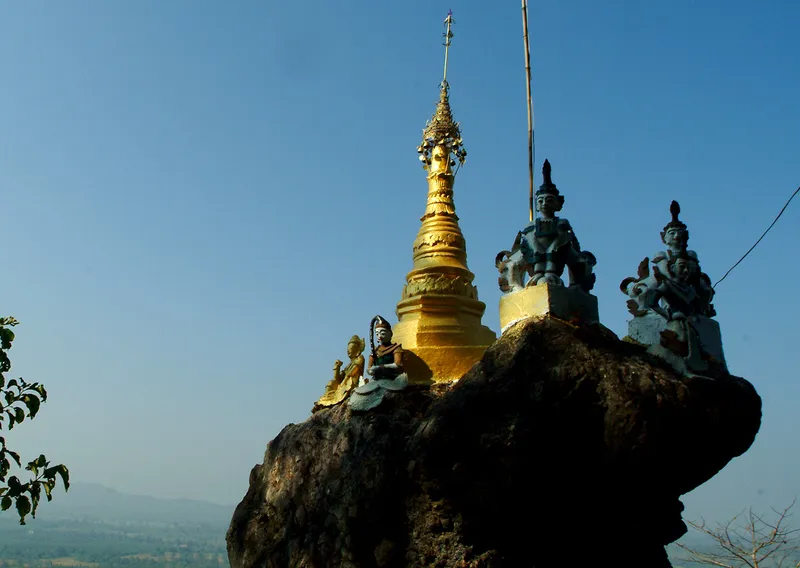
Phra That Hin Kio at Doi Din Chi, also known as Samnaksong Phra That Doi Hin Kio, is located at Ban Wang Takhian in Tha Sai Luat Subdistrict, Mae Sot District, Tak Province. It is one of the most distinctive sacred landmarks in Mae Sot, famous for a small Mon-style stupa built directly on top of a huge rock balanced on a high cliff. The rock has a narrow waist-like base that appears as if it might break apart, yet it remains standing dramatically on the cliff edge. Because of this extraordinary natural formation, local people often call it the “Stone Chedi of Phra Inthra Khaen,” comparing it with the famous Kyaiktiyo Golden Rock in Myanmar.
This sacred site is meaningful for both spiritual visitors and cultural travelers. For pilgrims, the stupa enshrines relics and is deeply respected by local communities in Tak Province, Mae Sot, nearby districts, and border communities connected with Myanmar. For travelers, the site offers a rare combination of faith, geology, landscape, and borderland culture. The image of a Mon-style chedi standing precisely on a large rock with a narrow base is unforgettable and makes the site one of the most visually remarkable attractions in Mae Sot.
The name Doi Din Chi is connected with the color and appearance of the surrounding earth and stones. The rocks in the area have dark brown or burnt-looking tones, similar to soil affected by fire. The word Hin Kio refers to the narrow, pinched shape of the rock base, which looks as if it is squeezed or nearly separated. These natural features gave the place both its local name and its sacred identity. Over time, the unusual rock formation became associated with Buddhist faith, and a stupa was built on top as an act of devotion.
Inside the stupa are sacred relics locally known as Phaya Long. The relics are revered by people in Tak and surrounding areas. Every year in February, local residents, devotees from Mae Sot, and visitors from nearby communities gather for the annual worship festival of Phra That Hin Kio. This festival is one of the most important spiritual events associated with the site and reflects the living faith of the border community. During this period, the site becomes especially active with merit-making, worship, and local religious activities.
Local tradition tells that the stupa was built by a Karen devotee named Phasuey Cha during the period when Myanmar was under British rule. He was deeply devoted to Buddhism and carried rupee coins on the back of an elephant in search of a suitable place to build a stupa as an offering. When he arrived at the cliff of Hin Kio, he saw the large rock standing above the high edge of the mountain and noticed its resemblance to Myanmar’s Golden Rock. He then chose this place for the construction of the stupa. After completion, sacred relics and five golden Buddha images were enshrined inside the chedi.
The stupa itself is small but powerful in appearance. Its Mon-style form reflects the cultural connection between Mae Sot and Myanmar, especially through the long-standing presence of Mon, Karen, Tai Yai, Thai, and border communities. The structure fits the width of the rock almost perfectly, creating a balanced and sacred visual composition. Building a chedi in such a limited and elevated location required strong faith and careful effort, which is why the site continues to inspire respect among visitors.
From the area around Phra That Hin Kio, visitors can see wide views of the Moei River and the mountain ranges on the Myanmar side. This borderland scenery is one of the great rewards of visiting the site. The river, mountains, and communities below make the experience more than a simple temple visit. It becomes a chance to understand Mae Sot as a border town shaped by geography, trade, religion, and cultural exchange.
Another important feature of the site is an ancient boat discovered on April 5, 1996 by local villagers of Ban Wang Takhian. The boat was recovered and preserved near the foot of Doi Din Chi. It was carved from a single log and measures about 13.35 meters in length. Its form suggests that it may have been used to transport food or goods between the two sides of the Moei River. This ancient boat adds another historical layer to the site, linking the sacred mountain with river transport, local livelihoods, and cross-border exchange in the past.
Phra That Hin Kio is therefore important in several ways. It is a natural wonder because of the huge rock balanced on a cliff. It is a sacred Buddhist site because of the stupa and relics enshrined there. It is a cultural landmark because it reflects Mon and Myanmar-influenced Buddhist art. It is also a borderland viewpoint where travelers can see the relationship between Mae Sot, the Moei River, and Myanmar’s mountain landscape.
The annual February worship festival is the most important time for local faith. Devotees travel to the site to pay respect to the relics, make merit, and participate in religious activities. For travelers who want to experience living local culture, this festival period is especially meaningful. It shows that Phra That Hin Kio is not only a scenic attraction, but also a living spiritual center for the people of Tha Sai Luat and Mae Sot.
Visitors who prefer a peaceful atmosphere should come on ordinary weekdays or in the morning. The weather is more comfortable, the site is quieter, and there is more time to appreciate the stupa, the rock formation, and the surrounding views. Comfortable walking shoes, drinking water, sun protection, and modest clothing are recommended. Because the site is a sacred place on a hillside, visitors should walk carefully and respect the religious atmosphere.
Getting There is straightforward from Mae Sot. Use Highway 105 toward Rim Moei Market, then turn right and pass Ban Tha At and Ban Wang Takhian. From the turnoff, the road continues for about 3 km to the Phra That area. The route is best traveled by private car, rental car, or local transport. Travelers staying in Mae Sot can combine the visit with Rim Moei Market, the Thai-Myanmar Friendship Bridge, Wat Thai Wattanaram, and other attractions in Tha Sai Luat.
A half-day itinerary works well for this area. Travelers can start from Mae Sot town, continue to Rim Moei Market to experience border trade, visit Phra That Hin Kio for worship and scenic views, and then stop at the Thai-Myanmar Friendship Bridge or Wat Thai Wattanaram before returning to Mae Sot. This route combines religion, local culture, scenery, and border-town atmosphere in one trip.
The atmosphere of Phra That Hin Kio is calm outside the festival period. The wind on the hill, the view across the Moei River, and the stupa standing on the dramatic rock create a strong sense of place. Many visitors come to pray, take photographs, and enjoy the peaceful mountain setting. The site is especially suitable for cultural photography because it includes a sacred chedi, unusual rock formation, cliff scenery, river views, and mountains on the Myanmar side.
As a landmark of Tha Sai Luat, Phra That Hin Kio helps travelers understand Mae Sot beyond its markets and border checkpoint. Mae Sot is also a place of faith, ethnic diversity, Buddhist art, and natural scenery. This sacred hilltop site is ideal for travelers interested in Mon-style stupas, local legends, Buddhist pilgrimage, and the cultural relationship between Thailand and Myanmar.
Visitors should dress modestly, speak respectfully, avoid climbing on unsafe rocks or sacred structures, and keep the area clean. Photography is welcome when done respectfully, especially during religious events. The site belongs to the living faith of the local community, so it should be approached as both a tourist attraction and a sacred place.
Overall, Phra That Hin Kio at Doi Din Chi is one of the most memorable places to visit in Mae Sot. The combination of a cliffside rock, a small Mon-style chedi, sacred relics, local legend, ancient river history, and panoramic border views makes it a destination with unusual depth. For travelers who want to see the spiritual and cultural side of Tak Province, this hilltop stupa is a highly rewarding stop.
| Name | Phra That Hin Kio at Doi Din Chi / Samnaksong Phra That Doi Hin Kio |
| Location | Ban Wang Takhian, Tha Sai Luat Subdistrict, Mae Sot District, Tak Province |
| Address | 3002 Rural Road, Tha Sai Luat Subdistrict, Mae Sot District, Tak 63110, Thailand |
| Coordinates | 16.760630, 98.491910 |
| Highlights | A Mon-style stupa built on a huge narrow-based rock on a high cliff, with views of the Moei River and Myanmar mountains |
| History | Local legend says the stupa was built by a Karen Buddhist devotee named Phasuey Cha during the period when Myanmar was under British rule |
| Name Origin | Hin Kio refers to the narrow waist-like rock base, while Doi Din Chi refers to the burnt-looking dark brown soil and stones in the area |
| Distinctive Features | A dramatic rock formation known locally as the Stone Chedi of Phra Inthra Khaen, with a small stupa placed precisely on top |
| Main Areas / Zones | The cliffside stupa, Moei River viewpoint, nearby Buddha footprint area, monastic area, and an ancient boat preserved near the foot of Doi Din Chi |
| Annual Tradition | The annual worship festival of Phra That Hin Kio is held every February |
| Travel Information | Use Highway 105 toward Rim Moei Market, turn right through Ban Tha At and Ban Wang Takhian, then continue about 3 km to the site |
| Current Status | An active monastic and sacred tourist site in Tha Sai Luat, open for worship and daytime visits |
| Open Days | Daily |
| Opening Hours | Open-air monastic and sacred area; daytime visits are recommended |
| Facilities | Parking area, worship area, viewpoint, and basic facilities in the monastic area and nearby community |
| Caretaker / Local Authority | Samnaksong Phra That Doi Hin Kio and Tha Sai Luat Subdistrict Administrative Organization |
| Main Contact Number | Tha Sai Luat Subdistrict Administrative Organization, Tel. 055-564-000 |
| Official Website / Official Page | https://www.tasailuad.go.th |
| Nearby Tourist Attractions | 1. Rim Moei Market, about 5 km 2. Thai-Myanmar Friendship Bridge No. 1, about 6 km 3. Wat Thai Wattanaram, about 8 km 4. Chao Pho Phawo Shrine, about 13 km 5. King Naresuan the Great Shrine, Mae Sot, about 13 km |
| Nearby Restaurants | 1. Ang Ang Lui Fai Tha Sai Luat, about 7 km, Tel. 081-123-0501 2. Kai Yang Na Cho Kho 34, about 8 km, Tel. 055-563-111, 084-577-7793 3. Roti Pae Ong Mae Sot, about 13 km, Tel. 082-769-4529 4. Roti Ong Nai Tamnan, about 13 km, Tel. 085-610-0622 5. Mughal Restaurant Mae Sot, about 14 km, Tel. 091-389-2180 |
| Nearby Accommodations | 1. Irawadee Resort Mae Sot, about 11 km, Tel. 055-535-430 2. The Teak Hotel, about 13 km, Tel. 055-031-888 3. Maesot Siri Hotel, about 14 km, Tel. 063-645-9094 4. Centara Life Hotel Mae Sot, about 16 km, Tel. 055-532-601-8 5. White House Hotel Mae Sot, about 15 km |
Frequently Asked Questions (FAQ)
Q: Where is Phra That Hin Kio at Doi Din Chi located?
A: It is located at Ban Wang Takhian in Tha Sai Luat Subdistrict, Mae Sot District, Tak Province, near the route to Rim Moei Market and the Thai-Myanmar Friendship Bridge.
Q: What makes Phra That Hin Kio special?
A: Its main feature is a small Mon-style stupa built on a huge narrow-based rock standing on a high cliff, creating a dramatic and sacred image.
Q: Why is it called Doi Din Chi?
A: The name comes from the dark brown, burnt-looking soil and stones in the area, while Hin Kio refers to the narrow shape of the rock base.
Q: When is the annual worship festival held?
A: The annual worship festival of Phra That Hin Kio is held every February.
Q: How do travelers get to Phra That Hin Kio?
A: Use Highway 105 toward Rim Moei Market, turn right through Ban Tha At and Ban Wang Takhian, then continue about 3 km to the site.
Q: Who should visit Phra That Hin Kio?
A: The site is ideal for travelers interested in Buddhist relics, Mon-style stupas, unusual natural rock formations, borderland scenery, and Mae Sot culture.
Q: What nearby places can be visited on the same trip?
A: Travelers can combine the visit with Rim Moei Market, the Thai-Myanmar Friendship Bridge, Wat Thai Wattanaram, Chao Pho Phawo Shrine, and Mae Sot town.
 Category: ●Art, Culture and Heritage
 Group: ●Historical Sites and Monuments
Last Update : 4 MonthAgo
 Last Update : 4 MonthAgo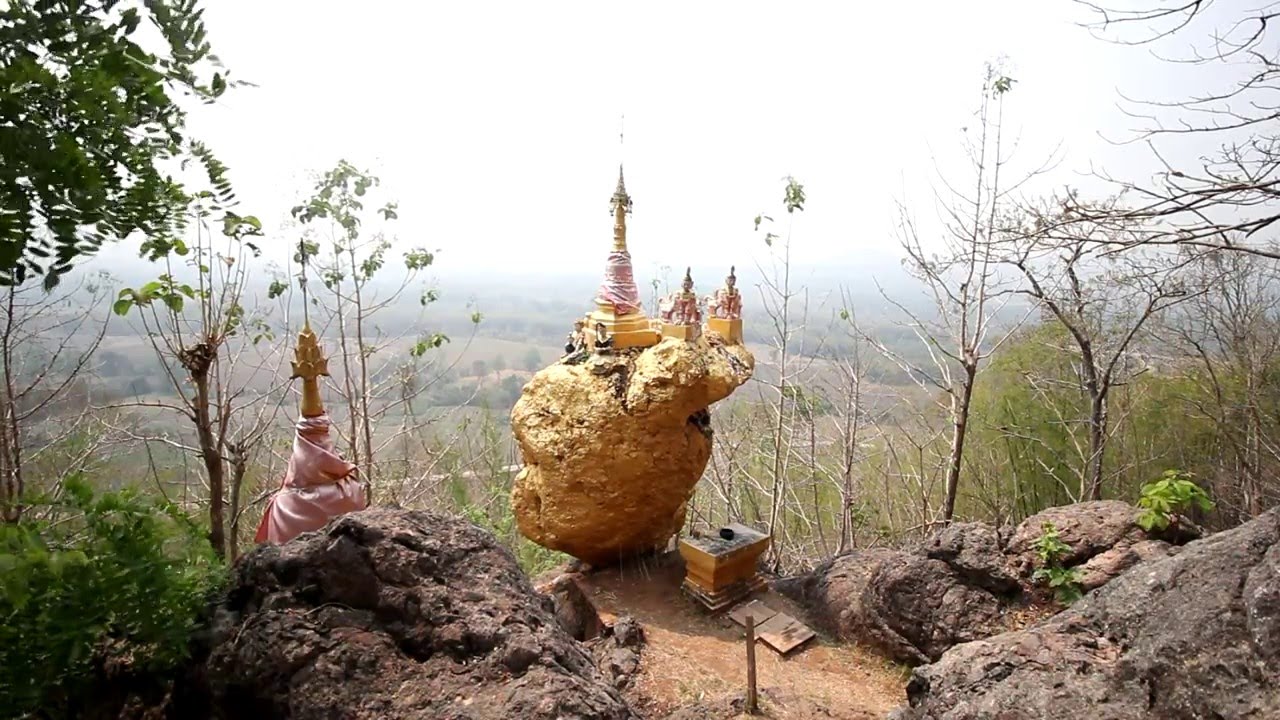
 Click to Access the Navigation Map GPS
Phra That Hin Kio at Doi Din Chi Map
Recommend
 Historical Sites and Monuments(2)
 Landmarks and Memorials(3)
 Art, Craft Centres, Tradition(6)
 Historic Homes and Cities(2)
 Educational Places
 Educational Gardens, Farm(2)
 Places of Worship
 Temple(22)
 Other Sacred Sites(9)
 Suburban Living
 Village, Community(5)
 Local Market(3)
 Nature and Wildlife
 National Parks and Marine Reserves(9)
 Mountain (Doi)(9)
 Dam, Reservoir, Lake(14)
 Waterfalls(23)
 Hot Springs(2)
 Caves(6)
 River, Canal(1)
 Bays and Beaches(1)
 Islands(1)
 Other natural attractions(1)
 Entertainment and Agricultural
 Farms, Parks and Ecotourism(5)
 Outdoor and Adventure Activities(4)


