
lovethailand home >North Travel Attractions >Tak Travel Attractions >Um Phang >Um Phang > Ancient House
TL;DR: Ancient House is located at Umphang community, Umphang District, Tak Province, open Advance coordination is recommended before visiting because the site is part of, hours Daytime visits are recommended.

Ancient House
Open Days: Advance coordination is recommended before visiting because the site is part of a living community and private residential area
Opening Hours: Daytime visits are recommended
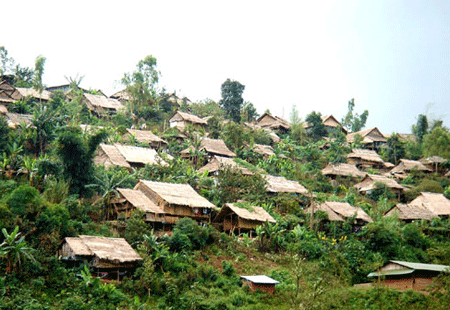
Ancient Houses in Umphang, Tak Province offer a quiet but meaningful cultural experience in one of Thailand’s most remote and atmospheric mountain districts. These old wooden houses are not simply architectural remains; they are living evidence of how local people adapted their homes, materials, and daily routines to the landscape, climate, forest environment, and community life of Umphang.
Umphang is a small district in Tak Province surrounded by mountains, forests, and long winding roads. Many travelers know Umphang for Thi Lo Su Waterfall, rafting, Doi Hua Mot, and the natural beauty of the western forest complex. Yet beyond its dramatic landscapes, Umphang also preserves a quieter cultural identity through traditional wooden houses that still reflect a simple and practical way of life.
The ancient houses of Umphang are mostly single-storey wooden structures raised above the ground. Their elevated floors allow air to circulate beneath the house, reduce humidity, and create usable space under the floor. The open area below the house can be used for storage, resting, household work, or daily family activities. This design shows how local architecture responds directly to climate and lifestyle rather than following decorative trends.
One of the most recognizable features of these houses is the front staircase leading up to the veranda. The veranda is more than a passageway; it is a social space where residents can sit, rest, welcome guests, talk with neighbors, or perform small daily tasks. A bench often runs along the edge of the veranda, creating a warm and informal setting that reflects the close relationship between household life and community interaction.
The roofs of these traditional houses were commonly made with local materials such as tong tung leaves, wooden shingles, and terracotta tiles. Each material carries its own practical and cultural meaning. Leaf roofing blends naturally with the forest environment, wooden shingles show local carpentry skills, and terracotta tiles provide durability while maintaining a traditional appearance. These materials reveal a way of building that depends on local resources, local knowledge, and long experience with the environment.
The wooden fences, often made from leftover timber slabs, are another distinctive detail. They define the boundary of each home without creating a harsh separation from the surrounding village. This type of fence gives the neighborhood a gentle and natural character. Walking through the community, visitors can sense that the houses are part of everyday life, not isolated museum displays.
What makes the ancient houses of Umphang especially valuable is that they remain connected to the lives of local people. Some houses are still related to real families and residential spaces. For this reason, visitors should approach the area with respect. These houses are not stage sets for photography; they are part of family memory, community identity, and local heritage.
The Ancient House Club has played an important role in encouraging homeowners and the community to understand the cultural value of these traditional houses. This approach supports the development of the houses as cultural visit points while respecting their role as private homes. Good conservation does not mean freezing houses in the past. It means allowing old houses to continue existing within modern community life while preserving their distinctive character.
For travelers interested in local culture, traditional architecture, and rural life, the ancient houses of Umphang offer a deeper perspective on the district. A visit here is best experienced slowly. Instead of rushing through the area, travelers should observe the details of the wooden structures, the raised floors, the verandas, the roofing materials, and the relationship between the houses and the surrounding village.
From an architectural point of view, these houses represent practical vernacular wisdom. The raised structure helps deal with damp ground and ventilation. The veranda creates a flexible space between the interior and the outside world. The open underfloor area expands the usefulness of the house without requiring additional built space. Every part of the house reflects real use, local knowledge, and adaptation to place.
From a social point of view, the houses represent community relationships. Umphang is a culturally diverse border district where Thai local communities and ethnic groups have long interacted with the forest and mountain landscape. The old wooden houses, open verandas, benches, fences, and underfloor spaces all support a lifestyle built around family, neighbors, and daily cooperation.
Travelers should understand that visiting these houses is a form of cultural learning. It is important not to enter private spaces without permission, not to touch personal belongings, not to make excessive noise, and not to photograph residents without consent. Responsible visiting helps ensure that cultural tourism benefits the community rather than disturbing it.
The ancient houses also add an important cultural dimension to an Umphang itinerary. Many visitors come to the district for nature and adventure, but these houses remind travelers that Umphang is also a living community with history, memory, and local identity. They connect the natural landscape with the human stories that have developed within it.
The charm of the ancient houses lies in their unpolished authenticity. They are modest, practical, and deeply connected to the village setting. Their beauty is not grand or ornamental. It comes from proportion, material, usefulness, and the gentle atmosphere of a mountain community. In an era when many old wooden houses across Thailand are disappearing, the remaining houses in Umphang are valuable cultural evidence.
Conserving these traditional houses is important because they help preserve local identity. If all old wooden houses were replaced by modern buildings, the community would lose a visible part of its cultural memory. Developing them carefully as cultural visit points can encourage local pride, support community-based tourism, and create a reason for future generations to value vernacular architecture.
Getting There usually begins from Tak town or Mae Sot. From Mae Sot, travelers continue along the mountain road to Umphang, a scenic but winding route that requires careful driving and sufficient travel time. Once in Umphang town, visitors should ask local authorities or community coordinators for the appropriate way to visit the ancient house area. A private car or rental vehicle is the most convenient option, especially for travelers who want to combine the visit with Umphang Local Museum, Doi Hua Mot, rafting routes, and Thi Lo Su Waterfall.
Daytime is the best time to visit because the architectural details are easier to see. The wooden walls, roof materials, raised floors, verandas, and fences can be appreciated clearly in natural light. Travelers who enjoy photography should choose respectful angles and avoid intruding into private residential areas. The cool season offers comfortable weather, while the rainy season brings lush mountain scenery, though road conditions and travel time should be planned carefully.
For a richer cultural experience, visitors can combine the ancient houses with Umphang Local Museum. The museum provides additional context about local history and culture, while the houses offer a real-life view of traditional domestic architecture. Together, they help travelers understand Umphang not only as a destination of waterfalls and forests, but also as a community shaped by people, houses, food, local materials, and borderland culture.
The ancient houses of Umphang are ideal for travelers who prefer meaningful, low-impact cultural tourism. They show how local architecture grows from real life. The roof, staircase, veranda, bench, fence, and open underfloor space all have practical functions and cultural meanings. Visiting them with respect allows travelers to appreciate a quieter side of Umphang that is just as important as its famous natural attractions.
| Name | Ancient Houses, Umphang District, Tak Province |
| Location | Umphang community, Umphang District, Tak Province |
| Address | Umphang Subdistrict, Umphang District, Tak Province 63170, Thailand |
| Highlights | Traditional wooden houses in a living mountain community, with raised floors, open underfloor areas, front verandas, wooden benches, timber fences, and local roofing materials |
| History | Traditional vernacular houses reflecting the simple lifestyle and local building wisdom of Umphang’s border community |
| Name Origin | The name refers to old wooden houses and traditional local homes that retain their original character within the Umphang community |
| Distinctive Features | Single-storey wooden houses raised above the ground, front staircases, verandas with benches, timber fences, and roofs made from local materials such as tong tung leaves, wooden shingles, and terracotta tiles |
| Travel Information | Travel from Mae Sot to Umphang along the mountain road. Upon arrival in Umphang town, ask local authorities or community coordinators for the appropriate visit route. |
| Current Status | Traditional wooden houses can still be seen in the community and should be visited respectfully because the area includes real residential spaces |
| Open Days | Advance coordination is recommended before visiting because the site is part of a living community and private residential area |
| Opening Hours | Daytime visits are recommended |
| Facilities | Local government offices and basic travel services are available in Umphang town, including restaurants, accommodations, and local travel information points |
| Main Areas / Zones | Traditional wooden house area, verandas, raised underfloor spaces, timber fences, and the surrounding community setting |
| Caretaker | Ancient House Club and homeowners in the community |
| Local Authorities | Umphang Subdistrict Administrative Organization, Tel. 055-561416 Umphang Subdistrict Municipality, Tel. 055-561613 or 055-561018 |
| Nearby Tourist Attractions | 1. Umphang Local Museum, about 1 km 2. Wat Nong Luang, about 1 km 3. Doi Hua Mot, about 10 km 4. Thi Lo Cho Waterfall, about 15 km 5. Umphang Wildlife Sanctuary / route to Thi Lo Su Waterfall, about 40 km |
| Nearby Restaurants | 1. The La Land, about 1 km, Tel. 062-929-9494 2. Baan Kru Sun, about 1 km, Tel. 055-561149 3. Krua Pa Nee Umphang, about 1 km 4. Krua Khon Baan Hao, about 2 km 5. Amo Apa Coffee, about 2 km |
| Nearby Accommodations | 1. Umphangburi Resort, about 2 km, Tel. 055-561576 2. Phudoi Campsite & Resort, about 2 km, Tel. 055-561049, 098-4561914 3. Umphang House, about 2 km, Tel. 088-426-4109 4. Baan Jiranan, about 1 km 5. BAAN Thatcha, about 1 km |
Frequently Asked Questions (FAQ)
Q: Where are the ancient houses in Umphang located?
A: They are located within the Umphang community in Umphang District, Tak Province, where traditional wooden houses still reflect the district’s local way of life.
Q: What makes the ancient houses of Umphang special?
A: They are traditional wooden houses with raised floors, open underfloor spaces, front verandas, timber fences, and roofs made from local materials such as tong tung leaves, wooden shingles, and terracotta tiles.
Q: Are the ancient houses a museum or real homes?
A: The area includes real community and residential spaces, so visitors should coordinate in advance and respect the privacy of homeowners.
Q: What is the best time to visit the ancient houses?
A: Daytime is recommended because visitors can clearly see the wooden structures, roof materials, verandas, raised floors, and fences.
Q: Who takes care of the ancient houses in Umphang?
A: The Ancient House Club, local homeowners, and local authorities in Umphang are the key parties connected with the area.
Q: How do travelers get to Umphang?
A: Most travelers go from Mae Sot to Umphang along the mountain road. The route is scenic but winding, so careful driving and sufficient travel time are important.
Q: What nearby places can be visited together with the ancient houses?
A: Travelers can also visit Umphang Local Museum, Wat Nong Luang, Doi Hua Mot, Thi Lo Cho Waterfall, and the route to Thi Lo Su Waterfall.
Q: How should visitors behave when visiting the ancient houses?
A: Visitors should ask permission before entering private areas or taking close-up photos, avoid touching personal belongings, keep noise low, and respect the community’s daily life.
Tel : 05551287
 Tel : 05551287
 Category: ●Art, Culture and Heritage
 Group: ●Historic Homes and Cities
Last Update : 2 MonthAgo
 Last Update : 2 MonthAgo
 Click to Access the Navigation Map GPS
 Historical Sites and Monuments(2)
 Landmarks and Memorials(3)
 Art, Craft Centres, Tradition(6)
Historic Homes and Cities(2)
Art, Craft Centres, Tradition(6)
Historic Homes and Cities(2)
 Educational Places
 Educational Gardens, Farm(2)
 Places of Worship
 Temple(22)
 Other Sacred Sites(9)
 Suburban Living
 Village, Community(5)
 Local Market(3)
 Nature and Wildlife
 National Parks and Marine Reserves(9)
 Mountain (Doi)(9)
 Dam, Reservoir, Lake(14)
 Waterfalls(23)
 Hot Springs(2)
 Caves(6)
 River, Canal(1)
 Bays and Beaches(1)
 Islands(1)
 Other natural attractions(1)
 Entertainment and Agricultural
 Farms, Parks and Ecotourism(5)
 Outdoor and Adventure Activities(4)


