
lovethailand home >North Travel Attractions >Tak Travel Attractions >Um Phang >Mae La Mung > Thi Lo Su Waterfall (Namtok Saifon)
TL;DR: Thi Lo Su Waterfall (Namtok Saifon) is located at Umphang Wildlife Sanctuary, Umphang District, Tak Province, open Open according to the official announcement of Umphang Wildlife Sanctuary, hours Contact Umphang Wildlife Sanctuary before traveling.
Thi Lo Su Waterfall (Namtok Saifon)
Open Days: Open according to the official announcement of Umphang Wildlife Sanctuary; visitors should contact the sanctuary before traveling
Opening Hours: Contact Umphang Wildlife Sanctuary before traveling
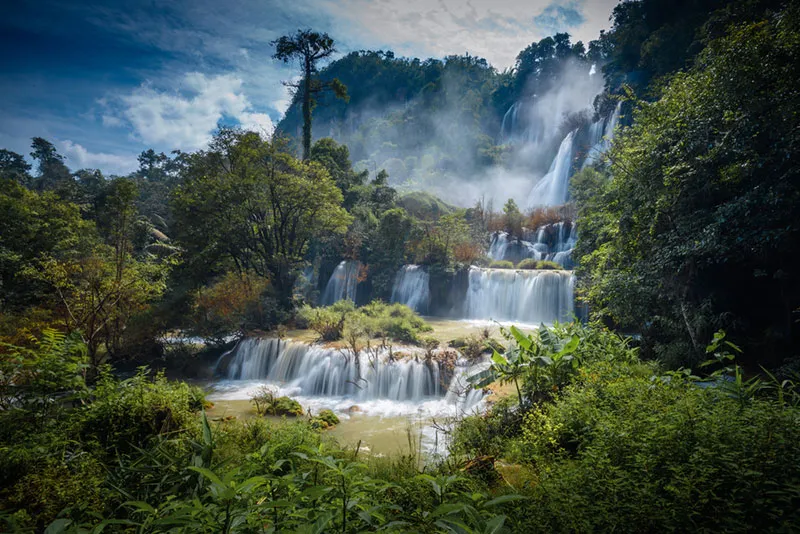
Thi Lo Su Waterfall in Tak Province is one of the grandest and most spectacular waterfalls in Thailand. Located inside Umphang Wildlife Sanctuary in Umphang District, Tak Province, the waterfall stands deep within the western forest complex, an area known for rugged mountains, rich biodiversity, pristine streams, and dense tropical forest. Thi Lo Su is a massive limestone mountain waterfall formed by Huai Klo Tho, a natural stream that spreads widely across a cliff before plunging down in powerful tiers. The enormous white curtain of water, the echoing sound of the falls, and the surrounding green forest make Thi Lo Su a destination that leaves a lasting impression on travelers who love nature and adventure.
The name “Thi Lo Su” is commonly associated with the language of the Karen or Pga K’nyau people who live in and around the forested highlands of Umphang. The name is often interpreted as referring to a powerful, great, or majestic waterfall. Another form, “Thi Lo Chu,” is also used in connection with the idea of a grand waterfall. These names reflect not only the physical scale of the waterfall, but also the deep respect local communities have for the power of water, forest, and mountains. Thi Lo Su is not simply a scenic spot; it is a natural landmark whose name carries cultural memory and local identity.
Thi Lo Su Waterfall is located at an elevation of about 900 meters above sea level. The surrounding landscape is mountainous and heavily forested, with deep valleys, streams, limestone formations, and humid forest ecosystems. Because the waterfall lies within Umphang Wildlife Sanctuary, it is part of a protected area managed primarily for wildlife conservation and forest protection. Travel to the waterfall is therefore controlled by official regulations. Visitors should not treat Thi Lo Su as a casual tourist site that can be entered at any time of year. Conditions for visiting depend on weather, road access, conservation measures, and official announcements.
The scale of Thi Lo Su is what makes it extraordinary. Water from Huai Klo Tho flows across a broad limestone cliff, then drops in multiple levels through the forest. During periods of strong water flow, the waterfall becomes a vast white wall surrounded by dark green jungle. Mist rises from the impact of the water and spreads across the viewing area, cooling the air and creating a dramatic atmosphere. The experience of standing near Thi Lo Su is difficult to capture fully in photographs because the real impact comes from the combination of sound, movement, mist, scale, and forest surroundings.
Unlike waterfalls that are located near main roads, Thi Lo Su requires planning, time, and physical readiness. Umphang itself is a remote district, and the journey from Mae Sot to Umphang is famous for its long winding road through mountain terrain. Once travelers reach Umphang, they still need to continue toward Umphang Wildlife Sanctuary under the conditions set by officials. The trip to Thi Lo Su is therefore part of the adventure. Visitors should allow enough time, avoid rushing the itinerary, and prepare for changing weather and route conditions.
The vehicle route to Thi Lo Su usually begins from Umphang District and continues toward Ban Mae Klong Mai before entering the wildlife sanctuary area. The final section is a rough forest and mountain route. In many periods, suitable pickup trucks or 4-wheel-drive vehicles are required. The road can become muddy, slippery, or difficult after rainfall. Travelers without suitable vehicles should use local operators or authorized transport services rather than attempting to drive in by themselves. This helps reduce risk and ensures that travel follows the sanctuary’s rules.
During the rainy season, vehicle access to Thi Lo Su may be restricted or closed according to annual announcements. These restrictions exist for both safety and conservation reasons. Heavy rain can damage routes, increase flash-flood risk, and make vehicle travel dangerous. The closure period also allows the forest and wildlife to recover from human disturbance. Because the exact opening and access conditions can change from year to year, visitors should always check the latest announcement from Umphang Wildlife Sanctuary before making travel plans.
Another famous way to experience Thi Lo Su is through a rafting or rubber-boat trip along the Mae Klong River. This route usually begins from the Umphang area and follows the river through forested scenery, cliffs, rapids, and natural hot spring areas before travelers continue by land or on foot toward the waterfall. Rafting adds depth to the trip because visitors experience the river ecosystem before reaching the waterfall itself. However, this type of trip should be arranged through experienced local operators who understand river conditions, safety practices, and sanctuary regulations.
The walking section to the waterfall allows visitors to experience the forest more closely. Depending on the season and access point, the route may include forest paths, moist ground, small streams, wooden walkways, or muddy sections. Even if parts of the trail are managed for visitors, it is still a natural route within a wildlife sanctuary. Proper walking shoes are important. Travelers should avoid separating from the group, walking off the trail, or entering restricted areas. The forest is beautiful, but it must be treated with caution and respect.
When visitors reach the main viewpoint of Thi Lo Su, the scene is unforgettable. The waterfall spreads across the cliff in broad tiers, with water dropping through different levels into the forest below. Mist fills the air, and the constant sound of falling water dominates the surroundings. The green forest behind and around the falls gives the whole area a sense of scale and power. Many travelers spend a long time simply standing still, listening, watching, and absorbing the atmosphere. Thi Lo Su is one of those places where the feeling of being there is much stronger than any description can fully express.
The best time to visit Thi Lo Su depends on what travelers want to experience. The period after the rainy season often provides strong water flow and impressive scenery, but the route may still be wet and more difficult. The cooler months may offer more comfortable travel and better road conditions, though water volume may gradually decrease later in the season. Since Thi Lo Su is located in a protected forest area, the safest approach is to check current conditions with officials before travel rather than relying only on general seasonal information.
Thi Lo Su is suitable for nature lovers, adventure travelers, photographers, and visitors who are willing to travel responsibly into a protected forest area. It is not ideal for travelers who want a quick, effortless stop or those who are not prepared for long travel time and changing conditions. Visitors should be in reasonable physical condition, especially if the trip includes rafting, walking, or traveling during periods when the access route is difficult.
Essential items for a Thi Lo Su trip include trekking shoes, quick-dry clothing, rain protection, waterproof bags, drinking water, personal medicine, insect repellent, a flashlight, and a trash bag. Travelers joining a local tour should confirm what is included in the program, such as transport, meals, rafting equipment, guide service, insurance, and permission arrangements. Clear planning helps avoid confusion and improves both safety and comfort.
The most important rule when visiting Thi Lo Su is to respect the wildlife sanctuary. Visitors must follow staff instructions, stay on designated routes, avoid loud noise, carry all rubbish out, avoid feeding wildlife, avoid collecting plants or stones, and never use soap or shampoo in streams. The waterfall exists because the surrounding forest remains healthy. Protecting the forest is therefore the only way to protect the waterfall’s beauty in the long term.
Photography at Thi Lo Su is highly rewarding but requires care. The waterfall produces strong mist in some areas, so cameras and phones should be protected with waterproof bags or covers. Morning light and soft daylight are often good for capturing the texture of the cliff, the forest, and the falling water. However, safety must come before photography. Visitors should not climb wet rocks, leave the path, or stand near unstable edges just to find a better angle.
Umphang offers more than Thi Lo Su alone. Nearby and related natural attractions include the Mae Klong River rafting route, Thi Lo Cho Waterfall, Umphang Hot Spring, Doi Hua Mot, Se Pla Waterfall, and other forest routes. Many travelers choose a 3-day, 2-night itinerary because it allows enough time to reach Umphang, raft, visit the waterfall, rest, and explore additional sites without rushing. A slower itinerary is also safer and more respectful of the area’s remoteness.
Umphang District itself is part of the experience. The district is known for its remote mountain setting, winding access road, borderland character, and local communities connected with the forest and river. A visit to Thi Lo Su is therefore not only about seeing a famous waterfall, but also about entering a landscape shaped by nature, culture, and distance. Travelers who use local services, local guides, and community-based operators help support the area’s economy while also benefiting from local knowledge.
Most visitors stay in Umphang town before traveling to Thi Lo Su. Accommodation options include riverside resorts, guesthouses, small local lodges, and tour-based accommodations that arrange rafting, 4WD transport, meals, and guide services. Staying in Umphang is practical because the waterfall lies inside a protected area with limited access and strict conditions. Travelers should select accommodations or operators that provide clear program details and coordinate properly with the relevant authorities.
Food and supplies should be prepared in Umphang before entering the wildlife sanctuary area. There are no city-style shops or restaurants at the waterfall itself. Tour programs usually arrange meals, but independent travelers should prepare drinking water, snacks, and necessary supplies without bringing excessive disposable packaging. All waste must be carried out. In a protected forest area, even small amounts of rubbish can damage the environment and affect wildlife.
Safety should be treated seriously at all times. Visitors must monitor official announcements about flash floods, route closures, vehicle restrictions, and weather conditions. Thi Lo Su is a powerful natural site, and its beauty comes with real risks during heavy rain or unstable conditions. If officials close or limit access, visitors should not attempt to bypass the rules. These measures protect both travelers and the ecosystem.
Thi Lo Su is a destination worth visiting at least once for anyone who loves Thailand’s natural landscapes. However, the right attitude matters. The purpose of visiting should not be to “conquer” the waterfall, but to experience and respect it. The greatness of Thi Lo Su comes from the forest, the watershed, the cliffs, the wildlife sanctuary, and the communities that have lived with this landscape for generations. Responsible travel is what allows this place to remain extraordinary.
In summary, Thi Lo Su Waterfall in Tak Province is a magnificent limestone mountain waterfall inside Umphang Wildlife Sanctuary. Formed by Huai Klo Tho and located at about 900 meters above sea level, it is known for its vast cliff, powerful multi-tiered flow, cool mist, and dense western forest setting. Traveling to Thi Lo Su requires planning, official permission or compliance with current regulations, suitable vehicles or local operators, and respect for seasonal access conditions. More than a famous waterfall, Thi Lo Su is a symbol of Thailand’s wild forest beauty and conservation-based travel.
| Name | Thi Lo Su Waterfall |
| Location | Umphang Wildlife Sanctuary, Umphang District, Tak Province |
| Address | Umphang Wildlife Sanctuary, Umphang District, Tak Province 63170, Thailand |
| Coordinates | 15.926940, 98.753330 |
| Highlights | Large limestone mountain waterfall formed by Huai Klo Tho, with broad multi-tiered cascades surrounded by dense forest inside Umphang Wildlife Sanctuary |
| Distinctive Features | Powerful multi-level waterfall, wide cliff face, loud water flow, cool mist, and rich western forest landscape suitable for conservation-based adventure travel |
| Elevation | About 900 meters above sea level |
| Water Source | Huai Klo Tho stream |
| History / Area Context | Located within Umphang Wildlife Sanctuary, an important protected area in Thailand’s western forest complex with mountains, streams, wildlife habitats, and high biodiversity |
| Name Origin | The name Thi Lo Su or Thi Lo Chu is associated with the Karen / Pga K’nyau language and refers to the power, greatness, and majesty of the waterfall |
| Travel Information | From Umphang District, travel toward Ban Mae Klong Mai and enter Umphang Wildlife Sanctuary according to official permission and seasonal access conditions. The final route is a rough forest and mountain road that generally requires a suitable pickup truck or 4WD vehicle, or an authorized local operator |
| Travel Options | 1. 4WD vehicle access on permitted routes 2. Rafting or rubber-boat trip along the Mae Klong River followed by walking 3. Trekking on designated routes with permission from officials |
| Current Status | A natural study and tourism site inside Umphang Wildlife Sanctuary; opening status and travel conditions depend on official announcements each season |
| Open Days | Open according to Umphang Wildlife Sanctuary announcements; visitors should check before traveling every time |
| Opening Hours | Contact Umphang Wildlife Sanctuary before traveling |
| Seasonal Restrictions | During the rainy season or forest recovery periods, vehicle access may be closed or restricted according to annual official announcements for safety and wildlife conservation |
| Facilities | Designated parking areas, walking routes, waterfall viewpoints, and official supervision during open periods; services and conditions may vary by season |
| Caretaker / Local Authority | Umphang Wildlife Sanctuary, Protected Area Regional Office 14, Department of National Parks, Wildlife and Plant Conservation |
| Main Contact Number | Umphang Wildlife Sanctuary, Tel. 065-002-7637, 088-427-5272 Tourism Authority of Thailand, Tak Office, Tel. 0-5551-4341-3 |
| Official Website / Official Page | Umphang Wildlife Sanctuary - Official Facebook Page |
| Visitor Guidelines | Follow official instructions, do not litter, do not make loud noise, stay on designated routes, do not feed wildlife, do not use chemicals in streams, and do not enter during official route closures |
| Nearby Tourist Attractions | 1. Mae Klong River rafting route, Umphang, about 20 km 2. Thi Lo Cho Waterfall, about 25 km 3. Umphang Hot Spring, about 25 km 4. Doi Hua Mot, about 35 km 5. Se Pla Waterfall, about 40 km 6. Umphang town, about 50 km |
| Nearby Restaurants | 1. Local noodle shop before Thi Lo Su route, about 12 km 2. Krua Pa Nee, Umphang, about 15 km 3. Khanom Jeen Teen Jum Huai, Umphang, about 16 km 4. Restaurants in Umphang town, about 50 km 5. Tilorsu Coffee, Umphang, about 50 km, Tel. 080-857-0823 |
| Nearby Accommodations | 1. Teelorsu Riverside Resort, Umphang, about 50 km, Tel. 089-832-1455, 089-016-5666, 055-809-035 2. Siang Sueng Resort, Umphang, about 50 km, Tel. 092-261-4156 3. Umphangburi Resort, about 50 km, Tel. 055-561-576, 063-989-4555, 095-360-8209 4. Local guesthouses and homestays in Umphang town, about 50 km 5. Accommodations in Mae Sot town, about 215 km |
Frequently Asked Questions (FAQ)
Q: Where is Thi Lo Su Waterfall located?
A: Thi Lo Su Waterfall is located inside Umphang Wildlife Sanctuary, Umphang District, Tak Province, Thailand.
Q: What does the name Thi Lo Su mean?
A: The name Thi Lo Su, or Thi Lo Chu, is associated with the Karen / Pga K’nyau language and refers to the power, greatness, and majesty of the waterfall.
Q: Is Thi Lo Su Waterfall open all year?
A: Access depends on official announcements from Umphang Wildlife Sanctuary. During the rainy season or forest recovery periods, vehicle routes may be closed or restricted for safety and conservation.
Q: What kind of vehicle is needed to visit Thi Lo Su?
A: The final route is a rough forest and mountain road, so a suitable pickup truck or 4WD vehicle is usually required when vehicle access is permitted. Visitors should follow the conditions set by officials.
Q: Can visitors reach Thi Lo Su by rafting?
A: Yes. Many visitors combine a rafting or rubber-boat trip on the Mae Klong River with walking to the waterfall. This should be arranged through experienced local operators who follow sanctuary regulations.
Q: When is the best time to visit Thi Lo Su?
A: The post-rainy season often offers impressive water flow, while the cool season may provide easier travel conditions. Visitors should check the latest official announcement before traveling.
Q: What should visitors bring to Thi Lo Su?
A: Visitors should bring trekking shoes, quick-dry clothing, rain protection, waterproof bags, drinking water, personal medicine, insect repellent, a flashlight, and a trash bag.
Q: What nearby places can be combined with a Thi Lo Su trip?
A: Nearby and related destinations include the Mae Klong River rafting route, Thi Lo Cho Waterfall, Umphang Hot Spring, Doi Hua Mot, Se Pla Waterfall, and Umphang town.
 Category: ●Nature and Wildlife
 Group: ●Waterfalls
Last Update : 4 MonthAgo
 Last Update : 4 MonthAgo
 Click to Access the Navigation Map GPS
Thi Lo Su Waterfall (Namtok Saifon) Map
Gellery
Recommend

 Art, Culture and Heritage
 Historical Sites and Monuments(2)
 Landmarks and Memorials(3)
 Art, Craft Centres, Tradition(6)
 Historic Homes and Cities(2)
 Educational Places
 Educational Gardens, Farm(2)
 Places of Worship
 Temple(22)
 Other Sacred Sites(9)
 Suburban Living
 Village, Community(5)
 Local Market(3)
 National Parks and Marine Reserves(9)
 Mountain (Doi)(9)
 Dam, Reservoir, Lake(14)
Waterfalls(23)
Dam, Reservoir, Lake(14)
Waterfalls(23)
 Hot Springs(2)
 Caves(6)
 River, Canal(1)
 Bays and Beaches(1)
 Islands(1)
 Other natural attractions(1)
 Entertainment and Agricultural
 Farms, Parks and Ecotourism(5)
 Outdoor and Adventure Activities(4)


