
lovethailand home >North Travel Attractions
>Tak Travel Attractions >Mae Sot
>Mae Kasa
> Doi Muser Hill Tribe Market
TL;DR: Doi Muser Hill Tribe Market is located at Along Highway 105, Tak–Mae Sot Route, on Doi Muser, around kilometer marker 29 and the newer market area around kilometer marker 36, open Daily, hours 08.00 – 18.00.

Doi Muser Hill Tribe Market
Open Days: Daily
Opening Hours: 08.00 – 18.00
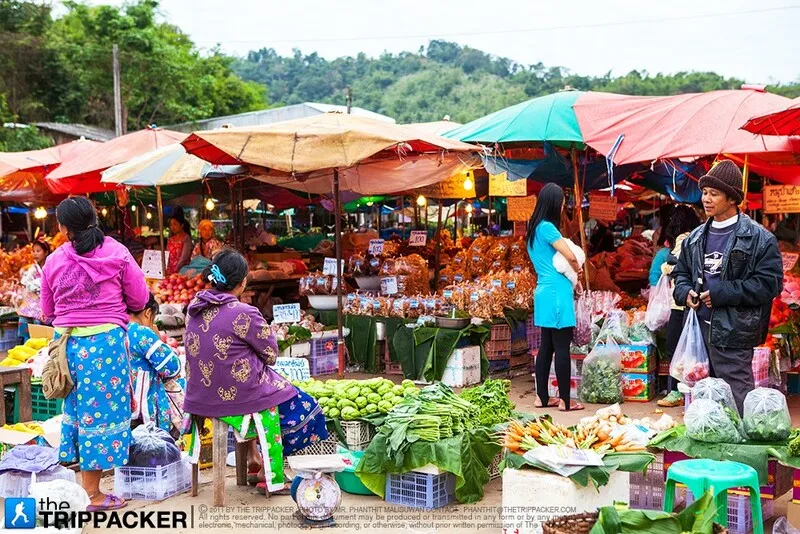
Doi Muser Hill Tribe Market in Tak Province is one of the most popular roadside markets on Highway 105, the scenic Tak–Mae Sot route. Located on Doi Muser, the market is an important stop for travelers driving between Tak town and Mae Sot District. It is known for fresh highland vegetables, seasonal fruit, Doi Muser coffee, local handicrafts, hill tribe textiles, silverwork, and souvenirs from highland communities. For many travelers, this market is not only a place to shop but also a place to rest, enjoy mountain air, and experience the everyday economy of highland communities in Tak.
The charm of Doi Muser Hill Tribe Market lies in its strong connection with real local livelihoods. Many products sold here are linked to the surrounding mountains, climate, farming seasons, and highland communities. Visitors can find vegetables, fruits, coffee, spices, textiles, handmade items, and local snacks. The market offers a clear view of how agriculture, culture, and roadside trade work together along the Tak–Mae Sot mountain route.
The market is often associated with the Muser or Lahu people, one of the important highland ethnic groups in Tak Province. However, the Doi Muser area and the wider Tak–Mae Sot route are also connected with other highland communities. This gives the market a diverse atmosphere. Visitors may notice different products, languages, clothing, foods, and handmade goods that reflect the cultural variety of highland life in western Thailand.
Doi Muser Hill Tribe Market is located along Highway 105 on Doi Muser. Travel information often refers to the area around kilometer marker 29 and the newer market area around kilometer marker 36, with old and new market sections along the route. Travelers coming from Tak town toward Mae Sot will find the market before reaching Mae Sot, while those traveling from Mae Sot back toward Tak can also stop for produce and souvenirs. Its roadside location makes it a convenient rest stop on a route with many curves and mountain sections.
Highway 105 is one of Tak Province’s key travel routes. It connects Tak town with Mae Sot, a major Thai–Myanmar border district. The road passes mountains, forests, highland communities, and important stops such as Doi Muser, Chao Pho Phawo Shrine, and Chao Pho Khun Sam Chon Shrine. The market fits naturally into this journey because it gives drivers a place to rest and gives travelers a chance to understand the highland communities behind the scenery.
The most recognizable products at Doi Muser Market are fresh highland vegetables and seasonal fruits. These may include corn, sweet potatoes, mustard greens, local vegetables, pumpkins, avocados, oranges, strawberries in season, passion fruit, plums, and other produce depending on the time of year. Many visitors like shopping here because the products are fresh, affordable, and sold close to the communities that grow them.
In addition to agricultural produce, the market offers hill tribe textiles, woven bags, clothing, silverwork, beadwork, bamboo products, small wooden items, and handmade souvenirs. These products reflect the skills and aesthetics of highland communities. Buying handicrafts at the market can help support local makers and gives travelers meaningful souvenirs with a stronger sense of place than mass-produced items.
Highland clothing and textiles at Doi Muser Market are especially attractive because of their colors and patterns. Some pieces use bright colors and distinctive decorative details associated with hill tribe communities. Silver ornaments and small handmade accessories may also be found. Even for visitors who do not buy, walking through these stalls offers a simple introduction to highland dress, craft, and community identity.
Doi Muser coffee is another important highlight. The cool mountain climate and highland terrain make the area suitable for coffee cultivation in some parts. Coffee stalls and small cafés along the route are popular with travelers who want to rest during the mountain drive. Drinking coffee here is not only a break from driving. It is a way to taste a product connected with the land, climate, and labor of highland farmers.
The market also works as an informal cultural learning space. Visitors can observe how vendors arrange seasonal produce, how local products are sold, and how communities adapt to tourism and road-based commerce. This learning happens through everyday market life rather than formal displays. Walking slowly, asking polite questions, and buying respectfully can make the visit more meaningful.
For photographers, Doi Muser Market offers many visual details: colorful vegetables and fruits, woven textiles, baskets, coffee stalls, highland products, mountain mist, and roadside market scenes. Photography should be done respectfully. Visitors should ask before taking close photos of people or stalls because the market is a real place of work for local vendors.
The best time to visit is from morning to afternoon, when produce is fresh and there are more choices. The cool season is especially pleasant because the air on the mountain is comfortable and seasonal products such as strawberries and cool-climate vegetables may be available. During the rainy season, the landscape is green and fresh, but drivers should be careful because the road may be slippery and visibility may be reduced by mist or rain.
Doi Muser Market is best enjoyed as a relaxed stop rather than a rushed visit. With 20 to 30 minutes, travelers can buy fruit, vegetables, coffee, or snacks. With 1 hour or more, they can walk through more stalls, compare products, try local food, and look more carefully at textiles and handmade items. Visitors interested in culture should allow time to observe the details of the market.
Good items to buy depend on the season and travel plan. If returning home the same day, fresh vegetables, fruit, and coffee are excellent choices. For longer journeys, roasted coffee, dried chili, spices, woven bags, textiles, and small handicrafts are easier to carry. Fresh fruit should be packed carefully, and visitors should ask vendors about ripeness and storage.
Shopping at Doi Muser Market should be done politely. Many products come directly from local families and highland farms. Paying a fair price supports community livelihoods and helps local people continue farming, crafting, and selling their own products. Responsible shopping is one of the simplest ways travelers can support the highland economy.
Getting There is easiest by private car or rental car. From Tak town, follow Highway 105 toward Mae Sot. The market is located along the roadside on Doi Muser around the kilometer marker 29 area, with the newer market section farther along the route around kilometer marker 36. The road is mountainous, so drivers should check their vehicle, drive carefully, and park only in safe areas that do not block traffic.
The Tak–Mae Sot road is scenic but has many curves and slopes. Travelers unfamiliar with the route should drive during the day, avoid speeding, and allow time for rest stops. Stopping at Doi Muser Market can make the journey safer and more enjoyable because it gives drivers time to rest while allowing passengers to explore local products.
Nearby attractions can be combined with the market. These include the Highland People Development Center in Tak Province, the Black Lahu Museum, Tak Agricultural Research and Development Center on Doi Muser, Lan Sang National Park, Chao Pho Phawo Shrine, and Chao Pho Khun Sam Chon Shrine. Travelers continuing to Mae Sot can also visit Rim Moei Market, Wat Thai Wattanaram, and the Thai–Myanmar Friendship Bridge.
Food options around the market include small local restaurants, roadside food stalls, coffee shops, and snack vendors. Visitors can eat simple meals or drink coffee during the journey. Those who prefer restaurants with more formal seating and clear contact information can continue to Tak town or Mae Sot, where there are more dining choices.
Accommodation near Doi Muser is mostly homestay-style or nature-oriented, while more convenient hotel options are available in Tak town or Mae Sot. Travelers who are not familiar with mountain driving may prefer to stay in town and use Doi Muser Market as a daytime stop along the route. This avoids driving the mountain road at night.
The market is also suitable for families. It is easy to walk, does not require difficult hiking, and offers products that appeal to different ages, such as fruit, snacks, textiles, and coffee. Families with older visitors should choose a safe parking spot and be careful when walking near the roadside because the market is close to a main highway.
For cultural travelers, Doi Muser Market is a useful gateway to understanding highland communities. The market cannot represent every detail of Muser or Lahu culture, but it offers an accessible starting point for seeing local products, craft, agriculture, and trade. Visitors who want deeper learning can continue to the Black Lahu Museum or community learning sites in the Doi Muser area.
Overall, Doi Muser Hill Tribe Market is more than a roadside shopping stop. It brings together mountains, agriculture, highland communities, handmade products, local coffee, seasonal fruit, and the travel rhythm of the Tak–Mae Sot route. For anyone driving between Tak and Mae Sot, stopping here adds taste, color, and cultural meaning to the journey.
| Name | Doi Muser Hill Tribe Market |
| Other Names | Doi Muser Market, Muser Market, Doi Muser Highland Market |
| Location | Along Highway 105, Tak–Mae Sot Route, on Doi Muser, around kilometer marker 29 and the newer market area around kilometer marker 36 |
| Address | Highway 105, Tak–Mae Sot Route, Doi Muser, Tak Province, Thailand |
| Highlights | Roadside highland market for fresh vegetables, seasonal fruit, Doi Muser coffee, hill tribe textiles, handicrafts, silverwork, souvenirs, and local products |
| Distinctive Features | Highland community market with old and new market sections, located on the Tak–Mae Sot mountain route and suitable for rest stops, shopping, and cultural observation |
| Recommended Products | Fresh vegetables, highland fruit, corn, sweet potatoes, avocados, oranges, seasonal strawberries, coffee, woven textiles, hill tribe clothing, silverwork, bamboo products, spices, and local souvenirs |
| Importance | A market that supports highland community income and reflects local agriculture, handicrafts, and roadside trade in Tak Province |
| Travel Information | Use Highway 105 from Tak town toward Mae Sot. The market is located along the mountain road on Doi Muser. Private car or rental car is the most convenient option, and careful driving is required. |
| Current Status | Open as a highland local product market and popular rest stop on the Tak–Mae Sot route |
| Open Days | Daily |
| Opening Hours | 08.00 – 18.00 |
| Fees | No admission fee |
| Facilities | Roadside parking areas, shops, local food stalls, coffee stalls, agricultural product stalls, and market walking areas |
| Main Areas / Zones | Vegetable and fruit stalls, coffee and drink stalls, hill tribe clothing zone, handicraft zone, souvenir zone, roadside food area, and old-new market areas on Doi Muser |
| Caretaker / Information Contact | Tourism Information: Tourism Authority of Thailand, Tak Office, Tel. 055-514-341 to 055-514-343 |
| Nearby Tourist Attractions | 1. Highland People Development Center, Tak Province, about 4 km 2. Black Lahu Museum, about 6 km 3. Tak Agricultural Research and Development Center, Doi Muser, about 7 km 4. Lan Sang National Park, about 18 km 5. Chao Pho Phawo Shrine, about 33 km 6. Chao Pho Khun Sam Chon Shrine, about 41 km |
| Nearby Restaurants | 1. Je On Restaurant, Muser Market, Tak, about 0.2 km 2. Muser Coffee, about 1 km 3. Z Surf Z Food, about 1 km 4. Ban Suan Lan Sang Café, about 17 km 5. Ban Kiang Nam Restaurant, Tak, about 28 km, Tel. 055-894-069, 081-953-9441 6. Pridi Phochana, about 30 km, Tel. 081-707-3800, 082-595-8145 |
| Nearby Accommodations | 1. Doi Muser Homestay, about 5 km, Tel. 083-335-9963, 086-209-6848 2. Viang Tak Riverside Hotel, about 28 km, Tel. 055-512-507 to 055-512-508, 081-887-2905 3. SOHO Boutique Hotel Tak, about 30 km, Tel. 055-039-988, 095-939-2871 4. Berich Hotel, about 30 km, Tel. 055-516-444, 082-444-6242 5. Silayok Grand Hotel, about 30 km, Tel. 055-515-555 6. Centara Life Hotel Mae Sot, about 45 km, Tel. 055-532-601 to 055-532-608 |
Frequently Asked Questions (FAQ)
Q: Where is Doi Muser Hill Tribe Market located?
A: Doi Muser Hill Tribe Market is located along Highway 105 on the Tak–Mae Sot route, around kilometer marker 29 and the newer market area around kilometer marker 36 on Doi Muser in Tak Province.
Q: What are the opening hours of Doi Muser Market?
A: The market is open daily from 08.00 to 18.00. Morning to afternoon is the best time to shop for fresh produce and souvenirs.
Q: What can travelers buy at Doi Muser Market?
A: Visitors can buy highland vegetables, seasonal fruit, corn, sweet potatoes, avocados, oranges, seasonal strawberries, coffee, hill tribe clothing, woven textiles, silverwork, handicrafts, spices, and local souvenirs.
Q: How can travelers get to Doi Muser Market from Tak town?
A: Travelers should follow Highway 105 from Tak town toward Mae Sot. The market is located along the mountain road on Doi Muser. Private car or rental car is the most convenient option.
Q: Is there an admission fee for Doi Muser Market?
A: No. There is no admission fee. Travelers can stop, walk through the market, buy products, and rest during opening hours.
Q: What are the best souvenirs from Doi Muser Market?
A: Recommended souvenirs include Doi Muser coffee, seasonal fruit, avocados, strawberries, dried chili, spices, woven textiles, cloth bags, and hill tribe handicrafts.
Q: What nearby attractions can be visited with Doi Muser Market?
A: Nearby places include the Highland People Development Center in Tak Province, Black Lahu Museum, Tak Agricultural Research and Development Center on Doi Muser, Lan Sang National Park, Chao Pho Phawo Shrine, and Chao Pho Khun Sam Chon Shrine.
Q: When is the best time to visit Doi Muser Market?
A: Morning to afternoon is best for walking through the market. The cool season is especially pleasant and often offers a wider range of highland seasonal produce.
 Category: ●Suburban Living
 Group: ●Local Market
Last Update : 8 HourAgo
 Last Update : 8 HourAgo
 Click to Access the Navigation Map GPS
Doi Muser Hill Tribe Market Map
Recommend
 Art, Culture and Heritage
 Historical Sites and Monuments(2)
 Landmarks and Memorials(3)
 Art, Craft Centres, Tradition(6)
 Historical Houses and The Ancient City(2)
 Educational Places
 Educational Gardens, Farm(2)
 University
 Places of Worship
 Temple(22)
 Other religious and spiritural sites(9)
 Village, Community(5) Local Market(3)
 Nature and Wildlife
 National Parks and Marine Reserves(9)
 Mountain (Doi)(9)
 Dam, Reservoir, Lake(14)
 Waterfalls(23)
 Hot Springs(2)
 Caves(6)
 River, Canal(1)
 Bays and Beaches(1)
 Islands(1)
 Other natural attractions(1)
 Entertainment and Agricultural
 Farm, Parks, Gardens and Ecotourism(5)
 Outdoor and Adventure Activities(4)


