
TL;DR: Si Fa Cave is located at Phutthakhaya Si Fa Cave Monastic Residence, Moo 6, Mahawan Subdistrict, Mae Sot District, Tak Province, open Daily, hours 08.00 – 17.00.
Si Fa Cave
Open Days: Daily
Opening Hours: 08.00 – 17.00
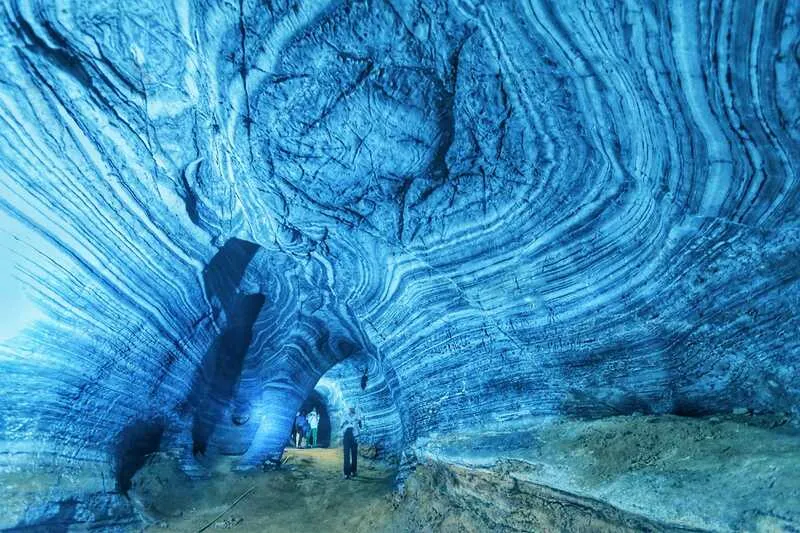
Si Fa Cave, also known as Blue Cave, is one of the most distinctive natural attractions in Mae Sot District, Tak Province. Located within Phutthakhaya Si Fa Cave Monastic Residence in Moo 6, Mahawan Subdistrict, the cave is best known for its greyish-blue rock walls, layered stone textures, and unusual natural formations that set it apart from many other caves in Thailand. While many Thai caves display reddish, orange, brown, or white limestone tones, Blue Cave has a cool-toned surface that appears blue-grey under natural and artificial light, making it especially memorable for nature travelers and photographers.
The appeal of Blue Cave is not limited to its color. The site also combines natural beauty with a quiet spiritual atmosphere. At the front chamber of the cave, visitors will find a reclining Buddha image in a Burmese artistic style, reflecting the cultural character of Mae Sot as a border town with strong Thai, Burmese, and local influences. Near the feet of the reclining Buddha, there is a pale rock formation often compared to the head of an elephant. This blend of cave scenery, Buddhist imagery, and unusual stone shapes gives the site a character that is both natural and sacred.
Blue Cave is a relatively small cave compared with deeper cave systems in Tak Province. The walking distance inside is short, generally around 100 m or less, and the route follows the same path in and out. This makes the cave suitable for visitors who want a cave experience without a long or physically demanding trek. Although the route is short, the cave offers many details to observe, including blue-grey wall textures, layered rock patterns, curved surfaces, and tunnel-like formations shaped by natural erosion.
One of the most recognized features inside the cave is the formation often referred to as the elephant-trunk tunnel. This natural rock passage or curved formation has been shaped over time and resembles a large elephant trunk. It is one of the most photographed areas of the cave because it gives the impression of walking through a natural sculpture. When light falls on the rock surface, the blue-grey color becomes more visible, and shadows add depth to the formation.
The cave walls are the main highlight. Their surfaces show bands, curves, and layered patterns in different shades of grey, blue, and blue-green depending on the light. The color is not a painted surface but a natural quality of the rock and mineral composition. When visitors shine a flashlight on the wall, the texture becomes clearer, revealing lines and patterns that may be missed in the dim interior. For this reason, visitors should bring a flashlight or use a phone light carefully to appreciate the details.
Although some lighting may be available in parts of the cave, certain sections remain dim. A flashlight or headlamp is recommended for safety and for viewing the rock details more clearly. The cave floor may be uneven, and in humid weather some surfaces can become slippery. Visitors should wear sneakers or shoes with good grip rather than loose sandals. The cave is easy to visit, but basic caution still matters because it remains a natural cave environment.
Blue Cave is suitable for families because it is close to the parking area and does not require a long walk. Children, adults, and elderly visitors who can walk steadily can usually enjoy the main part of the cave. However, children should not run inside the cave, touch the walls repeatedly, or climb on the rocks. Since the cave is located within a monastic area, visitors should also dress politely, keep their voices low, and respect the religious setting.
Local stories add another layer to the cave’s charm. Some stories mention old earthenware, such as bowls and plates, that were once kept in the cave and used for village merit-making ceremonies. Although such objects are no longer seen today, the stories reflect the relationship between the cave and the local community. Blue Cave was not just a geological feature; it also existed within the memory, belief, and spiritual imagination of the people living nearby.
Another local tale speaks of green lights seen floating out of the cave at night, especially by villagers who went out to look for frogs or field animals. These stories give the cave a mysterious atmosphere and make it more memorable for visitors. They should be appreciated as part of local oral tradition rather than as an invitation to explore the cave after dark. Blue Cave should be visited during official daytime opening hours only.
From a geological perspective, Blue Cave is interesting because its rock color and layered texture differ from many other caves. The blue-grey tone raises curiosity about mineral composition, erosion, and the environmental history of the Mae Sot area. Visitors do not need to be geologists to appreciate this. Simply observing the wall surfaces, curved passages, and rock textures can turn a short cave visit into a small natural learning experience.
Conservation is essential. Visitors should not write on cave walls, scratch the surface, break rocks, touch the walls repeatedly, or climb on fragile formations. The beauty of Blue Cave lies in the natural condition of its rock surfaces. Even small damage can leave lasting marks. Visitors should also avoid leaving rubbish, lighting candles in unsuitable areas, or making loud noise inside the monastic grounds.
Getting There from Mae Sot town is convenient. From the Mae Sot roundabout or Umphang junction area, follow Highway 1090 toward Phop Phra and Namtok Thararak. Before reaching the waterfall area, look for signs to Tham Phra Monastic Residence or Si Fa Cave, then turn in and continue for about 6 km on a paved road. The cave is approximately 30 km from Mae Sot town and takes around 40 minutes by car. The route is suitable for private cars, rental cars, motorcycles, or local hired transport.
Travelers coming from Bangkok can drive to Tak Province and continue to Mae Sot, or take a public bus to Mae Sot. Mae Sot town has accommodation, restaurants, and local transport options, making Blue Cave an easy half-day trip from town. Travelers should check transport availability before departure if they do not have a private vehicle.
The best time to visit Blue Cave is from morning to afternoon, when there is enough light around the entrance and the site is easy to walk around. For photography, a small flashlight or phone light helps reveal the color and layered texture of the walls. Visitors should avoid blocking the path, placing bags against cave surfaces, or using strong flash in a way that disturbs other visitors.
Blue Cave works well as part of a half-day Mae Sot itinerary. Visitors can leave Mae Sot in the morning, visit the cave, pay respect at the monastic area, and spend around 30 minutes to 1 hour exploring and taking photos. After that, the trip can continue to Namtok Thararak, Wat Thai Wattanaram, Rim Moei Market, or other attractions around Mae Sot. With a full day, travelers can connect the cave with the Mae Sot–Phop Phra route.
Mae Sot itself is an interesting border town with a blend of natural attractions, Buddhist sites, markets, Burmese-influenced architecture, and food culture. Blue Cave adds another side to Mae Sot tourism: a quiet natural site that is visually different from the busy border market areas. It shows that Mae Sot is not only a trading town but also a place with unique geological and cultural attractions nearby.
For photographers, the most appealing scenes include the reclining Buddha at the front chamber, the elephant-trunk tunnel, the blue-grey rock walls, and the layered stone textures inside the cave. Clothing in simple colors such as white, cream, brown, or earth tones can contrast nicely with the cool-toned cave walls. However, photography should never come before safety or conservation.
Visitors should bring a flashlight, shoes with good grip, drinking water, and a small bag for personal rubbish. During the rainy season, extra care is needed because the entrance area or cave floor may be slippery. During the hot season, it is better to avoid combining too many outdoor stops during the strongest midday heat. With simple preparation, Blue Cave is an easy and rewarding natural stop in Tak Province.
Blue Cave is also suitable for international travelers looking for a lesser-known natural site in western Thailand. The English name is easy to remember, and the location is not far from Mae Sot town. Foreign visitors should be aware that the cave is part of a monastic area, so polite dress and quiet behavior are appropriate. This makes the visit both a nature experience and a small cultural encounter.
Overall, Blue Cave in Tak Province is a distinctive destination with a strong visual identity. Its highlights include blue-grey rock walls, natural layered textures, the elephant-trunk tunnel, the reclining Buddha image, and local stories that add mystery to the site. It is not a long or difficult cave, but it offers a memorable experience for travelers who want to see a natural attraction unlike most caves in Thailand. With respect, care, and proper preparation, Blue Cave is one of the most worthwhile stops near Mae Sot.
| Name | Si Fa Cave / Blue Cave |
| Location | Phutthakhaya Si Fa Cave Monastic Residence, Moo 6, Mahawan Subdistrict, Mae Sot District, Tak Province |
| Address | Moo 6, Mahawan Subdistrict, Mae Sot District, Tak 63110, Thailand |
| Highlights | Blue-grey cave walls, natural layered rock textures, elephant-trunk tunnel, Burmese-style reclining Buddha image, and an easy short cave walk |
| History / Importance | An Unseen natural attraction of Mae Sot known for its rare blue-grey cave walls, local stories, and its location within Phutthakhaya Si Fa Cave Monastic Residence |
| Name Origin | The name Blue Cave comes from the natural blue-grey color of the rock inside the cave, which differs from the red, orange, brown, or white tones commonly seen in many caves |
| Distinctive Features | A small natural cave with a walking route of about 100 m or less, several small chambers, layered blue-grey walls, and a rock formation resembling an elephant trunk |
| Travel Information | From Mae Sot town, take Highway 1090 toward Phop Phra and Namtok Thararak. Before the waterfall area, turn toward Tham Phra Monastic Residence or Blue Cave and continue for about 6 km. The cave is about 30 km from Mae Sot town. |
| Current Status | Open to visitors within Phutthakhaya Si Fa Cave Monastic Residence |
| Open Days | Daily |
| Opening Hours | 08.00 – 17.00 |
| Fees | No admission fee |
| Facilities | Parking area, monastic grounds, walking access to the cave, worship area, and resting area near the entrance; visitors should bring a personal flashlight |
| Main Areas / Zones | Front cave chamber, Burmese-style reclining Buddha image, blue-grey cave walls, elephant-trunk tunnel, and natural layered rock formations |
| Caretaker | Phutthakhaya Si Fa Cave Monastic Residence, together with local authorities in Mahawan Subdistrict |
| Main Contact Number | TAT Tak Office, Tel. 055-514-341 / Mahawan Subdistrict Administrative Organization, Tel. 055-039-862 |
| Official Website / Official Page | Tourism Authority of Thailand and Mahawan Subdistrict Administrative Organization: www.mahawan.go.th |
| Nearby Tourist Attractions | 1. Namtok Thararak, about 8 km 2. Tham Phra / Phutthakhaya Si Fa Cave area, about 1 km 3. Wat Thai Wattanaram, about 25 km 4. Rim Moei Market, about 28 km 5. Thai–Myanmar Friendship Bridge No. 1, about 28 km 6. Mae Sot town, about 30 km 7. Pha Charoen Waterfall, about 45 km |
| Nearby Restaurants | 1. Muan Jai Mae Ku, about 12 km, Tel. 087-711-9343 2. ONE coffee&bakery, about 11 km 3. Roti Kad Luang 33 Nang Len, about 18 km 4. Tui Khao Soi Mae Sot, about 19 km 5. Pla Sod Mueang Chot Restaurant, about 19 km 6. Mingalarbar Mae Sot, about 28 km, Tel. 081-425-4188 7. A. Kung Phao Mae Sot, about 30 km, Tel. 055-531-073 |
| Nearby Accommodations | 1. Eco Inn Hotel Mae Sot, about 18 km, Tel. 066-125-3266 2. Retro Twin Home @ Maesot, about 18 km, Tel. 093-286-4291 3. One Budget Hotel Tak Maesot, about 19 km, Tel. 098-253-7558 4. Centara Life Hotel Mae Sot, about 26 km, Tel. 055-532-601 to 8 5. Chatchanan Resort, about 20 km 6. Maesot Siri Hotel, about 19 km |
Frequently Asked Questions (FAQ)
Q: Where is Blue Cave in Tak Province located?
A: Blue Cave is located within Phutthakhaya Si Fa Cave Monastic Residence, Moo 6, Mahawan Subdistrict, Mae Sot District, Tak Province.
Q: What are the opening hours of Blue Cave?
A: Blue Cave is open daily from 08.00 to 17.00.
Q: Is there an entrance fee for Blue Cave?
A: No. There is no admission fee, but visitors should behave respectfully because the cave is within a monastic area.
Q: What makes Blue Cave special?
A: Its highlights include blue-grey cave walls, natural layered rock textures, the elephant-trunk tunnel, and a Burmese-style reclining Buddha image near the front chamber.
Q: Should visitors bring a flashlight?
A: Yes. A flashlight or phone light is recommended because some parts of the cave are dim and extra light helps reveal the blue-grey rock textures.
Q: Is Blue Cave suitable for children and elderly visitors?
A: It is suitable for visitors who can walk steadily, as the route is short. Children should be supervised and visitors should wear shoes with good grip.
Q: How do travelers get to Blue Cave from Mae Sot town?
A: Take Highway 1090 toward Phop Phra and Namtok Thararak, then turn toward Tham Phra Monastic Residence or Blue Cave and continue for about 6 km.
Q: What nearby places can be visited with Blue Cave?
A: Nearby places include Namtok Thararak, Wat Thai Wattanaram, Rim Moei Market, the Thai–Myanmar Friendship Bridge, and Mae Sot town.
 Category: ●Nature and Wildlife
 Group: ●Caves
Last Update : 4 MonthAgo
 Last Update : 4 MonthAgo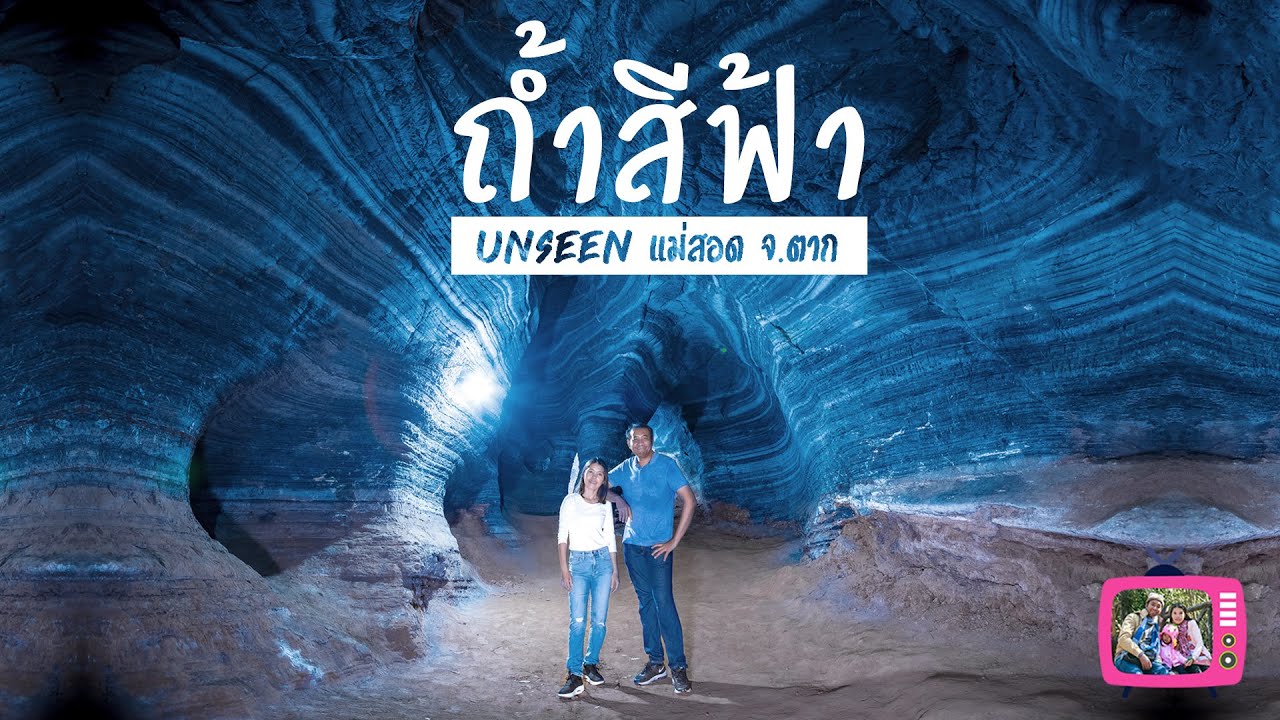
 Click to Access the Navigation Map GPS
Si Fa Cave Map
Recommend

 Art, Culture and Heritage
 Historical Sites and Monuments(2)
 Landmarks and Memorials(3)
 Art, Craft Centres, Tradition(6)
 Historic Homes and Cities(2)
 Educational Places
 Educational Gardens, Farm(2)
 Places of Worship
 Temple(22)
 Other Sacred Sites(9)
 Suburban Living
 Village, Community(5)
 Local Market(3)
 National Parks and Marine Reserves(9)
 Mountain (Doi)(9)
 Dam, Reservoir, Lake(14)
 Waterfalls(23)
 Hot Springs(2)
Caves(6)
Hot Springs(2)
Caves(6)
 River, Canal(1)
 Bays and Beaches(1)
 Islands(1)
 Other natural attractions(1)
 Entertainment and Agricultural
 Farms, Parks and Ecotourism(5)
 Outdoor and Adventure Activities(4)


