
TL;DR: Wat Pak Lat is located at Bang Tabun Subdistrict, Ban Laem District, Phetchaburi 76110, Thailand, open Daily, hours 08:00 – 17:00.
Wat Pak Lat
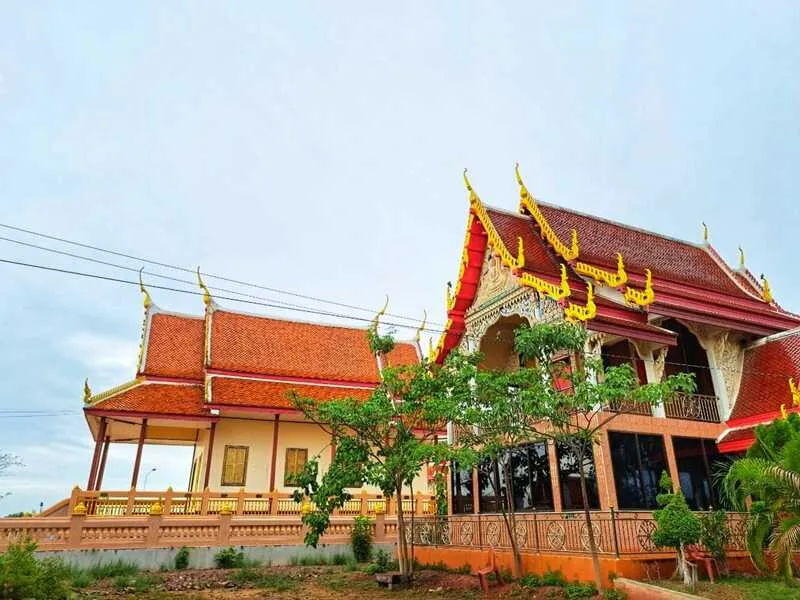
Open Days: Daily
Opening Hours: 08:00 – 17:00
Wat Pak Lat, Phetchaburi is an old riverside temple community along the Bang Tabun waterway, widely remembered as the “first temple of Bang Tabun Subdistrict” and a long-standing spiritual anchor for coastal households in Ban Laem. The temple sits in a landscape where daily life has always been inseparable from water — fishing boats, waterfront neighborhoods, seafood trade, and routes that once depended primarily on canals before evolving into today’s coastal roads. In that sense, the temple’s identity reflects “river-basin culture” as much as it reflects the role of a local temple, because Wat Pak Lat has never functioned merely as a venue for religious rites; it has served as a core of shared memory, belief, and collective community effort through the most meaningful moments of Bang Tabun life.
The heart of devotion that draws people to Wat Pak Lat is a revered set of Buddha images known locally as “Luang Pho Loi Nam, the Five Brothers,” formally titled “Phra Phuttha Pancha Phakhi Wari Patihan.” The name itself points clearly to the idea of a “miracle of five waters,” echoing a coastal community worldview that regards water as livelihood, as a passage for travel and trade, and as a sacred force that can offer both abundance and protection to those whose work depends on rivers, estuaries, and the sea. The folk legend that these images arrived by floating along the waterway gives worship here a distinctive emotional weight — like entrusting one’s hopes and safety to the very current that has sustained the community for generations.
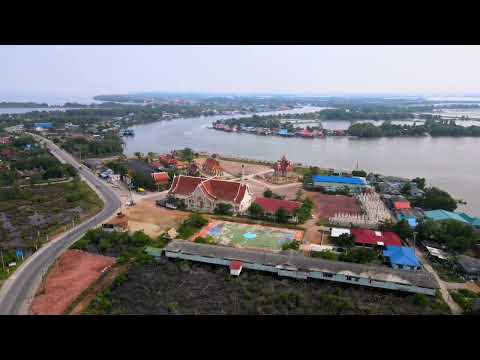
As you step inside the temple grounds, what many visitors notice immediately is the atmosphere of a waterside temple that feels neither rigid nor distant. Wat Pak Lat carries a calm, everyday sincerity — a working community temple where people come to make merit, offer alms, pay respect, and quietly reset their minds without any sense that the place exists solely for tourism. This “realness” is a defining charm, because beyond the structures you can see the river itself, boats moving through the day, and the living relationship between the temple and the community as something still actively practiced rather than remembered as the past.
Architecturally, Wat Pak Lat stands out for large-scale traditional Thai timber craftsmanship that reflects local expertise. One of the most recognizable features is the sermon hall built with unusually large wooden pillars. These pillars are more than structural supports; they are a tangible record of construction methods, access to timber resources in earlier periods, and the builders’ ability to calculate load distribution and stability with precision. Along the coast, timber buildings must endure humidity, sea breezes, and seasonal rains, so the preference for airy, open designs is both an aesthetic choice and a climate-intelligent solution at the same time.
The merit-making pavilion similarly expresses this principle of openness and practical use, enabling the community to host large gatherings comfortably. In the Ban Laem context, merit events often bring together many households, relatives returning home on important dates, and shared responsibilities across the subdistrict. A pavilion designed to accommodate people well becomes, in a deeper sense, a community “reception room” — a place where people meet, help one another, make merit side by side, and pass local customs from one generation to the next.
Another corner that invites you to pause is the riverside pier area, where you can understand why a “temple by the water” matters so much to Bang Tabun. If you come in the late afternoon, light reflecting off the surface often turns the whole scene gentler and quieter, and the movement of boats and residents becomes a view of ordinary life that naturally completes the visit. Here, the experience of worship does not end at paying respect; it ends with a grounded understanding of place, simply by watching the river and the community living alongside it.
In terms of local history, Wat Pak Lat is commonly described as having been established since the early Rattanakosin period, with a long lifespan measured in more than two centuries. For a coastal area, this kind of longevity is significant because it reflects the early settlement pattern of riverside communities in an era when waterways were the region’s primary arteries for travel and exchange. As the settlement expanded, the temple naturally became both the religious center and a shared public space. That is why the community’s phrase “the first temple of the subdistrict” is not only about chronology; it is a statement of the temple’s foundational role in shaping communal identity.
Devotion to “Luang Pho Loi Nam, the Five Brothers” is also expressed through annual merit activities that bring the temple to life and help residents reconnect. Temple-centered events are not merely religious; they are social systems of cooperation — coordinating space, sharing responsibilities, co-hosting, and reinforcing collective memory. In Bang Tabun, the boundary between “religion” and “community” is thin; both support each other, and the shared rhythm of merit-making is one of the most visible ways that local culture stays alive.
If you look at Wat Pak Lat through the lens of cultural travel, it suits travelers who want an unhurried coastal drive, a close encounter with Bang Tabun’s fishing life and fresh seafood culture, and a meaningful temple stop with a story and real craft evidence to see. The temple is not a grand urban complex, but it is dense with identity: a principal sacred image set with a local river legend, a community that still uses the temple in everyday life, and a waterside atmosphere that belongs naturally to this landscape.
Many visitors plan Bang Tabun as a simple day trip and then continue on to Laem Phak Bia, Hat Chao Samran, or the Ban Laem market area. In that flow, Wat Pak Lat works well as a starting point for a coastal Phetchaburi route because it provides both the spiritual dimension and the cultural texture of a river community before you move toward nature sites and beaches. This kind of itinerary keeps the day from being only about eating seafood or taking photos; it adds an understanding of the locality through a temple that functions as a true community root.
Getting There From Bangkok, take Rama 2 Road toward Samut Songkhram, then continue into the coastal routes leading into Phetchaburi’s Ban Laem area and onward to Bang Tabun. The final stretch is typically a mix of rural highways and local roads passing salt fields and coastal neighborhoods. Follow signs for “Bang Tabun,” and once you reach the riverside community zone, look for the crossing bridge area and the temple entrance within Bang Tabun. The temple is situated in the waterfront community area and is convenient to reach by private car.
| Place Summary | A historic riverside community temple in Bang Tabun, regarded locally as the subdistrict’s first temple. Enshrines “Phra Phuttha Pancha Phakhi Wari Patihan” (Luang Pho Loi Nam, the Five Brothers). Notable for traditional Thai timber architecture and a living waterfront atmosphere tied to the Bang Tabun way of life. |
| Address | Bang Tabun Subdistrict, Ban Laem District, Phetchaburi 76110, Thailand |
| Abbot / Temple Steward (Latest) | Phra Baidika Sitthichok Inthawanno |
| Highlights | Luang Pho Loi Nam (Five Brothers), identity as the first temple of Bang Tabun, large-scale Thai timber craftsmanship, serene riverside setting on the Bang Tabun waterway |
| Period | Early Rattanakosin – Present (community accounts commonly describe the temple as over 200 years old) |
| Key Evidence | Phra Phuttha Pancha Phakhi Wari Patihan (Luang Pho Loi Nam, the Five Brothers); traditional Thai timber buildings reflecting local craftsmanship; the lived waterfront context of Bang Tabun community life |
| Name Origin | “Pak Lat” aligns with the riverside geography of Bang Tabun, historically associated with canal junctions and shortcut waterways used for local travel and trade |
| Annual Traditions / Events | Community merit-making and temple festivals connected to Luang Pho Loi Nam (the Five Brothers), alongside regular Buddhist merit events such as Kathin and Pha Pa |
| Facilities | Parking area, restrooms, shaded sitting areas, riverside pier zone, merit-making spaces for community ceremonies |
| Fees | No admission fee (donations are welcome) |
| Travel | Best reached by private car via Rama 2 and the coastal Ban Laem – Bang Tabun route; the final stretch passes salt fields and waterfront neighborhoods before entering the Bang Tabun riverside community area |
| Current Status | Open for worship and merit-making as usual |
| Contact Number | 032-581-035 |
| Nearby Tourist Attractions With Distance | 1) Bang Tabun Riverside Community / Viewpoint – about 2 km 2) Bang Tabun Mangrove Zone (Ban Laem Area) – about 5 km 3) Ban Laem Market Area – about 14 km 4) Laem Phak Bia Project Area – about 18 km 5) Hat Chao Samran Beach – about 25 km |
| Popular Restaurants Nearby With Distance + Phone | 1) Khrua Bang Tabun (Lung Ya) – about 3 km – 032-581-297 2) Baan Chao Lay (Bang Tabun) – about 3 km – 088-959-4184 3) Khrua Ta Rueang Seafood – about 4 km – 061-596-0649 4) Khrua Ban So (Bang Tabun) – about 5 km – 087-151-2552 5) Kieng Kluen Seafood (Hat Chao Samran Area) – about 25 km – 081-448-5608 |
| Popular Accommodations Nearby With Distance + Phone | 1) Bang Tabun Homestay – about 3 km – 084-160-7879 2) Baan Bon Resort (Bang Tabun) – about 4 km – 096-856-2654 3) Samphao Ngoen Homestay (Bang Tabun) – about 6 km – 089-200-7819 4) Thong Thong Homestay (Bang Tabun) – about 6 km – 091-727-2617 5) Fisherman’s Resort (Hat Chao Samran) – about 25 km – 032-478-020 |
Frequently Asked Questions (FAQ)
Q: Why is Wat Pak Lat considered important to Bang Tabun?
A: Wat Pak Lat is widely remembered as the first temple of Bang Tabun Subdistrict and has long served as a spiritual and social anchor for the waterfront community, supporting merit-making, communal ceremonies, and local cultural continuity.
Q: What is “Luang Pho Loi Nam, the Five Brothers”?
A: It is the local name for “Phra Phuttha Pancha Phakhi Wari Patihan,” the principal revered set of Buddha images at the temple, associated in local tradition with arriving by water and being especially respected by people whose livelihoods depend on rivers and the sea.
Q: What kind of visit suits Wat Pak Lat best?
A: It suits a relaxed cultural stop: paying respect, making merit, viewing traditional Thai timber craftsmanship, and experiencing an authentic riverside temple atmosphere before continuing to Bang Tabun community spots, Laem Phak Bia, or Hat Chao Samran.
Q: Does the temple have any notable annual traditions?
A: The temple participates in community merit traditions tied to devotion for Luang Pho Loi Nam (the Five Brothers), alongside regular Buddhist annual activities such as Kathin and Pha Pa that bring residents together.
Q: Are there recommended seafood restaurants near the temple?
A: Yes. The Bang Tabun area is known for fresh seafood, and nearby options include Khrua Bang Tabun (Lung Ya), Baan Chao Lay, Khrua Ta Rueang Seafood, and other local favorites listed in the summary table.
Q: Are there places to stay overnight nearby?
A: Yes. Bang Tabun has homestays along the waterway for a local experience, and the Hat Chao Samran beach area offers seaside resorts for travelers extending the trip.
Q: Roughly how long does it take to drive from Bangkok?
A: Typically about 2–3 hours, depending on traffic on Rama 2 Road and the final coastal approach into the Bang Tabun area.
 Category: ●Places of Worship
 Group: ●Temple
 Last Update : 2 MonthAgo
 Click to Access the Navigation Map GPS
 Art, Culture and Heritage
 Historical Sites and Monuments(
 Landmarks and Memorials(
 Royal Palace(
 Art, Craft Centres, Tradition(
 Museums(
 Educational Places
 Educational Gardens, Farm(
 University
 Other religious and spiritural sites(
 Research and Development
 Royal Project(
 Suburban Living
 Village, Community(
 Floating Market(
 Nature and Wildlife
 National Parks and Marine Reserves(
 Mountain (Doi)(
 Dam, Reservoir, Lake(
 Waterfalls(
 Hot Springs(
 Caves(
 River, Canal(
 Bays and Beaches(
 Islands(
 Other natural attractions(
 Entertainment and Agricultural
 Farm, Parks, Gardens and Ecotourism(
 Theater(
 Outdoor and Adventure Activities(
 Travel Articles, Recipes
 Travel Review, Food Review(


