
TL;DR: Wat Khao Samo Rabang is located at 92 Moo 1, Ban Khao Samo Rabang, Nong Pla Lai Subdistrict, Khao Yoi District, Phetchaburi 76140, Thailand, open Daily, hours 08:00 – 17:00.
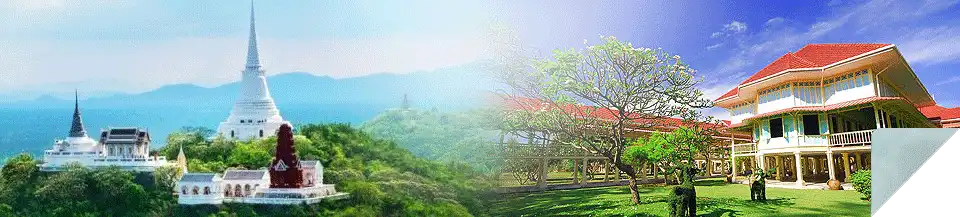
Wat Khao Samo Rabang
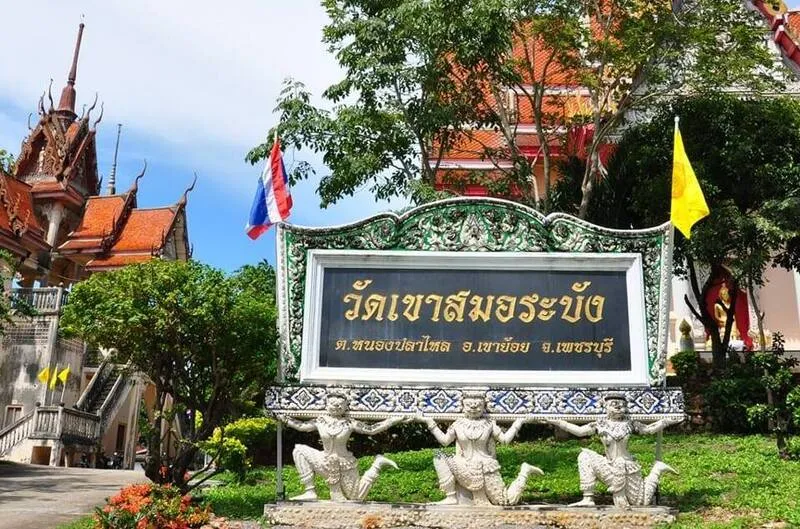
Open Days: Daily
Opening Hours: 08:00 – 17:00
Wat Khao Samo Rabang is a local temple situated on the only red laterite hill in Nong Pla Lai Subdistrict, Khao Yoi District, Phetchaburi Province. The hill rises to around 40 meters and covers roughly 100 rai, standing out amid the surrounding plains and residential community. For generations, this distinctive landscape has become a spiritual anchor and an important landmark for the Ban Khao Samo Rabang community.
The charm of this temple lies not only in its religious role but also in its “standalone hill” character, which serves as both a community marker and a simple destination for faith and quiet reflection. From a travel perspective, Wat Khao Samo Rabang is a cultural spot for visitors who want to experience a calmer, more local side of Phetchaburi. It preserves clear traces of local narratives—especially stories about a cave, the formation of a sacred place, and the temple’s gradual growth alongside the community.
The landscape of “Khao Samo Rabang” is defined by a red laterite hill that can be seen from afar. Set against the flat terrain of Khao Yoi, it creates a striking contrast between the hill’s red tones and the surrounding green orchards and fields. This visibility made the hill a practical point of reference in everyday life, a shared landmark in both physical space and collective memory. With a temple on the same site, its meaning deepens further as a focal point of community identity and spirituality.
The area around the hill reflects the rural lifestyle of Thailand’s central region. To the east runs a significant waterway known as “Khlong Nam Chiao” (Nam Chiao Canal), branching from the Phetchaburi River near Ban Wiang Khoi in Hua Saphan Subdistrict, Mueang Phetchaburi District. The canal flows through several villages and subdistricts in Mueang Phetchaburi before reaching Ban Khao Samo Rabang, then continues past Wat Khung Tamnak and out to the sea at Bang Tabun Subdistrict, Ban Laem District. Historically, it supported transport, agriculture, and everyday life in the region.
For outsiders, Nam Chiao Canal may appear to be just another canal name. For local communities, however, canals functioned as the area’s lifelines. In the past, travel, crop transport, trade, and relationships between villages were closely tied to waterways. Many older residents still remember boats used for travel or for bringing produce to market, and trips along the canal for merit-making or visiting relatives. As roads gradually replaced waterways, the canal’s transportation role diminished, yet it remains a living “life record” that continues to flow through the community’s landscape and memory.
To the west, the hill area used to be rice fields and has since shifted toward fish ponds. The north features coconut groves and nipa palm stands, preserving a strong rural atmosphere. To the south is Wat Khao Samo Rabang School, established after the temple provided donated land for educational use, reflecting the temple’s long-standing role as both a religious and educational center.
Seen as a whole, the surroundings show how “sacred space” and “working land” coexist closely. This is a hallmark of many rural Thai temples: they are not isolated monuments but components of a community ecosystem. Temples often include schools, shared public areas, meeting spaces, and places for merit-making, mutual support, and collective decisions. Visiting Wat Khao Samo Rabang is therefore not only about seeing a temple; it is also a way to understand how a community is structured and sustained through its living spaces.
The name Khao Samo Rabang appears in historical documentation, including a geographic dictionary published in 1921 (B.E. 2464), which lists the hill as “Khao Ton Samo” and mentions a cave whose entrance was on the hill’s northern side. Today, however, neither the samor tree nor the cave is found, leaving only stories and inherited memories passed down through generations.
Place names naturally shift in pronunciation and form over time, shaped by local speech and shared memory. The earlier name “Khao Ton Samo” suggests that a notable samor tree may once have served as a defining marker, or that the area’s plant life influenced how people remembered and named the hill. As landscapes changed—trees disappeared, features shifted, people moved—local perception evolved. The present name “Khao Samo Rabang” retains the core element “samo” while adding a descriptor that reflects the distinct identity of the place as understood by later generations.
Local legend recounts that the cave once held many household items and valuables that villagers could borrow for use, provided they returned them afterward. When someone borrowed items and failed to return them, the cave’s sacred power gradually declined. Over time, the cave “closed” and could no longer be accessed. There were later attempts to reopen the entrance using explosives, but they failed. The story functions as a moral narrative about honesty, greed, and the consequences of one’s actions within a rural community.
Legends of this kind appear in many parts of Thailand and Southeast Asia. Sacred places are often said to contain goods that may be borrowed, with a key condition: integrity and knowing one’s limits. If a promise is broken, the sacred place may “close” or “disappear.” Such narratives do more than describe the supernatural; they guide community behavior without formal law, reinforcing values of responsibility, restraint, and fairness through simple and memorable storytelling.
Even though the cave is no longer visible today, it still exists as a cultural symbol of the area. It is a story that gives the hill character and meaning beyond its physical form. For visitors interested in local culture, it is worth taking time to “listen to the stories” from community members, because what matters most is not always what can still be seen, but what people continue to remember together and retell with purpose.
A key figure in the temple’s early formation was Mr. Mai Am Jiw, a local villager who, driven by faith, chose to ordain as a monk in order to care for the cave and the hill area. Later, around 1934 (B.E. 2477), Mr. Thian Monthian, another local resident, began creating a Pa Lelai Buddha image and a Reclining Buddha image to enshrine near the former cave area, symbolically guarding the sacred site. He also built 2 rest pavilions and 3 shared monk dwellings (kuti), marking an early stage of development that helped transform a personal sacred site into a community temple.
Viewed through the lens of how sacred places take shape, the progression is clear: it begins with personal devotion, then develops religious symbols, and later expands into structures that support people and communal activities. The Pa Lelai and Reclining Buddha images are not merely crafted figures; they serve as markers that the area is cared for, respected, and recognized as sacred. The addition of pavilions and residences signals that the site began to accommodate merit-making, resting, practice, and the community’s ongoing presence.
From these beginnings, Wat Khao Samo Rabang gradually developed into a community temple, serving as a spiritual center, a place for Buddhist ceremonies, and a learning space for local history. It reflects the relationship between people, nature, and belief in a way that remains easy to sense on the ground.
More broadly, many local Thai temples grew through a similar process: communities collectively build and care for them. A temple becomes a community institution rather than just a location. This creates layered roles, from religious functions such as observance days, ordinations, funerals, and merit-making events, to social functions such as meetings, mutual aid during emergencies, and spaces where people of different generations connect. In rural settings, the temple remains a core structure that helps the idea of “home” stay anchored and shared.
When visiting Wat Khao Samo Rabang, it is best to approach with respect for local rhythms. Do not rush, and allow room for quietness. Temples like this are not designed primarily for commercial tourism; they are built for real community life. Their simplicity is part of their value, and they offer a chance to recognize that “culture” is not only in museums, but also in everyday places where people continue to live and believe.
In terms of worship, visitors often pay attention to the Buddha images that symbolize the place, particularly the Pa Lelai and Reclining Buddha images associated with protecting the site’s sacred character. Even without knowing every historical detail, seeing images that the community created and sustained can make the local narrative feel tangible and immediate.
With the hill as a backdrop, sacred sites on elevated ground often inspire a natural sense of “lifting the mind,” because people must walk upward or look upward. Physical movement subtly aligns with mental preparation. This is one reason many cultures place sacred spaces on higher ground, and Wat Khao Samo Rabang reflects that idea in a simple local form.
Another key value of Wat Khao Samo Rabang as a cultural destination is its authenticity. The place has not been overly staged for superficial beauty; it retains a working landscape shaped by real community use. The red laterite hill, coconut groves, nipa palms, fish ponds, and the canal all form a setting that tells the story of rural Phetchaburi clearly. This makes the visit suitable for travelers who want to see a genuine local environment rather than chasing pre-arranged photo spots.
For preparation, dress modestly, keep noise low, and be careful on laterite ground, which can be slippery after rain. If traveling with elderly visitors or children, supervise closely around slopes or hill paths. Respect community space by avoiding intrusion into monk residential areas. A simple principle applies: visit as a guest who respects the host community.
For those who enjoy learning local history, the visit becomes richer when you ask questions based on what you see: Why does this hill stand out? Why is the cave story repeated across generations? Why does the temple sit next to the school? These questions shift the trip from a quick “check-in” to a more meaningful understanding of place through a humanities lens, which is at the heart of true cultural travel.
Within the Khao Yoi context, Wat Khao Samo Rabang can be a stop on a Phetchaburi day trip or an overnight itinerary. Nearby areas include canal-side life and the coastal community of Bang Tabun, as well as major city attractions such as Phra Nakhon Khiri (Khao Wang). A mixed route of “temple & community life & local food” provides a fuller picture of Phetchaburi while helping spread visitor spending across multiple community points.
Getting There Wat Khao Samo Rabang is best reached by private car. From Phetchaburi town, head toward Khao Yoi District. Once you enter Nong Pla Lai Subdistrict, ask for directions to Ban Khao Samo Rabang. The temple is located near Wat Khao Samo Rabang School and can be visited year-round.
If traveling by private car, using an online map and setting the destination to “Wat Khao Samo Rabang, Nong Pla Lai” can help avoid confusion in local community lanes, where some stretches may be narrow and signage may be limited. A practical landmark is the area near the temple school, and the hill itself is clearly visible as you approach. Park only in designated areas or where it does not block local traffic.
Public transport access is generally less convenient compared with Phetchaburi’s main tourist sites. A workable approach is to travel first to Khao Yoi District or a main point along Phetkasem Road, then continue by local hired transport or a private ride into Nong Pla Lai. For travelers planning multiple stops in one day, a private car remains the most practical option.
The morning is typically the most comfortable time to visit, with gentler light and cooler temperatures. Afternoon heat can be strong in some seasons, especially during the central region’s hot period. In the rainy season, choose footwear with good grip, as laterite soil may become slippery in places. Simple preparation helps ensure a smooth and memorable visit.
| Place Name | Wat Khao Samo Rabang |
| Address | 92 Moo 1, Ban Khao Samo Rabang, Nong Pla Lai Subdistrict, Khao Yoi District, Phetchaburi 76140, Thailand |
| Highlights | A temple on the only red laterite hill in the subdistrict, local cave legend, Pa Lelai and Reclining Buddha images, rural central Thailand landscape with Nam Chiao Canal |
| Abbot | Phra Maha Suraphan Sutthamano |
| Temple Contact | 061-947-8979 |
| Nearby Tourist Attractions | 1) Wat Khung Tamnak – approx. 6 km 2) Bang Tabun Canal Community – approx. 18 km 3) Ban Laem Market – approx. 20 km 4) Phra Nakhon Khiri Historical Park (Khao Wang) – approx. 22 km 5) Bang Tabun Coastal Area – approx. 23 km |
| Popular Restaurants Nearby | 1) Brown Canyon – approx. 10 km – 082-305-5194 2) Pa Song Phochana – approx. 12 km – 032-895-819 3) Krua Ban Khwan – approx. 14 km – 086-939-7979 4) IKO Camp & Cafe – approx. 16 km – 092-464-6929 (camp), 086-616-8282 (cafe) 5) Khao Kaeng Tamrap Mae Luan – approx. 12 km – 032-896-941, 090-916-6659 |
| Popular Accommodations Nearby | 1) LeMae Residence – approx. 14 km – 095-458-8836 2) Pop House Hotel – approx. 16 km – 032-447-1345 3) TPN Homestead – approx. 15 km – 092-465-9938, 087-922-6414 4) Wipula House – approx. 15 km – 088-794-1955, 088-794-4155, 095-596-5442 5) NK Place – approx. 14 km – 086-314-4522 |
Frequently Asked Questions (FAQ)
Q: Is Wat Khao Samo Rabang open every day?
A: Yes. The temple is generally open daily, with commonly referenced visiting hours of 08:00–17:00.
Q: Why is Wat Khao Samo Rabang important to the local community?
A: It serves as a spiritual center and a shared community space, supporting religious life, local history learning, and community-oriented activities such as education.
Q: What makes Wat Khao Samo Rabang different from other temples?
A: Its standout feature is its setting on the only red laterite hill in the subdistrict, along with the local cave legend and the Pa Lelai and Reclining Buddha images associated with the site.
Q: Can the cave from the local legend still be seen today?
A: The cave is no longer visible today. However, the story remains a meaningful part of local culture and reflects community values and beliefs.
Q: Can I reach the temple by public transportation?
A: Public transport access is generally not very convenient. Most visitors come by private car, or travel to Khao Yoi / Phetkasem Road first and then continue by local hired transport into Nong Pla Lai.
Q: Is there an admission fee to visit Wat Khao Samo Rabang?
A: There is generally no admission fee. Visitors can enter for worship and sightseeing as usual, while observing appropriate temple etiquette.
Q: How can I contact the temple for additional information?
A: You can call the contact number listed in the summary table. If needed, checking the temple’s announcements on social channels before traveling may also be helpful.
 Category: ●Places of Worship
 Group: ●Temple
 Last Update : 2 MonthAgo
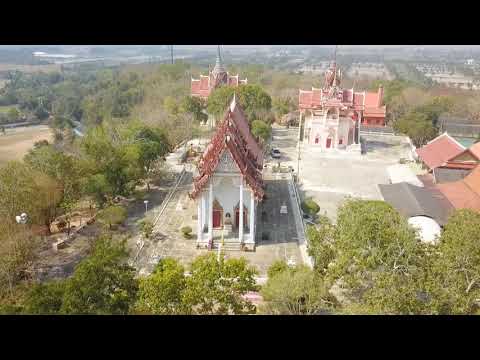
 Click to Access the Navigation Map GPS
 Art, Culture and Heritage
 Historical Sites and Monuments(
 Landmarks and Memorials(
 Royal Palace(
 Art, Craft Centres, Tradition(
 Museums(
 Educational Places
 Educational Gardens, Farm(
 University
 Other religious and spiritural sites(
 Research and Development
 Royal Project(
 Suburban Living
 Village, Community(
 Floating Market(
 Nature and Wildlife
 National Parks and Marine Reserves(
 Mountain (Doi)(
 Dam, Reservoir, Lake(
 Waterfalls(
 Hot Springs(
 Caves(
 River, Canal(
 Bays and Beaches(
 Islands(
 Other natural attractions(
 Entertainment and Agricultural
 Farm, Parks, Gardens and Ecotourism(
 Theater(
 Outdoor and Adventure Activities(
 Travel Articles, Recipes
 Travel Review, Food Review(


