
lovethailand home >Central Travel Attractions
>Phetchaburi Travel Attractions >Cha Am
>Rai Mai Phatthana
> Wat Nong Hong Pattana
TL;DR: Wat Nong Hong Pattana is located at Moo 1, Ban Nong Hong Phatthana, Rai Mai Phatthana Subdistrict, Cha-am District, Phetchaburi 76120, Thailand, open Daily, hours 08:00 – 17:00.
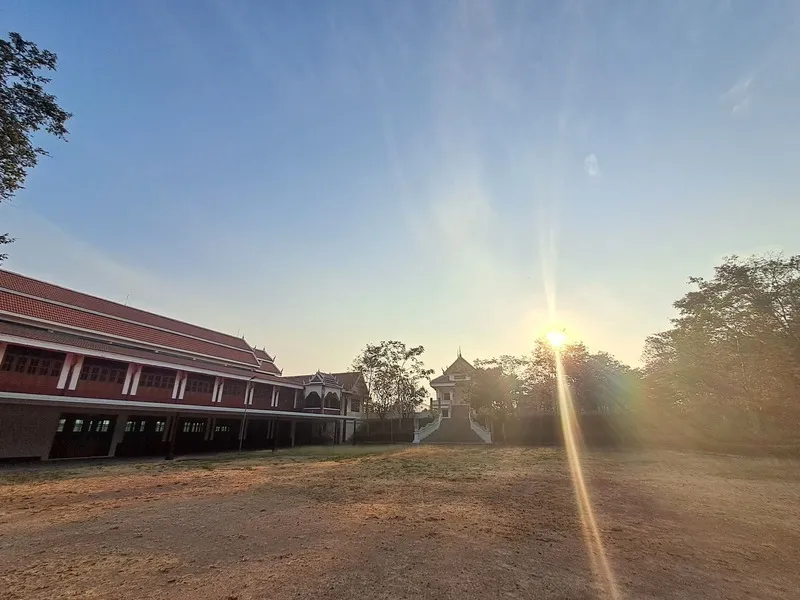
Wat Nong Hong Pattana
Open Days: Daily
Opening Hours: 08:00 – 17:00
Wat Nong Hong Phatthana is located in Ban Nong Hong, Rai Mai Phatthana Subdistrict, Cha-am District, Phetchaburi Province. It is a Dhammayut-affiliated temple that emerged from genuine local faith and collective community effort. With an area of approximately 4 rai 1 ngan 92 square wah, the temple has the scale of a “community temple”—not so large that it feels distant, yet spacious enough to serve as the village’s spiritual center. It is a place for merit-making, religious rites, and communal gatherings tied to important moments in life, from annual merit festivals to events directly connected to families and the wider community.
The charm of Wat Nong Hong Phatthana lies in its simplicity and in the fact that it is a “working temple” that remains deeply woven into everyday village life. The temple was not designed as a commercial tourist attraction; instead, it is a place of faith set within the rural landscape of inland Cha-am. Visitors can expect a calm atmosphere, shade from trees, the sounds of daily temple routines, and the feeling of a community that still maintains a close bond with its temple. If you are looking for a temple that truly reflects what a “village temple” means—and you want to see how faith is built through the shared efforts of local people—Wat Nong Hong Phatthana is one place that tells that story clearly, without relying on grand spectacle.
Geographically, the temple’s boundaries offer a clear sense of its surroundings: to the east it borders a mountain, to the west it borders a road, and to the north and south it borders private land. Having a road on one side makes the temple easy for local residents to access—whether they come to make merit on Buddhist holy days, join activities on important Buddhist occasions, or gather for community events and public ceremonies. The eastern side bordering the mountain also provides a natural backdrop, enhancing the calm atmosphere and the sense of sacredness typical of rural settings.
When viewed as a community institution, Wat Nong Hong Phatthana plays a role beyond being merely “a place for chanting.” In rural communities, the temple gently supports social relationships by bringing together people of different ages within the same shared context. Merit events help villagers meet, cooperate, and support one another. The temple reinforces a sense of continuity in life and tradition. At the same time, it can also be a respectful learning space for outsiders who wish to understand local ways of life, because the area is neither crowded nor arranged for rushed, tourism-driven visits.
The history of Wat Nong Hong Phatthana is a clear example of how a “modern-era temple” can take shape in Thailand’s central countryside. It began with local believers recognizing the need for a monks’ residence or a nearby place for religious activities, before gradually developing into an officially established temple through the proper ecclesiastical administrative process. A key point is that in 1995 (B.E. 2538), Mr. Chamras Chadsap, a resident of the subdistrict, donated land to build a monks’ residence. From this beginning, the community pursued the required permissions and formal procedures. The temple was officially established on 10 November 1999 (B.E. 2542). This timeline reflects the community’s drive to keep Buddhism close to home, close to daily life, and within a form the community can collectively care for.
Starting as a “monks’ residence” before being elevated to an “official temple” is significant, because it shows that faith was not created by orders or large-scale projects, but by the real needs of people in the area. When a community is ready, has supporters, and manages the process systematically, the institution can eventually gain formal status. For visitors from outside the area, knowing this formation story can transform the visit from simply looking at buildings or taking photos into seeing the “process of creating sacred space” in contemporary Thai society.
Although Wat Nong Hong Phatthana is not large, its main monastic buildings are arranged to support full community-temple functions. The temple has 3 wooden monk dwellings (kuti), reflecting simplicity and a local character. Wooden kuti often feel airy and well-ventilated, which suits Phetchaburi’s hot and humid climate across many seasons. They also reflect a practical approach to construction: not emphasizing luxury, but prioritizing real use and maintenance that the community can participate in.
Another key building is the multipurpose hall (sala), approximately 18 meters wide and 48 meters long, built in 1997 (B.E. 2540) with reinforced concrete. A hall of this size signals that the temple was designed to accommodate large gatherings, because the multipurpose hall is the heart of merit events, ceremonies, and community activities. In rural temples, the sala is what makes the temple truly a “public shared space”—whether for annual merit-making, ordination ceremonies, funerals, or community meetings. It is the point where people gather and where social bonds remain strong.
There is also one merit-making/funeral hall (sala bamphen kuson), built with reinforced concrete. This space plays an important role in ceremonies involving dedication of merit and family rites, especially those connected with loss and remembrance of ancestors. In many communities, such a hall helps support people emotionally during difficult times and gives concrete meaning to the idea that “the temple is a refuge for the heart,” not merely a symbolic phrase.
The temple’s sacred objects are recorded as including 6 Buddha images, reflecting accumulative offerings made by devotees across different periods. In community temples, Buddha images often carry personal meanings for local people—offered in fulfillment of vows, offered to dedicate merit, offered as blessings for one’s family, or offered to mark new beginnings in life. For this reason, the Buddha images are not only artistic objects, but also “records of faith” that echo local stories on another level.
As a Dhammayut-affiliated temple, Wat Nong Hong Phatthana also carries an identity associated with discipline and a more rigorous monastic practice, which many devotees deeply respect. Many Dhammayut temples are places where people come to make merit quietly, listen to teachings, or enter with sincere intention rather than merely passing through. This sense of stillness and simplicity aligns well with Wat Nong Hong Phatthana’s rural setting and its mountain backdrop.
For visitors, Wat Nong Hong Phatthana suits those who want a Cha-am trip that shows “more than the sea.” Cha-am is widely known as a beach town, but if you turn inland you will find agricultural communities, local temples, and landscapes that reveal another side of Phetchaburi life. Stopping at Wat Nong Hong Phatthana can become a calm pause in the journey, slowing the pace and helping you notice more details of the area. Afterward, it is easy to return to the coastal zone for seafood or a walk along the beach.
If you plan to come to worship and walk around the grounds, it is recommended to dress modestly, keep noise to a minimum, and be mindful when walking in certain areas if there are slopes near the mountain or zones used for actual temple routines, such as the monk residence area or monastic activity spaces. A good visit to a community temple is one made with respect for the hosts: unhurried, not turning sacred space into a mere photo backdrop, and prioritizing the quiet atmosphere of the place.
Getting There Wat Nong Hong Phatthana is most conveniently reached by private car. You can pin “Wat Nong Hong Phatthana, Rai Mai Phatthana Subdistrict, Cha-am District” on an online map, then follow local roads into Ban Nong Hong Phatthana. The temple is within the community, and you can ask local residents for directions if needed. If traveling on weekends or during busy periods in Cha-am, allow a bit of extra time for the main roads before turning into community routes. It is also advisable to check suitable days and times in relation to temple activities before you go for a smoother visit.
Upon arrival, park only in designated areas or in spots that do not obstruct local traffic. Community temples are often close to homes and share roads with villagers. If you come as a family or with elderly companions, plan your walking route with comfort in mind. The sala area and temple courtyard are typically flatter and easier to walk, so you may want to start there before slowly exploring other sections.
For those who enjoy learning about a temple through its tangible structure, Wat Nong Hong Phatthana offers an interesting contrast in building materials between wooden structures (the monk dwellings) and reinforced-concrete structures (the multipurpose hall and merit-making/funeral hall). This reflects the approach of community temples built after the late 1980s (B.E. 2530s): durable spaces for large gatherings, while preserving wooden buildings for daily monastic life and airy comfort. Reading the temple through its materials provides a concrete picture of how the community and the temple have adapted together.
Overall, Wat Nong Hong Phatthana may not be a destination for those seeking a large, iconic temple or a landmark photo spot. Instead, it is suited to travelers who want to understand “another side of Cha-am” and to experience a quiet Dhammayut community temple that remains actively integrated with local life. If you intend to come to worship, make merit, or simply pause for reflection during a Cha-am–Phetchaburi trip, this temple offers a simple, peaceful atmosphere and an interesting story of how a modern community temple was formed.
| Place Summary | A Dhammayut-affiliated community temple in Rai Mai Phatthana Subdistrict. It began with land donated for a monks’ residence in 1995 (B.E. 2538) and was officially established on 10 November 1999 (B.E. 2542). The temple features a large multipurpose reinforced-concrete hall and 3 wooden monk dwellings, with a calm rural atmosphere in inland Cha-am. |
| Address | Moo 1, Ban Nong Hong Phatthana, Rai Mai Phatthana Subdistrict, Cha-am District, Phetchaburi 76120, Thailand |
| Highlights | A Dhammayut temple shaped by community faith; the eastern boundary borders a mountain; a large reinforced-concrete multipurpose hall (approx. 18 m wide, 48 m long) built in 1997 (B.E. 2540); 3 wooden monk dwellings; a reinforced-concrete merit-making/funeral hall; 6 Buddha images recorded as sacred objects. |
| Abbot (Current) | Phra Khru Jirapattathorn (พระครูจิรพัฒนาทร) |
| Temple Contact | +66 37 946 539 |
| Nearby Tourist Attractions | 1) Cha-am Beach – approx. 20 km 2) Maruekhathaiyawan Palace – approx. 25 km 3) Khao Nang Phanthurat Forest Park – approx. 28 km 4) Swiss Sheep Farm (Cha-am) – approx. 22 km 5) FN Outlet Hua Hin – approx. 30 km |
| Nearby Restaurants | 1) Krua Met Sai (Cha-am) – approx. 20 km 2) Krua Huai Sai (Cha-am) – approx. 30 km 3) Krua Je Nong Seafood (Cha-am) – approx. 32 km 4) Little Sea Cafe (Cha-am) – approx. 32 km 5) Saep E Lee (near the military camp / Cha-am zone) – approx. 30 km |
| Nearby Accommodations | 1) Ace of Hua Hin Resort – approx. 32 km 2) Mida De Sea Hua Hin – approx. 33 km 3) Devasom Hua Hin Resort – approx. 35 km 4) Dusit Thani Hua Hin – approx. 34 km 5) Veranda Resort & Villas Hua Hin Cha-am – approx. 30 km |
Frequently Asked Questions (FAQ)
Q: Where is Wat Nong Hong Phatthana located?
A: The temple is located in Moo 1, Ban Nong Hong Phatthana, Rai Mai Phatthana Subdistrict, Cha-am District, Phetchaburi Province. You can search and pin the location on an online map for convenient navigation.
Q: Which monastic order is Wat Nong Hong Phatthana affiliated with?
A: Wat Nong Hong Phatthana is affiliated with the Dhammayut order.
Q: When was Wat Nong Hong Phatthana officially established?
A: The temple was officially established on 10 November 1999 (B.E. 2542), with its beginnings linked to land donated for a monks’ residence in 1995 (B.E. 2538).
Q: What are the notable temple buildings and features?
A: The temple has a large multipurpose hall (approximately 18 meters wide and 48 meters long) built in 1997 (B.E. 2540) with reinforced concrete, a reinforced-concrete merit-making/funeral hall, and 3 wooden monk dwellings that reflect the simplicity of a community temple.
Q: How can I contact the temple before visiting?
A: You can use the phone number listed in the summary table. It is also recommended to ask about suitable days and times, especially if you plan to visit as a group or during festival periods.
Q: What kind of visit is Wat Nong Hong Phatthana best suited for?
A: It is ideal for a quiet merit-making stop or a reflective pause during an inland Cha-am trip, especially for travelers who want to experience a calm, simple Dhammayut community temple that remains actively used in local daily life.
 Category: ●Places of Worship
 Group: ●Temple
 Last Update : 3 MonthAgo
 Click to Access the Navigation Map GPS
 Art, Culture and Heritage
 Historical Sites and Monuments(
 Landmarks and Memorials(
 Royal Palace(
 Art, Craft Centres, Tradition(
 Museums(
 Educational Places
 Educational Gardens, Farm(
 University
 Other religious and spiritural sites(
 Research and Development
 Royal Project(
 Suburban Living
 Village, Community(
 Floating Market(
 Nature and Wildlife
 National Parks and Marine Reserves(
 Mountain (Doi)(
 Dam, Reservoir, Lake(
 Waterfalls(
 Hot Springs(
 Caves(
 River, Canal(
 Bays and Beaches(
 Islands(
 Other natural attractions(
 Entertainment and Agricultural
 Farm, Parks, Gardens and Ecotourism(
 Theater(
 Outdoor and Adventure Activities(
 Travel Articles, Recipes
 Travel Review, Food Review(


