
TL;DR: Siriphum Waterfall is located at Ban Khun Klang, Ban Luang Subdistrict, Chom Thong District, Chiang Mai (Doi Inthanon National Park), open Generally open daily (subject to announcements by Doi Inthanon National Park, hours Generally 08:00 – 17:00.

Siriphum Waterfall
Open Days: Generally open daily (subject to announcements by Doi Inthanon National Park and weather conditions).
Opening Hours: Generally 08:00 – 17:00.
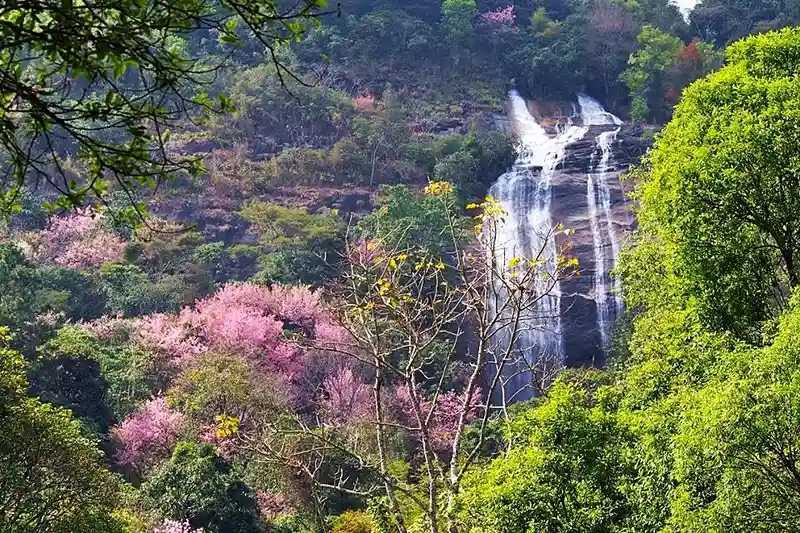
Siriphum Waterfall is one of the waterfalls that best captures the “signature image of Doi Inthanon.” That is not only because of its scale or dramatic presence, but because of its naturally paired streams: two cascades flowing side by side down a steep cliff. From a distance, the waterfall can be seen clearly—almost like a set of guiding lines for the eyes—quietly telling travelers that what lies ahead is a living headwater forest that continues to do its work every day.
Siriphum Waterfall is located within Doi Inthanon National Park near Ban Khun Klang, Ban Luang Subdistrict, Chiang Mai Province. The surrounding area is montane forest with high humidity, generally cool temperatures year-round, and rich biodiversity—especially among ferns, mosses, and understory plants that require specific environmental conditions. Coming here is therefore not just about “seeing a waterfall,” but about stepping into the ecosystem of Thailand’s humid highland forest.
Historically, Siriphum Waterfall was known as “Lalee Waterfall,” named after a Hmong village headman in the area. Another name that locals and visitors commonly used was “Two Brothers Waterfall,” a nickname that describes its appearance perfectly. These earlier names do more than describe physical characteristics; they also reflect the long relationship between natural landscapes and the communities who have lived alongside the forest for generations, long before the area was developed into an eco-minded destination.
The waterfall’s defining feature is its two streams descending from a steep cliff at a similar height. The water does not fall as a narrow single line; instead it spreads over rock surfaces, creating a fine mist that drifts across the lower area. The sound you hear is not a single explosive crash typical of one-drop falls, but a continuous, deep, resonant roar that carries through the valley. In the late rainy season, when water volume is strong, the waterfall looks especially powerful yet calm at the same time.
The lower area has been developed into “Suan Luang Siriphum” (Siriphum Royal Garden), a space created to collect and conserve native plant species—especially ferns and mosses from various parts of the country—under the care and operation of the Inthanon Royal Project Development Center. This garden plays an important role both in conservation and in visitor education. As you walk through, you can see many fern groups, including types that are not commonly encountered in ordinary natural settings. These plants are indicators of a healthy humid forest, and they are one reason the area requires particularly careful stewardship.
A visit to Siriphum Waterfall is not limited to viewing the falls from a single lookout. It also includes a nature-study trail of around 600 meters. This trail lets visitors gradually absorb the atmosphere of montane evergreen forest—passing through understory plants, ferns, mosses, and dense stands of trees. Along the way you can sense soil moisture, leaf scent, and shifting light filtering through the canopy—small details that make the trip feel more meaningful than a simple check-in photo stop.
That said, because the area is highly humid, certain sections of the trail can be slippery—especially during the rainy season or right after rainfall. Good traction footwear and an unhurried pace are essential. Siriphum Waterfall is a place that rewards “slowing down” and giving time to nature, rather than rushing to the next destination.
Getting There Siriphum Waterfall is about 92 kilometers from Chiang Mai city. Drive via the Chiang Mai–Hot route (Highway 108). Around kilometer marker 58, turn right onto the Chom Thong–Doi Inthanon road (Highway 1009). Continue until approximately kilometer markers 31–32, where you will find a right turn leading in about 2 kilometers. From the parking area, continue on foot along the nature-study trail to the waterfall. The overall walking distance is not long, but it is recommended to allow extra time and check weather conditions before traveling.
Although Siriphum Waterfall is relatively easy to reach, it remains a highly sensitive environment. Mosses and many ferns take a long time to recover if repeatedly trampled or disturbed. Responsible travel is therefore the key principle: stay on designated paths, do not litter, keep noise respectful, and follow park rules so this place can remain a living classroom and a restorative retreat for future visitors.
| Place Name | Siriphum Waterfall |
| Location | Ban Khun Klang, Ban Luang Subdistrict, Chom Thong District, Chiang Mai (Doi Inthanon National Park) |
| Key Features | Twin-stream waterfall cascading side by side down a steep cliff, visible from afar, with Suan Luang Siriphum (Siriphum Royal Garden) |
| Former Names | Lalee Waterfall, Two Brothers Waterfall |
| Nearby Attractions (Approx. Distance) | Doi Inthanon Summit (20 km) King and Queen Pagodas (Naphamethanidon – Naphaphonphumisiri) (12 km) Wachirathan Waterfall (15 km) Kew Mae Pan Nature Trail (18 km) Mae Ya Waterfall (30 km) Ban Khun Klang (2 km) |
| Nearby Restaurants (Approx. Distance) | Inthanon Royal Project Restaurant (5 km) Tel. 053-286728 Ban Hom Doi Inthanon (35 km) Tel. 088-6498566 Krua Fueang Fah (45 km) Tel. 053-341274 Coffee Ngeggee (45 km) Tel. 088-2570878 |
| Nearby Accommodations (Approx. Distance) | Inthanon Highland Resort (8 km) Tel. 053-033552 Touch Star Resort (35 km) Tel. 053-033595 Bansuan Inthanon Eco Resort (40 km) Tel. 086-4291642 Inthanon Riverside Resort (55 km) Tel. 081-5305767 |
Frequently Asked Questions (FAQ)
Q: When is the best time to visit Siriphum Waterfall?
A: Late rainy season through early cool season is usually the most beautiful, with good flow and lush green forest. Please be extra careful, as the trail can be slippery.
Q: Is the walking trail difficult?
A: The nature-study trail is about 600 meters and not very steep, but humidity is high and the ground can be slick, so shoes with good grip are recommended.
Q: Is it suitable for children or older visitors?
A: Yes, but they should be supervised closely, walk at a slow pace, and avoid visiting right after heavy rain when surfaces are most slippery.
Q: What should I be especially careful about?
A: Do not step on moss or sensitive groundcover off the path, watch for slippery surfaces, and follow park rules carefully.
Category: ●Nature and Wildlife
 Category: ●
Group: ●Waterfalls
 Group: ●
 Last Update : 4 MonthAgo

 Click to Access the Navigation Map GPS
 Art, Culture and Heritage
 Historical Sites and Monuments(
 Landmarks and Memorials(
 Royal Palace(
 Art, Craft Centres, Tradition(
 Museums(
 Educational Places
 Museum for Study(
 Educational Gardens, Farm(
 Training Center(
 University
 Places of Worship
 Temple(
 Mosque(
 Other religious and spiritural sites(
 Research and Development
 Royal Project(
 Suburban Living
 Village, Community(
 Local Market(
 National Parks and Marine Reserves(
 Mountain (Doi)(
 Dam, Reservoir, Lake(
 Hot Springs(
 Caves(
 River, Canal(
 Other natural attractions(
 Entertainment and Agricultural
 Zoos and Aquariums(
 Animal camps and shows(
 Stadium(
 Farm, Parks, Gardens and Ecotourism(
 Waterpark(
 Theater(
 Outdoor and Adventure Activities(
 Shopping
 Shopping and Night Market(
 Restaurant
 Michelin Star(
 Michelin Guide(
 Call Customer Service in Tourism
 Call Customer Service in Tourism(
 Travel Articles, Recipes
 Travel Review, Food Review(
 Food Menu, North Recipes(
 Thai Desserts, North Recipes(


